


Imagine a world where the line between the digital and the physical doesn't just blur—it vanishes. Where the thrill of exploration isn't confined to a screen but spills out into your living room, your city street, and the very air around you. This is the breathtaking promise held within the powerful convergence of gaming, Augmented Reality (AR), and Virtual Reality (VR). It’s a technological symphony that is actively dismantling the traditional concept of a 'game' and rebuilding it as an experience, an adventure, and a new layer of reality itself. This isn't a distant future; it's an unfolding revolution, and it’s inviting you to step inside.
The Foundational Divide: Understanding AR and VR
Before delving into their powerful fusion, it's crucial to understand the distinct DNA of AR and VR. Though often mentioned in the same breath, they approach the digital-physical paradigm from opposite directions.
Virtual Reality is an exercise in total immersion. By donning a head-mounted display, the user is visually and audibly transported to a completely computer-generated environment. The physical world is intentionally blocked out, replaced by a meticulously crafted digital one. In VR gaming, you don't just control a character; you become the character. You look down and see your digital hands, you turn your head to survey a fantastical landscape, and you physically duck behind virtual cover. The goal is presence—the undeniable, often exhilarating, feeling of being somewhere else.
Augmented Reality, in contrast, is about enhancement rather than escape. AR technology superimposes digital information—images, data, characters—onto the user's view of their real-world environment. This is most commonly experienced through smartphone cameras or transparent glasses. AR gaming doesn't take you to another world; it brings the game into yours. It transforms your kitchen table into a strategic battlefield, makes your local park a sprawling hunting ground for digital creatures, and lets cartoon characters dance on your sofa. The magic of AR lies in its juxtaposition, creating a playful and often surprising hybrid reality.
The Hardware Ecosystem: Portals to New Realities
The magic of these experiences is enabled by a sophisticated and evolving ecosystem of hardware, each designed to serve its specific reality-bending purpose.
VR: The Immersion Machines
Modern VR systems are engineering marvels. They typically consist of a high-resolution headset that tracks the user's head movements in all six degrees of freedom (6DoF)—forward/back, up/down, left/right, pitch, yaw, and roll. This tracking is achieved through a combination of internal sensors and external base stations or inward-facing cameras that map the room. This ensures that when you move in the physical world, you move identically in the virtual one, preventing disorientation and fostering deep immersion.
Input is another critical component. Gone are the simple gamepads. VR utilizes motion-tracked controllers, held in each hand, that translate your real-world gestures into the game. Whether you're swinging a sword, carefully picking up an object, or casting a spell with intricate hand movements, these controllers are your conduit to the digital realm. Higher-end systems are pushing towards full finger tracking, allowing for even more nuanced and expressive interactions. For the deepest level of immersion, haptic feedback vests and treadmills are emerging, allowing players to feel impacts and walk for miles within a confined physical space.
AR: The World as Your Playground
AR hardware is more varied, ranging from the ubiquitous to the specialized. The most accessible portal is the smartphone. Its camera, screen, and suite of sensors (GPS, accelerometer, gyroscope) make it a powerful AR device, capable of overlaying graphics onto the world through the screen. This democratized AR gaming for millions.
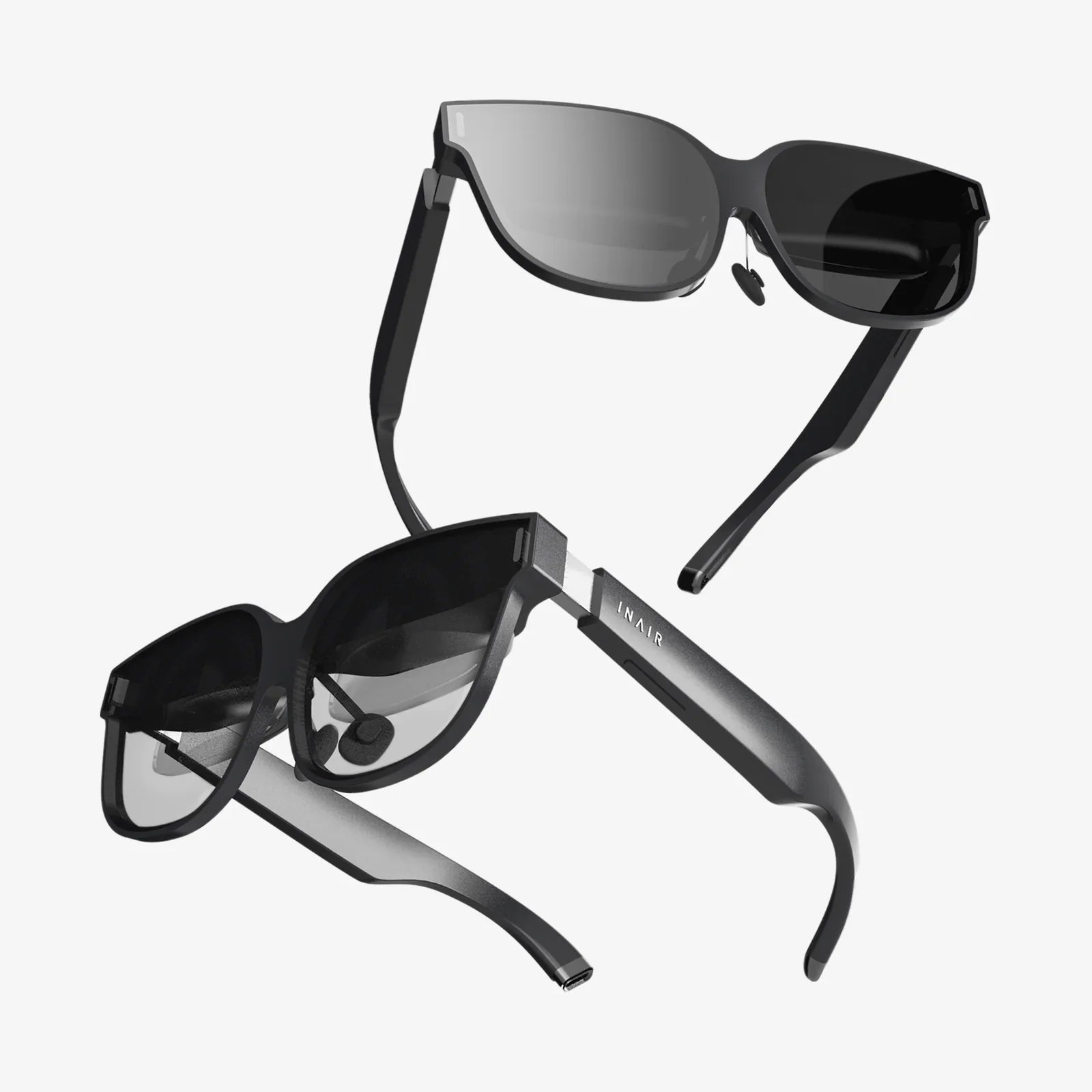
The next evolution is dedicated AR glasses. These transparent wearables project holographic imagery directly into the user's field of vision, allowing for a hands-free, seamless experience. Early versions are already available, with more advanced models promising wider fields of view, all-day battery life, and more realistic holograms. The ultimate goal is a lightweight, socially acceptable pair of glasses that can continuously augment your perception of reality.
Underpinning all AR experiences is a technology called Simultaneous Localization and Mapping (SLAM). SLAM allows the device to understand and map its environment in real-time. It identifies floors, walls, tables, and other surfaces, enabling digital objects to be placed and persist in the real world, occluding correctly behind physical objects and interacting with the environment in a believable way.
The Gaming Genres Transformed
The influence of AR and VR is not limited to a single genre; it's a tidal wave washing over the entire gaming landscape, creating new genres and reinvigorating old ones.
VR's Domain: First-Person Everything
VR has a natural affinity for genres that benefit from a first-person perspective and deep physical interaction.
- Horror: VR horror is in a league of its own. The inability to look away or hide behind the safety of a screen amplifies fear exponentially. The creak of a floorboard is behind you. The monster isn't in front of your character—it's in front of you.
- Simulation: From piloting giant mechs and starfighters to performing intricate surgery, VR simulations offer an unparalleled sense of embodiment and scale. The physicality of flipping switches, gripping control yokes, and manipulating complex interfaces creates a powerful and authentic connection to the activity.
- Social and MMO: Social VR platforms are less like games and more like digital teleporters. They allow users to inhabit shared virtual spaces as expressive avatars, attending concerts, watching movies, or simply chatting with friends from across the globe. The sense of shared presence—making eye contact, using hand gestures—makes interaction feel startlingly genuine.
- Rhythm and Fitness: Games that have you slicing blocks to the beat or ducking and weaving through obstacles have turned VR into a highly effective and incredibly fun workout machine, famously dubbed "exercise in disguise."
AR's Playground: The World is Your Level
AR gaming excels at turning mundane reality into a playground for the imagination.
- Location-Based Games: These games use GPS data to tie gameplay to specific real-world locations. They encourage exploration, turning entire cities into game boards where parks become power-ups and public landmarks become raid bosses or portals.
- Tabletop and Strategy: AR can project a game board and pieces onto any surface, with animated characters battling it out right on your coffee table. It combines the tactile social pleasure of traditional tabletop gaming with dynamic digital visuals and logic.
- Narrative Puzzles: Imagine a detective game where clues are hidden around your actual home, or a story that unfolds with spectral characters appearing in your hallway. AR is uniquely suited for narrative experiences that break the fourth wall and use your environment as a key part of the story.
Beyond the Game: The Social and Physiological Impact
This technological shift carries profound implications that extend far beyond entertainment.
The Social Fabric of Immersive Gaming
Critics often paint VR and AR as isolating technologies, but the reality is more complex. While VR can be a solitary experience, it is also fostering powerful new forms of social connection. Social VR platforms create a powerful sense of "co-presence" that video calls cannot match. For individuals with mobility issues or those separated by vast distances, this can be a lifeline, a way to share experiences and feel truly together.
AR, by its nature, is more socially inclusive. It doesn't require shutting out the world, allowing for shared experiences with people in the same physical space. A digital creature appearing in the middle of a room can be seen and experienced by everyone present, creating a shared point of wonder and conversation.
The Mind and Body in the Loop
Our physiology is deeply intertwined with these experiences. "VR sickness," similar to motion sickness, remains a challenge for some users, though advancements in hardware and software are steadily mitigating it. Conversely, "presence"—the feeling of being there—is a positive physiological and psychological state that developers strive to induce through high fidelity, consistent tracking, and believable interactions.
The phenomenon of "phantom sense"—where users report faintly feeling virtual objects—highlights the powerful connection between the virtual body and the brain. Furthermore, VR is proving to be a revolutionary tool in therapeutic contexts, from exposure therapy for phobias and PTSD to physical rehabilitation, where exercises can be transformed into engaging games.
Challenges on the Horizon
The path forward is not without significant obstacles. For VR, the quest for wireless, high-fidelity, and affordable hardware continues. The issue of accessibility—both in terms of cost and physical space requirements—remains a barrier to mass adoption.
For AR, the hardware challenges are even greater. Creating stylish, all-day glasses with a wide field of view, powerful processing, and long battery life is a monumental task. Both fields also grapple with substantial design questions: How do you create intuitive UI in a 360-degree space? How do you guide a user's attention without traditional cinematic tools?
Perhaps the most pressing challenges are ethical and societal. The collection of detailed spatial data and biometric information raises serious privacy concerns. The potential for hyper-realistic misinformation or dangerous "real-world" AR games is a real threat. And as experiences become more immersive, the need to understand their long-term psychological effects becomes ever more critical.
The Convergent Future: Where AR and VR Collide
The most exciting development is not the progression of AR and VR as separate paths, but their inevitable convergence. We are already seeing the beginnings of this with mixed reality (MR) experiences on VR headsets. These devices use outward-facing cameras to pass through a video feed of the real world, allowing digital objects to be anchored within your physical space. You can have a giant virtual screen pinned to your real wall or see a robot scuttle under your actual desk.
This is the precursor to a future where our devices won't be labeled as strictly AR or VR, but as spectrum devices capable of rendering the full continuum from pure reality to pure virtuality. The headset of tomorrow might let you work at a virtual office (VR), then bring up a holographic diagram to explain a concept to a colleague in the room with you (AR), and then later play a game that seamlessly blends your furniture into a dungeon crawl (MR).
This fusion will be the true game-changer. It won't be about choosing between the real world and a virtual one, but about fluidly moving between states of reality, using the best of both to enhance our work, our play, and our connection to others. The game of the future won't be a place you go to escape life, but a layer you add to life to make it richer, more fun, and more magical.
The controller is waiting. The headset is your portal. The familiar world around you is about to reveal its hidden layers, its secret dungeons, and its infinite potential for play. This is more than a new way to game; it's a new sense, a new canvas for human creativity, and the next great frontier in our endless desire to stories and explore worlds, both imagined and real. The revolution will not be televised. It will be lived.
Share:
AR and VR Examples: Transforming Industries and Redefining Reality
Augmented Reality at Conferences: The Ultimate Guide to Immersive Event Experiences