


Imagine a world where a subtle flick of your wrist dismisses a notification, a pinching motion adjusts the volume in your headphones, or a simple thumbs-up sends a pre-written message without ever reaching for your phone. This isn't a glimpse into a distant future; it's the rapidly emerging present of gesture control for wearable devices, an invisible interface poised to fundamentally reshape our relationship with technology. The cumbersome tapping and swiping on minuscule screens are giving way to a more natural, intuitive, and ultimately human form of interaction, turning our own hands and fingers into the ultimate remote control.
The Mechanics of Magic: How It Actually Works
While the user experience feels like magic, the technology behind gesture control is a sophisticated symphony of hardware and software. Unlike the simple infrared sensors of early motion-controlled systems, modern wearable devices employ a suite of advanced technologies to accurately interpret human movement.
One of the most common and powerful methods is the use of optical sensors, typically miniature cameras. These are often paired with infrared projectors that dot the surrounding area with a grid of invisible points of light. By measuring how these points deform over the contours of your hand and how your movements change their position, the device can construct a detailed 3D depth map of your gestures in real-time. This allows for precise tracking of individual finger movements, hand orientation, and even the distance from the sensor.
Another critical technology is inertial measurement units (IMUs). These micro-electromechanical systems (MEMS) contain accelerometers and gyroscopes that measure the velocity, orientation, and gravitational forces acting on the wearable device itself. While not as precise for fine finger tracking on their own, IMUs are exceptionally effective at recognizing gross arm and wrist movements—like raising your arm to look at a watch or making a large swiping gesture. They are also incredibly power-efficient, making them ideal for always-on listening for specific activation commands.
Finally, surface electromyography (sEMG) represents a more futuristic approach. Instead of watching your hand from the outside, sEMG sensors placed against the skin on your wrist detect the tiny electrical signals generated by your muscles when they contract. The fascinating implication is that you don't even need to make a full, visible gesture; the device can interpret your intention by reading the neuromuscular commands your brain sends, enabling subtle, sub-visual control that feels like telekinesis.
These technologies rarely work in isolation. The most robust systems use a technique called sensor fusion, where data from optical, inertial, and EMG sensors is combined and processed by machine learning algorithms. This creates a more complete, accurate, and reliable picture of user intent, filtering out accidental movements and environmental noise.
Beyond the Gimmick: Practical Applications Unleashed
The true value of any technology lies in its application. For gesture control in wearables, the use cases extend far beyond novelty, solving real-world problems and enhancing daily routines.
Enhanced Accessibility
This is perhaps the most profound application. For individuals with limited mobility or dexterity, gesture control can be life-changing. Someone who cannot easily manipulate a touchscreen or a small button can navigate menus, communicate, and control their environment through predefined, customizable gestures. It offers a new layer of independence and interaction that was previously difficult or impossible to achieve.
Seamless Audio Control
In the realm of hearables like wireless earbuds and headphones, gesture control is a game-changer. A double-tap to play/pause, a swipe to skip tracks, or a pinch to activate a voice assistant allows for complete control without removing the device from your ears or your phone from your pocket. This is invaluable while running, cooking with messy hands, or during freezing winters when wearing gloves.
Hands-Free Augmented Reality (AR)
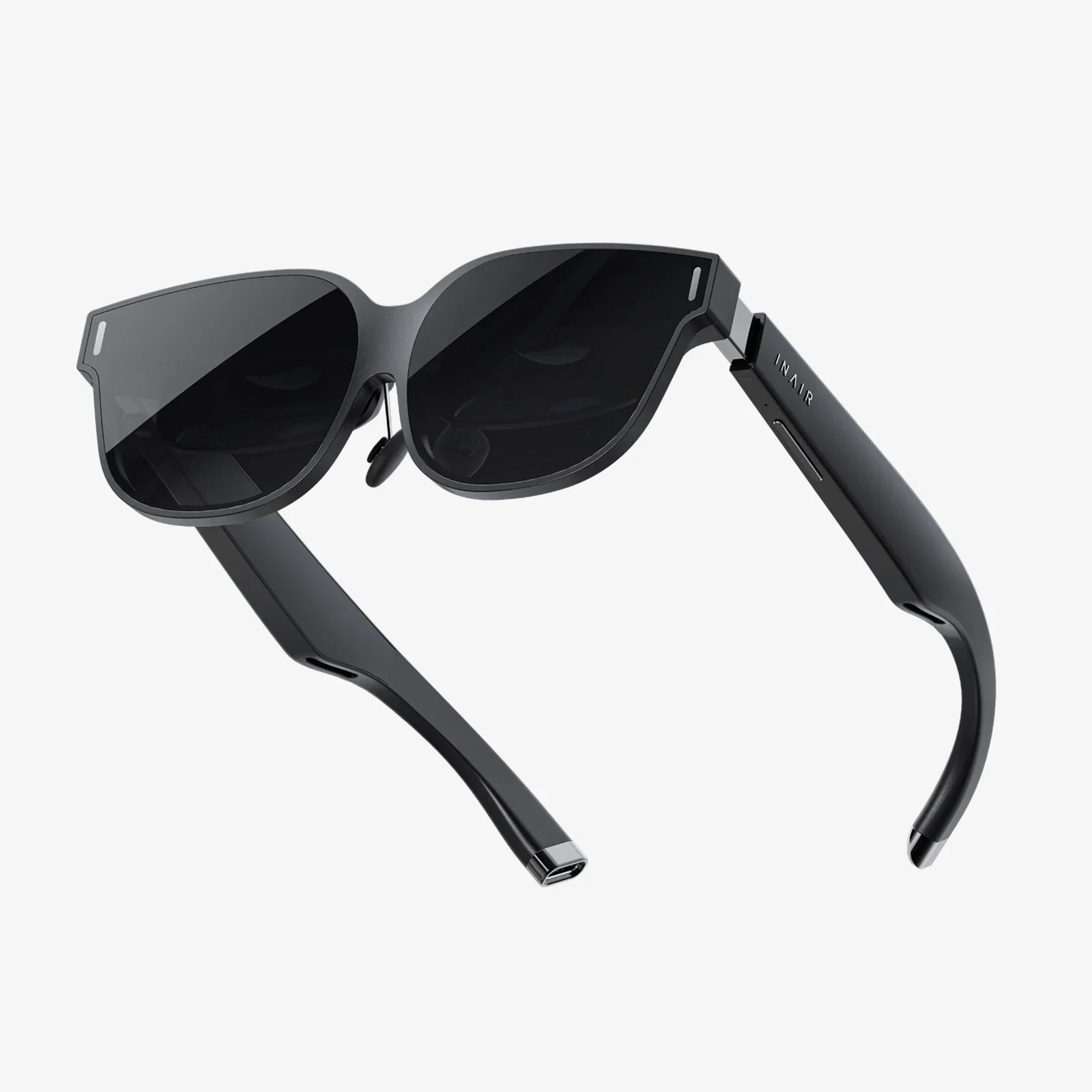
As smart glasses mature, gesture control will become their indispensable partner. Touchscreens or handheld controllers are impractical and break the immersive experience of AR. Gestures allow users to naturally manipulate virtual objects floating in their field of view—grabbing, rotating, and placing digital content into their physical world as if it were really there. This has immense potential for fields like engineering, design, medicine, and logistics.
Discreet and Contextual Notifications
Smartwatches and fitness bands can use gestures for subtle interactions. A quick twist of the wrist could silence an incoming call, while a shaking motion might clear all notifications. This allows users to manage their digital interruptions without ever looking at their device, maintaining politeness in conversations and focus in meetings.
The User Experience Revolution: Intuition Over Instruction
The core promise of gesture control is a shift from learned interaction to intuitive operation. We didn't need a manual to learn how to point; it's an innate human behavior. Gesture interfaces aim to leverage this innate physical intelligence.
A well-designed gesture system feels less like inputting commands and more like having a conversation with your device. It reduces cognitive load; the user doesn't have to remember which button is where on a tiny interface. It also drastically cuts down on interaction time. A gesture can often be performed faster than navigating through multiple menu layers on a screen.
However, this intuitiveness is not automatic. The design of the gesture lexicon—the vocabulary of motions a device understands—is critical. Designers face a difficult balancing act. Gestures must be:
- Distinct: Different enough from each other to avoid false triggers.
- Memorable: Logically connected to their function (e.g., a pinch to zoom).
- Ergonomic: Comfortable and natural to perform repeatedly, avoiding awkward movements that could cause strain.
- Socially acceptable: Unobtrusive and not embarrassing to perform in public.
This is where machine learning becomes paramount. Algorithms must be trained on vast and diverse datasets of human movement to understand the same gesture performed by people of different sizes, ages, and physical abilities. They must also be able to distinguish between an intentional command and an accidental scratch or a normal walking gait.
Navigating the Challenges: The Road to Ubiquity
For all its promise, gesture control is not without significant hurdles that engineers and designers are racing to overcome.
Power Consumption: Continuously powering optical sensors and processing complex data streams is a significant drain on the small batteries found in wearables. Advancements in ultra-low-power chipsets and the strategic use of low-power IMUs to "listen" for activation before waking up more power-hungry systems are key to solving this.
Accuracy and False Positives: The "Midas Touch" problem—where every movement is interpreted as a command—remains a frustration. Environmental factors like bright sunlight can confuse optical sensors, and everyday movements can be misread. Improving signal-to-noise ratio through better algorithms and multi-modal sensing is essential for user trust.
Standardization: Unlike the near-universal pinch-to-zoom on touchscreens, there is currently no standard lexicon for gestures. A swipe might mean one thing on one brand's device and something entirely different on another's. This lack of consistency creates a learning curve for users and fragments the experience. Industry-wide standards will be crucial for mass adoption.
Privacy and Social Implications: Devices with always-on cameras, even if they are only capturing depth data, raise legitimate privacy concerns. Clear communication about what data is being collected, how it is processed (ideally on-device rather than in the cloud), and user control over permissions are non-negotiable for earning public trust.
The Next Frontier: Where Do We Go From Here?
The current state of gesture control is merely the foundation. The future points toward even more seamless and integrated experiences.
The next leap will be toward predictive and contextual gesture control. Instead of reacting to commands, your wearable will anticipate your needs based on context. Reaching for your car door might automatically unlock it. Sitting down at your desk could trigger your computer to wake up. The device understands not just the gesture, but the intent behind it within a specific scenario.
Furthermore, the combination of gesture control with other emerging inputs will create a multi-modal interface. A user might look at an object through their AR glasses (eye-tracking), make a gesture to select it (hand-tracking), and issue a voice command to manipulate it. This layered approach allows for incredibly rich and complex interactions that feel effortless and powerful.
Finally, research into haptic feedback will close the loop. Today, gesturing into the air provides no physical confirmation. Future systems might use subtle vibrations, ultrasonic waves, or even electrotactile stimulation to simulate the feeling of touching a virtual button or object, making the invisible interface tangibly real.
The age of fumbling for devices and squinting at screens is drawing to a close. Gesture control for wearables is quietly forging a path toward a future where technology understands the language of our bodies, responding to a raised eyebrow, a pointed finger, or a clenched fist with seamless precision. This invisible, intuitive layer of interaction won't just make our gadgets easier to use; it will begin to weave them so deeply into the fabric of our daily actions that they will feel less like tools we operate and more like extensions of our own human capability.
Share:
Growth of Wearable Devices: From Niche to Necessity in a Connected World
AR Projection Mapping: The Invisible Canvas Revolutionizing Reality