


- by wangfred
Glass 8K Holographic Display: The Invisible Portal to a New Digital Reality
- by wangfred
Imagine a world where your living room wall transforms into a window to a coral reef, with schools of fish so vivid you instinctively reach out to touch them, only for your fingers to pass through the light. Envision a surgeon in New York guiding a complex procedure in Tokyo, not through a flat screen, but by manipulating a glowing, three-dimensional human heart that floats in the center of the operating theater. This is not a scene from a distant sci-fi future; it is the breathtaking promise of the glass 8K holographic display, a technology poised to shatter our fundamental understanding of interfaces and dissolve the barrier between the digital and the physical.
To comprehend the significance of this technology, one must first appreciate the two powerful waves of innovation it merges: ultra-high-resolution flat-panel displays and true volumetric holography. For decades, these fields progressed on parallel tracks, each with its own limitations.
The pursuit of higher resolution has been a relentless drive in display technology. From standard definition to 4K and now to 8K, the goal has always been to create a pixel density so high that the human eye cannot distinguish individual pixels at a standard viewing distance. An 8K resolution, at 7680 x 4320 pixels, offers a staggering 33 million pixels—four times that of 4K and sixteen times that of Full HD. This creates an image of unparalleled sharpness, depth, and color fidelity, eliminating the "screen door effect" and delivering a level of realism that is profoundly immersive. However, it is still a flat image, confined to a two-dimensional plane.
Holography, on the other hand, has always been the holy grail of visual representation. Unlike a photograph or a screen, a hologram captures and reconstructs the light field of an object, preserving all the depth cues—parallax, occlusion, and refraction—that our brains use to perceive the three-dimensional world. Traditional holograms, like those on credit cards, are static and fixed. Modern digital holography, however, uses complex algorithms and light modulation techniques to project dynamic, moving holograms. The challenge has always been achieving sufficient brightness, color range, and viewing angle to make them practical for widespread use.
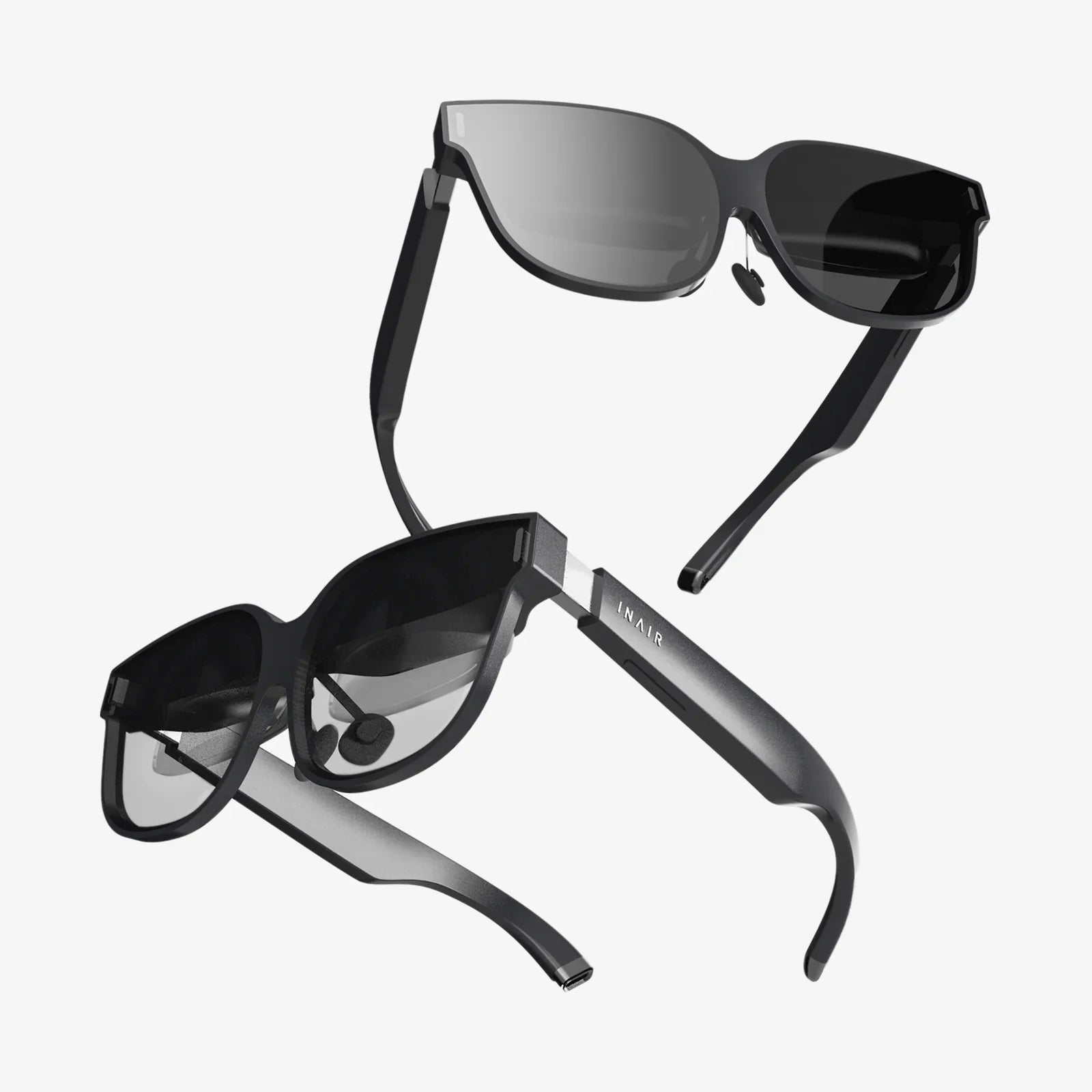
The glass 8K holographic display is the synthesis of these paths. It is not merely a high-resolution screen showing a pre-rendered 3D animation. It is a display medium that uses the glass substrate not as a surface to emit light, but as an engineered optical element—a sophisticated lens or a waveguide—that precisely controls light to project 3D images into free space with 8K-level detail. The "glass" becomes an invisible, intelligent window, and the content is the reality seen through it.
The magic of this technology lies in its ability to bend light with extreme precision. While specific implementations vary, the core principle often involves projecting the 8K image source into the edge of a special glass panel. This glass is not ordinary silica; it is typically a complex composite or nano-engineered material filled with microscopic structures, gratings, or metamaterials.
These internal structures act as a network of tiny mirrors and lenses, scattering and redirecting the incoming light outwards from the surface of the glass in a tightly controlled manner. By minutely adjusting the phase, direction, and intensity of millions of light rays across the panel, the system can create the illusion that these rays are emanating from a point in mid-air, behind the glass, or even in front of it. This process, known as computer-generated holography, is computationally immense. Generating a single frame of a complex, full-color hologram at 8K resolution requires processing power that was unthinkable just a few years ago, leveraging advancements in parallel processing and specialized algorithms.
The result is a visual artifact that possesses all the natural depth cues. Viewers can move their heads and see around the projected objects. There are no special glasses required, no vergence-accommodation conflict that causes eye strain in stereoscopic 3D displays, and no fixed "sweet spot." The image exists in the space, as real as light can be.
The potential applications for this technology are as vast as they are revolutionary, set to disrupt nearly every sector that relies on visual information.
Medical imaging will be utterly transformed. Radiologists could examine MRI or CT scan data not as a series of 2D slices on a monitor, but as a full-color, interactive hologram of a patient's anatomy that can be rotated, sliced, and explored from within. Surgeons could plan complex procedures by rehearsing on a perfect holographic replica of an organ, understanding the spatial relationships between tumors, blood vessels, and nerves in a way flat screens cannot convey. During surgery, real-time ultrasound or other imaging data could be projected as an overlay directly onto the patient's body, creating a powerful augmented reality guidance system.
Product designers and architects will no longer be confined to computer screens and physical prototypes. They could collaborate around a full-scale hologram of a new engine block or a building's core structure, identifying design flaws and testing integrations long before a single physical component is fabricated. This "digital twin" technology, rendered in perfect holographic detail, will drastically reduce development time, cost, and material waste. Factory floor operators could see schematics and instructions overlaid directly onto the machinery they are maintaining.
Video conferencing, a staple of modern life, will evolve into holographic telepresence. Instead of a grid of faces on a screen, participants would appear as life-sized, three-dimensional holograms around a virtual meeting table, enabling natural eye contact and nonverbal communication. The sense of shared presence would be profound, making remote collaboration feel truly authentic and closing the vast experiential gap between a video call and an in-person meeting.
The online shopping experience will leap from a 2D catalog to a 3D showroom. Consumers could use their own displays to project a life-sized hologram of a new sofa into their living room to check for fit and style, or inspect the cut and detail of a piece of clothing from every angle. This tactile and spatial understanding will build consumer confidence and reduce return rates, fundamentally changing the economics of online retail.
This is the canvas for a new art form. Filmmakers and game developers will have an entirely new palette. Narratives will no longer be confined to a rectangular frame; stories could unfold all around the viewer. Museums could showcase artifacts that were too fragile to transport, allowing visitors to walk around and examine every detail of a priceless sculpture. Live performances could integrate holographic elements that interact with performers on stage, creating breathtaking new forms of experiential entertainment.
For all its promise, the path to ubiquitous glass 8K holographic displays is fraught with significant hurdles. The computational burden is astronomical, requiring real-time rendering of complex light fields, which demands specialized hardware and incredibly efficient algorithms. The cost of both the nano-engineered glass substrates and the projection systems is currently prohibitive for consumer markets.
Furthermore, creating compelling content requires entirely new tools and languages. Our entire digital content creation ecosystem—from software to artistic techniques—is built around the 2D frame. A new generation of creators will need to learn how to design and tell stories in a true 3D medium. There are also questions of standardization, data bandwidth for streaming such immense amounts of information, and the human factors of long-term interaction with such realistic volumetric imagery.
The ultimate goal of interface design has always been to make the technology itself disappear, to create a seamless conduit between human intention and digital action. The glass 8K holographic display represents a monumental leap toward that goal. It moves us beyond interacting with a device to interacting with information itself, manifested in our world. It redefines the screen from being a destination to look at, to being a portal to look through. As the computational, material, and optical challenges are gradually overcome, this technology will cease to be a novel display and will instead become the primary window through which we work, learn, play, and connect, forever blurring the line between where the physical world ends and the digital one begins.
We stand at the precipice of a new visual era, one where our digital companions step out of the screen and into our space, not as pixels but as photonic reality. The promise is a world enriched with information and experience, layered seamlessly onto our physical environment through a pane of glass that sees nothing, yet shows us everything.