


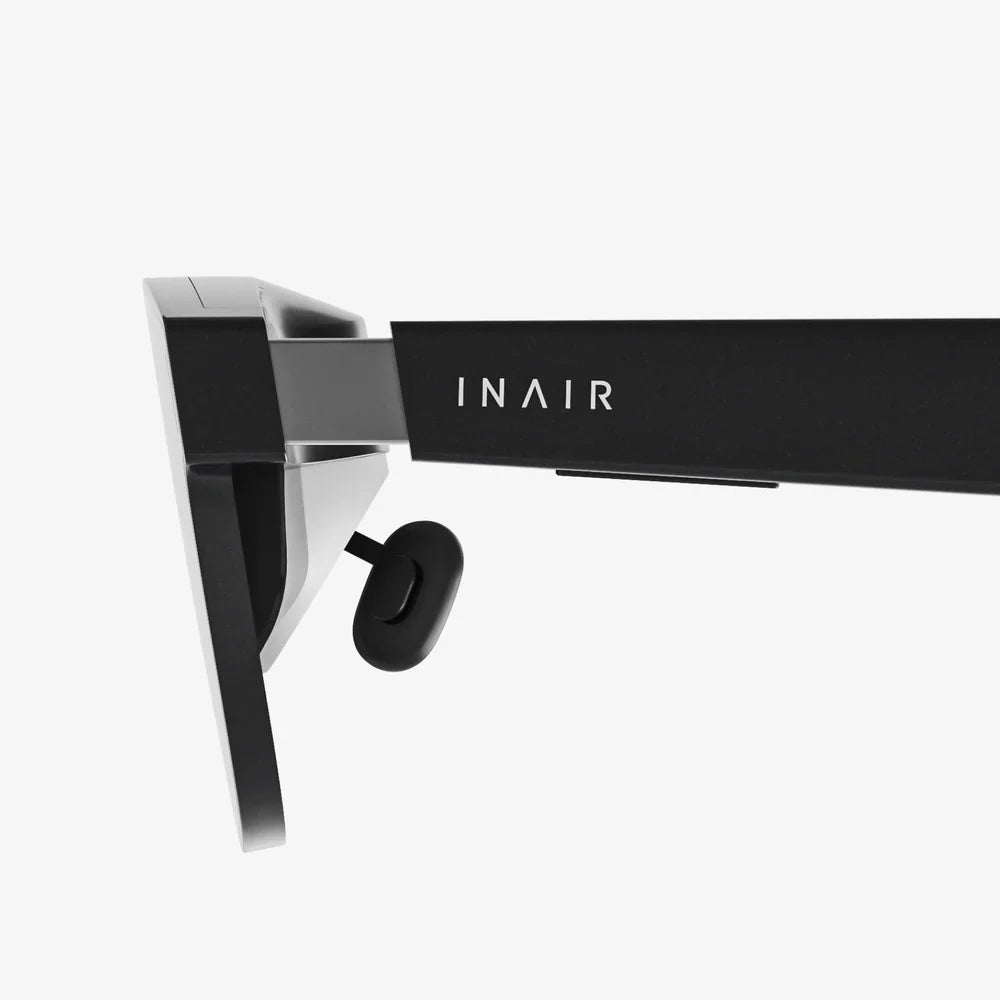
Imagine a world where information flows as naturally as sight, where digital assistants see what you see, and the boundaries between the physical and virtual realms gently dissolve. This is no longer the realm of science fiction; it is the imminent future being crafted by the rapid advancement of glasses electronic. These sophisticated devices are set to become the next pivotal platform in personal computing, promising to change how we work, learn, socialize, and perceive reality itself.
The Evolutionary Journey: From Prototype to Paradigm Shift
The concept of wearable computing and augmented vision has tantalized innovators for decades. Early iterations were often bulky, tethered, and limited to specialized industrial or military applications. They were tools, not companions. The dream, however, persisted: to create a device that was as socially acceptable as it was technologically powerful, a pair of glasses that could augment human capability without isolating the user.
The turning point came with the miniaturization of core components. Processors became powerful enough to handle complex machine learning tasks while sipping power. Displays evolved from obtrusive setups to waveguides and micro-LED projectors that could paint high-resolution images directly onto the retina. Sensors—LiDAR scanners, high-resolution cameras, inertial measurement units (IMUs), and microphones—shrank and became more accurate. This convergence of advancements transformed glasses electronic from a clunky prototype into a sleek, wearable form factor that finally aligns with the vision of seamless augmentation.
Deconstructing the Technology: The Magic Behind the Lenses
At their core, glasses electronic are a symphony of hardware and software working in perfect harmony. Understanding their components reveals the sheer engineering marvel they represent.
The Optical Heart: Display Systems
How do you project a digital image onto a clear lens without blocking the user's view of the real world? This is the central challenge. Several technologies have emerged as leaders. Waveguide technology uses microscopic structures on a transparent lens to bend and direct light from a micro-projector on the temple into the eye, creating a bright, stable image that appears to float in space. Another approach utilizes holographic optical elements to achieve a similar effect with potentially wider fields of view. The goal is always the same: to create a bright, high-contrast, and energy-efficient display that feels like a natural part of the environment.
The Sensory Cortex: Cameras and Sensors
Glasses electronic are packed with a suite of sensors that act as their eyes and ears. Cameras are not for traditional photography; they are for understanding. They perform simultaneous localization and mapping (SLAM), building a 3D model of the environment in real-time to anchor digital objects persistently. They enable hand-tracking, allowing users to interact with virtual interfaces through intuitive gestures. They can read text, identify objects, and translate signs instantly. IMUs track head movement with incredible precision, ensuring the digital overlay remains locked in place relative to the physical world, preventing drift and nausea.
The Digital Brain: Processing and Connectivity
All this data requires immense processing power. A sophisticated system-on-a-chip (SoC) within the frames handles the complex tasks of sensor fusion, computer vision, and running the operating system. Often, this onboard processing is supplemented by cloud connectivity, offloading heavier computations like advanced AI inference to remote servers, ensuring the device remains lightweight and cool. Low-latency 5G and Wi-Fi are crucial for this symbiotic relationship, enabling real-time data access and seamless experiences.
The Interface with Reality: Audio and Interaction
Interaction is designed to be subtle and private. Bone conduction audio or miniature directional speakers deliver sound directly to the user's ears without obstructing ambient noise, crucial for situational awareness. This allows for private notifications, spatial audio for immersive experiences, and discreet conversations with AI assistants. Voice commands, activated by a wake word, offer a hands-free way to search, command, and create. The combination of voice, gesture, and contextual awareness (using gaze detection to infer intent) creates a multimodal interface that is far more natural than a touchscreen.
A World Transformed: Applications Reshaping Industries
The true power of glasses electronic lies not in the technology itself, but in its applications. They are poised to become ubiquitous tools across every facet of society.
Revolutionizing the Workplace
In industrial and field service settings, the impact is profound. A technician repairing complex machinery can see schematics overlaid directly on the equipment, with animated instructions guiding each step. A surgeon can have vital signs and 3D scans visualized directly in their field of view during an operation. Warehouse workers can see optimal picking routes and inventory data without looking down at a scanner, dramatically improving efficiency and safety. Remote experts can see through a worker's eyes and provide guidance with digital annotations, reducing travel costs and downtime.
Redefining Social Connection and Entertainment
Socially, glasses electronic promise a new form of telepresence. Instead of video calls on a flat screen, you could share your perspective with a friend, and they could appear as a photorealistic avatar sitting on your couch, watching a movie with you on a virtual screen that feels cinema-sized. Gaming will escape the confines of TVs and phones, transforming your living room into a digital playground where characters and objects interact with your physical space. This creates a shared, embodied experience that current technology cannot match.
Augmenting Daily Life and Accessibility
For the general consumer, the benefits are endless. Navigation arrows can be painted onto the street, guiding you to your destination. Real-time translation of foreign language menus and signs can break down communication barriers. They can act as a personal assistant, reminding you of a person's name at a networking event or alerting you to the fact that you're out of milk when you pass a grocery store. For individuals with visual or hearing impairments, the potential is even greater, offering enhanced auditory descriptions of the world or visual cues for sounds.
Navigating the Obstacle Course: Challenges on the Path to Adoption
Despite the exciting potential, the path to mainstream adoption is fraught with significant hurdles that must be overcome.
The Privacy Conundrum
A device with always-on cameras and microphones worn in public is a privacy advocate's nightmare. The potential for surreptitious recording is obvious. Manufacturers must build trust through transparent design. This includes physical hardware switches to disable sensors, clear indicator lights showing when recording is active, and robust on-device processing that anonymizes data before it is ever sent to the cloud. Society will need to establish new social norms and potentially new laws governing the use of such technology in public and private spaces.
The Battery Life Barrier
Powering a high-resolution display, multiple sensors, and a powerful processor is incredibly demanding. Current iterations often struggle to last a full day of active use. Breakthroughs in battery technology, both in energy density and alternative solutions like solar-charging coatings or kinetic energy harvesting, are essential. Until then, users will have to manage with external battery packs or frequent charging, which hinders the ideal of all-day, uninterrupted use.
The Social Acceptance Hurdle
Technology must be not only useful but also desirable. Early head-mounted displays often carried a stigma of geekiness or social isolation. The design of glasses electronic is critical; they must be fashionable, lightweight, and available in a variety of styles to suit personal tastes. People must want to wear them as they would any other pair of glasses. Furthermore, the experience of interacting with someone wearing them must feel natural, not like you are talking to a distracted cyborg.
The Road Ahead: A Glimpse into the Future
The current generation of glasses electronic is merely the foundation. The future holds even more transformative possibilities. We are moving towards contact lenses with embedded electronics, eliminating the frame entirely. Brain-computer interfaces could eventually allow us to control digital interfaces with our thoughts, making the technology truly seamless. As artificial intelligence becomes more advanced, our digital companions will evolve from reactive tools to proactive partners, anticipating our needs and offering information before we even ask.
This technology will fundamentally reshape our relationship with information. The internet will cease to be a destination we visit on a screen and will instead become a layer integrated into our perception of reality. The implications for education, creativity, and human collaboration are staggering. We are standing at the precipice of a new era, one where our tools understand the context of our lives and work silently in the background to enhance our human experience.
The next time you put on a pair of glasses, take a moment to look at them not just as a tool for vision correction, but as a blank canvas. In the very near future, that simple frame will be the window through which you experience a richer, more connected, and infinitely more informed world, seamlessly blending the best of what is real with the infinite potential of the digital.
Share:
What Are the Benefits of Virtual Meetings: A Deep Dive into the Digital Revolution
Head Mounted Projection Display: The Future of Personal Visual Computing