


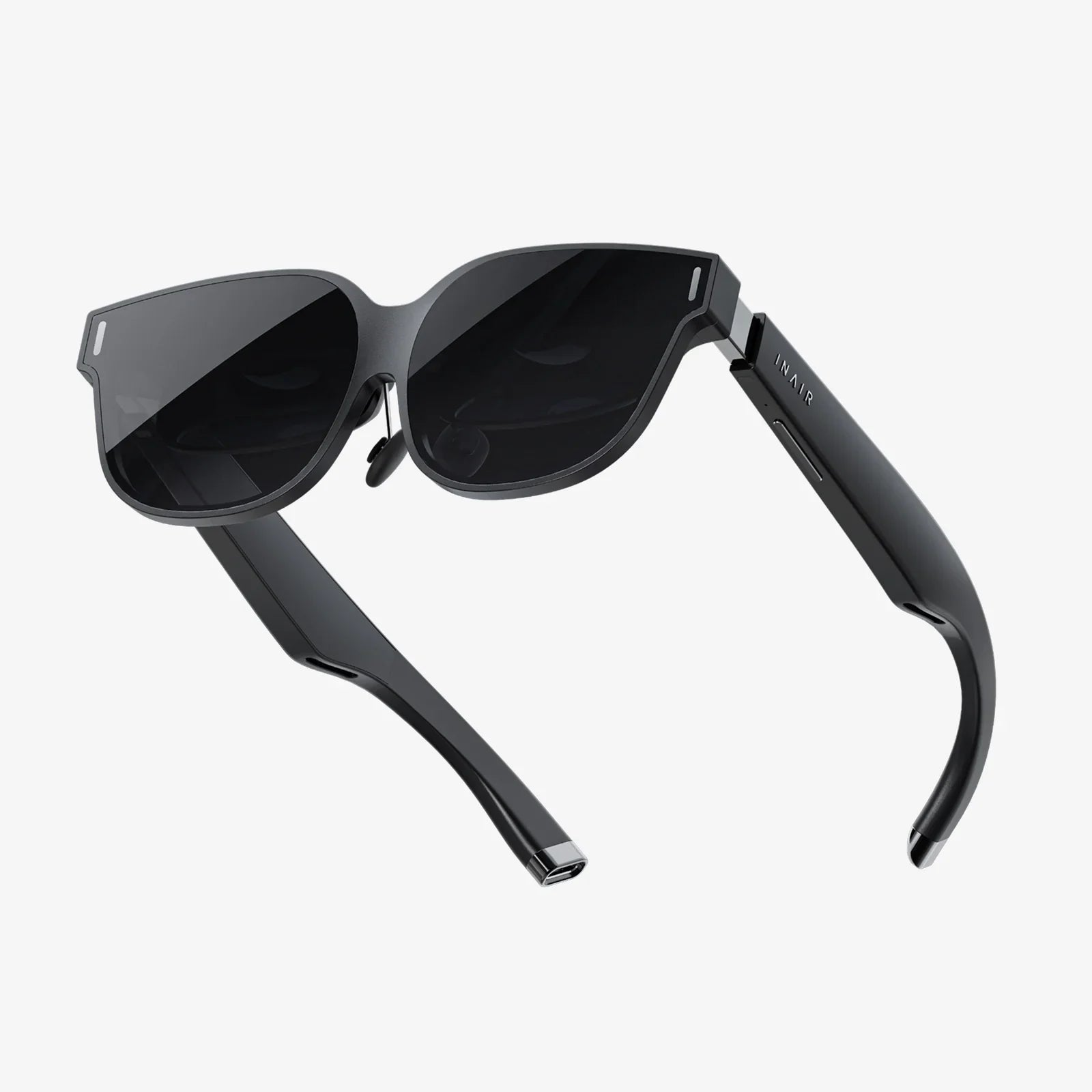
Imagine a world where your most mundane questions are answered not by pulling out a phone, but by a quiet whisper in your ear, where navigating a foreign city feels like having a local guide by your side, and where a language barrier simply ceases to exist. This is not a distant science fiction fantasy; it is the emerging reality being built today by glasses that have AI in them. This revolutionary wearable technology is poised to become the most intimate and transformative interface between humans and the digital world, moving computing from our pockets directly into our line of sight and fundamentally altering how we perceive, interact with, and understand our environment.
The Architecture of Intelligence: More Than Meets the Eye
At first glance, a pair of AI-enabled glasses might look like a standard, if slightly modern, frame. The true magic, however, lies in the sophisticated ecosystem of hardware and software seamlessly integrated within its form. This is a feat of miniaturization and engineering, packing immense computational power into a device designed to be worn comfortably all day.
The core components typically include:
- High-Resolution Cameras: These act as the eyes of the system, continuously capturing the visual world. They are not for recording video in the traditional sense but for visual analysis—reading text, identifying objects, recognizing faces, and mapping environments.
- Microphones and Speakers: An array of microphones picks up voice commands and ambient sound, enabling natural language interaction. Bone conduction speakers or tiny directional speakers then deliver audio feedback directly to the user's ears without obstructing environmental sounds, allowing for a private auditory experience while remaining aware of one's surroundings.
- Sensors: A suite of sensors, including accelerometers, gyroscopes, and magnetometers, tracks head movement, orientation, and location. This inertial measurement is crucial for understanding context and stabilizing the digital overlay on the real world.
- Onboard Processing and Connectivity: A miniaturized processor handles immediate tasks and sensor data, while a constant connection to the cloud via Wi-Fi or cellular networks taps into the vast, ever-learning large language models and AI systems that provide the true intelligence. This hybrid approach balances low-latency response with immense computational power.
- Battery Technology: Powering this always-on system is a significant challenge. Advanced battery systems are distributed throughout the frame—in the stems and hinges—to maximize life while maintaining a wearable form factor.
This hardware symphony is conducted by sophisticated software. Computer vision algorithms interpret the camera feed, natural language processing deciphers speech, and machine learning models make sense of it all to provide contextual, relevant, and timely information.
Beyond Novelty: Practical Applications Reshaping Daily Life
The promise of this technology is not in its specs but in its utility. The applications are vast and touch upon nearly every aspect of modern life, offering tangible benefits that extend far beyond mere convenience.
Revolutionizing Accessibility
Perhaps the most profound and immediate impact is in the field of accessibility. For individuals with visual impairments, AI glasses can act as a powerful visual interpreter. They can read aloud text from a menu, a street sign, or a product label, describe the scene in front of them (“a brown dog is sitting on a green lawn”), identify currency denominations, and even recognize and announce the arrival of a friend. For those who are hard of hearing, real-time speech-to-text transcription can be displayed in their field of view, turning conversations into captions and making group discussions accessible. This technology is not an aid; it is a tool for empowerment and independence.
The Ultimate Productivity and Navigation Tool
For professionals and everyday users alike, the hands-free, eyes-forward nature of AI glasses unlocks new levels of efficiency. Imagine walking through a warehouse and having inventory counts, locations, and instructions overlaid directly on the shelves. A technician could see a wiring diagram superimposed on the machine they are repairing. For the average person, it means getting turn-by-turn navigation arrows painted onto the street itself, checking your calendar for your next meeting with a glance, or translating a sign in real-time while traveling. It is a constant, contextual stream of information that enhances reality rather than distracting from it.
A New Paradigm for Social Connection and Memory
These devices also have the potential to reshape social interactions. With consent and privacy safeguards, they could help with name recall, displaying a contact's name and last interaction when you look at them—a boon for anyone who struggles with remembering faces. During conversations, they could provide talking points based on that person's known interests. More poignantly, they could act as a memory anchor, recording moments not as intrusive video, but as a log of key events, conversations, and sights, creating a searchable, personal database of one's life experiences.
The Invisible Elephant in the Room: Privacy, Security, and Ethical Quandaries
The integration of always-on cameras and microphones into a wearable device worn on the face represents one of the most significant privacy challenges of our time. The very features that make these glasses powerful also make them potentially intrusive.
- Consent and Notification: How do we ensure that people are aware they are being recorded or analyzed? Unlike a phone, which is visibly held up to take a picture, these devices are subtle. Clear indicators, both digital and physical (like a light that illuminates during recording), are non-negotiable ethical requirements.
- Data Ownership and Usage: The visual and auditory data collected is incredibly intimate. Who owns this data? How is it stored, processed, and used? Could it be used for targeted advertising, sold to third parties, or accessed by government entities? Robust, transparent data governance policies are essential before widespread adoption can occur.
- The Surveillance Society: The potential for mass surveillance is terrifying. A network of such devices could create an unprecedented panopticon, where every public space is constantly being recorded and analyzed by countless individuals and, by extension, the companies that serve them. Strong legal frameworks must be established to prevent this dystopian outcome.
- Social Etiquette and Dependency: Will wearing these in social settings be considered rude? Will we become so reliant on AI-generated prompts that we lose our natural ability to converse and remember? These are softer, but equally important, sociological questions that society will need to grapple with.
Addressing these concerns is not a secondary task; it is fundamental to the responsible development and adoption of the technology. The companies building these devices must prioritize privacy by design, embedding ethical principles into the core of their architecture.
The Road Ahead: From Assistive Tool to Cognitive Partner
The current generation of AI glasses is impressive, but it is merely the first step on a much longer journey. The future evolution of this technology points toward even deeper integration and capability.
We are moving toward devices with more advanced augmented reality (AR) displays that can project high-fidelity holograms into the environment, seamlessly blending the digital and physical. Battery technology will improve, and processing power will become more efficient, enabling all-day use without compromise.
Most importantly, the AI itself will evolve from a reactive assistant to a proactive partner. Instead of waiting for a command, it will anticipate needs based on context, schedule, and behavior. It might notice you looking at a complex wine list and offer brief summaries of regions and vintages, or remind you to buy flowers on your way home because it knows it’s your anniversary. It will move from being a tool you use to a cognitive extension of yourself, enhancing your memory, perception, and decision-making in subtle, continuous ways.
This path will inevitably lead to deeper philosophical questions about the nature of reality and self. When everyone perceives a digitally augmented world, will we share a common reality? And if our memories and decisions are constantly being aided by an external intelligence, where does the human end and the machine begin?
The development of glasses that have AI in them is one of the most exciting and consequential technological trends of the decade. It represents a fundamental shift in our relationship with technology, offering incredible potential to enhance human capability, accessibility, and connection. Yet, it simultaneously demands a serious, thoughtful, and proactive conversation about the world we want to build with this power. The technology itself is neutral; its impact is defined by the choices we make today. The future is not just something we enter; it’s something we create, and it’s being built right before our eyes—if we know where to look.
Share:
Good VR Glasses: Your Ultimate Portal to Immersive Digital Realities
Good VR Glasses: Your Ultimate Portal to Immersive Digital Realities