


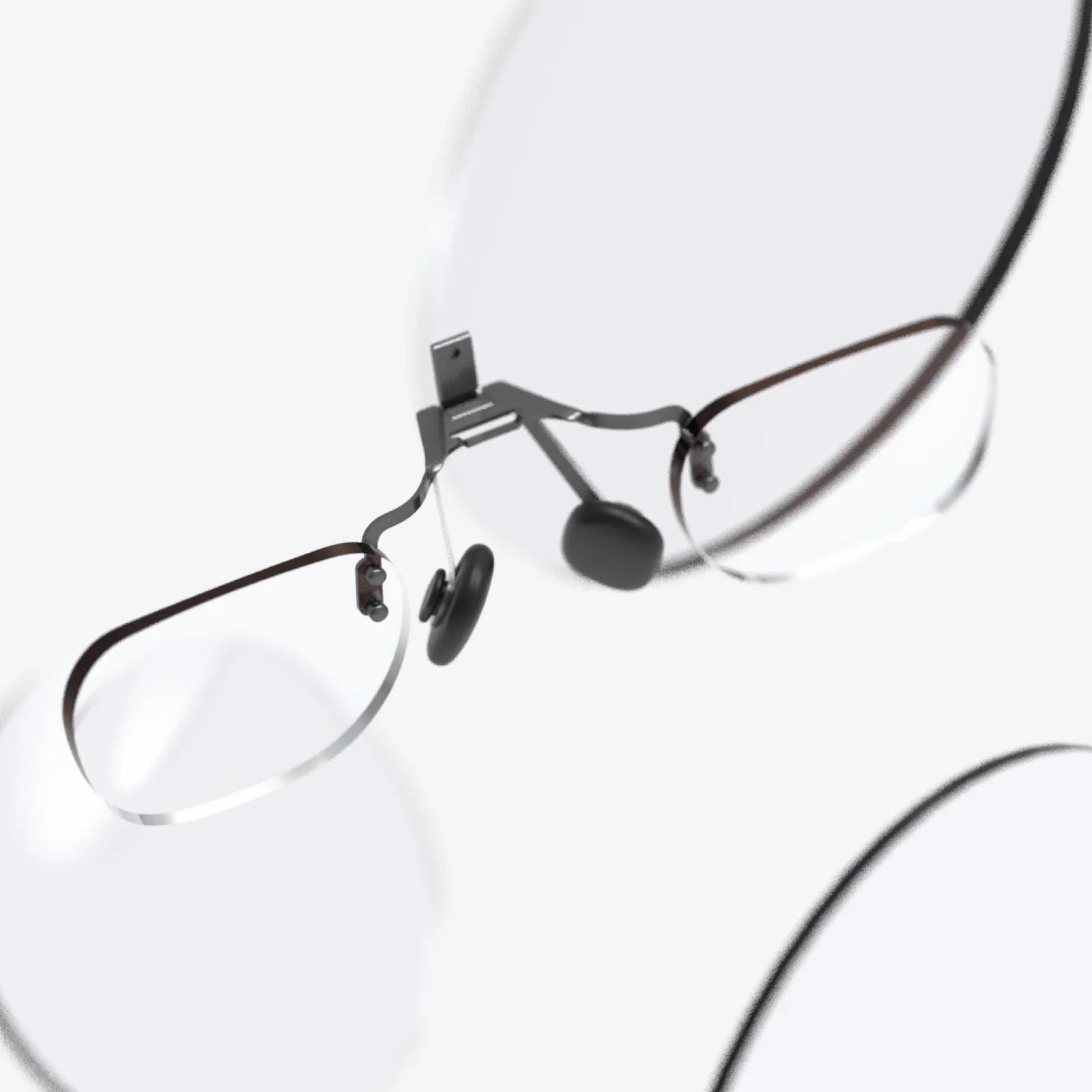
Imagine a world where your most personal device, the one you use to perceive reality itself, is no longer a passive tool but an intelligent partner. A world where information doesn’t reside in a screen you have to look down at, but is seamlessly layered over your field of vision, accessible with a glance or a whisper. This is not a distant science fiction fantasy; it is the imminent future being forged by the development of glasses that have AI. This technological convergence is poised to redefine our relationship with information, with each other, and with the very fabric of our daily lives, moving computing from our pockets and into our periphery in the most intimate way imaginable.
The Architectural Symphony: How AI Glasses Perceive and Process the World
Glasses that have AI are not merely spectacles with a tiny display. They are a sophisticated symphony of hardware and software, a compact marvel of engineering designed to see, hear, understand, and augment. At their core, these devices function as a centralized sensor hub, continuously collecting a rich stream of multimodal data from the environment.
Miniaturized high-resolution cameras act as digital eyes, capturing everything from text and objects to faces and gestures. Advanced microphones, often employing beamforming technology, listen for voice commands and filter out ambient noise. Inertial Measurement Units (IMUs), including accelerometers and gyroscopes, track head movement and orientation with precision. Some prototypes even incorporate biometric sensors to monitor heart rate or blood oxygen levels through the skin near the temples.
This constant, raw data deluge is meaningless without interpretation. This is where the true "AI" comes into play. This computational heavy lifting happens through a combination of on-device processing and cloud connectivity. A dedicated Neural Processing Unit (NPU) embedded within the glasses' frame handles immediate, latency-sensitive tasks in real-time. This on-board AI is responsible for fundamental functions like:
- Computer Vision: Instantly identifying objects, translating text on a sign, or recognizing a product on a shelf.
- Wake-word Detection: Listening for the specific trigger phrase to activate the voice assistant without constantly streaming audio to the cloud.
- Basic Gesture Recognition: Interpreting a nod, a wink, or a finger swipe as a command.
For more complex tasks—like conducting a detailed web search, analyzing a complex scene, or accessing a vast personal database—the glasses leverage a secure connection to powerful cloud-based AI models. This hybrid approach balances the need for instant responsiveness with access to virtually limitless computational power and knowledge.
Beyond Novelty: Transformative Applications Across Industries
The true measure of any technology lies not in its specifications, but in its utility. Glasses that have AI promise to transcend the realm of consumer gadgetry and become powerful professional tools and life-enhancing aids.
Revolutionizing Accessibility and Inclusion
Perhaps the most profound and immediate impact will be felt in the realm of accessibility. For individuals with visual or auditory impairments, AI glasses can act as a powerful sensory prosthesis. They can audibly describe a room, read documents aloud, identify currency denominations, and recognize faces, providing a newfound level of independence. For those who are deaf or hard of hearing, real-time speech-to-text transcription can be projected onto the lenses, turning conversations into readable subtitles for the world, effectively breaking down communication barriers.
The Augmented Professional
In fields where hands-free operation and instant access to information are critical, AI glasses will be transformative. A surgeon could see vital signs and procedural guides overlayed on their view of the operating field without breaking sterility. A field engineer repairing complex machinery could see schematic diagrams and receive remote expert guidance superimposed on the equipment itself. A warehouse worker could have order-picking instructions and inventory data streamed directly to their eyes, dramatically increasing efficiency and accuracy. This "see-what-I-see" capability also revolutionizes remote collaboration, allowing an expert to guide a novice through a task from thousands of miles away.
Redefining Daily Life and Learning
For the general consumer, the applications are both practical and magical. Imagine walking through a foreign city where street signs and menus automatically translate. Imagine meeting someone at a networking event and discreetly seeing their name, LinkedIn profile, and last conversation you had with them pop up. A chef could follow a recipe hands-free, with timers and step-by-step instructions floating beside their ingredients. A student dissecting a frog in biology class could see labels and animations explaining each organ system. The potential to enhance learning, memory, and situational awareness is staggering.
The Inescapable Mirror: Privacy, Ethics, and the Social Contract
With this transformative power comes an immense weight of responsibility. The very features that make AI glasses so powerful—constant environmental awareness and recording capability—make them a potential privacy nightmare. The societal implications are vast and require careful, proactive consideration.
The most pressing concern is the concept of pervasive surveillance. If everyone is wearing a device that can record audio and video at any moment, the idea of a private conversation in a public space evaporates. The ability to secretly identify strangers through facial recognition raises dystopian prospects of a world without anonymity, where every glance could be logged, analyzed, and stored. The ethical line between collecting data for user benefit and surveilling unwitting bystanders is incredibly thin.
This necessitates a new social and legal contract. Clear and unambiguous visual and auditory indicators that recording is taking place are non-negotiable. Strong, privacy-first design principles must be baked into the core of these products. Features like facial recognition must be opt-in and heavily regulated, potentially limited to specific, consensual use cases. Data must be encrypted, and users must have full control over what is stored locally versus what is sent to the cloud. Legislation will need to evolve rapidly to address these new challenges, determining rights in the age of augmented reality.
Beyond privacy, there are deeper psychological and social questions. Will constant access to information atrophy our natural memory and observational skills? Will we become less present in our own lives, more focused on the digital overlay than the physical world? And what new forms of digital addiction might emerge? These are not questions with easy answers, but they are essential to ask as we stride toward this new frontier.
The Road Ahead: From Prototype to Paradigm Shift
The journey to perfecting and mainstreaming glasses that have AI is still underway. Current challenges include improving battery life to last a full day, refining display technology for brightness and comfort in all lighting conditions, and designing a form factor that is socially acceptable and desirable to wear—moving beyond a tech-first aesthetic to something people would choose as a fashion accessory.
The ultimate goal is contextual and anticipatory computing. The next generation of these devices will move beyond simply responding to commands. They will understand context and intent. Your glasses will know you are in a meeting and automatically mute notifications. They will see you struggling to assemble furniture and proactively pull up the relevant instruction manual. They will notice you looking at a restaurant and offer reviews and your calendar to see if you can book a table. The interface will become increasingly ambient and intuitive, potentially evolving toward direct brain-computer interfaces in the distant future, but for the next decade, the eyes are the portal.
The development of glasses that have AI represents one of the most significant shifts in personal technology since the advent of the smartphone. It is a move toward a more natural, immersive, and integrated form of computing that has the power to augment human capability in extraordinary ways. It promises to empower the marginalized, supercharge the professional, and enrich the everyday experiences of millions. Yet, this power is a double-edged sword, demanding a parallel evolution in our ethical frameworks and social norms. We are not just building a new device; we are building a new layer of reality. The future is not something we enter; it's something we create. And it's coming into focus, one intelligent frame at a time.
Share:
Augmented Reality Examples and Uses: Transforming Our World Layer by Digital Layer
Augmented Reality Impact on Society: Reshaping Reality, Redefining Human Experience