


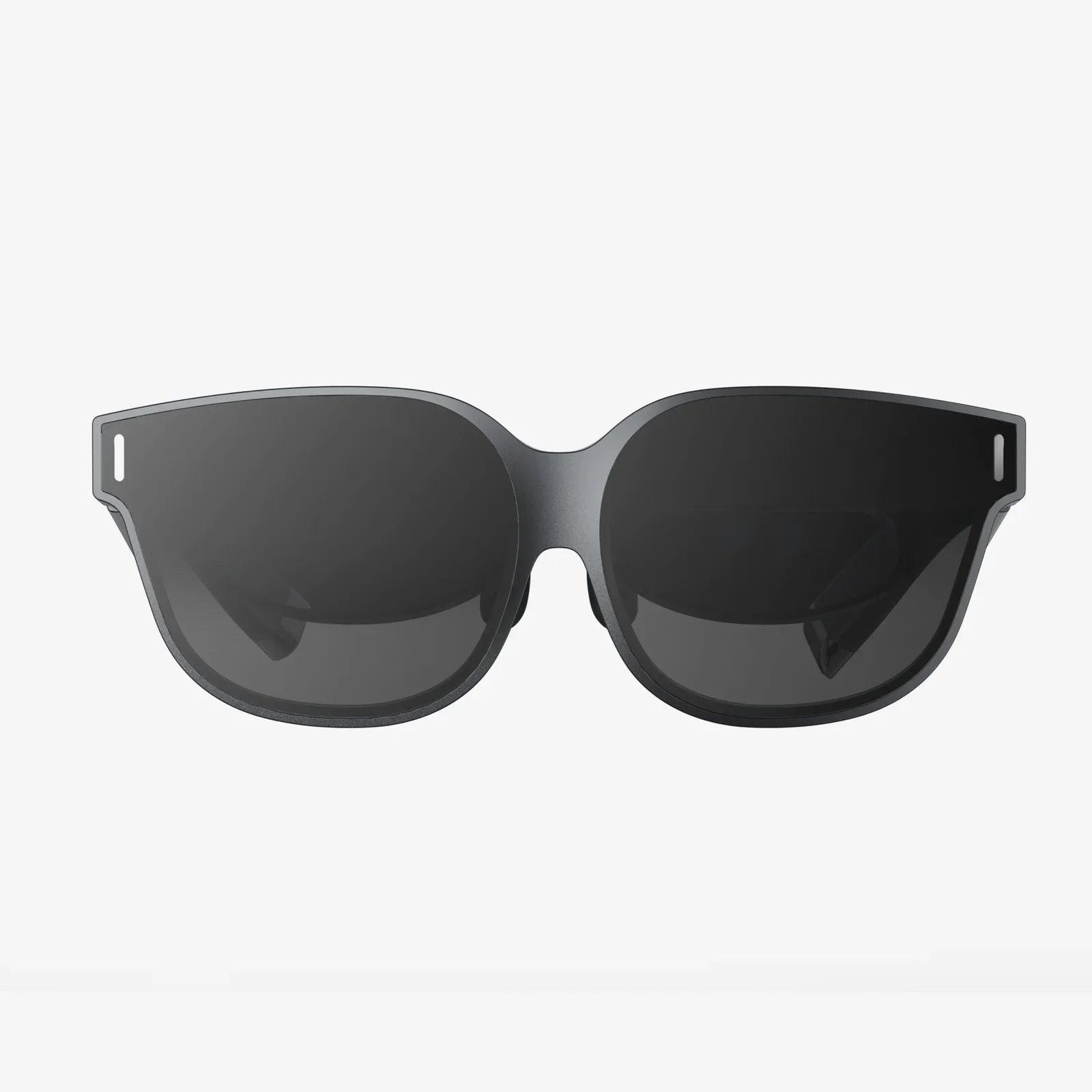
Imagine a world where your entire digital universe—your messages, maps, videos, and memories—floats seamlessly in front of your eyes, accessible with a glance yet invisible to those around you. This is no longer the stuff of science fiction. The emergence of glasses that project a phone screen directly into the wearer's field of vision represents one of the most significant leaps in personal technology since the smartphone itself. It’s a paradigm shift from looking at a device to looking through a device into a boundless digital realm, and it promises to untether us from our screens while keeping us more connected than ever before.
The Core Technology: How Light Paints a Digital Canvas
At the heart of this revolutionary eyewear lies a fascinating interplay of optics, software, and miniaturized hardware. Unlike a traditional screen you stare at, this technology projects images directly onto the retina or onto a specially designed lens.
The process typically begins with a micro-display, an incredibly small screen often utilizing technologies like OLED or MicroLED for high brightness and contrast. This tiny display acts as the source image. Then, a complex system of waveguide optics or miniature projectors channels the light from this micro-display. Think of a waveguide as a piece of transparent glass or plastic etched with precision nano-structures that bounce the light along a specific path, eventually directing it toward the eye.
This creates a phenomenon known as a virtual retinal display (VRD) or, more commonly, an augmented reality (AR) overlay. The result is a digital image that appears to hover in space at a comfortable viewing distance, superimposed over the real world. The user perceives a floating screen that could be the size of a tablet, a monitor, or even a cinema screen, all contained within the frame of their glasses.
Beyond Novelty: A Multitude of Transformative Applications
The true power of this technology is not just in its clever engineering but in its vast potential to reshape everyday activities across numerous domains.
Enhanced Mobility and Navigation
Imagine walking through an unfamiliar city. Instead of constantly glancing down at your phone, distracting you from your surroundings and potentially making you a target for theft, turn-by-turn directions are painted onto the pavement in front of you. Arrows gently guide you around corners, and points of interest are highlighted as you look at them. This heads-up navigation is safer for pedestrians and could be revolutionary for drivers, providing vital information like speed and next-turn directions without ever requiring them to take their eyes off the road.
Revolutionizing Professional Workflows
For professionals, these glasses are a game-changer. A surgeon could have a patient's vital statistics and MRI scans visible during a procedure. An engineer could view complex schematics and 3D models hands-free while assembling a prototype. Field technicians could receive remote expert guidance with annotations overlaid on the faulty equipment they are repairing. This contextual information overlay drastically reduces errors, improves efficiency, and provides an unprecedented level of access to data exactly when and where it is needed.
Immersive Entertainment and Gaming
Entertainment is poised for a massive disruption. Why watch a movie on a small phone or even a large TV when you can have a private, massive screen appear on the wall of your room, on the ceiling of your bed, or even against the backdrop of a scenic view? This is personal cinema redefined. For gaming, the implications are even more profound. Game elements can escape the confines of the phone and interact with your physical environment, turning your living room into a dungeon crawl or your local park into an alien planet teeming with digital life.
Accessibility and Inclusivity
This technology holds immense promise for accessibility. Individuals with low vision could have text magnified and speech converted to subtitles that appear in their glasses. Real-time translation could subtitle conversations for the deaf and hard of hearing, or translate foreign language signs instantly. It can provide cognitive assistance by displaying reminders, task lists, and facial recognition cues for those with memory conditions. This ability to augment reality based on individual needs can create a more inclusive and navigable world for millions.
The User Experience: A Seamless Digital Extension of Self
Interacting with this floating interface is as crucial as seeing it. The most advanced systems utilize a combination of intuitive control methods.
- Voice Commands: A natural and hands-free way to launch apps, send messages, or search for information.
- Touch-sensitive Temple Arms: Swiping or tapping on the arm of the glasses allows for subtle, discreet control without drawing attention.
- Gesture Recognition: Small, built-in cameras can track finger movements, allowing you to interact with virtual elements as if they were truly there.
- Phones as a Trackpad: Many systems still leverage the connected smartphone, using its touchscreen as a precise input device when needed.
The goal is to create an experience that feels like a natural extension of your thoughts and actions, minimizing friction and maximizing utility.
Navigating the Challenges: Privacy, Social Acceptance, and Technical Hurdles
Despite the exciting potential, the path to widespread adoption is not without its significant obstacles.
The Privacy Conundrum
The ability to record video and take pictures surreptitiously raises serious privacy concerns. The thought of someone wearing these in a changing room, a private meeting, or simply a public space is a legitimate societal fear. Manufacturers must address this head-on with clear, physical indicators like a always-visible LED light when recording is active, and robust ethical guidelines must be developed alongside the technology itself. Public trust is the most valuable currency for this new medium, and it must be earned.
The "Glasshole" Stigma
Early attempts at camera glasses were met with social resistance, earning wearers a certain derogatory nickname. The fear of being perceived as creepy, disconnected, or overly tech-obsessed is a real barrier. Overcoming this requires not only more elegant and normal-looking designs but also a cultural shift in how we perceive technology-mediated interaction. The technology must become so useful and seamless that its benefits outweigh any social awkwardness.
Technical Limitations
Current iterations face the classic tech trilemma: balancing battery life, processing power, and form factor. Projecting bright, high-resolution images is computationally intensive and drains batteries quickly. Fitting all the necessary components into a frame that is stylish, lightweight, and comfortable for all-day wear remains a monumental engineering challenge. Furthermore, achieving a wide field of view and perfect visual comfort for a diverse range of users is an ongoing pursuit.
The Future Vision: Where Do We Go From Here?
The glasses of today are merely the primitive ancestors of what is to come. The future trajectory points toward several key developments.
We are moving toward a standalone device that does not require a tethered phone, with all computing power integrated into the frame. Advancements in battery technology, such as solid-state or graphene batteries, will enable all-day use. Most importantly, the development of true spatial computing platforms will allow digital objects to understand and interact with the physics of our world, anchoring them persistently to real-world locations and creating a truly blended reality.
In the long term, this technology could evolve beyond a separate device and become integrated into standard prescription eyewear, becoming as ubiquitous and essential as a smartphone is today. It could fundamentally change how we learn, work, socialize, and perceive reality itself.
We stand at the precipice of a new era, one where the boundary between our digital and physical lives dissolves into a single, enhanced experience. The journey from holding a rectangle of glass to wearing a window to a new world has begun, and it promises to change everything about how we see and interact with the information that defines our modern lives.
Share:
Top 10 AI Glasses: The Ultimate Guide to Smart Eyewear Revolutionizing Your World
Augmented Reality Domains: The Next Frontier in Digital Real Estate