


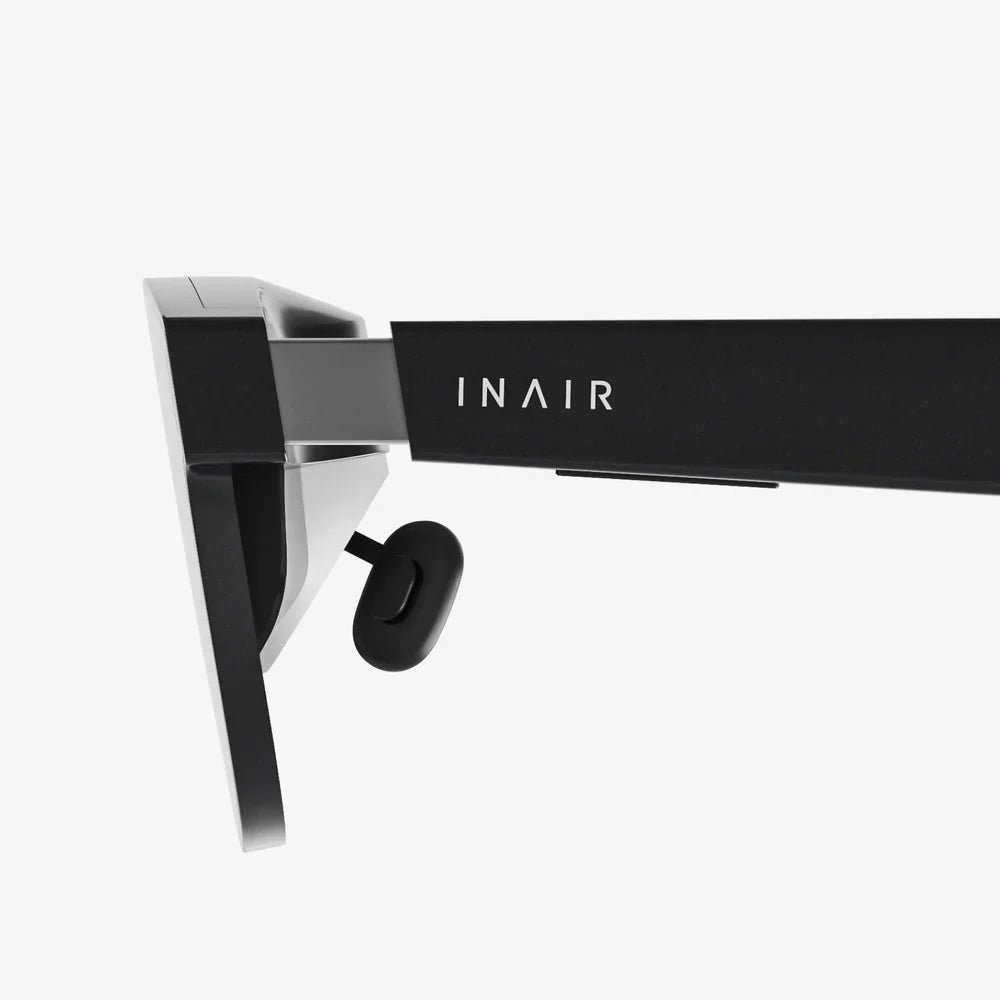
Imagine a world where your entire digital universe—your emails, your movies, your video calls, your virtual workspace—floats seamlessly in front of your eyes, accessible with a glance yet invisible to everyone else. This is no longer the stuff of science fiction. The emergence of glasses that project a screen directly onto the wearer's retina is poised to be the most significant paradigm shift in personal computing since the advent of the smartphone. This technology promises to untether us from physical displays, offering a boundless, private, and immersive experience that could fundamentally change our relationship with technology, work, and the world around us.
The Architectural Leap: How It Actually Works
At its core, the technology behind these remarkable devices is a sophisticated feat of optical engineering. Unlike virtual reality headsets that completely envelop the user in a digital environment, or augmented reality glasses that overlay digital objects onto the real world for mixed reality, glasses that project a screen are primarily focused on creating a high-resolution, floating display that only the wearer can see.
The magic happens through a combination of micro-displays and complex optical systems. Tiny, incredibly bright micro-LED or OLED displays, often no larger than a pencil eraser, generate the initial image. This image is then directed through a series of miniature lenses and waveguides—essentially clear, flat pieces of glass or plastic etched with microscopic patterns. These waveguides act like magical conduits, bending the light from the micro-display and projecting it directly onto the user's retina. The result is a crisp, vibrant screen that appears to hover in space at a comfortable viewing distance, perhaps equivalent to a 100-inch television viewed from several feet away, all while remaining completely transparent when not in use.
Beyond Convenience: A Multitude of Transformative Applications
The initial appeal of having a massive, private screen anywhere you go is undeniable for entertainment and casual use. But the true potential of this technology extends far beyond watching movies on a plane without disturbing your neighbor.
The Future of Work and Productivity
The traditional office setup, with its fixed monitors and clunky cables, could become obsolete. Professionals could carry their entire multi-monitor workstation in their pocket, slipping on a pair of glasses at a coffee shop, library, or airport lounge to instantly access a sprawling digital canvas. Coders could see endless lines of code without turning their head; financial analysts could monitor live data streams and charts while on the move; architects could review 3D blueprints overlaid on their physical desk. This technology enables a truly fluid and mobile productivity environment, decoupling high-performance computing from a fixed location.
Revolutionizing Accessibility
Perhaps one of the most profound impacts will be in the field of accessibility. For individuals with low vision, these glasses can project magnified text and enhanced imagery directly into their field of view, acting as a powerful and discreet visual aid. Real-time closed captioning for conversations or public announcements could be displayed for those who are deaf or hard of hearing, breaking down communication barriers in real-time. The ability to customize and position information within one's personal visual field offers unprecedented tools for empowerment and inclusion.
The Stealth Commander: Discrete Data for Specialized Fields
In numerous specialized professions, access to hands-free, eyes-forward information is not just convenient—it's critical. Surgeons could view patient vitals, MRI scans, or procedural checklists without ever looking away from the operating table. Field engineers repairing complex machinery could have schematic diagrams and instruction manuals pinned to their line of sight. firefighters navigating a smoke-filled building could see building layouts and the locations of their team members. The applications are limited only by the imagination, offering a significant boost to efficiency, safety, and precision.
Navigating the Hurdles: Challenges on the Path to Adoption
For all its promise, the path to mainstream adoption is paved with significant technological and social challenges that must be overcome.
The Quest for the Perfect Form Factor
The ultimate goal is a device that is indistinguishable from a regular pair of stylish eyewear. Current iterations, while impressive, often involve trade-offs. Battery life is a constant battle, as powering bright micro-displays and processors for hours on end is incredibly demanding. Processing power must be sufficient to drive high-resolution graphics without lag or overheating, all contained within the slim arms of the glasses. The industry is racing to miniaturize components and improve battery technology to create a product that consumers will want to wear all day.
The Social Conundrum: The Cyborg Stare
There is an inherent social awkwardness in not knowing whether someone is looking at you or at a screen projected in their eyes. Early adopters of face-worn technology often face the "cyborg stare," a perception of being disconnected from their immediate surroundings. Manufacturers are developing subtle indicators, like a small LED light, to signal when the display is active, helping to bridge this social gap. Widespread acceptance will require a cultural shift in how we perceive and interact with someone who is, in a sense, in two places at once.
Privacy and Security in a World of Invisible Screens
The very feature that makes these glasses so compelling—their invisibility to others—also raises serious questions. How do we prevent their use for surreptitious recording in private spaces? How is the vast amount of personal data they collect—what you look at and for how long—protected? Robust digital ethics, clear laws, and built-in technological safeguards, like physical shutter mechanisms for cameras and clear audio recording indicators, will be non-negotiable prerequisites for public trust.
The Invisible Infrastructure: Connectivity and the Ecosystem
For these glasses to function as a primary computing device, they cannot exist in a vacuum. They will rely on a powerful, low-latency connection to a processing unit, most likely a smartphone or a dedicated wearable computer. The seamless handoff of tasks and data between devices will be crucial. Furthermore, an entire ecosystem of applications and operating systems needs to be built or adapted for this new spatial interface. Gesture control, voice commands, and perhaps even neural input interfaces will need to evolve to provide intuitive control without a physical keyboard or mouse.
A Glimpse into Tomorrow: The Long-Term Vision
Looking further ahead, glasses that project a screen are not the endgame; they are a crucial stepping stone. They represent the maturation of the display technology necessary for more advanced augmented reality. Today, it's a private 2D screen. Tomorrow, that same optical technology could be used to anchor persistent, photorealistic 3D holograms into your living room, allowing for collaborative design sessions with colleagues across the globe or interactive educational experiences that bring history to life. This technology is the foundational layer for a future where the digital and physical worlds are inextricably and usefully linked.
We stand at the precipice of a new era of personal technology, one that will gradually fade the black rectangles of screens from our lives and replace them with a dynamic, contextual, and personal visual layer integrated into our very perception. The potential to enhance human capability, to make information effortlessly accessible, and to create new forms of art and connection is staggering. The revolution won't be televised on a screen you can see—it will be projected directly onto your retina, visible only to you, quietly transforming everything.
Share:
Augmented Reality Insights: Transforming Data Perception and Decision-Making
AR VR Technology: Reshaping Reality and Redefining Human Experience