


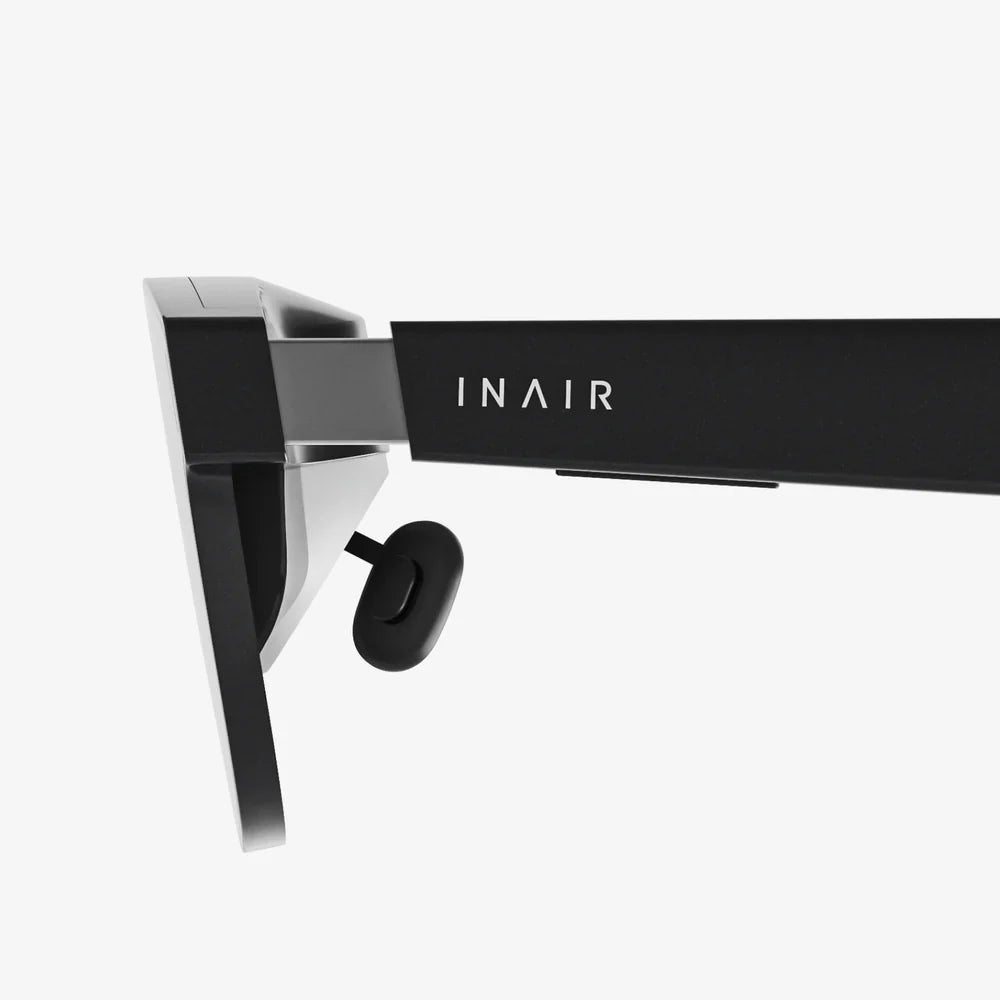
Imagine a world where your digital universe doesn't live on a screen in front of you, but is seamlessly painted onto the reality you already inhabit. A world where a whispered word, a subtle gesture, or even a fleeting glance is enough to summon information, manipulate virtual objects, or connect with others across the globe. This is not a distant science fiction fantasy; it is the imminent future being forged today by the rapid convergence of two transformative technologies: lightweight, immersive smart glasses and sophisticated, intuitive voice and gesture command systems for virtual and augmented reality. We are standing on the precipice of a fundamental shift in how we interact with technology, moving away from keyboards, mice, and even touchscreens, towards a more natural, human-centric paradigm. This is the promise of Glasses VR Command, and it is poised to redefine everything from how we work and play to how we learn and perceive the world around us.
The Evolution of the Interface: From Punch Cards to Presence
To truly appreciate the revolutionary nature of Glasses VR Command interfaces, we must first understand the journey of human-computer interaction. For decades, our primary means of communicating with machines has been through layers of abstraction. We translated our intent into keyboard strokes, mouse movements, and multi-touch gestures on a flat, detached pane of glass. These interfaces, while powerful, create a barrier—a cognitive and physical divide between the user and the digital realm.
Virtual and Augmented Reality began to tear down this wall by offering a sense of presence and immersion. Early VR systems, however, often replaced one set of abstract controllers (mice) with another (hand-held motion controllers). Users had to learn new button combinations and gestures, which, while more intuitive than a keyboard, still represented a translation of intent rather than a direct execution.
The true breakthrough is happening now with the maturation of three critical technologies:
- Advanced Optical Systems: The development of ultra-lightweight, high-resolution displays that can be comfortably worn like a pair of everyday glasses, eliminating the bulky, face-enclosing headsets of the past.
- Spatial Computing: The ability of devices to understand and map the physical environment in real-time, anchoring digital content persistently to specific locations, objects, and surfaces.
- Ambient Intelligence: The sophisticated fusion of always-on sensors, including high-fidelity microphones, eye-tracking cameras, and depth sensors, enabling the device to perceive user intent through natural cues.
This trifecta creates the perfect foundation for a Glasses VR Command ecosystem, where the device doesn't just wait for input; it anticipates need through constant, ambient awareness.
Deconstructing the Command: Voice, Gaze, and Gesture
The term "command" in this context is a vast oversimplification. It's not a single mode of input but a symphony of interconnected systems working in concert to interpret user intent with remarkable subtlety and precision.
The Power of Voice: Your Constant Companion
Voice interaction has evolved far beyond simple command-and-response models. In a Glasses VR environment, voice becomes a persistent, hands-free channel for complex interaction.
- Natural Language Processing (NLP): Modern systems understand context and colloquial speech. Instead of needing to remember specific syntax like "Computer, open file document.txt," a user can simply mutter, "Hey, pull up that proposal I was editing yesterday morning," and the system will comply.
- Spatial Audio and Voice Isolation: Advanced beamforming microphones can isolate the user's voice from background noise, even in a busy café. Furthermore, spatial audio allows digital entities to have a "location" in space—a notification might sound like it's coming from over your left shoulder, making the experience deeply immersive.
- Proactive Assistance: By analyzing what you're looking at and your current task, the AI can offer context-aware suggestions. If you're looking at a complex piece of machinery, it might proactively say, "I have the technical manual for this model. Would you like me to overlay the maintenance steps?"
The Intent of Gaze: Where You Look is What You Choose
Eye-tracking technology is arguably the most transformative input method for Glasses VR Command. Our eyes are naturally drawn to what we are thinking about, making gaze an incredibly fast and efficient pointer.
- Foveated Rendering: This technique uses eye-tracking to render the area of the screen you are directly looking at in high resolution, while subtly reducing the detail in your peripheral vision. This dramatically reduces the processing power required, making lightweight glasses possible.
- Dwell-Based Selection: Simply looking at a virtual button or icon for a predetermined amount of time (e.g., half a second) can act as a selection mechanism. This is often combined with a subtle confirmatory gesture or voice command ("Select that") to avoid accidental activation.
- Attention and Analytics: In collaborative or educational settings, gaze data can be invaluable. A teacher in a virtual classroom could see if students are looking at the lesson material or distracted, allowing for real-time engagement adjustments.
The Language of Gesture: Your Hands as Tools
Gesture control completes the triad, allowing for direct manipulation of the virtual world. The goal is not to replicate a complex sign language but to leverage intuitive, ergonomic movements.
- Micro-Gestures: Recognizing subtle movements made near the body or even on the glasses themselves is crucial for discretion and social acceptance. A pinch of the thumb and forefinger in the air to select an item, a flick of the wrist to scroll, or a tap on the temple of the glasses to bring up a menu—all feel natural and unobtrusive.
- Haptic Feedback:
A critical component of making gestures feel real is haptic feedback. Wearable devices like rings or wristbands can provide subtle vibrations when a user interacts with a virtual object, creating a tactile confirmation that bridges the physical-digital divide. This confirms that a "press" was registered or that an object has been "grabbed," adding a layer of sensory certainty that is missing from purely visual interfaces.
The Seamless Symphony: Multimodal Interaction in Action
The true magic of Glasses VR Command is not in the individual components, but in their seamless integration. A user doesn't think "now I will use a voice command" or "now I will use a gesture." They simply act, and the system interprets the most appropriate input.
Consider a user wearing their glasses, looking at a virtual 3D model of a heart for a biology class. They might use their gaze to rotate the model and focus on the ventricles. Then, they could use a voice command: "Zoom in here and label the aorta." As the label appears, they might make a pinching gesture with their fingers to "grab" the label and move it to a less obstructive position. The entire interaction is fluid, intuitive, and feels less like operating a machine and more like directing a thought.
This multimodal approach also provides robustness. In a noisy environment where voice commands are difficult, the system can rely more heavily on gaze and gesture. If a user's hands are full, voice and gaze take precedence. The technology adapts to the user's context, not the other way around.
Transforming Industries and Redefining Experiences
The applications for this technology extend far beyond consumer entertainment. They are set to revolutionize entire sectors of the economy and society.
- Enterprise and Field Work: A technician repairing a complex piece of equipment can have schematics, step-by-step instructions, and live video feed from a remote expert overlaid directly onto their field of view. They can use voice commands to scroll through instructions or use gestures to virtually highlight a component for the remote expert to see.
- Healthcare: Surgeons could have vital patient statistics and imaging data visible without looking away from the operating field. Medical students could learn anatomy by walking through life-sized, interactive holograms of the human body, dissecting layers with gesture commands.
- Design and Engineering: Architects and engineers can walk through full-scale 3D models of their creations before a single physical material is used. They can voice-command changes to materials ("Make these walls glass") or use gestures to move structural elements in real-time.
- Accessibility: For individuals with certain physical disabilities, Glasses VR Command can offer an unprecedented level of autonomy. Controlling a smart home, communicating, and accessing information can be achieved through voice, gaze, or minor gestures that are uniquely calibrated to the user's abilities.
Navigating the Challenges: Privacy, Social Norms, and the Future
This powerful technology does not arrive without significant challenges and ethical considerations that must be addressed head-on.
Privacy and Data Security: A device that is always on, always watching, and always listening is a privacy advocate's nightmare. The amount of biometric data collected—from eye movements to voice recordings to detailed maps of your home and workplace—is staggering. Robust, transparent data policies, on-device processing where possible, and clear user controls over what is recorded and stored are non-negotiable prerequisites for widespread adoption. Users must have absolute sovereignty over their personal data.
The Social Contract: The social etiquette for wearing always-on AR glasses is yet to be written. Is it rude to wear them during a conversation? How do we know when someone is recording us? Early devices will need clear, external indicators to show when they are active and recording to avoid creating a society of constant, silent surveillance. Finding a design that is socially acceptable and non-intrusive is as important a engineering challenge as any technical one.
The Digital Divide: As with any transformative technology, there is a risk of exacerbating existing inequalities. Ensuring that the benefits of Glasses VR Command are accessible and affordable, not just a luxury for the wealthy or powerful corporations, will be crucial for its positive impact on society.
The path forward requires a collaborative effort between technologists, ethicists, policymakers, and the public to establish guardrails that foster innovation while protecting fundamental human rights.
The dream of technology that fades into the background, empowering us without demanding our constant conscious attention, is finally within reach. Glasses VR Command represents the next great leap, moving us from interacting with computers to truly integrating with them. It’s a future where the line between issuing a command and simply thinking it becomes beautifully, magically blurred. The devices on the horizon promise to be less like tools we hold and more like extensions of our own minds, unlocking human potential in ways we are only beginning to imagine. The age of intuitive, ambient, and powerful computing is dawning, and it will be controlled by nothing more than a look, a word, or a wave of your hand.
Share:
Augmented Reality Projects: Transforming Industries and Redefining Human Experience
AI Glasses for Women: The Future of Fashion, Function, and Empowerment