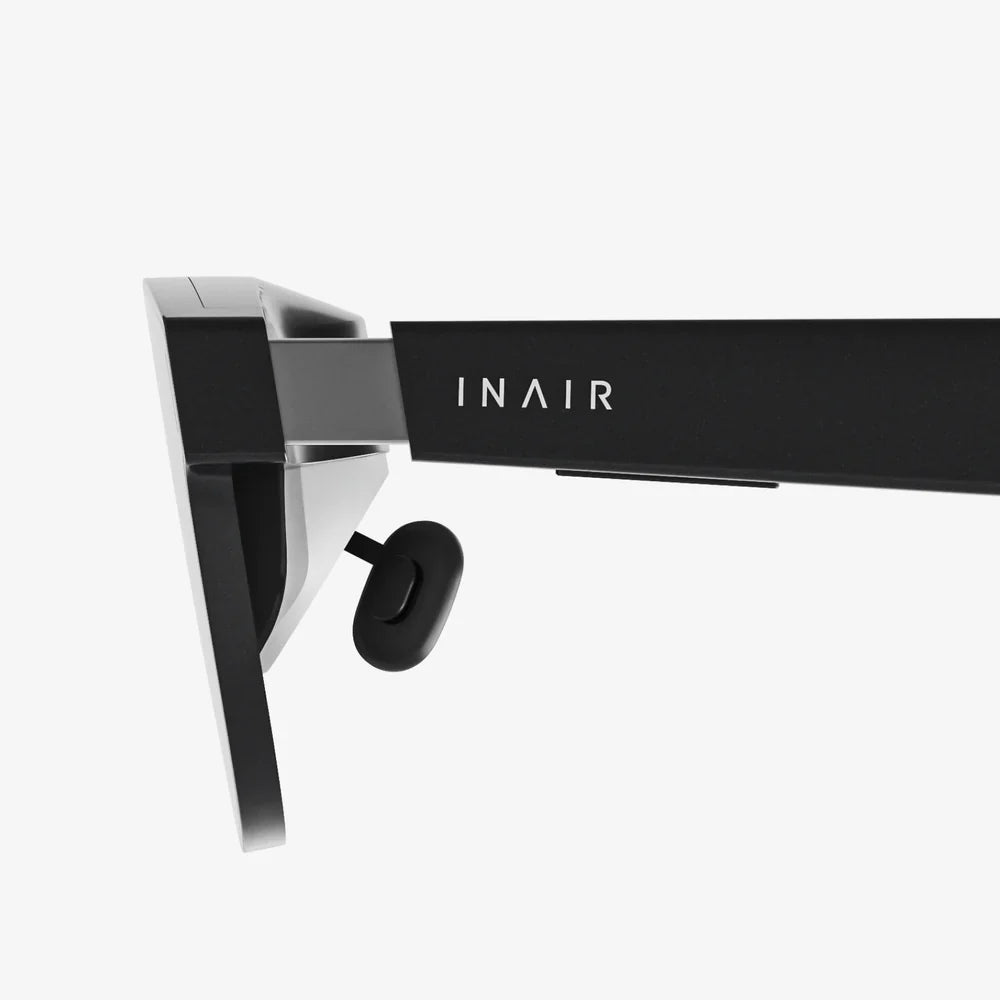
Imagine walking down a bustling city street, your favorite music playing softly in your ears, when a notification for an upcoming meeting gently pulses at the edge of your vision. Without reaching for your phone, a subtle glance confirms the details. As you approach a new restaurant, its menu and reviews float beside its entrance. You glance at a foreign language sign, and the translation instantly overlays the text. This isn’t a scene from a futuristic film; this is the imminent reality promised by glasses with a heads-up display (HUD), a technology poised to fundamentally reshape our relationship with information and the world around us. This seamless integration of the digital and physical, once the domain of fantasy, is now on the cusp of becoming an everyday accessory, promising to augment our reality in ways we are only beginning to comprehend.
From Cockpits to Corneas: A Brief History of Seeing Data
The concept of a heads-up display is not new. Its origins are firmly rooted in the mid-20th century, specifically in the realm of military aviation. Early fighter pilots faced a critical problem: to access vital flight information like airspeed, altitude, and targeting data, they had to look down at their instrument panels, taking their eyes off the sky and their adversaries. This split-second glance could mean the difference between life and death. The solution was to project this crucial information onto a transparent screen, or combiner, in the pilot’s line of sight, allowing them to keep their heads up and focused on the mission. This technology was revolutionary, providing a significant tactical advantage and enhancing safety.
Over the decades, HUD technology trickled down from military jets to commercial aviation and high-end automobiles, where it now projects speed and navigation cues onto the windshield. However, these systems were large, expensive, and confined to specific vehicles. The next logical, yet vastly more complex, step was to miniaturize this technology to the point where it could be comfortably worn on the face. The dream was to create a personal heads-up display—a system that could project a digital overlay onto the real world for anyone, anywhere. Early attempts were clunky, often resembling something from a cyberpunk novel, with limited functionality and poor user experience. But recent advancements in micro-optics, sensor technology, battery efficiency, and processing power have finally converged to make sleek, functional, and socially acceptable glasses with a heads-up display a tangible consumer product.
How Do They Work? The Magic Behind the Lenses
At its core, the technology within these smart glasses is a marvel of modern engineering, involving a sophisticated dance between hardware and software. While designs vary, most systems rely on a few key components working in concert to create the illusion of digital objects existing in your physical space.
The Optical Engine: Painting Light onto Reality
This is the heart of the device. Unlike a traditional screen you stare at, the goal here is to project images onto a transparent surface so they appear to be out in the world. Two primary methods dominate:
-
Waveguide Displays: This is the most common approach for sleek, consumer-grade glasses. It involves using a tiny projector, often based on LED or laser technology, to shoot light into a transparent piece of glass or plastic (the waveguide). This light is then "bent" through a process of internal reflection and diffraction (often using nanostructures called gratings) until it is directed outwards towards the user’s eye. Think of it like a fiber optic cable for your vision, piping the image from its source on the temple of the glasses to the lens in front of your eye. This method allows for a very thin and lightweight lens design.
-
Curved Mirror Combiner: An older, but sometimes used, method involves a small projector mounted on the frame’s temple that beams light onto a specially curved, semi-transparent mirror placed in the upper part of the lens. This mirror reflects the image into the eye while still allowing the user to see through it. This can sometimes result in a bulkier form factor.
Sensors: The Glasses' Senses
To understand and interact with the world, the glasses are equipped with a suite of sensors that would make a smartphone jealous. These typically include:
-
Cameras: To see what you see, enabling features like object recognition, text translation, and augmented reality overlays.
-
Accelerometer and Gyroscope: To track the precise movement and orientation of your head, ensuring the digital content stays locked in place in the real world.
-
Ambient Light Sensor: To automatically adjust the brightness of the display for optimal visibility in a dark room or bright sunlight.
-
Microphones: For voice commands and audio input, often with beamforming technology to isolate your voice from background noise.
-
Eye-Tracking Cameras: In more advanced models, these sensors monitor where your eyes are focused, enabling intuitive control (e.g., selecting an item by looking at it) and creating a more realistic depth of field for digital objects.
Processing and Connectivity
All this data from the sensors is processed by a miniaturized computer, often housed in the frame’s temples. This processor runs the operating system, handles the complex spatial calculations for AR, and manages wireless connectivity like Wi-Fi and Bluetooth. This allows the glasses to offload heavier processing to a paired smartphone or access cloud services, ensuring a smooth and responsive experience without requiring a bulky, power-hungry chip on your face.
A World Augmented: Transformative Applications Across Industries
The potential applications for this technology extend far beyond receiving text messages. They promise to revolutionize workflows, enhance learning, and create entirely new forms of entertainment.
Professional and Industrial Use Cases
This is where the technology is already proving its immense value. By providing contextual information hands-free, it drastically improves efficiency and safety.
-
Field Service and Repair: A technician repairing a complex piece of machinery can see schematics, instruction manuals, or a live video feed from a remote expert overlaid directly on the equipment they are working on. They can keep their tools in hand and their focus on the task.
-
Healthcare: A surgeon could have vital signs, ultrasound data, or 3D anatomical models projected into their field of view during a procedure without turning away from the patient. Medical students could practice on virtual cadavers, and nurses could instantly access patient records and medication information.
-
Logistics and Warehousing: Warehouse workers fulfilling orders can see navigation cues guiding them to the correct aisle and bin, along with item details and quantities, dramatically speeding up the picking and packing process.
-
Design and Architecture: An architect could walk through a physical construction site and see their digital building model overlaid onto the unfinished structure, allowing them to visualize the final product and identify potential issues in real-time.
Everyday Life and Consumer Applications
For the average consumer, the promise is one of seamless information and enhanced experiences.
-
Navigation: Instead of holding a phone and looking down, arrows and directions can be painted onto the street in front of you, guiding you to your destination while you remain fully aware of your surroundings.
-
Travel and Tourism: Point your gaze at a landmark, and historical facts, architectural details, or user reviews could appear. Menus can be instantly translated, and conversations can be facilitated with real-time subtitles.
-
Fitness and Health: Runners and cyclists could see their heart rate, pace, and route mapped in front of them. During a workout, a personal trainer could appear in the corner of your vision to demonstrate the next exercise.
-
Social Connection and Content: Imagine watching a sports game where live stats and player information appear over the field, or a cooking tutorial where the recipe instructions and timers float next to your mixing bowls. Communication could evolve into sharing virtual objects and experiences in a shared physical space.
Navigating the Obstacle Course: Challenges and Considerations
Despite the exciting potential, the path to mainstream adoption of glasses with a heads-up display is fraught with significant technical, social, and ethical hurdles that must be addressed.
The Technical Hurdles
-
Battery Life: Powering a projector, multiple sensors, and a processor is incredibly demanding. Achieving all-day battery life in a lightweight, comfortable form factor remains a monumental challenge. Innovations in low-power displays and battery chemistry are critical.
-
Display Quality and Field of View (FOV): Early displays often suffered from a "screen door effect," low brightness, and a very narrow FOV—like looking through a tiny postage stamp floating in your vision. The holy grail is a bright, high-resolution, wide FOV display that is indistinguishable from the real world, all while being housed in a normal-looking form factor.
-
Social Acceptance and Design: For decades, eyeglasses have been a fashion statement. The first generation of smart glasses were often criticized for being too geeky, bulky, or obtrusive. For true mass adoption, they must become indistinguishable from regular high-end eyewear, offering a variety of styles to suit personal tastes. The goal is for the technology to be invisible, allowing the user to be the focus, not the device on their face.
The Ethical and Privacy Quandaries
This is perhaps the most critical area for public discourse. A device that can record audio and video, track your gaze, and understand your environment raises profound questions.
-
The Privacy Paradox: Always-on cameras and microphones create the potential for constant surveillance, both by the user and by the companies behind the technology. The concept of "consent" becomes murky in a public space. How do we prevent these devices from becoming tools for unwanted recording and data collection?
-
Data Security: The amount of intimate data collected by these glasses—what you look at, where you go, what you say, who you talk to—is staggering. Protecting this data from hackers and ensuring it is not misused by the companies that collect it is paramount.
-
Digital Distraction and Reality Blurring: While designed to be less distracting than a phone, there is a risk of information overload or becoming disconnected from genuine human interaction. Furthermore, as the digital overlay becomes more convincing, the line between what is real and what is virtual may blur, raising psychological and philosophical questions about our perception of reality.
The Invisible Revolution: What the Future Holds
The evolution of this technology will not stop at the current iterations. The future points toward even deeper integration. We are moving toward contact lenses with embedded displays, and further still, to direct neural interfaces that can project information directly into our visual cortex, bypassing the need for any external hardware altogether. The goal is a complete and seamless merger of human and machine intelligence, augmenting our natural capabilities without any conscious effort. The device itself will fade into the background, becoming an invisible conduit to a richer understanding of our world.
The journey from the clunky prototypes of yesteryear to the sleek, powerful devices emerging today represents more than just a technological leap; it signifies a fundamental shift in human-computer interaction. We are moving away from a world where we dive into isolated digital screens and toward a future where digital information enhances our physical reality. Glasses with a heads-up display are the key to this augmented age, offering a glimpse of a world where knowledge is contextual, assistance is immediate, and our potential is limited only by our imagination. The future isn't something we will watch on a screen; it's something we will see, quite literally, through a new lens.