


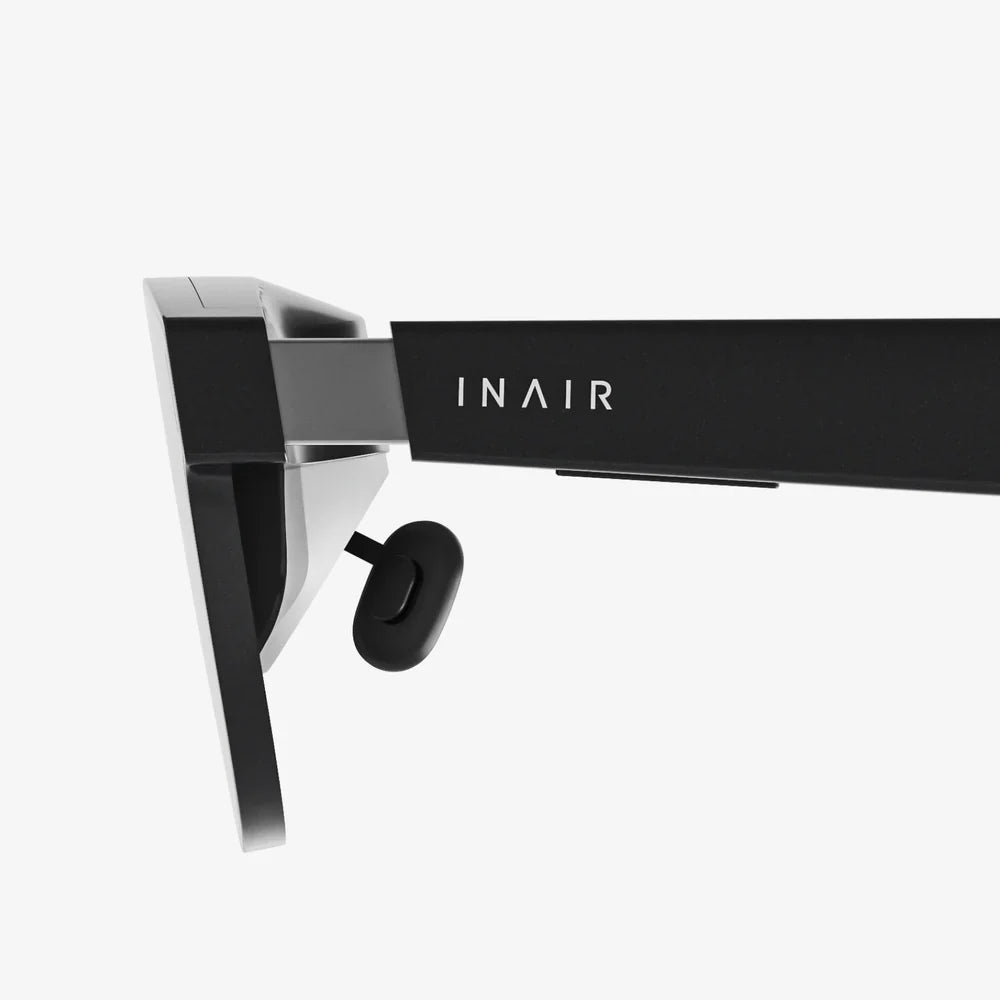
Imagine a world where your entire digital universe—your meetings, messages, maps, and memories—is projected seamlessly onto the canvas of reality, accessible with a glance and controlled with a thought. This is no longer the stuff of science fiction but the burgeoning reality promised by glasses with built-in screens, a technology quietly advancing to fundamentally alter our perception of, and interaction with, information itself.
From Concept to Concrete: The Architectural Leap
The core challenge in creating functional glasses with a built-in screen has always been one of physics and miniaturization. How do you project a high-resolution, bright, and usable image directly into the user’s eye without constructing a massive, head-mounted display unit? The answer lies in a sophisticated blend of optics, micro-electronics, and materials science.
At the heart of most modern systems are micro-displays. These are incredibly small, high-density screens, often utilizing technologies like Micro-OLED or Liquid Crystal on Silicon (LCoS). These displays are the digital source, generating the image that the user will ultimately see. But the true magic lies in the optical combiners—the components that take this tiny image and present it to the eye.
Two primary methods dominate:
Waveguide Optics
This is perhaps the most elegant and discreet solution. Waveguides are transparent substrates, often made of glass or plastic, etched with microscopic gratings. Light from the micro-display is injected into the edge of the waveguide. It then travels through the material, bouncing off the internal gratings until it is directed outwards and into the pupil of the eye. The result is a digital image that appears to float in space, overlaid on the real world. The primary advantage is that the hardware can be elegantly integrated into the arms and frame of the glasses, maintaining a form factor that is socially acceptable.
Free-Space Combiners
This method often involves a small, curved mirror or a series of lenses positioned between the display and the eye. Light from the micro-display is reflected off this combiner and into the eye. While this can achieve excellent image quality and a large field of view, it can sometimes result in a bulkier physical profile, as the optical path requires more space in front of the user’s face. Advances are continuously making these systems smaller and more integrated.
A Spectrum of Experiences: From Assistance to Immersion
The applications for this technology are as diverse as human endeavor itself, broadly falling into two overlapping categories: augmented reality (AR) and personal viewing.
Augmented Reality: The Contextual Layer
AR glasses with built-in screens aim to be a constant, intelligent companion. They are designed to provide contextual information without requiring the user to look down at a separate device.
- Navigation: Imagine walking through an unfamiliar city where turn-by-turn directions are painted onto the sidewalk ahead, and the names of restaurants float above their doors, accompanied by reviews from your friends.
- Professional Workflows: A surgeon could see vital signs and 3D anatomical models overlaid on their patient. A field engineer could view schematics and instructions while keeping their hands free to work on complex machinery. A warehouse worker could see item locations and picking lists, drastically improving efficiency.
- Social and Communication: Real-time translation of spoken conversation could appear as subtitles beneath the person speaking. Notifications from your phone could appear subtly in your periphery, allowing you to triage importance without ever reaching for your device.
Personal Viewing: The Private Cinema
Not all glasses with screens are about augmenting the outside world. Some are designed for pure, private digital consumption.
- Entertainment on the Go: Commuters and travelers can watch films, play games, or browse content on a virtual screen that feels meters wide, all while sitting on a train or plane, without disturbing those around them.
- Mobile Computing: They can act as a portable monitor, allowing users to extend their laptop or smartphone workspace into a large, private display anywhere they go.
The Human Factor: Navigating the Social and Physiological Maze
For all the technological brilliance, the ultimate success of glasses with built-in screens hinges on overcoming profound human-centered challenges.
Social Acceptance and the "Glasshole" Stigma
Early attempts at always-on, camera-enabled eyewear faced intense social backlash. Concerns about privacy, recording without consent, and general social awkwardness created a significant barrier. The next generation must be designed with social cues in mind: clear indicators when recording, a design language that is fashionable and not overly tech-centric, and functionality that feels helpful, not intrusive. The goal is to become a normalized piece of apparel, like wireless earbuds, rather than a conspicuous piece of tech.
Ergonomics and Comfort
A device worn on the face all day must be incredibly light, balanced, and comfortable. It must accommodate a wide variety of face shapes and sizes, and coexist with prescription lenses for the vast majority of users who need them. Battery life is a critical component of ergonomics; a heavy battery pack or a device that dies after two hours is useless. The ideal is all-day wear, necessitating energy-efficient components and innovative power management.
Physiological Considerations
Pushing light into the human eye requires careful consideration. Issues like vergence-accommodation conflict (where the eyes struggle to focus on a screen projected at a fixed depth) can cause eye strain and headaches. Display brightness must be adaptable to function in both a dark room and bright sunlight without causing discomfort or blinding the user. Furthermore, long-term studies on the effects of constantly having digital light projected into the retina are still ongoing.
The Invisible Infrastructure: Connectivity and Control
These glasses do not exist in a vacuum. Their power is unlocked by a web of connectivity and intuitive control schemes.
Most will act as a companion to a more powerful computing device, like a smartphone or a dedicated processing unit, handling the heavy computational load via high-speed wireless protocols. This symbiosis keeps the glasses themselves light and efficient.
Interaction is moving beyond the touchpad. Voice assistants provide hands-free control. Subtle touch sensors on the arms or frames allow for swipes and taps. The most futuristic and compelling method is neural input—using tiny sensors to detect electrical signals from the brain or minute movements in the eye muscles to execute commands. This would allow for truly intention-based computing, where a mere thought could scroll a page or select an app.
Gazing into the Crystal Ball: The Future is Transparent
The trajectory of this technology points towards a future where the distinction between online and offline becomes increasingly blurred. We are moving towards what pioneers call "spatial computing," where the digital world is mapped onto our physical space, and information is treated as a tangible object within it.
Future iterations will feature higher resolution, wider fields of view, and more realistic holographic imagery. They will be powered by artificial intelligence that anticipates our needs, offering information before we even know we need to ask. They could become our primary interface for the metaverse—a persistent digital layer over reality—changing how we socialize, learn, and work in profound ways.
The ethical considerations are immense. Questions of data ownership, privacy, digital addiction, and the potential for new forms of advertising and manipulation will need to be addressed by developers, regulators, and society as a whole. The goal must be to build a future that is not only technologically advanced but also human-centric and equitable.
The age of staring down at a slab of glass in our hands is drawing to a close, soon to be replaced by looking up and out at a world infinitely enriched by data, design, and possibility—all through a pair of seemingly ordinary glasses.
Share:
What Software Is Used for Augmented Reality - The Ultimate Guide to AR Development Platforms
How to Use VR with Glasses: The Ultimate Guide to a Clear Immersive Experience