


Imagine holding the entire planet in the palm of your hand, not as a static, inanimate model, but as a living, breathing, data-rich entity that responds to your touch, reveals its hidden secrets, and tells the stories of its past, present, and potential futures. This is no longer the realm of science fiction; it is the burgeoning reality promised by the convergence of globe and augmented reality (AR), a technological synergy poised to fundamentally alter our relationship with the world around us.
Beyond the Map: Defining the Digital Planet
At its core, globe augmented reality is the sophisticated fusion of a three-dimensional geospatial model of Earth with a real-time, interactive digital overlay. It moves far beyond the simple pins on a 2D map that first introduced millions to digital geography. This technology leverages a globe as its primary canvas, acknowledging the true spherical nature of our world, and uses AR to project a stratum of information onto it. This stratum can be anything: real-time weather systems swirling across continents, the intricate web of global shipping traffic, historical borders shifting over centuries, or even the predicted rise in sea levels lapping at the coasts of major cities.
The magic lies in its immersive nature. Instead of looking at a screen, the user is positioned within the data. You can walk around a virtual globe projected in your living room, zoom in to see a photorealistic 3D model of the Alps emerging from the surface, or point your device at the sky to see constellations mapped onto the daylit heavens. This creates an intuitive and powerful form of visual literacy, making complex global interconnections immediately comprehensible.
The Architectural Pillars: How a Digital Earth is Built
Creating a seamless and convincing globe AR experience rests on several critical technological pillars. The first is precise geospatial mapping. This involves the use of satellite imagery, aerial photography, and LIDAR scanning to create a highly accurate digital twin of Earth. This model must be incredibly detailed and dynamically updated to reflect changes in the environment and human infrastructure.
The second pillar is robust tracking and registration. For the AR illusion to hold, the digital content must be perfectly “locked” to its real-world geographical coordinates, regardless of how the user moves their device or their head. This is achieved through a combination of technologies:
- GPS and GNSS: Provides coarse location data.
- Inertial Measurement Units (IMUs): Accelerometers and gyroscopes in devices track orientation and movement.
- Computer Vision: Cameras recognize features in the environment to precisely anchor digital objects, a process known as simultaneous localization and mapping (SLAM).
The final pillar is the data layer itself. This is the engine of meaning. It can be static data, like the names of countries and topographical features, or dynamic, real-time data feeds showing live flight paths, seismic activity, or social media trends pulsing across the globe. The power of globe AR is its ability to contextualize this data spatially, allowing us to see not just the “what,” but the “where” and “why.”
Transforming the Classroom: Education in a New Dimension
Perhaps the most immediate and profound impact of globe AR is in the field of education. It has the potential to transform geography, history, and science from abstract subjects into tangible, experiential learning adventures.
Imagine a history lesson where students don’t just read about the Roman Empire; they can watch it expand across a virtual globe, see the construction of Hadrian's Wall, and trace the routes of trade caravans. A biology class can track the real-time migration patterns of monarch butterflies or whales, observing the environmental factors that influence their journeys. Geology students can peel back the layers of the Earth to see tectonic plate boundaries, or trigger a virtual earthquake and witness its wave propagation across the globe.
This shifts learning from passive reception to active exploration. It fosters spatial thinking and systems thinking, helping students understand that an event in one part of the world—a volcanic eruption, an economic decision, a cultural movement—can have ripple effects across the entire planet. It makes the daunting scale of global challenges like climate change tangible and, therefore, more manageable to comprehend and address.
Redefining Enterprise: The Industrial and Commercial Metaverse
Beyond the classroom, globe AR is set to revolutionize numerous industries by providing an unparalleled operational overview. In logistics and supply chain management, executives could stand before a massive AR globe watching every ship, plane, and truck in their fleet move in real time, with color-coded alerts for delays, weather disruptions, or inventory levels. This allows for predictive modeling and vastly more efficient resource allocation.
Urban planners and architects can use it to visualize new developments within the existing cityscape, studying shadow impacts, wind patterns, and traffic flow on a city-wide scale. Environmental scientists can overlay decades of climate data onto the globe to visualize trends in global warming, deforestation, and glacial retreat, creating powerful tools for research and public communication.
Even the tourism industry can be reinvented. Instead of browsing flat, static photos of a hotel, a potential traveler could take a virtual “fly-over” tour of the resort and its surrounding geography, getting a true sense of place and scale before they ever book a ticket.
The Social Sphere: Connecting Humanity on a Shared Canvas
Globe AR also holds immense promise as a new medium for social connection and cultural exchange. It can serve as a shared canvas for humanity, a virtual Agora where we can collectively visualize and discuss global issues. Social media could evolve from text and image feeds on a flat timeline to events and trends visualized geographically, showing how ideas and movements spread across borders.
It could enable new forms of collaborative storytelling, where historical events are recreated on the very terrain they occurred, or where users can leave digital “notes” attached to locations, sharing personal stories, historical facts, or artistic creations with anyone who visits that spot virtually. This creates a living, collective memory of a place, accessible to all.
Navigating the Ethical Landscape: Privacy and the Paradox of Discovery
With such powerful technology comes significant responsibility and ethical challenges. The most pressing concern is privacy. A globe AR system that can identify and tag real-world locations with user-generated content could easily be misused for surveillance or harassment. The line between annotating a public park and infringing on the privacy of someone in their home is thin and must be guarded by robust ethical frameworks and regulations.
There is also a risk of creating a “paradox of discovery.” By overlaying the world with a digital guidebook, do we risk eliminating the joy of serendipitous exploration and unmediated experience? If every mountain peak has a floating label and every historic site has a pre-digested story, are we truly seeing the world for ourselves, or are we seeing a version of it that has been curated and defined for us? The technology must be designed to enhance reality, not replace it, offering layers that can be turned on or off to preserve the raw wonder of discovery.
The Future is Spherical: Where Do We Go From Here?
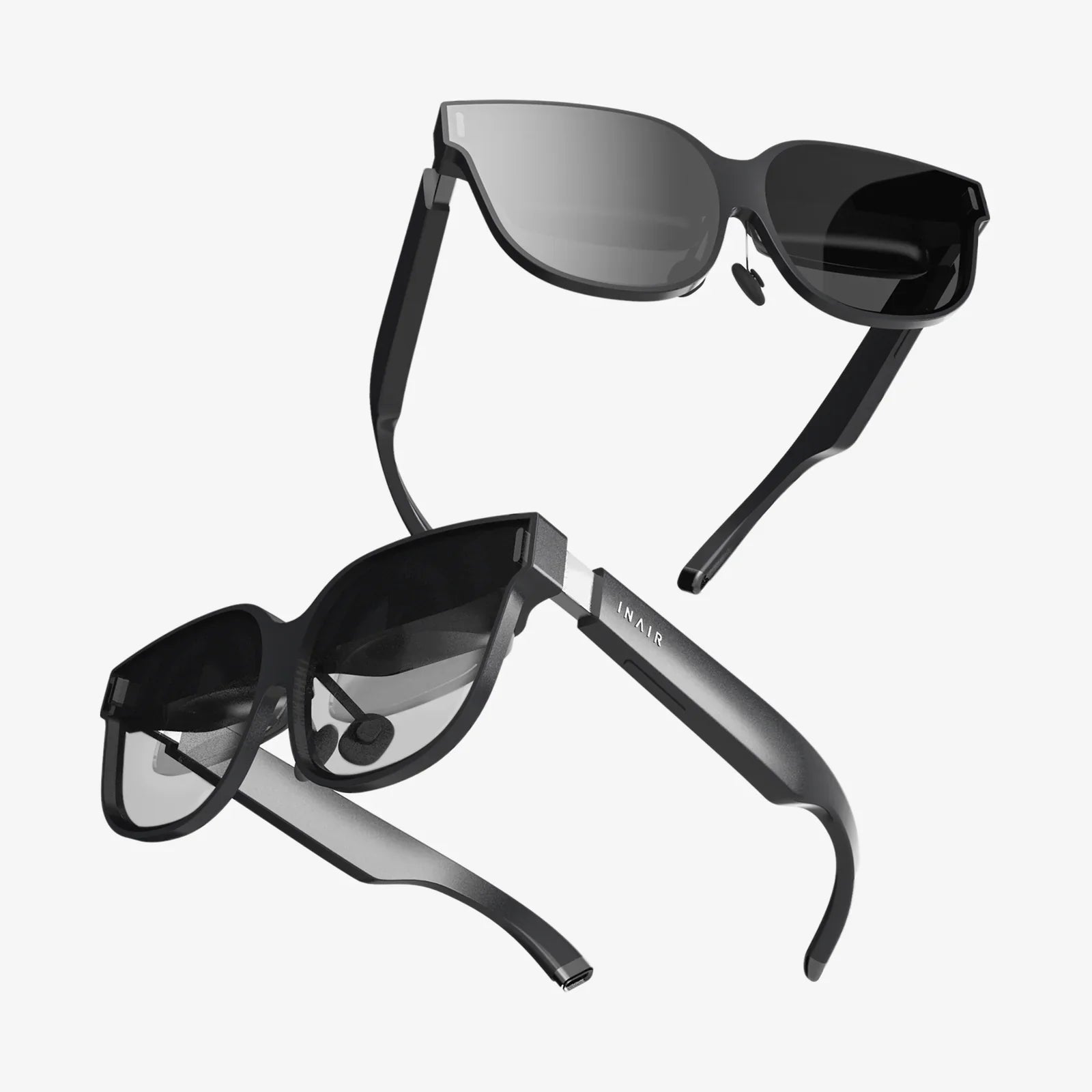
The future development of globe AR is inextricably linked to advancements in wearable technology. The current reliance on handheld smartphones is merely a transitional phase. The ultimate goal is lightweight, socially acceptable AR glasses that can seamlessly blend the digital globe with our permanent field of vision. This will make the technology always available, context-aware, and truly ubiquitous.
We are moving towards a future where checking the weather might involve glancing out the window to see virtual clouds gathering, each tagged with precipitation percentages. Where planning a vacation could involve walking through a life-sized, virtual rendition of a Tokyo street or a Caribbean beach. Where understanding a breaking news event in a distant country will be as intuitive as looking at that part of the world and seeing the story unfold geographically.
The convergence of globe and augmented reality represents more than just a new app or a neat gadget; it is a new paradigm for interfacing with information about our home. It is a tool for empathy, allowing us to viscerally understand our place within a vast, interconnected system. It promises to dissolve the barriers of distance and abstraction, transforming the way we learn, work, and connect. The world is about to become a much smaller, and infinitely more fascinating, place.
We are on the cusp of a revolution where the line between the map and the territory will not just be blurred, but will cease to exist altogether, inviting us to step inside and explore our planet in ways we have only ever dreamed of.
Share:
5G AR VR Use Cases: Redefining Reality Across Industries
Top Augmented Reality Apps That Are Reshaping Our Digital and Physical Worlds