


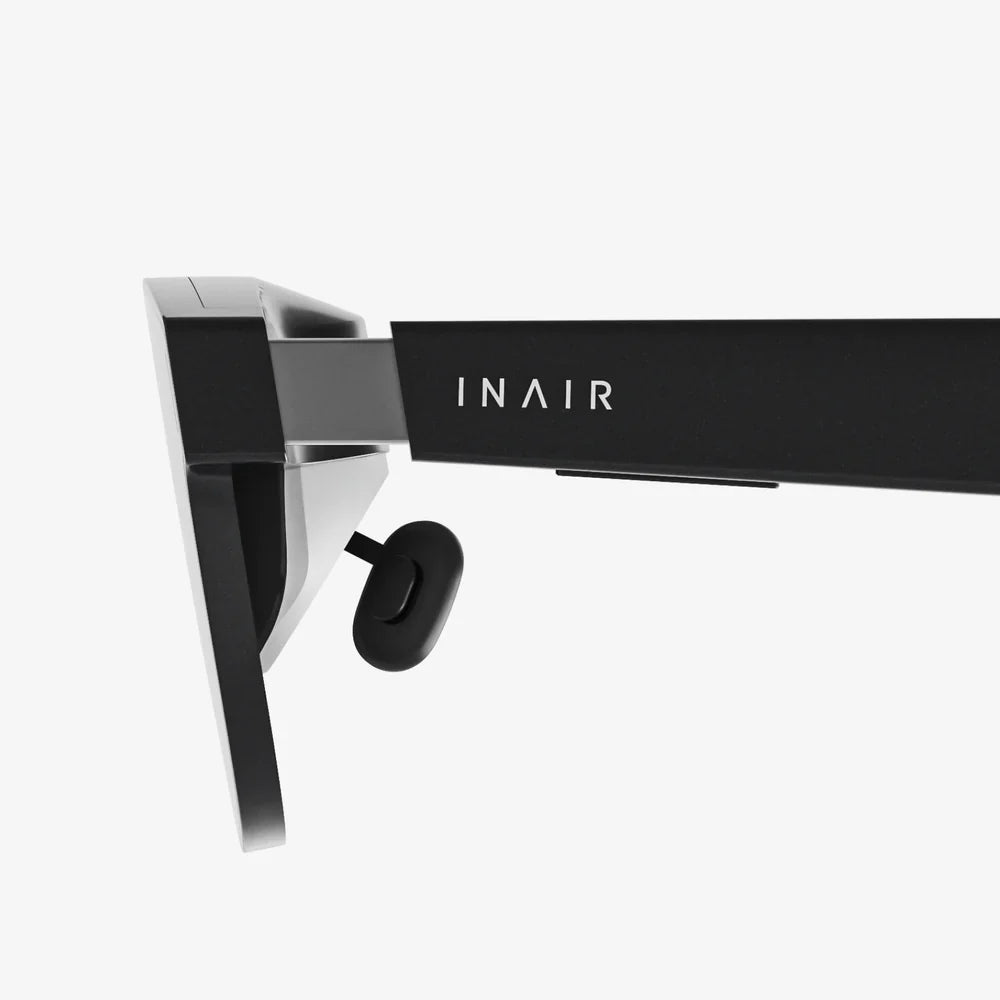
You’ve seen the hype, you’ve watched the movies, and maybe you’ve even tried a basic headset. But you’re left wondering: what separates a forgettable gimmick from a truly transformative, good VR experience that can redefine your perception of reality itself? The journey from a nascent, clunky technology to a seamless portal into other worlds is paved with innovation, and understanding what makes VR "good" is the first step into that new reality.
The Pillars of Presence: What Truly Defines a Good VR System
At its core, the ultimate goal of any VR system is to achieve a state of "presence"—the undeniable, often subconscious feeling that you are actually *in* the virtual environment. This isn't about just seeing a 3D image; it's about your brain being convinced, on a fundamental level, that the digital world is your reality. A good VR system is engineered from the ground up to cultivate this feeling through several critical pillars.
The most immediate and obvious pillar is visual fidelity. This encompasses several factors working in concert. Resolution is paramount; a high pixel density, often measured in pixels-per-degree (PPD), ensures that the image is sharp and clear, eliminating the "screen door effect" where users can discern the gaps between pixels, which instantly shatters immersion. Beyond raw resolution, the field of view (FOV) is crucial. A narrow FOV feels like looking through a pair of binoculars, constantly reminding you of the headset's boundaries. A good VR system offers a wide, human-like FOV that fills your peripheral vision, pulling you deeper into the world.
However, a crystal-clear, wide image is useless if it's blurry or causes discomfort. This is where refresh rate and low persistence come in. A high refresh rate (90Hz and above) ensures motion appears smooth and lifelike, not choppy or laggy. Low persistence technology only illuminates pixels for a fraction of a second per frame, drastically reducing motion blur when you turn your head. This combination is essential for preventing simulator sickness, a form of nausea caused by a disconnect between what your eyes see and what your inner ear feels.
The second pillar is precise and intuitive tracking. For your brain to believe your virtual hands are your own, they must move exactly as you do, with imperceptible latency. Good VR utilizes a fusion of inside-out and outside-in tracking systems, employing cameras, gyroscopes, and accelerometers to map your position in physical space and translate every subtle movement into the digital realm with millimeter accuracy. This allows for six degrees of freedom (6DoF)—the ability to not only rotate your head but also lean, crouch, and move freely within a play area. The controllers themselves are a masterpiece of haptic engineering, providing not just buttons and joysticks but nuanced finger-tracking that can replicate gestures like pointing, grabbing, and thumbs-up, making interactions feel natural and expressive.
Beyond the Hardware: The Human Element of Comfort and Accessibility
A technically advanced headset is worthless if it’s a pain to use. Good VR is, above all else, comfortable VR. This starts with industrial design. The headset must be ergonomically balanced to distribute weight evenly across the head and face, avoiding excessive pressure on the nose or cheeks. Materials matter; plush, breathable facial interfaces and easily adjustable straps—often with a dial-based mechanism for a secure fit—are non-negotiable for long sessions. A good VR system is designed for a wide range of head shapes and sizes, and often includes options for users who wear glasses, with customizable lens spacing (IPD adjustment) to ensure a clear and comfortable view for everyone.
Accessibility extends beyond physical comfort to the very way we interact with these new worlds. A robust and user-friendly software interface is the gateway to VR. Menus should be easy to navigate, settings should be clear and adjustable, and the process of setting up a play space (known as "guardian" or "chaperone" systems) must be simple and effective at preventing real-world collisions. Good VR software provides a wealth of comfort options to accommodate a spectrum of users, from seasoned veterans to first-time visitors. These include features like teleportation movement for those sensitive to smooth locomotion, vignetting (subtly darkening the edges of the screen during movement) to reduce motion sickness, and adjustable height and scale settings.
The Soul of the System: Software and Experiences That Captivate
The most comfortable, high-resolution headset is merely an expensive paperweight without compelling software. The true measure of a good VR ecosystem is the depth, diversity, and quality of its experiences. This spans several key categories that demonstrate the medium's unique strengths.
In gaming, good VR is revolutionary. It transforms players from spectators into active participants. Instead of pressing a button to swing a sword, you physically swing your arm. Instead of using a thumbstick to aim, you use your own hand-eye coordination. This physicality creates an unparalleled level of immersion and engagement. Games built from the ground up for VR leverage these mechanics, offering experiences that are impossible on flat screens, from physics-based puzzles to intense, heart-pounding horror where you must physically hide from enemies.
Yet, to label VR merely as a gaming platform is to profoundly underestimate its potential. Good VR is a powerful tool for social connection. Social VR platforms allow users to inhabit shared virtual spaces as expressive avatars, attending concerts, watching movies, playing games, or simply chatting with friends and family from across the globe. The sense of shared presence—making eye contact, reading body language, and feeling like you are in the same room—is a far cry from traditional video calls and represents a significant leap toward the vision of a embodied internet or "metaverse."
The applications extend powerfully into productivity and creativity. Architects and designers can walk clients through full-scale 3D models of unbuilt structures. Artists can paint and sculpt in three dimensions with virtual clay or light. Professionals can attend virtual meetings with whiteboards and 3D models, collaborating in ways a 2D screen cannot facilitate. Furthermore, good VR has proven to be a transformative medium for education and training. Medical students can practice complex surgical procedures in a risk-free environment, mechanics can learn to repair engines, and history students can take field trips to ancient Rome or the surface of Mars. The ability to learn by doing, within a simulated context, dramatically improves retention and understanding.
Gazing into the Crystal Ball: The Future of Good VR
The technology behind good VR is advancing at a breathtaking pace. The near future promises developments that will further blur the line between the real and the virtual. Varifocal and eye-tracking technology will solve the vergence-accommodation conflict, a visual discrepancy that can cause eye strain, by dynamically adjusting the focus of the lenses based on where you are looking, creating a more natural and comfortable depth perception.
We are also moving toward more advanced and realistic haptic feedback
Perhaps the most significant frontier is the development of brain-computer interfaces (BCIs). While still in early stages, this technology aims to allow users to control virtual environments through neural signals alone, and even more profoundly, to simulate sensations directly in the brain. This could eventually lead to experiences that are indistinguishable from physical reality, raising fascinating questions and possibilities for the future of human interaction, communication, and experience itself. Ultimately, good VR is not defined by a checklist of specs, but by its ability to fade away. The best VR experience is one where the hardware disappears from your consciousness, the controllers feel like an extension of your own body, and the digital world becomes your tangible reality. It’s a combination of cutting-edge engineering, thoughtful design, and captivating software that works in harmony to transport you. It’s a medium that empowers creators, connects people across vast distances, and offers new ways to learn, work, and play. This is the promise of good VR—a promise that is no longer on the distant horizon, but is available here and now, waiting for you to step inside and explore the limitless possibilities of a new dimension of experience. The portal is open, and what awaits on the other side is limited only by imagination.
Share:
What Are the Advantages of Telecommuting and a Virtual Office: A Deep Dive into the Future of Work
How to Make a Virtual Meeting Interactive: A Complete Guide to Boosting Engagement