


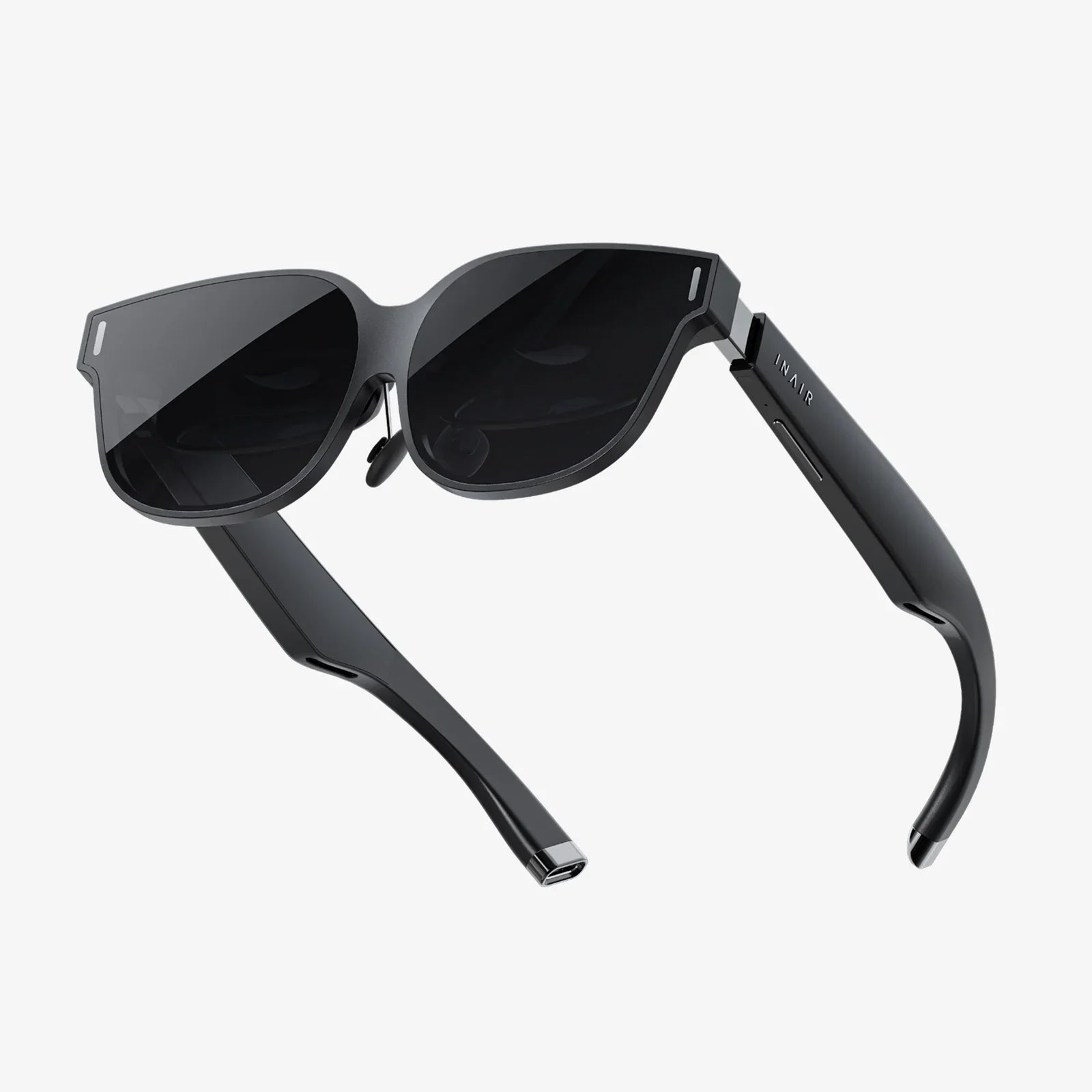
Imagine slipping on a headset and instantly dissolving the walls around you, trading your living room for the surface of Mars, the depths of the ocean, or the front row of a concert happening a thousand miles away. This is no longer the stuff of science fiction; it's the immediate, breathtaking reality offered by a pivotal piece of technology: HDMI Virtual Reality Goggles. These devices are more than just screens for your face; they are meticulously engineered portals, and the humble HDMI cable is the steadfast bridge that makes the journey possible. The moment you plug in, you're not just a spectator—you are an active participant stepping into the frame, and the digital universe rushes to meet you.
The Unseen Conduit: Demystifying the HDMI Connection
At the heart of the modern VR experience lies a critical, yet often overlooked, component: the High-Definition Multimedia Interface, or HDMI. For standard television and monitor setups, HDMI is a reliable workhorse, dutifully transmitting high-quality audio and video from a source to a display. But in the context of virtual reality, its role is exponentially more demanding and vital.
Unlike a static movie or game on a monitor, a VR environment must render two distinct, high-resolution perspectives—one for each eye—to create a convincing stereoscopic 3D effect. This requires a massive and uninterrupted flow of data. The latency, or the delay between an action performed by the user and the corresponding visual update inside the headset, must be imperceptibly low. Even a delay of a few milliseconds can break immersion and, more importantly, lead to motion sickness. A wired HDMI connection provides a dedicated, high-bandwidth pathway that ensures this data deluge is delivered swiftly and synchronously, maintaining the fragile illusion of reality.
More Than Just a Screen: The Anatomy of Immersion
Calling these devices "goggles" barely scratches the surface of their complexity. A quality set of HDMI Virtual Reality Goggles is a symphony of advanced technology working in concert.
The Display Panels: Windows to Another World
Just inches from your eyes reside high-resolution displays, often one per eye. The quest for higher pixel density—measured in pixels per inch (PPI)—is relentless, as it directly combats the "screen door effect," where users can perceive the gaps between pixels, shattering the illusion. Modern iterations employ fast-switching LCD or vibrant OLED technology to produce rich, deep blacks and a wide color gamut, making virtual worlds feel tangible and alive.
The Lenses: Focusing on Illusion
Between the displays and your eyes are specialized lenses. Their job is to take the images from the flat panels and warp them to fill your entire field of view, creating a wide field of view (FOV) that typically ranges from 90 to 120 degrees or more. These sophisticated pieces of glass or plastic also account for the focal distance, allowing your eyes to relax as if looking into the distance rather than straining at a screen mere centimeters away. Many systems include physical IPD (Interpupillary Distance) adjustments, sliding the lenses to match the unique spacing of your eyes for perfect clarity and comfort.
Tracking and Sensors: The Bridge Between Real and Virtual
Immersion is worthless without interaction. This is where internal and external tracking systems come into play. Inside the headset, an array of sensors—including gyroscopes, accelerometers, and magnetometers—precisely track the orientation of your head: the yaw, pitch, and roll. For full positional tracking, which allows you to lean, duck, and walk around, many systems use external cameras or laser-emitting base stations that map the physical space and track the position of the headset within it. This data is processed instantaneously, and the HDMI connection carries the updated visual world back to you, creating a perfect feedback loop between your physical movement and your digital perception.
A Universe of Experiences: Beyond the Hype
The true value of any technology is measured by its application. HDMI Virtual Reality Goggles have moved far beyond their gaming origins to become powerful tools across numerous domains.
Revolutionizing Entertainment and Gaming
This is the most visible application, and for good reason. Gaming is transformed from a passive activity on a screen into an embodied experience. You don't just control a character; you become the character. Looking down, you see your virtual hands and body. The thrill of looking over the edge of a virtual skyscraper or the tension of a horror game experienced in 360 degrees is qualitatively different from traditional media. Furthermore, virtual cinemas allow you to watch films on a giant private IMAX screen, and live events are beginning to be broadcast in VR, offering front-row seats to anyone, anywhere.
Transforming Education and Training
Imagine medical students practicing complex surgical procedures on virtual patients, making mistakes without consequences. Envision history students walking through a digitally reconstructed ancient Rome, or astronomy students navigating the solar system. VR provides experiential learning that textbooks cannot match. Similarly, industries from aviation to construction use VR simulations for high-fidelity, safe, and cost-effective training, preparing workers for real-world scenarios in a completely controlled environment.
Enabling New Forms of Connection and Design
Social VR platforms are emerging where people can meet, interact, play games, and watch movies together using personalized avatars, offering a profound sense of shared presence that video calls cannot replicate. For architects and engineers, VR is an invaluable design tool, allowing them to step inside their blueprints and experience the scale and flow of a building before a single brick is laid. This enables iterative design and client presentations that are far more intuitive and impactful than any 3D model on a screen.
Navigating the Landscape: Considerations for the Curious
For those looking to acquire their own portal, several factors warrant careful consideration. The visual fidelity is paramount; prioritize headsets with high resolution and a wide field of view. Comfort is equally critical, as a heavy or poorly balanced headset can cut a promising journey short. The ergonomics, weight distribution, and quality of the materials matter immensely for longer sessions.
Furthermore, understanding the ecosystem is key. The content library available for the platform must align with your interests, whether that's games, creative applications, or educational software. Finally, one must consider the hardware requirements. A high-fidelity, HDMI-connected VR experience is typically powered by a robust external computer or console, which needs a sufficiently powerful graphics card to render these complex worlds at high frame rates.
The Future is Wired, For Now
While wireless and standalone VR headsets offer compelling freedom and accessibility, they inherently make compromises on latency and visual fidelity due to the constraints of data compression over air. For the highest-fidelity, most graphically intensive, and latency-sensitive experiences, the pure, uncompressed signal delivered by an HDMI cable remains the gold standard. It represents a commitment to an uncompromised, truly immersive experience, offering a level of performance that wireless technology is still striving to match consistently.
The journey of virtual reality is far from over. Advancements in display technology like varifocal lenses, which adjust focus dynamically, and foveated rendering, which tracks your gaze to render only what you're looking at in full detail, promise even more lifelike and efficient experiences. Haptic feedback suits and gloves are beginning to add the crucial sense of touch to the visual and auditory immersion.
Yet, through all these advancements, the core function remains: to transport you. HDMI Virtual Reality Goggles are the culmination of decades of technological progress, a key that unlocks doors to places limited only by imagination. They challenge our perceptions of presence, reality, and connection. That single cable is not a tether holding you back, but a lifeline to infinite possibilities, a direct feed of dreams into your consciousness. The next world is waiting; all you have to do is plug in and see.
Share:
Is AR Coating on Glasses Worth It? A Deep Dive Into The Modern Lens Upgrade
Best Smart Glasses 2025 Under $50: The Ultimate Budget Tech Wearables Guide