


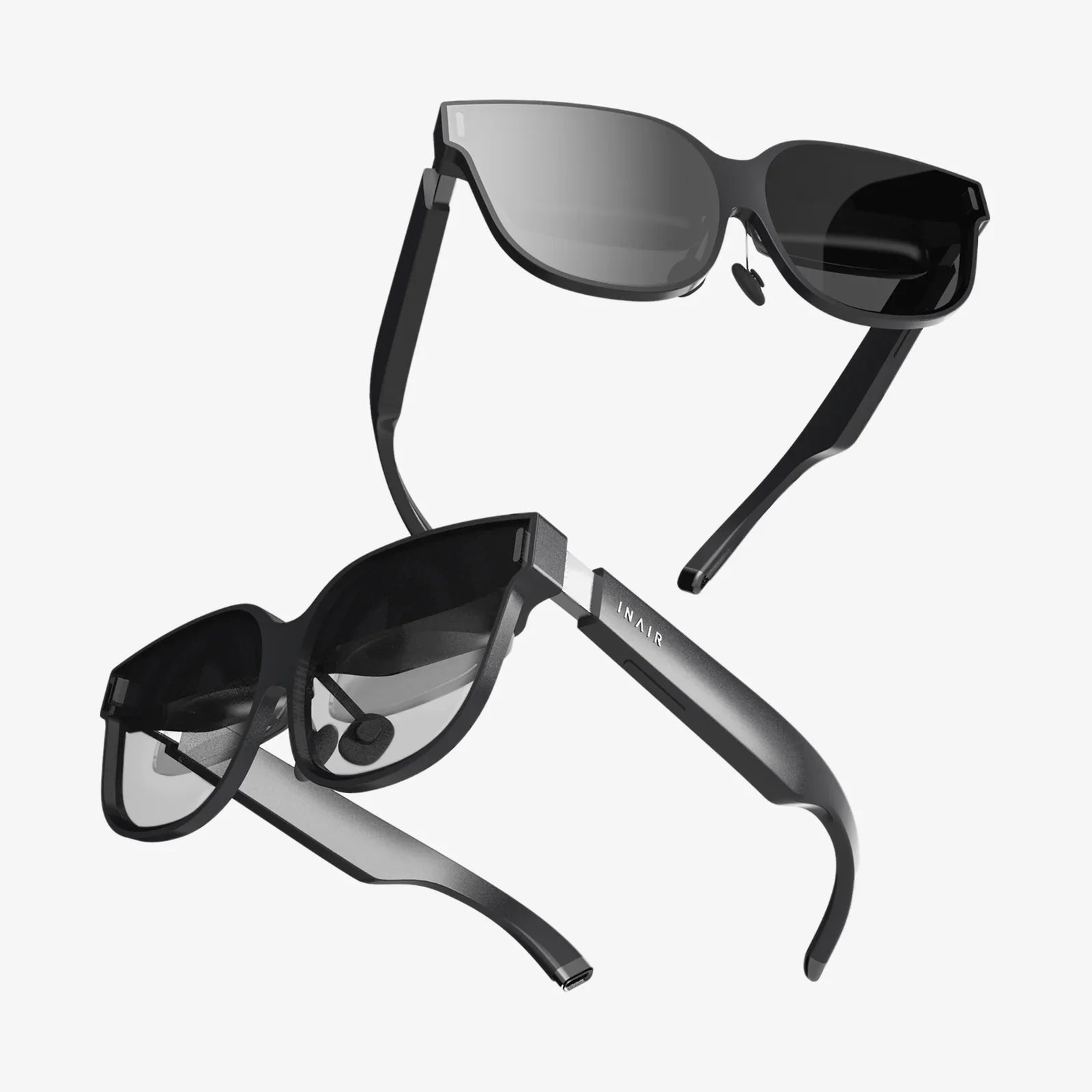
Imagine a device that can transport you to another world, overlay digital information onto your living room, or allow you to collaborate with a colleague as if they were standing right beside you. This is no longer the stuff of science fiction; it is the burgeoning reality promised by the head-mounted three dimensional display, a technology poised to redefine our relationship with information, entertainment, and each other. The journey from a niche concept to a transformative tool is underway, and its implications are nothing short of revolutionary.
The Core Technologies Behind the Magic
At its heart, a head-mounted three dimensional display is a wearable visual interface that creates a stereoscopic 3D environment for the user. This immersive effect is achieved through a sophisticated interplay of several key technologies.
Stereoscopy and Binocular Disparity
The fundamental principle behind 3D vision is stereoscopy, which leverages binocular disparity. Our two eyes are spaced apart, so each sees a slightly different view of the world. The brain fuses these two separate 2D images into a single, coherent perception of depth. Head-mounted displays replicate this by presenting a unique image to each eye through dedicated micro-displays or a single display split by a lens system. This creates a powerful and convincing illusion of three-dimensional space.
Display Panels and Optics
The quality of the visual experience is dictated by the displays and the optical system. Modern devices utilize high-resolution micro-OLED or LCD panels known for their fast response times and rich color gamuts. These panels are positioned extremely close to the eyes, requiring a complex array of lenses to focus the image comfortably. Advanced optics, including Fresnel lenses and pancake lenses, are engineered to bend light, create a wide field of view (FOV), and project a virtual image that appears to be meters away, reducing eye strain and enhancing the sense of immersion.
Tracking and Spatial Computing
For the virtual world to feel responsive and real, the device must understand its position in space and the user's movements. This is accomplished through a suite of sensors, including accelerometers, gyroscopes, and magnetometers (collectively an IMU - Inertial Measurement Unit). For more precise positional tracking, many systems employ external cameras or internal outward-facing cameras. These cameras perform inside-out tracking, mapping the physical environment in real-time. This process, known as simultaneous localization and mapping (SLAM), allows the device to anchor digital objects to physical surfaces and understand the user's movement through space, a critical function known as six degrees of freedom (6DoF) tracking.
Audio and Haptics
Immersion is a multi-sensory experience. Spatial audio is a crucial component, using head-related transfer functions (HRTF) to simulate sounds coming from specific points in the 3D environment. This means a virtual bee will sound like it's buzzing around your head, not just playing from a static speaker. Furthermore, haptic feedback controllers provide a sense of touch, allowing users to feel the recoil of a virtual weapon or the subtle vibration of a virtual tool, closing the loop between seeing and interacting.
A Spectrum of Applications: Beyond Entertainment
While gaming is the most prominent application, the potential uses for head-mounted three dimensional displays extend far into professional and practical domains.
Revolutionizing Professional Training and Education
This technology offers a safe, cost-effective, and highly effective platform for training. Medical students can practice complex surgical procedures on virtual patients, making mistakes without consequences. Aircraft mechanics can learn to repair engines using detailed 3D models overlaid onto physical equipment. In classrooms, students can take virtual field trips to ancient Rome or journey through the human bloodstream, transforming abstract concepts into tangible experiences.
Transforming Design and Manufacturing
In architecture, engineering, and construction, professionals are using these displays for virtual prototyping and design review. Architects can walk clients through a full-scale, photorealistic model of a building before a single brick is laid, making changes in real-time. Factory planners can design and optimize assembly lines in a virtual space, identifying potential bottlenecks and safety issues long before physical implementation.
Enhancing Remote Collaboration and Telepresence
The concept of the "metaverse" is largely built upon the idea of shared virtual spaces. Head-mounted displays enable a new form of telepresence where remote colleagues can meet as lifelike avatars in a virtual boardroom, examine 3D models together, and interact with data in intuitive ways. A expert located across the globe can guide a local technician through a repair by drawing virtual arrows and annotations directly onto the technician's field of view, vastly improving the efficiency and accuracy of remote support.
New Frontiers in Healthcare and Therapy
The therapeutic applications are profound. Exposure therapy for phobias can be conducted in a controlled, virtual environment. Patients undergoing painful medical procedures or physical rehabilitation can use immersive experiences as a powerful distraction technique, reducing perceived pain and anxiety. Furthermore, these devices are being explored as tools for cognitive rehabilitation and for providing assistive experiences for individuals with visual or auditory impairments.
Navigating the Challenges and Ethical Considerations
Despite the exciting potential, the path forward for head-mounted three dimensional displays is not without significant hurdles.
The Hardware Hurdles
Current devices often face a trade-off between performance and comfort. Achieving high resolution, a wide field of view, and high refresh rates requires powerful processors and bright displays, which generate heat and consume battery life quickly. This often leads to devices that are bulky, heavy, and tethered to a separate processing unit or have limited untethered usage. The quest for a lightweight, comfortable, high-fidelity, and affordable form factor remains the central challenge for hardware engineers.
The Social and Psychological Impact
As this technology becomes more pervasive, society must grapple with its psychological effects. Prolonged use can lead to simulator sickness for some users, a type of motion sickness caused by a disconnect between visual motion and the inner ear's sense of movement. More profoundly, there are concerns about addiction, social isolation, and the "reality gap"—the potential difficulty some may have in distinguishing between virtual experiences and real-world interactions. The nature of identity, presence, and social etiquette in shared virtual spaces is entirely new territory.
Data Privacy and Security
These devices are arguably the most personal computers ever conceived. They have the potential to collect an unprecedented amount of intimate data: eye-tracking, gesture recognition, detailed maps of users' homes, biometric responses, and even recordings of their surroundings. This creates a massive privacy risk. Who owns this data? How is it stored and used? The industry must establish robust, transparent, and user-centric data policies to prevent misuse and build essential trust with consumers.
The Future Horizon: What Lies Ahead?
The evolution of this technology is moving towards greater integration with our daily lives and our own biology. We are moving towards devices that are indistinguishable from regular eyeglasses, thanks to advancements in holographic optics and micro-LED displays. The concept of the "digital twin"—a perfect virtual replica of a physical object, system, or even a city—will become interactive and navigable through these displays, revolutionizing urban planning and logistics.
Further out, research into brain-computer interfaces (BCIs) suggests a future where visual and auditory information could be directly streamed to the brain, bypassing physical displays altogether. While this remains a long-term prospect, it highlights the trajectory towards ever more seamless and immersive integration of the digital and physical worlds.
The head-mounted three dimensional display is more than just a new screen; it is a new lens through which we will perceive, interact with, and ultimately shape our reality. It holds the promise of unlocking human potential in fields we have yet to imagine, but it also demands a thoughtful and deliberate conversation about the world we want to build with it. The headset is not the destination; it is the gateway to a new dimension of human experience, waiting just on the other side of the lenses.
Share:
Remote Work Virtual Office: The Definitive Guide to Thriving in the Digital Workspace
Remote Work Virtual Office: The Definitive Guide to Thriving in the Digital Workspace