


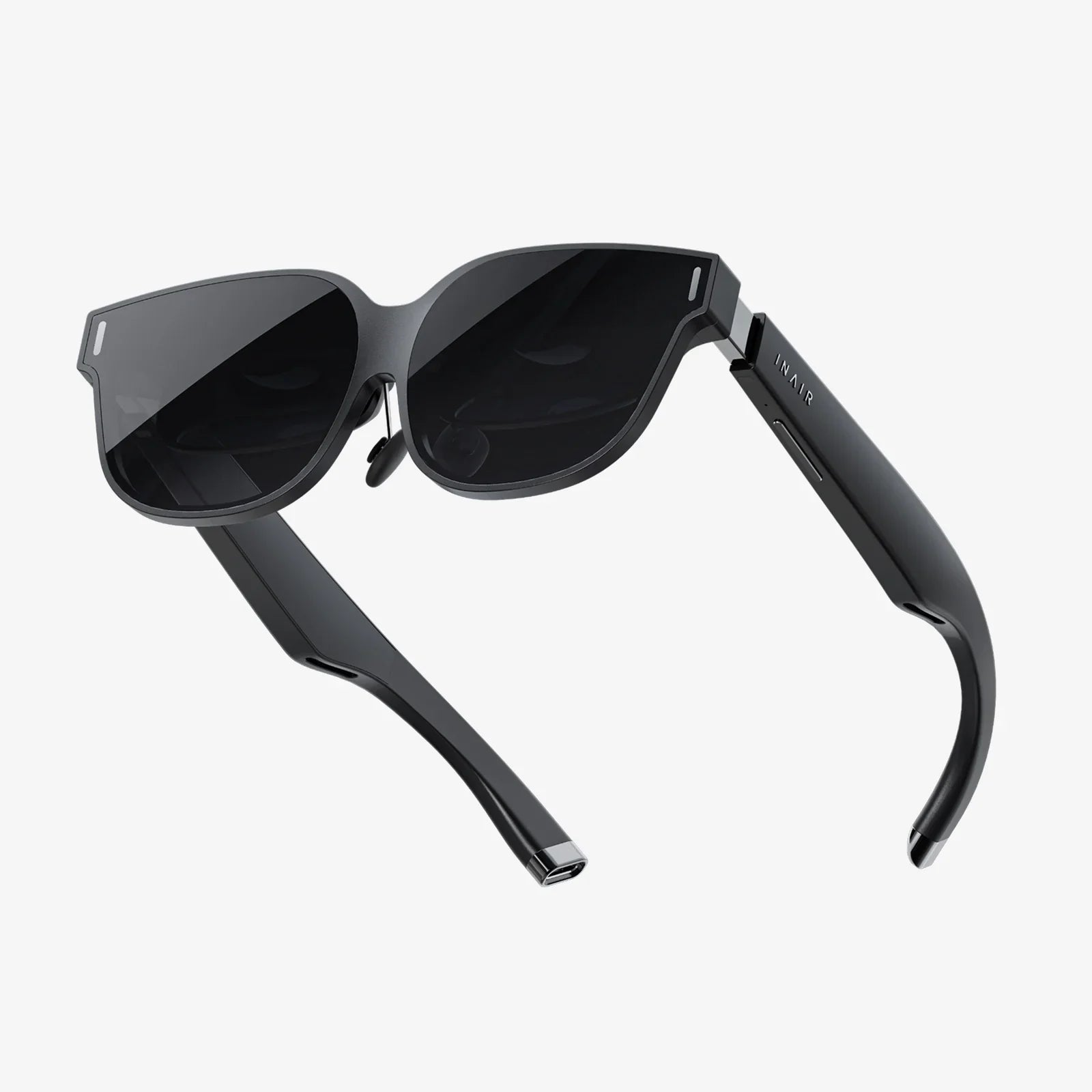
Imagine a world where the line between the digital and the physical blurs into insignificance. Where information isn't confined to a screen in your hand but is painted onto the very fabric of reality, accessible with a mere glance. This is the promise of Heads-Up Display Augmented Reality (HUD AR), a technology not merely knocking on the future's door but actively dismantling its hinges. It’s a revolution unfolding right before our eyes, poised to fundamentally alter our perception of everything, from mundane daily tasks to complex professional endeavors.
From Cockpits to Consumers: The Genesis of a Vision
The concept of projecting data into a user's field of view is not a product of the 21st century. Its origins are firmly rooted in the mid-20th century, specifically in the high-stakes world of aviation. Early iterations were primitive, using simple light sources to project reticles onto glass panels, giving birth to the reflector sight. The true genesis of the modern HUD, however, came with the development of more sophisticated systems for military fighter jets. These systems were engineering marvels designed for a singular, critical purpose: to keep a pilot's eyes up and focused on the battlefield, eliminating the deadly need to glance down at a dizzying array of instruments during combat.
This foundational principle – minimizing context switching and keeping the user engaged with their environment – remains the core tenet of all HUD AR today. The technology’s migration from the cockpit began with automotive applications, where simplified versions projected speed and navigation onto the windshield. While innovative, these were isolated, single-purpose systems. The paradigm shift, the true spark that ignited the current revolution, was the convergence of several key technologies: miniature high-resolution displays, powerful mobile processors, sophisticated tracking sensors, and most importantly, the conceptual leap to spatially aware contextual computing.
Deconstructing the Magic: The Core Technologies Powering HUD AR
To understand the potential of HUD AR, one must first understand the intricate symphony of hardware and software that makes it possible. It is far more than just a transparent screen.
The Optical Engine: Windows to a New World
At the heart of any HUD AR device is its optical system, the complex arrangement of lenses, waveguides, and combiners responsible for placing digital images in front of the user's eyes. There are several competing approaches, each with its own advantages. Some systems use miniature projectors that bounce light off a curved combiner, while more advanced designs employ waveguide technology, where light is channeled through a thin, transparent piece of glass or plastic and then emitted directly into the eye. This method allows for sleek, eyeglasses-like form factors. The ultimate goal is to create digital imagery that is bright, high-resolution, and, crucially, can be focused at varying distances to avoid eye strain and blend convincingly with the real world.
Spatial Mapping and Tracking: The Digital Nervous System
For digital content to feel like a natural part of the environment, the device must possess a deep understanding of the space around it. This is achieved through a suite of sensors that act as a digital nervous system. Cameras, LiDAR (Light Detection and Ranging), depth sensors, and inertial measurement units (IMUs) work in concert to perform two critical tasks: simultaneous localization and mapping (SLAM) and persistent tracking.
SLAM algorithms allow the device to construct a real-time 3D map of the environment while simultaneously tracking its own position within that map. This is what allows a virtual character to sit convincingly on your physical sofa or for navigation arrows to appear anchored to the road itself. The device isn't just overlaying graphics; it's comprehending the geometry, textures, and properties of the world, enabling digital objects to occlude and be occluded by real ones, a key factor for immersion.
The Interface Paradigm: Beyond the Touchscreen
Interacting with a floating interface requires a complete rethinking of user input. The tap-and-swipe language of smartphones is inadequate. Modern HUD AR systems are pioneering intuitive, natural modes of interaction. These include:
- Voice Commands: A hands-free method for complex queries and system control.
- Hand Tracking: Advanced computer vision allows users to manipulate virtual objects with pinch, grab, and gesture controls, as if they were physically present.
- Eye Tracking: By knowing precisely where a user is looking, the system can enable foveated rendering (saving processing power by rendering the center of vision in high detail) and create intuitive selection mechanisms—simply look at a button and confirm with a subtle gesture.
- Contextual Awareness: The most powerful interaction is often no interaction at all. The system, understanding your location, schedule, and habits, can proactively surface the right information at the right time.
The Invisible Assistant: Transformative Applications Across Industries
The true measure of a technology's impact lies in its practical applications. HUD AR is poised to become the ultimate productivity and enhancement tool across countless fields.
Revolutionizing the Frontline Workforce
Perhaps the most immediate and profound impact is being felt in industrial and medical settings. For a technician repairing a complex piece of machinery, a HUD AR display can overlay step-by-step instructions, highlight specific components with arrows, and display real-time sensor data from the equipment itself. This reduces errors, slashes training time, and empowers workers with encyclopedic knowledge instantly. In surgery, a surgeon can see critical patient vitals, 3D scans of organs, or guidance for incision points directly in their line of sight without ever turning away from the patient, increasing precision and safety.
Redefining Social Connection and Storytelling
The social and entertainment implications are staggering. HUD AR enables shared experiences that transcend physical location. Friends separated by continents could see and interact with the same virtual object in their respective living rooms, creating a palpable sense of presence. Storytelling evolves from passive viewing to active experience. Imagine a historical tour where figures from the past act out scenes on the very ground you're standing on, or a horror game that transforms your own home into a chilling landscape. The world itself becomes the stage for new forms of narrative and play.
Enhancing Daily Navigation and Cognition
On a more personal level, HUD AR acts as a cognitive prosthesis, effortlessly enhancing our daily lives. Navigation arrows are painted onto the road, eliminating wrong turns. When you look at a restaurant, its reviews and today's specials materialize next to the door. In a supermarket, your shopping list guides you to items and highlights healthy alternatives. During a conversation with a new colleague, a discreet prompt could remind you of their name and recent work projects. It becomes an always-available, context-aware extension of your own memory and perception.
Navigating the Uncharted: The Ethical and Societal Crossroads
This powerful technology does not arrive without significant challenges and profound ethical questions that society must confront.
The Privacy Paradox
A device that sees what you see, hears what you hear, and knows where you are represents the ultimate data collection tool. The potential for misuse is unprecedented. Continuous recording of the environment raises critical questions: Who owns this data? How is it stored and used? Could it lead to a world of perpetual surveillance, where every person and place is constantly logged and analyzed? Robust ethical frameworks and transparent, user-centric data policies are not an option; they are an absolute prerequisite for public trust and adoption.
The Attention Economy's Final Frontier
If we think the battle for our attention is fierce now, consider a world where digital advertisements can be seamlessly injected into our every sightline. A virtual billboard could be placed on any blank wall, a brand logo could be superimposed on a product, and sponsored information could be interwoven with legitimate data. The very concept of an ad-blocker would need a physical dimension. Establishing norms and regulations to prevent a dystopian landscape of visual spam and cognitive overload will be one of the great societal challenges of the coming decade.
The Digital Divide and Accessibility
As with any transformative technology, there is a risk of exacerbating existing inequalities. Will HUD AR become a tool for the privileged, granting them enhanced cognition and efficiency, while widening the gap with those who cannot afford it? Conversely, it holds immense promise for accessibility, offering real-time translation for the deaf and hard of hearing, audio descriptions for the blind, and memory aids for those with cognitive impairments. Ensuring this technology is developed inclusively and affordably is paramount to its success as a force for good.
The Path Forward: From Prototype to Paradigm
The journey to perfect, ubiquitous HUD AR is still underway. Current limitations include achieving all-day battery life in a socially acceptable form factor, processing the immense amount of visual data required for convincing AR in real-time, and solving the complex challenge of rendering digital light brightly enough to be visible in direct sunlight. These are formidable engineering hurdles, but they are being tackled with relentless pace.
The future likely won't be a single, monolithic device, but a spectrum of form factors tailored to different needs: lightweight glasses for all-day productivity, specialized headsets for industrial use, and perhaps even contact lens-based systems further down the line. The operating system for this new reality, the AR cloud, a persistent digital copy of the world that allows experiences to be shared and anchored consistently for everyone, is already under development.
We are standing at the precipice of the next great computing platform, one that promises to weave computing back into the tapestry of human experience, making it less an object of our attention and more an enhancement of our perception. The revolution will not be televised. It will be overlayed.
The promise of Heads-Up Display AR is a world less interrupted, where technology recedes into the background of our lives only to enrich the foreground of our reality. It’s the end of looking down and the beginning of looking ahead, a fundamental shift that will challenge our definitions of privacy, connection, and reality itself. The question is no longer if this future will arrive, but how carefully and deliberately we will choose to build it. The next time you glance up, the world might just be looking back, filled with invisible layers of possibility waiting for your command.
Share:
Design Graphics for Projection AR: The Ultimate Guide to Crafting Immersive Digital Worlds
Best AI Visibility Tool: The Ultimate Guide to Unlocking Digital Dominance