


Imagine a world where the information you need doesn't require you to look down, scroll, or shift your focus. It simply appears, floating in your line of sight, integrated seamlessly with the world around you. This isn't science fiction; it's the reality being built today by Heads Up Display technology, and it's poised to change everything about how we see and interact with our environment.
The Genesis of a Vision: A Technology Born from Necessity
The story of the Heads Up Display begins not on the open road, but in the cramped, high-pressure cockpit of a fighter jet. During the Second World War and the subsequent Cold War era, pilots faced a critical problem: to access vital flight data like airspeed, altitude, and targeting information, they had to constantly glance down at their instrument panels. In a high-speed dogfight or during a critical landing approach, these precious seconds with eyes off the target could mean the difference between life and death. The solution was as brilliant as it was simple: project the most crucial information onto a transparent screen in front of the pilot, allowing them to keep their "head up" and focused on the sky. Early systems were rudimentary, using simple light sources to project reticles onto glass, but the concept was proven. It was a revolutionary step in human-machine interface, creating the first true augmented reality by overlaying data onto the real world.
How It Works: The Magic of Light and Lenses
At its core, a Heads Up Display is an elegant feat of optical engineering. While implementations vary, the fundamental principle remains consistent across most systems.
The process starts with a picture generation unit (PGU). This is the engine of the HUD, typically a high-brightness liquid crystal display (LCD) or a more advanced micro-display like a Digital Light Processing (DLP) chip or Liquid Crystal on Silicon (LCoS). This unit creates the image to be projected—be it numbers, graphics, or symbols.
This image is then relayed through a series of lenses and mirrors. The optical path is carefully designed to focus the image at a specific distance, known as the virtual image distance. This is a critical aspect of HUD design. A poorly designed system might project the image seemingly on the windshield itself, forcing the user's eyes to constantly refocus between the close-up data and the distant road. A quality HUD, however, projects the image at a virtual distance far down the road—often 10 to 20 feet or more—allowing the driver's or pilot's eyes to remain focused on infinity, making the data appear to hover in the world ahead and drastically reducing eye strain.
Finally, the projected image is bounced off a combiner. In many automotive systems, the windshield itself is specially shaped and coated to act as the combiner. In aircraft and some higher-end systems, a separate, dedicated piece of transparent glass or plastic is used. The combiner reflects the projected image towards the user's eyes while allowing most ambient light from the outside world to pass through. Special coatings ensure the reflected image is bright and clear, even in direct sunlight.
From Cockpits to Dashboards: The Automotive Revolution
The migration of Heads Up Display technology from military aviation to consumer automobiles marked a pivotal moment. Initially, it was a high-end luxury feature, a futuristic novelty for premium vehicles. But as costs decreased and the benefits became undeniable, its adoption has accelerated rapidly. The value proposition for drivers is immense. By projecting key information like vehicle speed, navigation directions, cruise control status, and collision warnings directly into the driver's line of sight, HUDs significantly reduce distracted driving. There's no longer a need to glance down at a central screen or instrument cluster; the data is already where the eyes need to be. This split-second preservation of focus can prevent accidents. Modern automotive HUDs have evolved from simple monochrome speed projections to full-color, augmented reality-enabled systems that can paint navigation arrows directly onto the road surface, highlight the vehicle in your lane you should be aware of, and even display warning symbols precisely on the hazard they refer to.
Beyond the Road: The Expanding Universe of HUD Applications
While automotive use is the most visible application, the reach of HUD technology extends far beyond the windshield. Its core function—presenting contextual information hands-free and eyes-forward—is valuable in countless fields.
- Commercial Aviation: Modern airliners are equipped with sophisticated HUDs that provide pilots with flight path vectors, runway alignment cues, and critical performance data during takeoff and landing, greatly enhancing safety in low-visibility conditions.
- Military and Tactical Operations: The technology continues to advance in its original domain. Modern fighter pilot helmets feature integrated HUDs that project targeting data, sensor information, and friend-or-foe indicators directly onto the visor, regardless of which way the pilot is looking.
- Surgery: In the operating room, surgeons can use Heads Up Displays to view patient vitals, ultrasound images, or pre-operative plans without turning away from the surgical field, maintaining sterility and focus.
- Manufacturing and Maintenance: Technicians repairing complex machinery can have schematics, torque values, and instruction manuals overlaid on the equipment they are working on. Warehouse workers can see picking and packing information without carrying a tablet.
- Gaming and Entertainment: While virtual reality (VR) immerses you in a digital world, AR gaming using HUD technology can bring digital characters and events into your living room, creating a new layer of interactive play.
The Challenges on the Horizon: Obstacles to Perfect Clarity
Despite its promise, Heads Up Display technology is not without its challenges. Engineers and designers continuously grapple with several key issues.
Information Overload: The greatest risk of any powerful tool is misuse. A poorly designed HUD that clutters the windshield with excessive data, animations, or irrelevant alerts can become just as distracting, if not more so, than a traditional screen. The philosophy must be one of minimalism and context-awareness, showing only the most vital information exactly when it is needed.
Cost and Complexity: While becoming more affordable, high-quality, augmented reality HUDs still require sophisticated optics, powerful projection systems, and specially manufactured windshields, adding cost and weight to a vehicle.
Readability and Eyebox: Ensuring the display is bright enough to be seen in bright daylight but dim enough to not be blinding at night is a technical challenge. Furthermore, the "eyebox"—the three-dimensional space within which the user can see the full display—can be limited. If a driver moves their head too much, the image may become cropped or disappear entirely.
Augmentation Accuracy: For AR-HUDs that place graphics onto the real world, precise tracking and calibration are paramount. If a navigation arrow intended to point to a specific street is misaligned by even a degree, it could lead a driver down the wrong road. This requires highly accurate GPS, vehicle dynamics sensors, and robust software.
The Next Frontier: From Windshields to Retinas
The evolution of the Heads Up Display is marching towards an even more integrated and personal future. The next logical step is to move the technology from the dashboard onto the face itself.
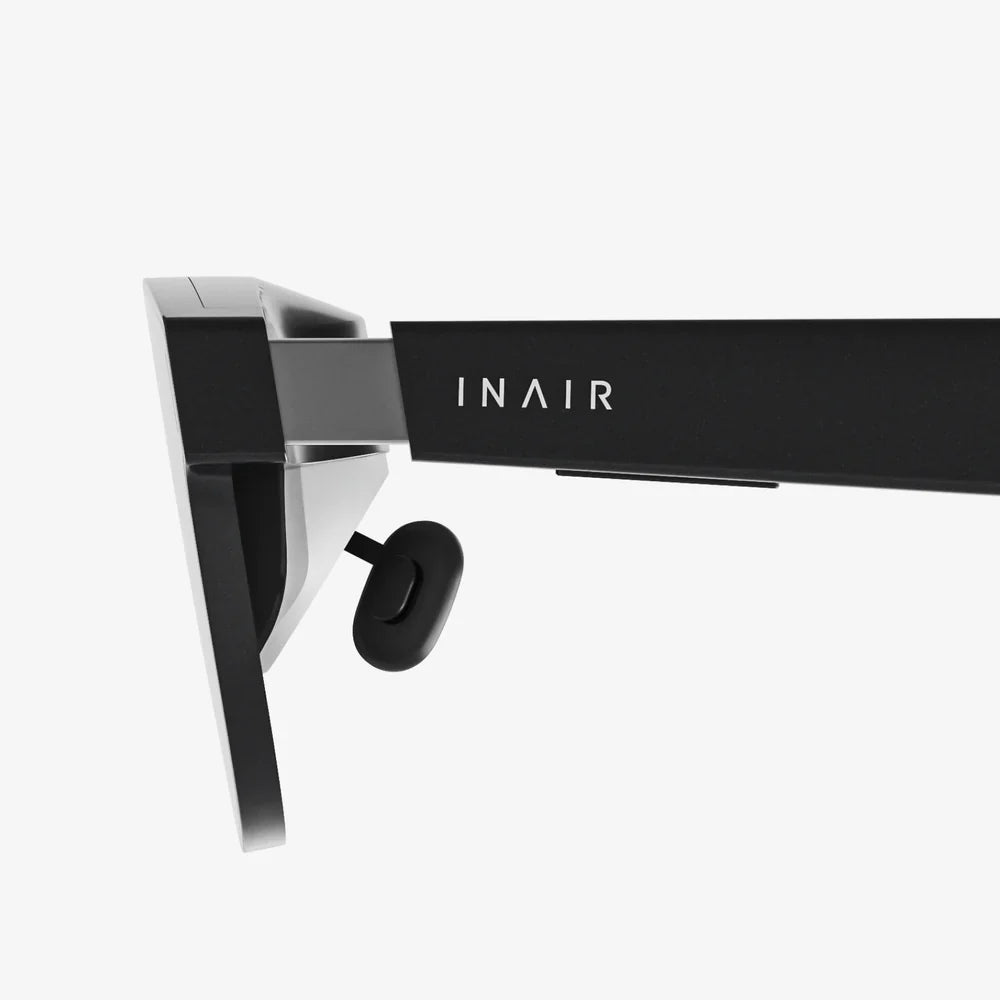
Smart Glasses represent a miniaturization of HUD principles. Instead of a large unit in the dash projecting onto a windshield, tiny projectors embedded in the frames of glasses or sunglasses beam information directly onto the lenses. This creates a personal, portable HUD that follows the user everywhere. The potential applications are endless, from getting walking directions superimposed on the street to seeing translated subtitles in real-time during a conversation with someone speaking another language.
Looking even further ahead, research into Retinal Display and Virtual Retinal Display (VRD) technology aims to bypass screens and lenses altogether. These conceptual systems would use low-power lasers or LEDs to scan images directly onto the user's retina. This could offer incredible resolution, a massive field of view, and perfect focus regardless of the user's vision, all while being completely invisible to anyone else. This would be the ultimate Heads Up Display—information painted directly onto your perception of reality.
A Seamless Symphony of Data and Reality
The journey of the Heads Up Display is a testament to human ingenuity. It is a technology born from a dire need for efficiency and safety that has blossomed into a platform for redefining our entire relationship with information. It promises a future where technology doesn't demand our attention but instead quietly empowers us within our environment. The goal is not to create a more cluttered reality, but a more intuitive one—a seamless symphony where data and reality are in harmony, enhancing our abilities without overwhelming our senses. We are moving towards a world where your reality comes with a helpful, informative, and invisible user interface.
The highway of the future won't just be filled with autonomous vehicles; it will be alive with data, visible only to those who need it, turning every journey into a safer, more efficient, and deeply connected experience. The next time you get behind the wheel, try to imagine your speedometer floating effortlessly ahead of you, a ghostly guide in your peripheral vision. That small glimpse is just the beginning; the true potential of seeing the world through this new lens is a revolution waiting to unfold, right before our eyes.
Share:
Human Centered Interaction: The Art and Science of Designing for People
Electric Glass: The Transparent Technology Revolutionizing Modern Architecture and Design