


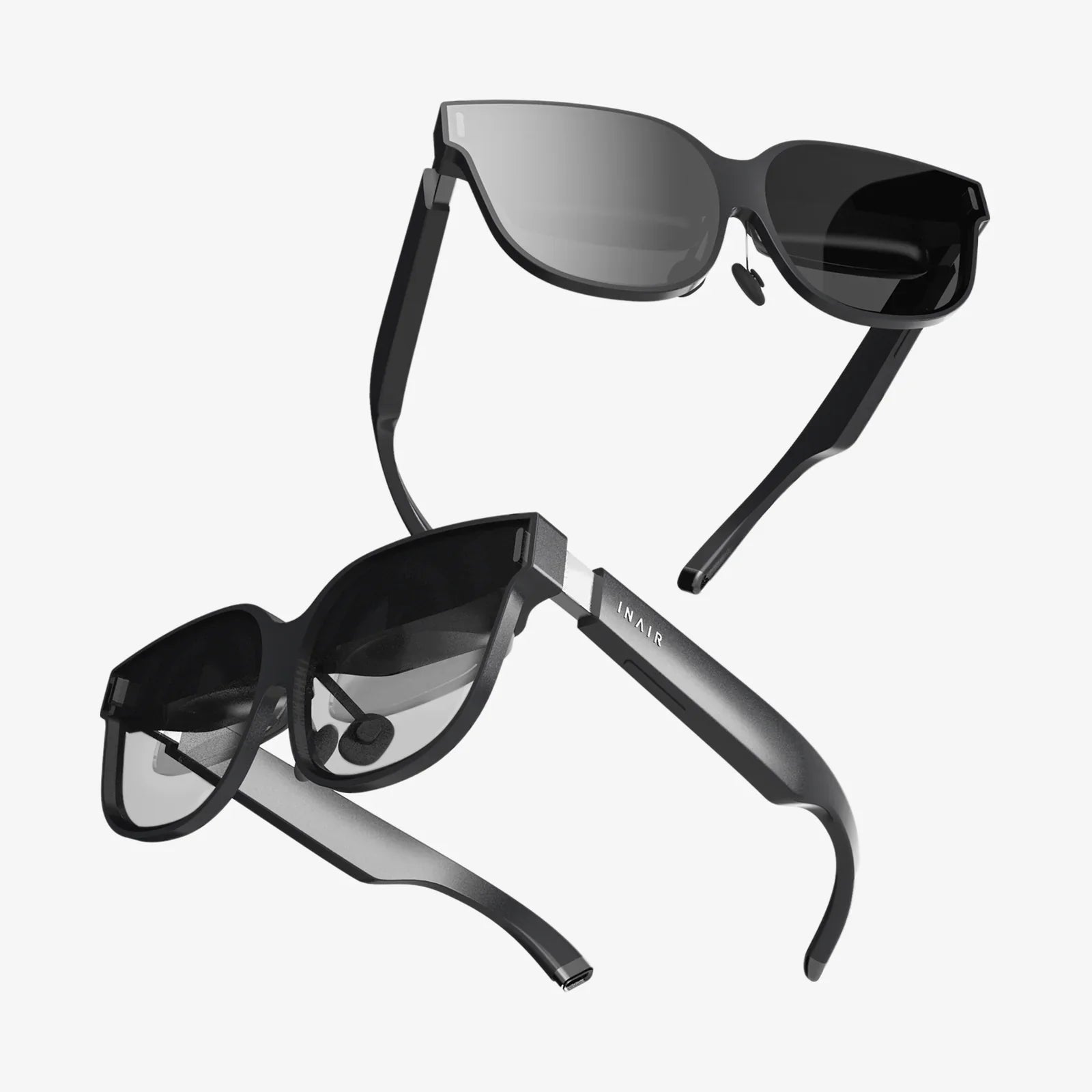
Imagine a workspace that materializes around you with a thought, a cinema that unfolds in the void of your living room, or a control panel for the digital universe that hovers at your fingertips. This is no longer the stuff of science fiction. The convergence of headset and computer monitor technology is rapidly dismantling the physical and perceptual barriers of the flat screen, ushering in an era of spatial computing that promises to redefine our entire relationship with digital information. The traditional monitor, a stationary window into the digital realm, is being superseded by a dynamic, three-dimensional, and infinitely scalable canvas worn on our heads. This revolution is not just about upgrading a display; it's about transcending the very concept of a screen altogether.
The Inevitable Convergence: From Pixels to Presence
For decades, the paradigm of human-computer interaction has been largely two-dimensional. We have stared into glowing rectangles, manipulating abstract icons with a mouse and keyboard. While resolutions have climbed from fuzzy VGA to retina-searing 8K and refresh rates have become buttery smooth, the fundamental experience has remained confined within a fixed frame. The headset computer monitor shatters this frame. It represents the logical next step in a long journey towards more immersive and intuitive computing.
The driving force behind this shift is a simple, powerful idea: presence. A high-resolution monitor can show you a breathtaking landscape, but a high-fidelity headset can make you feel like you are standing within it. This is achieved through a combination of cutting-edge technologies. Ultra-high-resolution micro-displays are positioned mere centimeters from the eyes, using advanced optics to project a crystal-clear image that fills your field of view. Precise head and eye-tracking systems work in tandem, constantly adjusting the perspective of the virtual world in real-time to match the slightest movement of your head, creating a stable, believable environment. This is a quantum leap beyond simply watching a screen; it is about inhabiting a digital space.
Architecting Your Digital Reality: The Core Technologies
To understand the power of the headset as a monitor, one must look under the virtual hood. Several key technologies work in concert to create a seamless experience.
Visual Fidelity: Beyond 4K and Into the Retinal Realm
The most immediate comparison is, of course, to a traditional monitor. Specs like resolution, refresh rate, and color gamut are just as critical here, if not more so. Early headsets suffered from a "screen door effect," where users could see the gaps between pixels. This has been largely eradicated by modern micro-OLED and LCD panels boasting pixel densities that far exceed those of standard desktop monitors. When these panels are combined with sophisticated pancake or aspherical lens systems, the result is a sharp, vibrant image that can be comfortably focused upon. High refresh rates (90Hz, 120Hz, and beyond) ensure motion is smooth and free of stutter, which is critical for both preventing simulation sickness and providing a responsive desktop experience.
Inside-Out Tracking: The Magic of Spatial Awareness
This is the technology that truly separates a headset from a monitor strapped to your face. A array of cameras and sensors on the headset continuously scans your physical environment. This serves two primary purposes. First, it enables six degrees of freedom (6DoF) tracking. This means the headset knows not only which way you're looking (rotation: pitch, yaw, and roll) but also exactly where you are in space (position: X, Y, and Z coordinates). Your virtual screens stay locked in place as you lean in to read text or move around. Second, this scanning creates a real-time 3D map of your room, allowing for passthrough functionality. Black-and-white or full-color video feeds from the cameras are displayed inside the headset, effectively letting you see your physical surroundings. This blend of the real and virtual is the foundation of the mixed-reality workspace.
Intuitive Interaction: Your Hands as the Ultimate Controller
What good is a virtual monitor if you can't interact with it? Headsets have moved far beyond simple controllers. Advanced systems now feature precise hand-tracking technology. Using onboard cameras, the headset can see your hands, fingers, and gestures, allowing you to point, click, drag, and type on virtual keyboards using nothing but your natural movements. Voice commands further augment this, enabling you to open applications, search the web, or dictate text without lifting a finger. This creates a fluid and intuitive workflow that reduces the friction between intention and action.
The Productivity Paradigm Shift: A Workspace Without Limits
The most compelling application for this technology today is in productivity. The headset computer monitor offers advantages that are simply impossible to replicate with physical hardware.
Infinite Screen Real Estate
The most obvious benefit is the ability to create a vast, multi-monitor setup anywhere you go. You are no longer constrained by the size of your desk, the number of video outputs on your computer, or your budget for expensive displays. Users can spawn multiple large, high-resolution virtual screens, arranging them in arcs, stacks, or spheres around their field of view. A developer can have code on one virtual screen, documentation on another, and a communication app on a third, all while maintaining focus without constantly alt-tabbing. A financial analyst can have charts, live feeds, and data models arrayed around them, creating a command center for market intelligence.
Focus and Immersion
Physical monitors are surrounded by distractions—a cluttered desk, a noisy office, a phone lighting up. A headset can create a profound sense of focus by digitally replacing your environment. You can work from a virtual beach, a quiet space station, or simply a minimalist void. By controlling the visual and auditory environment completely, you can achieve a state of deep work, minimizing context-switching and maximizing productivity. This is the ultimate "do not disturb" mode.
Ergonomics and Portability
Traditional desk setups often force us into poor postures, hunched over laptops or craning our necks to see secondary monitors. A virtual workspace allows you to position your screens ergonomically in 3D space. You can lie back in a chair and have your screens positioned comfortably on the ceiling, or stand up and have them follow your gaze, promoting movement and better posture. Furthermore, your entire powerful workstation—three massive screens and all—becomes entirely portable. You can have the same exact setup in a hotel room, on a plane, or at a coffee shop, with nothing more than your headset and laptop.
Navigating the Current Frontier: Challenges and Considerations
Despite its immense potential, the technology is not without its hurdles. For widespread adoption, several challenges must be addressed.
Visual Comfort and Eyestrain: While improving rapidly, prolonged use can still cause eyestrain for some users. The vergence-accommodation conflict—where your eyes converge on a virtual object but must focus at a fixed focal distance—is a fundamental optical challenge that engineers are working to solve with varifocal and light field technologies.
Battery Life and Processing Power: Delivering high-resolution, low-latency visuals for hours on end is computationally intensive. Standalone devices face battery life limitations, while PC-powered headsets require a powerful computer and a tether, sacrificing some freedom.
The Social Barrier: Wearing a headset is an isolating experience by nature. It cuts you off from immediate face-to-face interaction with colleagues in a shared physical space. For collaborative office environments, this remains a significant social and practical hurdle.
Fidelity of Passthrough: For a truly blended mixed-reality experience, the passthrough video feed needs to be near-perfect: high resolution, high frame rate, and with accurate color representation. We are getting closer, but the "looking through a camera" effect is still noticeable on most current devices.
The Future is Spatial: What Lies Beyond the Horizon
The headset computer monitor is merely the first step into a spatial computing future. As the technology matures, we can expect several transformative developments.
We will see the rise of neural interfaces that move beyond hand-tracking, allowing for control via subtle eye movements or even neural impulses. Displays will evolve to solve the accommodation issue, potentially using holographic techniques or varifocal lenses to project light fields that perfectly mimic natural vision. The virtual and physical will become so seamlessly integrated that the distinction will begin to blur entirely. Your virtual notes will stick to your physical refrigerator. Your physical desk will gain digital controls. The world itself will become the interface.
This evolution will redefine not just work, but entertainment, social connection, education, and design. The flat screen, a revolutionary invention in its own right, will become a relic of a two-dimensional past, much like the rotary phone. We are moving towards a world where our computing environment is as dynamic, malleable, and infinite as our imagination.
The glowing rectangle that has defined digital life for generations is finally fading to black, not into darkness, but into a new dawn of infinite possibility. The headset computer monitor is your ticket out of the confines of the screen and into a world where your ideas can take shape in the space around you, limited only by the boundaries of your creativity. The revolution isn't coming; it's already here, waiting for you to put it on.
Share:
Glasses for TV Watching: The Ultimate Guide to Enhancing Your Viewing Experience
Glasses Display Computer Screen: The Future of Personal Computing is on Your Face