


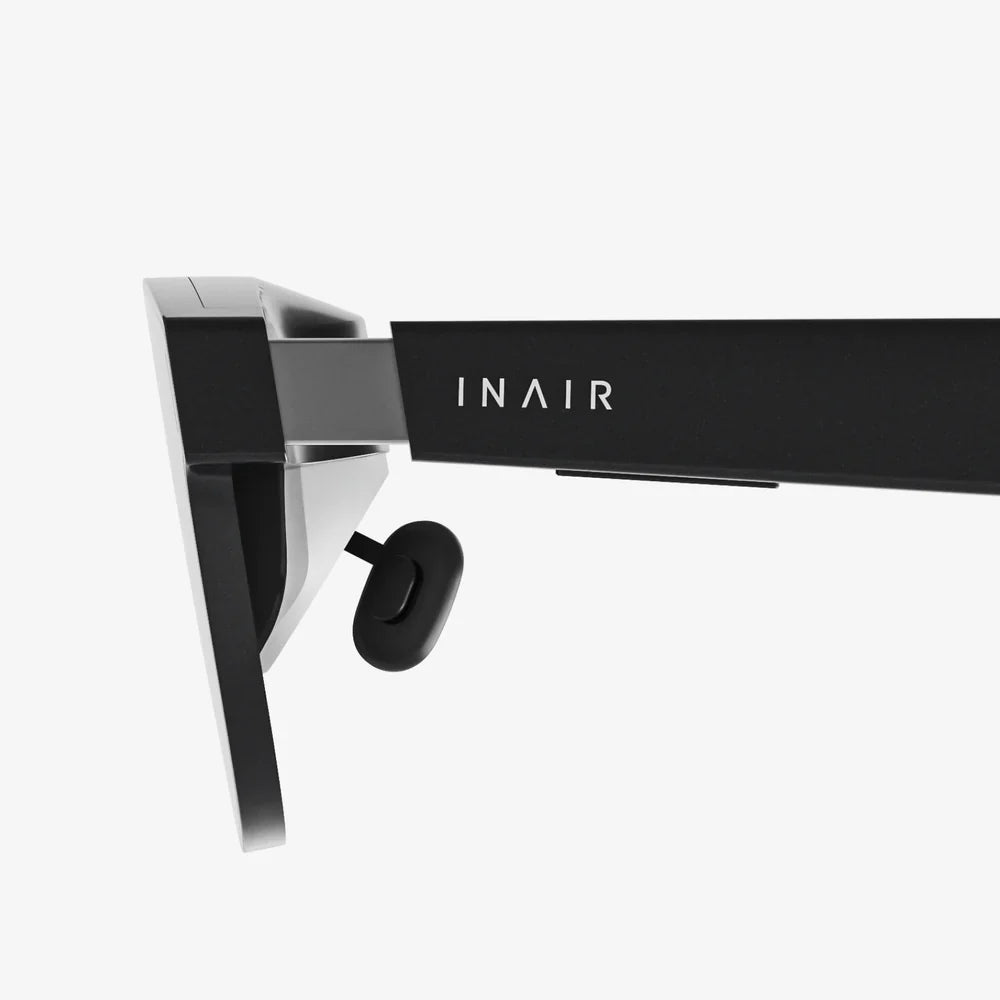
Imagine a world where the boundary between your physical reality and the infinite expanse of the digital universe dissolves into nothingness. Where information, entertainment, and connection are not confined to a screen in your hand or on your desk, but are layered seamlessly over the world you see every day. This is not a distant science fiction fantasy; it is the imminent future being built today, and it’s being worn on the face. The revolution will not be held in your hand; it will be perched on your nose, looking for all the world like a simple pair of stylish glasses, yet containing the power to fundamentally alter human perception and interaction. The era of headset glasses is dawning, and it promises to be one of the most transformative technological shifts of our generation.
The Evolutionary Leap From Prototype to Prodigy
The journey to modern headset glasses is a story of relentless miniaturization and ambitious dreaming. The concept of augmenting reality through eyewear is decades old, with early prototypes often resembling bulky, cumbersome helmets or complex head-mounted displays tethered to room-sized computers. They were the domain of multi-million-dollar military projects, aerospace engineers, and specialized industrial applications. The goal was clear, but the path was cluttered with technological hurdles: processing power, battery life, display technology, and form factor all presented monumental challenges.
The first significant step towards consumer viability came with the advent of basic wearable displays, which offered a monocular, data-overlay experience, often for niche activities like cycling or photography. These were precursors, hinting at the potential but failing to deliver a truly integrated experience. They were gadgets, not companions. The true turning point arrived with the convergence of several key technologies. The smartphone revolution acted as a powerful catalyst, driving down the cost and size of high-quality sensors, micro-displays, and powerful mobile processors. Simultaneously, breakthroughs in waveguide and holographic optics provided a way to project vivid images directly into the user’s field of view without requiring massive, opaque components.
This evolution has moved through distinct phases: from the clunky and obvious, to the functional but awkward, and now, to the elegant and socially acceptable. Today's cutting-edge devices are the result of this painstaking refinement, embodying a design philosophy that prioritizes wearability and style as much as computational prowess. They are no longer just headsets; they are glasses first, technology second—a critical distinction for mass adoption.
Deconstructing the Magic: The Core Technologies at Play
To understand the marvel of modern headset glasses, one must peer into the sophisticated symphony of components working in unison behind the lenses. This is a feat of optical engineering, software intelligence, and industrial design.
The Optical Heart: See-Through Displays
At the core of the experience is the optical system. Unlike virtual reality headsets that block out the world, headset glasses utilize see-through displays, primarily through two advanced methods:
- Waveguide Optics: This technology uses microscopic gratings etched into a thin piece of glass or transparent plastic. Light from a micro-projector is injected into the waveguide, where it "rides" these gratings through total internal reflection before being directed out towards the user’s eye. This allows for a bright, high-resolution image to be overlaid onto the real world while keeping the lens remarkably thin and transparent.
- Holographic Optics: A more recent and even more promising advancement, this approach uses laser light to record complex optical elements into a photosensitive material. These holographic optical elements (HOEs) can perform the same function as waveguide gratings but can be even thinner, lighter, and offer a wider field of view and better image quality, representing the next frontier in visual fidelity.
The Digital Brain: Processing and Sensors
Projecting an image is only half the battle. For that image to be contextually relevant and stable, the device must understand its environment and the user’s intentions. This is handled by a suite of sensors and a dedicated processing unit:
- Cameras: High-resolution cameras track the user’s eye movements (gaze tracking) and map the surrounding environment (simultaneous localization and mapping, or SLAM). This allows for intuitive control—where you look is where you interact—and ensures digital objects remain locked in place in the physical world.
- Spatial Audio: Tiny speakers near the ears create a convincing soundscape that seems to emanate from the environment itself, whether it’s a navigation cue from the street corner ahead or the subtle whisper of a notification.
- Inertial Measurement Units (IMUs): These accelerometers and gyroscopes track the precise movement and orientation of the glasses, thousands of times per second, ensuring the digital overlay doesn’t lag or jitter as you move your head.
The Unseen Power: Battery and Connectivity
All this technology demands power. Ingenious engineering has led to distributed battery systems, often splitting the cell between the two temples to balance weight. Some designs even utilize a small, pocketable battery pack to maximize all-day usage. Seamless connectivity, via Bluetooth and Wi-Fi, ties the glasses to a user’s smartphone, leveraging its cellular connection and computing power for more demanding tasks, creating a powerful symbiotic relationship.
A World Transformed: Applications Across Industries
The true potential of headset glasses is unlocked not in their technical specifications, but in their practical applications. They are a blank canvas for human ingenuity, already finding profound uses across numerous fields.
Professional and Industrial Metamorphosis
In the workplace, headset glasses are moving from experimental gadgets to essential tools, enhancing human capability and efficiency.
- Field Service and Maintenance: A technician repairing a complex machine can see schematics, animated instructions, and torque specifications overlaid directly on the equipment they are working on. A remote expert can see their view and annotate the real world with digital arrows and notes to guide them, reducing errors and eliminating the need for costly travel.
- Healthcare and Surgery: Surgeons can have vital patient statistics, ultrasound data, or 3D anatomical models visualized directly in their line of sight during procedures, keeping their focus on the patient rather than on distant monitors. Medical students can learn anatomy by walking around a life-sized, holographic human body.
- Logistics and Warehousing: Warehouse workers fulfilling orders see digital pick-lists and optimal navigation paths projected onto the aisles, guiding them instantly to the correct items and dramatically speeding up fulfillment processes.
Everyday Life and Consumer Empowerment
Beyond specialized professions, headset glasses promise to redefine daily rituals and personal entertainment.
- Navigation and Exploration: Walking through a new city, directional arrows can be painted onto the sidewalk, historical facts can pop up next to monuments, and restaurant reviews can hover over their storefronts. The world becomes an interactive, informative tour guide.
- Accessibility and Translation: For individuals with hearing impairments, speech could be converted to real-time subtitles displayed in their glasses. For travelers, foreign language signs and menus could be instantly translated and overlaid with the local text, breaking down communication barriers.
- Immersive Entertainment: Imagine watching a movie on a virtual 100-foot screen in your living room, playing a video game where characters duel on your coffee table, or following a cooking tutorial where the recipe and timer float neatly beside your mixing bowl, hands-free.
Navigating the Invisible Frontier: Challenges and Ethical Considerations
With such transformative power comes significant responsibility and a host of challenges that society must proactively address. The path to ubiquity is not without its obstacles.
The Privacy Paradox
The always-on cameras and sensors necessary for these devices to function represent a profound privacy challenge. The potential for continuous environmental recording raises critical questions about consent, data ownership, and surveillance. How do we prevent a future where every conversation in a public café is potentially being recorded by someone’s eyewear? Robust, transparent privacy frameworks, on-device data processing, and clear visual indicators that recording is active will be non-negotiable requirements for public trust.
The Social Contract
The social implications are equally complex. Will conversing with someone wearing headset glasses feel disconcerting if you are unsure whether they are fully present or distracted by a digital feed? New social etiquette will need to evolve to govern their use, much like rules against using phones at the dinner table. The term "digital ghosting" has been coined to describe the act of ignoring the physical world in favor of the digital one—a behavior these devices could exacerbate if not designed and used thoughtfully.
The Digital Divide and Accessibility
As with any advanced technology, there is a risk that headset glasses could widen the gap between the technological haves and have-nots. If they become essential tools for education or high-paying jobs, ensuring equitable access will be crucial. Conversely, their potential to empower individuals with different abilities is immense, offering a chance to create a more inclusive digital world.
The Crystal Ball: Envisioning the Future of Headset Glasses
Looking ahead, the trajectory of this technology points toward even deeper integration into our lives. We are moving toward a future where the technology becomes truly invisible. The next generation of devices will likely shed any remaining bulk, looking indistinguishable from standard fashion eyewear, perhaps even integrating prescription lenses directly. Advancements in artificial intelligence will make the interface more predictive and contextual, anticipating your needs before you even voice them. The ultimate destination is a seamless, always-available ambient computing environment—an intelligent layer over reality that enhances our human experience without isolating us from it.
The journey of headset glasses is a testament to human innovation, a story of taking the impossible and relentlessly working to make it not just possible, but elegant, useful, and personal. They represent a fundamental shift in how we will interact with information and with each other. The screen, that rectangle that has dominated our attention for decades, is beginning to fade away. In its place, a new canvas is emerging—the entire world around us, waiting to be enhanced, explored, and understood in ways we are only just beginning to imagine. The future is not on a screen; it’s right in front of your eyes, clearer than ever before.
Share:
How Does a HUD Work? The Science of Seeing Information in Thin Air
PS Virtual Headset: The Ultimate Gateway to Immersive Gaming Realms