


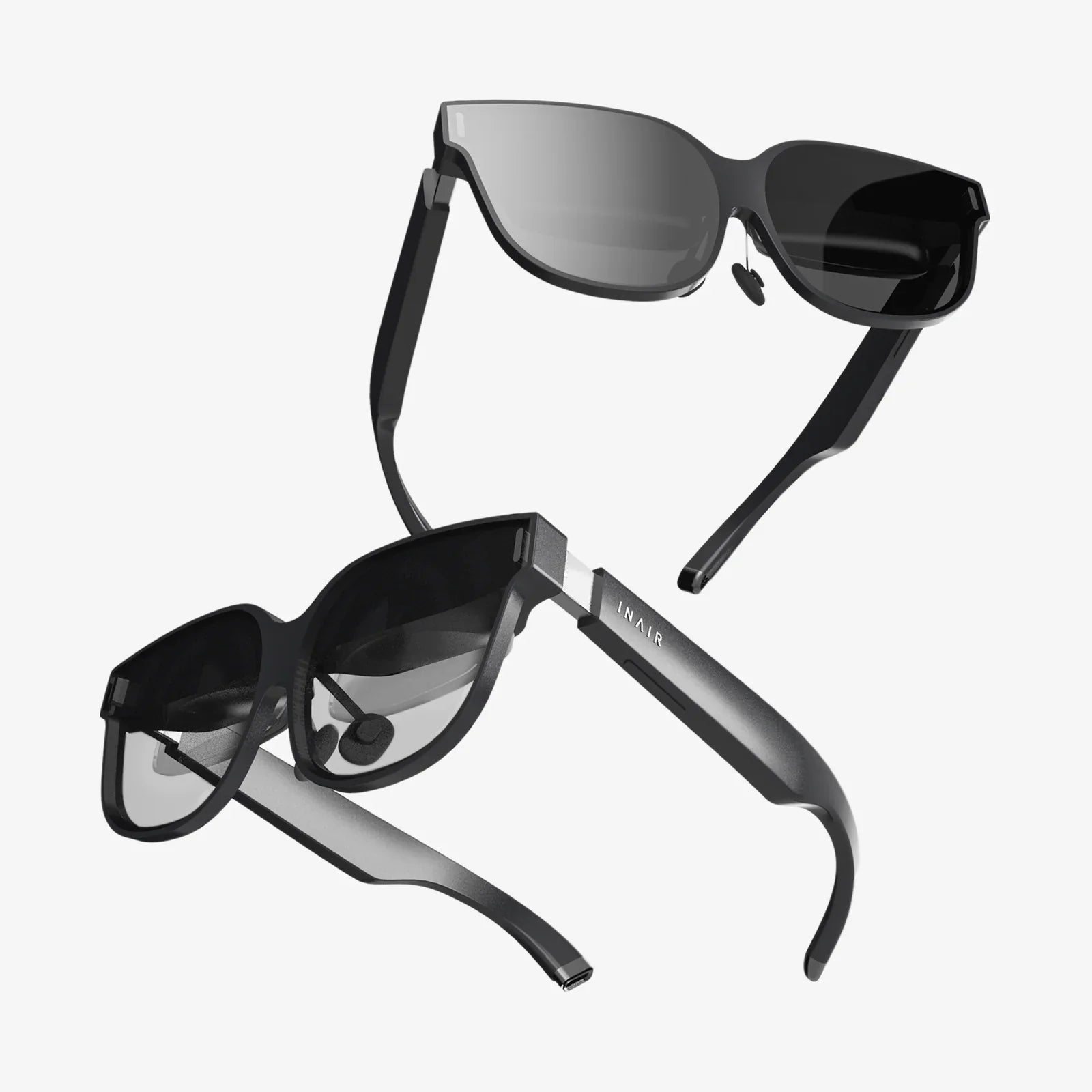
Imagine a world where your entire digital life—your emails, your entertainment, your work, your social connections—floats seamlessly in front of your eyes, accessible with a glance or a whisper, without ever needing to look down at a screen in your hand. This is not a scene from a science fiction film; it is the imminent future being built today through the rapid advancement of headset monitor glasses. This emerging class of wearable technology promises to be the most intimate and transformative computing platform since the smartphone, offering a paradigm shift from looking at a device to looking through one. The race to dominate this new frontier is on, and the implications for how we work, play, and perceive reality are nothing short of revolutionary.
The Architectural Blueprint: How They Work
At their core, headset monitor glasses are a feat of miniaturization and optical engineering, combining elements from augmented reality (AR), virtual reality (VR), and traditional computing into a single, wearable form factor.
The Visual Engine: Waveguides and Micro-LEDs
The most critical component is the display system. Unlike a smartphone or monitor that you look at, these glasses project digital imagery directly onto your retinas. This is primarily achieved through two methods. The first uses miniature micro-OLED or micro-LED displays, incredibly small screens that are positioned near the temples. The light from these displays is then bounced through a series of optical waveguides—essentially clear glass or plastic plates etched with microscopic patterns—that direct the light into your eyes. This creates the illusion that crisp, bright text, videos, and 3D objects are existing in the world around you, superimposed over your normal vision.
The Sensory Suite: Cameras and Sensors
To understand and interact with the environment, these devices are equipped with a sophisticated array of sensors. This typically includes:
- High-resolution cameras: For capturing the world in front of you, enabling features like video recording, object recognition, and translating text in real-time.
- Depth sensors (LiDAR/ToF): To accurately map the three-dimensional space around you, allowing digital objects to occlude behind real-world furniture or stick to a specific wall.
- Inertial Measurement Units (IMUs): Gyroscopes and accelerometers that track the precise movement and rotation of your head, ensuring the digital overlay remains stable and locked in place.
- Eye-tracking cameras: These monitor the movement of your pupils, enabling intuitive gaze-based controls, advanced user authentication, and more realistic avatars in social applications.
Processing and Connectivity
All this data requires serious computational power. Some designs rely on a wired or wireless connection to a nearby powerful computer or smartphone to handle the heavy processing. The most advanced standalone models, however, pack a full system-on-a-chip (SoC), battery, and cooling solution directly into the frames, making them a self-contained computer you wear on your face.
Beyond Novelty: Transformative Applications
The true potential of headset monitor glasses lies not in the technology itself, but in the profound ways it can augment human capability across countless domains.
Redefining the Workspace
The concept of the office is being dismantled, and these glasses are the next logical tool. Imagine a truly portable multi-monitor setup. A developer could have several large virtual code windows arranged around their physical laptop in a coffee shop. A financial analyst could visualize live, interactive 3D graphs of market data floating in their home office. A field technician could have a schematic of the machine they are repairing perfectly overlaid on top of the actual equipment, with remote experts able to see their view and draw annotations directly into their vision. This is spatial computing at its most practical, untethering productivity from a fixed location and screen.
The Future of Entertainment and Social Connection
Entertainment will cease to be a contained experience on a rectangular screen. A movie could play on a virtual 100-foot screen against your living room wall. A strategy game could turn your coffee table into a living game board, with units and terrain rendered in 3D. Socially, the implications are even more profound. Instead of a grid of faces on a video call, you could feel like you are sitting around a virtual campfire with friends from across the globe, their photorealistic avatars mimicking their real-life expressions thanks to advanced sensors. This technology has the potential to combat the loneliness of remote interaction by creating a genuine sense of shared presence.
Enhanced Navigation and Contextual Awareness
Walking through a new city will never be the same. Instead of constantly glancing down at a phone, navigation arrows and street names can be painted onto the pavement itself. Look at a restaurant, and its reviews and today's specials materialize next to its sign. At a museum, each painting could come to life with a curator's commentary. This layer of contextual information, accessible instantly and hands-free, will make us more informed and efficient in our daily lives.
The Inevitable Hurdles: Challenges to Mainstream Adoption
For all their promise, headset monitor glasses face significant obstacles before they can become as ubiquitous as smartphones.
The Form Factor Conundrum
The ultimate goal is a device that is indistinguishable from regular eyeglasses—lightweight, comfortable, and socially acceptable to wear all day. Current technology often results in compromises: devices that are too heavy, too wide, or have a limited field of view. The battery life must last a full waking day, and the processing power must be immense yet not generate uncomfortable heat on the user's face. Solving these engineering puzzles is the primary focus of developers.
The Privacy Paradox
This is perhaps the most significant societal challenge. A device with always-on cameras and microphones worn on your face is a privacy advocate's nightmare. The potential for constant surveillance, unauthorized data collection, and facial recognition in public spaces is a serious concern. Robust, transparent, and user-controlled privacy frameworks will be non-negotiable. The "creep factor" of not knowing if someone is recording you or looking up your profile just by looking at you is a social norm that will need to be navigated carefully.
The Digital Divide and Accessibility
As with any transformative technology, there is a risk of exacerbating existing inequalities. The high initial cost could create a new digital divide between those who can afford this layer of digital augmentation and those who cannot. Furthermore, the technology must be designed with accessibility at its core, ensuring that people with different visual, auditory, and physical abilities can benefit equally.
A Glimpse into the Next Decade
The evolution of headset monitor glasses will not be a single launch event but a gradual progression. Early adopters will likely use them for specific professional applications and gaming. As the technology matures, becomes more affordable, and slims down, we will see a shift toward all-day wear. They will likely become our primary interface with the internet, eventually replacing smartphones for many tasks. The line between accessing the digital world and living in the physical one will blur to the point of invisibility. This will raise profound philosophical questions about attention, memory, and what it means to experience an "authentic" reality when that reality can be edited and augmented at will.
The journey to a world where headset monitor glasses are as commonplace as wristwatches is fraught with technical, social, and ethical challenges. But the vision is too powerful to ignore: a world of limitless information and connection, seamlessly integrated into our perception, empowering us to work, learn, and create in ways we are only beginning to imagine. The device that allows us to see the world anew is coming, and it will change everything.
Share:
Android XR Device News: The Next Frontier in Mobile Computing and Immersive Reality
HUD TV Screens: The Future of Home Entertainment is Transparent