


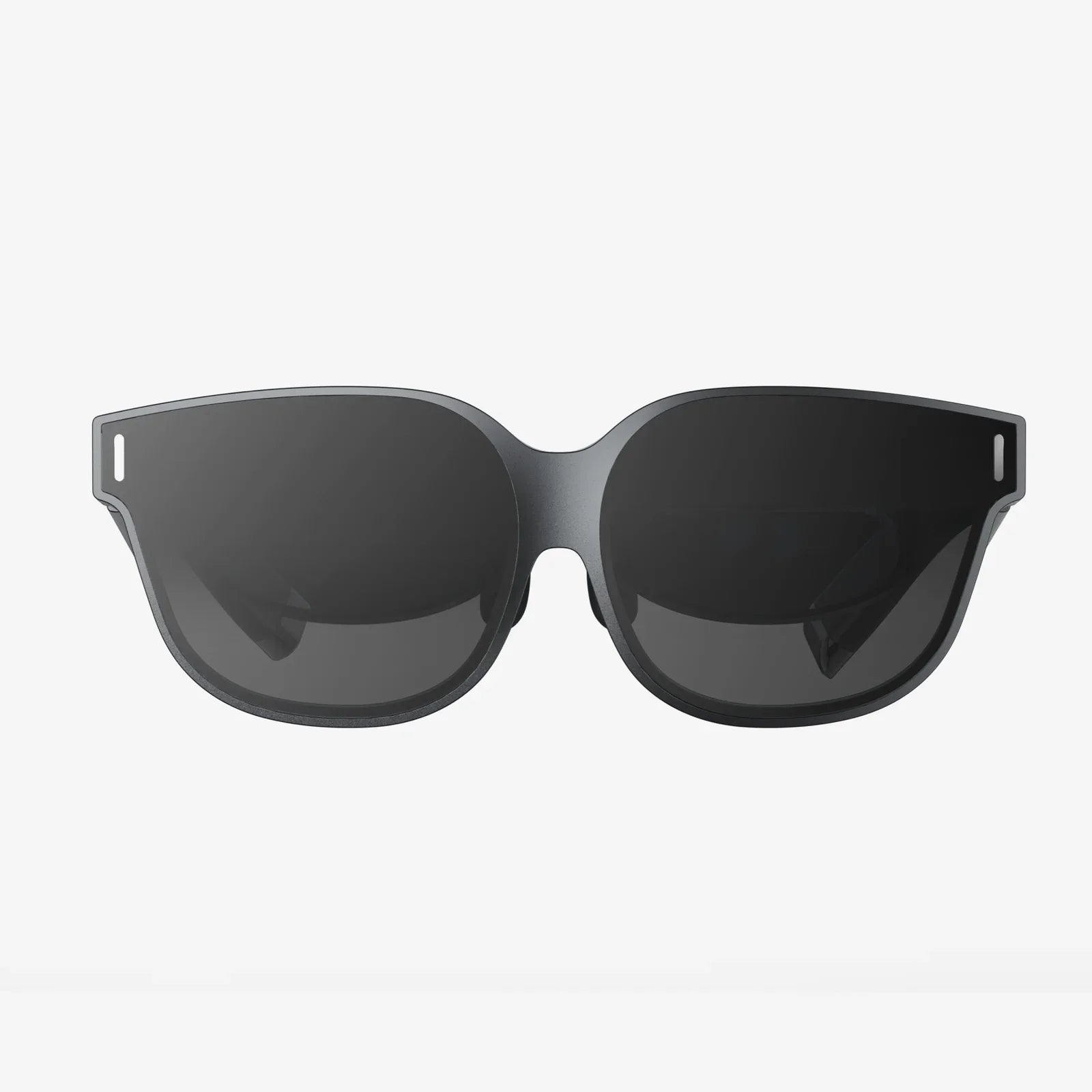
Imagine slipping on a headset and stepping through a portal, not into a pixelated game, but into a world so convincing your brain accepts it as reality—this is the breathtaking promise and rapidly approaching future of high-end virtual reality, a technological frontier poised to redefine every aspect of our lives from the way we work and learn to how we connect and create.
The journey to this point has been one of exponential growth. Early iterations, while revolutionary in concept, were often characterized by low-resolution displays, jarring latency that induced discomfort, and a limited field of view that constantly reminded users they were looking into a screen. Today's high-end systems have shattered those limitations. They are powered by a symphony of cutting-edge technologies: ultra-high-resolution displays measured in pixels-per-inch that eliminate the 'screen door effect,' wide field-of-view lenses that fill your peripheral vision, and inside-out tracking systems that map your physical room with astonishing accuracy, granting you unbridled freedom of movement. The most critical advancement lies in the drastic reduction of motion-to-photon latency—the delay between your head moving and the image updating—which, when combined with high refresh rates, effectively tricks the vestibular system and banishes the specter of simulation sickness for most users.
Beyond the Pixels: The Hardware Arms Race
The pursuit of true immersion has fueled an arms race in hardware innovation. It extends far beyond the visual.
- Haptic Feedback and Embodiment: Next-generation controllers and even full-body haptic suits are moving beyond simple rumble. They provide nuanced tactile feedback, allowing you to feel the texture of a virtual stone, the recoil of a tool, or the pressure of a handshake. This fosters a powerful sense of embodiment, the feeling that your virtual hands and body are truly your own.
- Eye-Tracking and Foveated Rendering: This is a game-changer for both performance and interaction. By precisely tracking where your eyes are looking, a system can dedicate its rendering power to the center of your gaze—where your vision is sharpest—while subtly reducing detail in your periphery. This massively improves graphical fidelity without requiring exponentially more processing power. Furthermore, eye-tracking enables new forms of intuitive UI navigation and social interaction, as avatars can make meaningful eye contact.
- Varifocal Displays and Comfort: A significant hurdle has been the vergence-accommodation conflict—our eyes naturally focus on objects at different distances, but traditional VR headsets fix the focal plane. Experimental varifocal displays dynamically adjust the focus based on what you are looking at, providing a profound leap in visual comfort and realism.
- Audio: High-fidelity, spatialized 3D audio is half of the immersion. Advanced audio engines simulate how sound waves interact with a virtual environment, allowing you to pinpoint the location of a whispering colleague or a distant waterfall with uncanny accuracy, all through a standard pair of headphones.
The Software Frontier: Building Worlds and Experiences
Powerful hardware is nothing without sophisticated software to bring it to life. The creation of high-end VR content is a discipline in itself, blending game development, architectural visualization, and cinematic storytelling.
Developers are crafting vast, persistent virtual worlds that support thousands of simultaneous users. These are not just games; they are emerging social platforms and digital economies. The tools for creation are also becoming more accessible. Professional-grade VR applications allow artists to sculpt 3D models in mid-air, architects to walk clients through unbuilt designs at 1:1 scale, and musicians to compose in a three-dimensional soundscape.
Artificial intelligence plays a crucial role in populating these worlds with believable characters. AI-driven NPCs (Non-Player Characters) can now hold complex, context-aware conversations, recognize users, and react to unpredictable human behavior in ways that feel organic and unscripted, pushing the boundaries of interactive narrative.
Transforming Industries: The Enterprise Metaverse
While consumer entertainment captures headlines, the most immediate and impactful applications of high-end VR are occurring in enterprise and professional fields.
- Medicine and Healthcare: Surgeons practice complex procedures on detailed virtual anatomies, reducing risk and improving patient outcomes. Therapists use controlled VR environments to treat PTSD, phobias, and anxiety disorders through exposure therapy. Medical students can perform virtual dissections and explore the human body in ways a textbook could never allow.
- Architecture, Engineering, and Construction (AEC): Teams scattered across the globe can meet inside a virtual prototype of a new building, inspecting every conduit and beam before a single foundation is poured. This 'digital twin' technology saves millions in costly rework and enhances collaborative design.
- Corporate Training and Collaboration: From training retail employees in a virtual store to simulating dangerous scenarios for first responders, VR provides a safe, scalable, and highly effective training platform. Immersive teleconferencing promises to make flat video calls obsolete, fostering a stronger sense of presence and collaboration among remote teams.
- Retail and Real Estate: Customers can configure a car and take it for a virtual test drive or tour a property on another continent, experiencing the space and flow as if they were physically there.
The Human Connection in a Digital Space
Perhaps the most profound impact of high-end VR is its potential to revolutionize human connection. Social VR platforms are evolving into vibrant digital town squares, concert halls, and classrooms. The sense of 'co-presence'—the feeling of being *with* someone else—is unparalleled in any other digital medium.
With advanced avatar technology that can mirror our facial expressions and body language through headset sensors, our digital representations are becoming increasingly empathetic and authentic. This has staggering implications for maintaining relationships across vast distances, allowing families and friends to share experiences, not just screens. It offers a new frontier for people with mobility or social anxieties to interact and build communities on their own terms.
Navigating the Ethical and Societal Landscape
Such a powerful technology does not arrive without significant questions and challenges. The concept of the 'metaverse'—a persistent network of interconnected virtual spaces—raises critical issues about data privacy, digital identity, and ownership. The biometric data collected by these headsets, from eye movements to facial expressions, is incredibly personal and valuable.
There are also concerns about psychological effects and potential for addiction, as these hyper-real experiences could become more appealing than physical reality for some. Furthermore, the digital divide could widen into a 'reality divide,' where access to these transformative experiences is limited to those with significant means. Ensuring equitable access and establishing robust ethical frameworks will be paramount as this technology continues to mature and integrate into society.
We stand at the precipice of a new dimension, not of science fiction, but of science fact. High-end virtual reality is maturing into a utility as transformative as the smartphone, offering a new lens through which to see our world and imagine others. The headset is becoming a portal to infinite possibilities, and the journey is only just beginning.
Share:
Mixed Reality vs Virtual Reality: A Deep Dive into the Digital Frontier
Is Virtual Reality Good for Your Brain? An In-Depth Exploration of Cognitive Impacts