


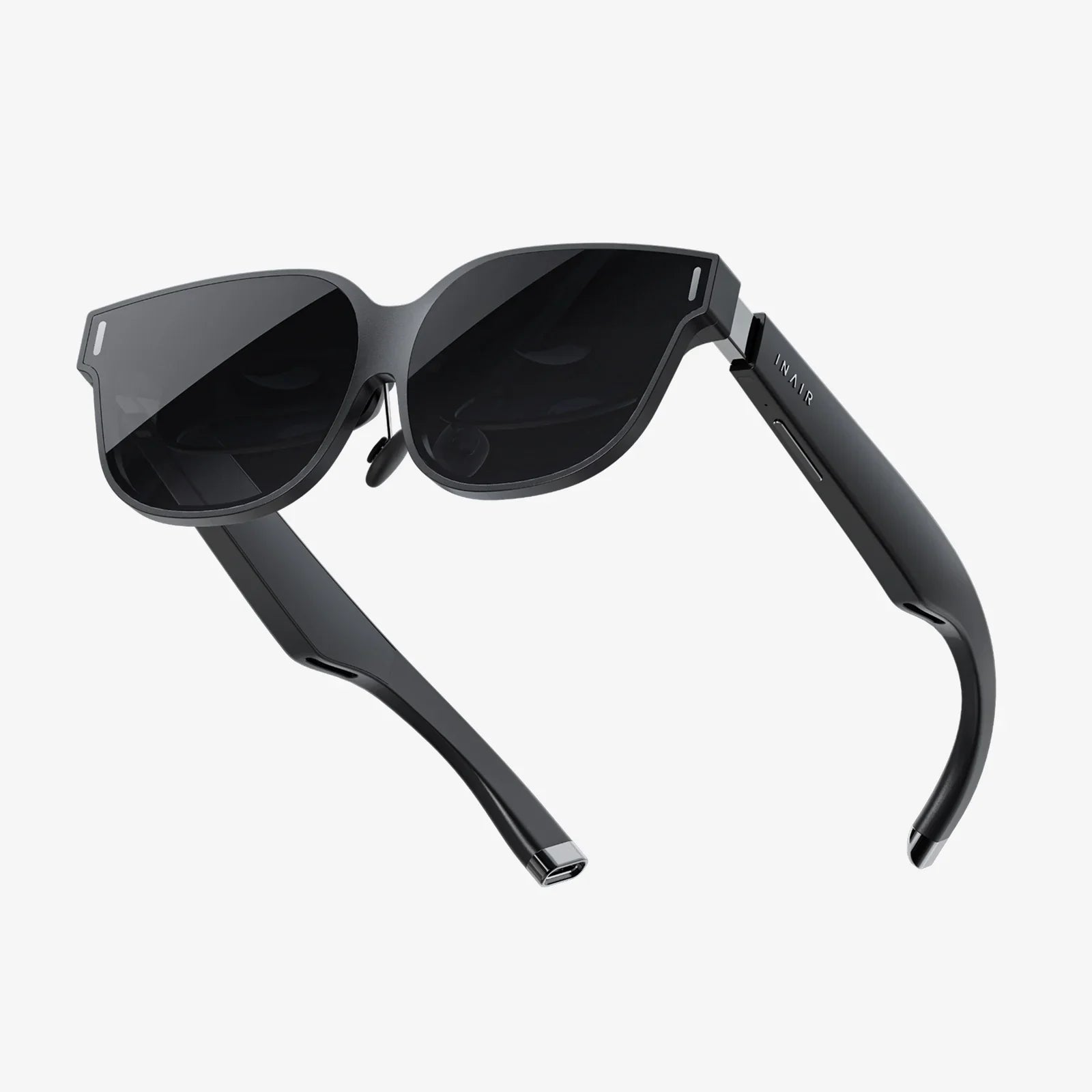
Imagine a world where your glasses do more than just correct your vision—they connect you to a digital universe, protect your health, and adapt to your environment in real-time. This isn't a scene from a science fiction film; it's the reality ushered in by the latest generation of high tech spectacles. The humble eyeglass, a tool centuries in the making, has undergone a radical transformation, evolving from a simple visual aid into a sophisticated wearable computer that sits right on your face. The convergence of nanotechnology, artificial intelligence, and augmented reality has propelled these devices into the forefront of personal technology, promising to change our lives in ways we are only beginning to understand. The future is looking clearer, smarter, and infinitely more connected.
Beyond 20/20: The New Era of Adaptive Lenses
For generations, the primary function of spectacles was static: to bend light in a specific way to correct a refractive error. High tech spectacles have shattered this paradigm, introducing dynamic, intelligent lenses that see, think, and react.
The most groundbreaking advancement is in autofocal technology. Traditionally, progressive lenses offer a fixed corridor of vision. Next-generation lenses use embedded microelectronics and liquid crystal layers to automatically adjust their focal point based on where the wearer is looking. A tiny, imperceptible sensor tracks the user's gaze, determining if they are reading a book, glancing at a computer screen, or looking at a person across the room. The lens then changes its power instantaneously, providing crystal-clear focus at any distance. This eliminates the awkward head movements associated with traditional progressives and offers a more natural, seamless visual experience.
Furthermore, photochromic technology has been supercharged. While old-fashioned lenses darken slowly in response to UV light, new electronic photochromics can transition from clear to dark and back again in less than a second, activated not just by sunlight but by an onboard computer. With a simple voice command or tap on a frame, a wearer can instantly tint their lenses for bright environments, a feature invaluable for drivers emerging from a tunnel or anyone moving rapidly between indoors and outdoors. Some advanced models can even create selective tinting, darkening the top portion of the lens like a permanent sun visor while keeping the bottom clear for reading.
A Window to Another World: Augmented Reality Integration
Perhaps the most futuristic aspect of high tech spectacles is their role as a portal to augmented reality (AR). By projecting digital images directly onto the lenses, these devices overlay a layer of interactive information onto the real world.
The applications are vast and transformative:
- Navigation: Instead of glancing down at a phone, directions are superimposed onto the street in front of you, with arrows pointing to your turn, and icons highlighting points of interest.
- Translation: Look at a foreign street sign or menu, and a real-time translation appears seamlessly over the text, breaking down language barriers instantly.
- Professional Assistance: Technicians can see schematics and instructions overlaid on the machinery they are repairing. Surgeons can have vital signs and 3D anatomical guides projected during procedures.
- Social Connectivity: Imagine seeing the name and recent social media updates of someone you just met at a conference, displayed discreetly next to their face (with privacy controls, of course).
This is achieved through incredibly miniaturized waveguide displays and micro-projectors embedded in the frames. These components bounce light into the lens, which then directs it into the user's eye, creating the illusion that digital objects exist in the physical space around them. The challenge of making this technology both powerful enough to be vivid and efficient enough to not drain a small battery in minutes is a testament to the engineering marvel these spectacles represent.
Guardians of Well-being: Health and Environmental Monitoring
High tech spectacles are becoming vigilant guardians of our health. Packed with an array of subtle sensors, they continuously gather data, offering unprecedented insights into our well-being and our surroundings.
Biometric sensors on the nose pads and temples can monitor key health metrics without any conscious effort from the wearer. These can track:
- UV Exposure: Measuring cumulative exposure to harmful ultraviolet rays throughout the day, alerting the user when it's time to seek shade or be more vigilant about sunscreen.
- Environmental Pollutants: Tiny sensors can detect levels of particulate matter, pollen, and other allergens in the immediate environment, providing real-time air quality updates and warnings, especially useful for those with respiratory conditions.
- Biometric Data: By measuring the subtle reflections of light off the skin beneath the eyes, sensors can accurately track heart rate, stress levels, and even blood oxygen saturation. Advanced models are exploring the potential for non-invasive blood glucose monitoring, a holy grail for diabetics.
- Posture and Fatigue: Accelerometers and gyroscopes can detect if the wearer is slouching over a desk for too long, sending a gentle haptic feedback reminder to sit up straight. They can also analyze blink rate and head position to warn of drowsiness, a critical feature for long-distance drivers.
This constant, passive monitoring creates a rich dataset of personal health information, empowering individuals to make more informed decisions about their lifestyle and proactively manage their health.
The Intelligence Within: Processing Power and Connectivity
None of these features would be possible without a significant amount of computing power packed into the sleek form factor of a pair of spectacles. This is where the true "high tech" label is earned.
Modern smart frames contain a System-on-a-Chip (SoC) similar to those found in smartphones, albeit optimized for extreme low-power operation. This miniature computer is responsible for processing data from all the sensors, running machine learning algorithms for gaze tracking and object recognition, and managing the AR display. It connects to the internet and other devices via Bluetooth Low Energy, Wi-Fi, and even 5G, ensuring a constant and seamless flow of information.
User interaction is designed to be intuitive and unobtrusive. Instead of touchscreens, which are impractical on lenses, control is managed through:
- Voice Commands: Built-in microphones and speakers allow for hands-free control using digital assistants.
- Touch-Sensitive Temples: Swiping along the arm of the glasses can adjust volume, change songs, or scroll through notifications.
- Gesture Control: Some models use outward-facing cameras to interpret hand movements made in front of the body, allowing users to interact with virtual menus.
All of this is powered by a compact battery integrated into the frames, designed to last a full day on a single charge, often using innovative induction charging cases to make power management effortless.
Design Meets Technology: The Aesthetics of the Future
A major historical barrier to the adoption of earlier smart glasses was their bulky, geeky aesthetic. Today, the industry mantra is clear: technology must be invisible. The goal is to create devices that people would want to wear even if they had no tech features at all.
This has led to incredible innovations in materials science and design. Frames are now constructed from advanced, lightweight polymers and memory metals that are both durable and comfortable. The electronic components—the batteries, chips, and sensors—are distributed strategically throughout the frame and temples to balance weight and maintain a profile that is nearly indistinguishable from traditional high-end eyewear.
The choice of materials also considers sustainability, with many manufacturers pioneering the use of recycled metals and bio-acetates derived from renewable sources. The era of sacrificing style for functionality is over; the next generation of high tech spectacles are fashion statements in their own right.
Navigating the New Frontier: Privacy and Social Implications
With great power comes great responsibility, and the capabilities of high tech spectacles raise important questions about privacy and social etiquette. A device that can record video, recognize faces, and constantly collect environmental data inherently carries the potential for misuse.
Manufacturers are addressing these concerns through both technology and design. Physical hardware shutters that block cameras provide a clear, visual indicator to others that recording is not active. Privacy lights are mandated to signal when a camera is in use. Furthermore, robust data encryption and on-device processing are becoming standard, ensuring that sensitive biometric and location data is not transmitted to the cloud without explicit user consent.
The social contract around these devices is still being written. Etiquette will evolve to determine when it is appropriate to use AR features in conversation or to record in public. As with any transformative technology, a dialogue between users, manufacturers, and regulators is essential to ensure that the future they build is not only advanced but also respectful and ethical.
The journey of eyeglasses from simple vision correctors to intelligent companions is one of the most fascinating evolutions in modern technology. High tech spectacles are no longer just about seeing the world better; they are about understanding it more deeply, interacting with it more meaningfully, and protecting ourselves within it more proactively. They represent the perfect fusion of the physical and digital worlds, worn right on our noses. As the technology continues to shrink and become more integrated, we are stepping into an era where our view of reality will be limited only by our imagination.
Share:
Holographic Television: The Future of Entertainment is Here and It’s Projecting a New Reality
XR Means Exploring the Blurred Lines Between Our World and the Digital One