


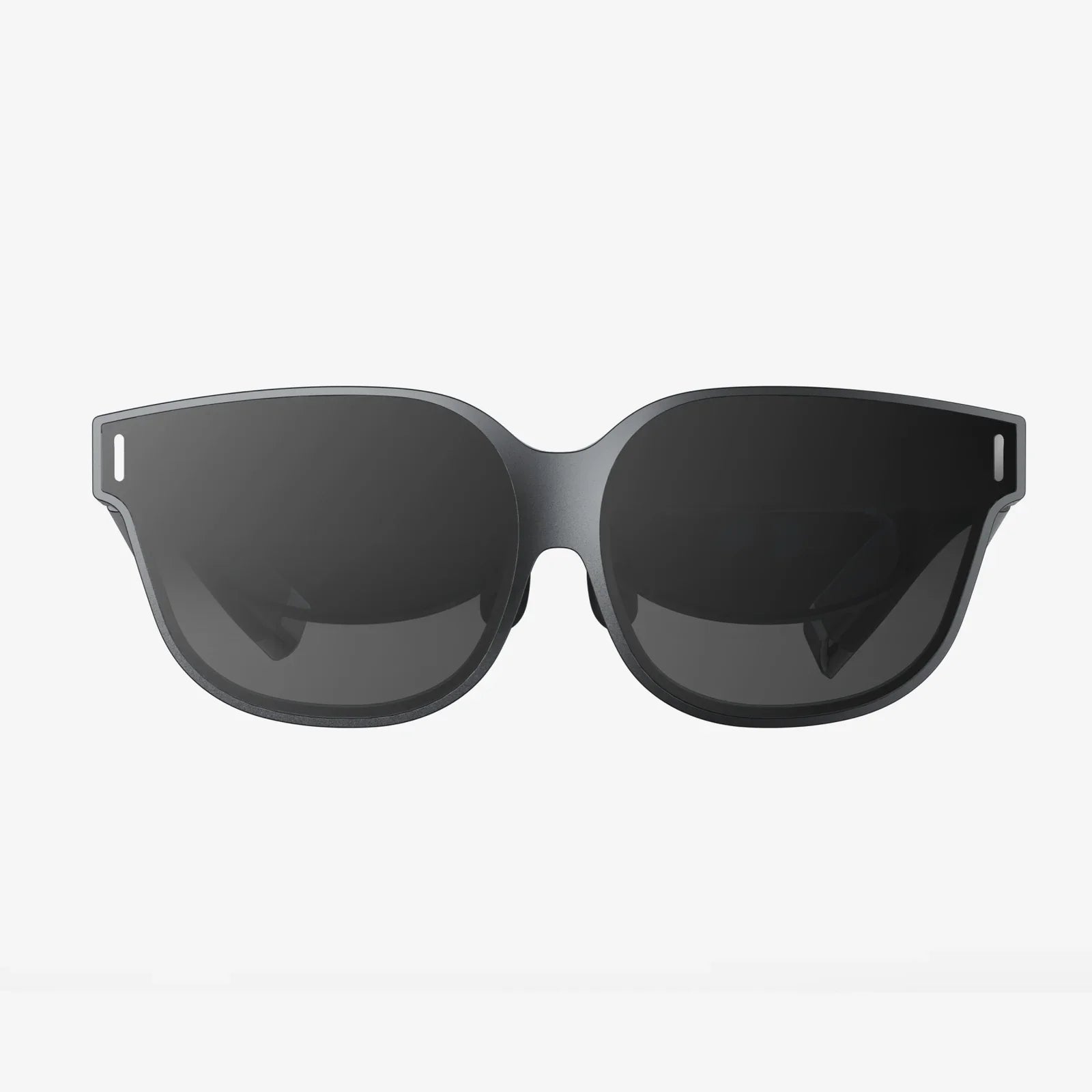
Imagine slipping on a device and instantly being transported to a fully-realized digital universe, or having critical information about the world around you overlaid seamlessly onto your field of vision. This is no longer the stuff of science fiction; it’s the reality being built today, and at the very heart of this technological revolution lies a critical, yet often overlooked, component: the HMD display. This intricate piece of optical engineering is the gateway, the final frontier between the vast world of digital data and the human perception of reality. The journey of these displays, from clunky, low-resolution prototypes to the stunningly crisp and immersive windows of today, is a story of relentless innovation that is quietly reshaping our world in profound ways.
The Core of the Experience: Defining the HMD Display
At its simplest, an HMD display refers to the high-resolution screen or screens housed within a head-mounted device, positioned mere centimeters from the user's eyes. But to call it merely a "screen" is a dramatic oversimplification. It is a sophisticated optical system designed to solve a unique challenge: how to present a digital image that is comfortable, in-focus, and expansive when placed too close for the human eye to naturally focus on. This system typically comprises the micro-display panels themselves, a series of specialized lenses, and often, complex light-guiding elements that bend and shape the image onto the retina. The ultimate goal is to create a convincing and usable visual interface that feels less like looking at a monitor and more like an extension of one's own vision.
A Journey Through Time: The Evolution of Display Technology
The history of HMD displays is a chronicle of overcoming significant limitations. Early systems, often developed for military and aerospace applications, relied on Cathode Ray Tube (CRT) technology. These were incredibly bulky, power-hungry, and offered poor resolution, but they proved the concept's potential. The revolution began with the adoption of Liquid Crystal Display (LCD) technology. LCDs were smaller, lighter, and more efficient, making consumer-grade devices a tangible possibility for the first time. However, they often suffered from motion blur and slow response times.
The next great leap forward came with Organic Light-Emitting Diode (OLED) and its variant, Active-Matrix OLED (AMOLED). This technology allowed each pixel to produce its own light, enabling perfect blacks, a drastically higher contrast ratio, and faster pixel response times—critical for eliminating motion smearing in fast-paced virtual environments. The most recent frontier involves micro-LED technology, which promises the perfect blend of OLED's perfect blacks and high contrast with LCD's high brightness and longevity, all while being incredibly small and power-efficient. Each evolutionary step has been geared toward higher pixel density, lower persistence, better color accuracy, and increased efficiency.
Key Technical Specifications: What Makes a Great Display?
Evaluating an HMD display requires looking beyond standard screen specs. Several unique factors determine the quality of the experience:
- Resolution and Pixels-Per-Degree (PPD): While total resolution (e.g., 1920x1832 per eye) is important, PPD is the true measure of sharpness. It calculates how many pixels are packed into one degree of your field of view. A low PPD results in the "screen-door effect," where users can see the gaps between pixels, shattering immersion. Modern high-end displays strive for PPD figures above 25, approaching the perceived sharpness of a 1080p monitor.
- Field of View (FoV): This is the angular extent of the observable world presented at any given moment. A narrow FoV feels like looking through binoculars, while a wider FoV (100 degrees and above) is essential for a truly immersive and peripheral-vision-filling experience. There is a constant engineering trade-off between FoV, resolution, and the form factor of the device.
- Refresh Rate and Persistence: A high refresh rate (90Hz, 120Hz, and now even 144Hz+) is crucial for smoothness and comfort, reducing latency and the judder that can cause simulator sickness. Low persistence is a related technique where the display flashes each frame for a very short duration instead of keeping it lit, eliminating motion blur caused by the eye tracking moving objects.
- Optical Stack and Lens Clarity:
The physical lenses placed between the display and the eyes are as important as the panels themselves. Their job is to focus the image correctly and warp it to cover a wide field of view. Fresnel lenses, with their concentric circular ridges, have been common for their light weight and cost, but they can introduce god rays and glare around high-contrast elements. Advanced pancake lenses are now emerging, using polarization folding to create a much more compact optical path, enabling slimmer and lighter device designs with superior edge-to-edge clarity and minimal optical artifacts.
Beyond Entertainment: The Expansive Applications of HMD Displays
While gaming and immersive media are the most visible applications, the impact of advanced HMD displays extends far beyond.
- Enterprise and Manufacturing: Technicians can overlay schematics and instructions directly onto complex machinery they are repairing. Warehouse workers can see optimized picking and packing routes visualized in their space, dramatically improving logistics efficiency. Architects and engineers can walk clients through full-scale 3D models of unbuilt structures.
- Healthcare and Medicine: Surgeons can access vital patient statistics, ultrasound data, or 3D anatomical models in their line of sight without looking away from the operating table. Medical students can practice complex procedures on virtual cadavers, and therapists are using immersive environments to treat PTSD, phobias, and anxiety disorders.
- Design and Collaboration: Global teams can meet in a shared virtual space around a 3D model of a new product, examining it from every angle as if it were physically present. This collapses geographical barriers and transforms the iterative design process.
- Training and Simulation: From training pilots in realistic flight simulators to preparing soldiers for combat scenarios or teaching firefighters how to navigate zero-visibility environments, HMD displays provide a safe, controlled, and highly realistic training ground.
The Human Factor: Balancing Immersion with Comfort and Safety
The pursuit of technical excellence is always tempered by human physiological constraints. A primary challenge is Vergence-Accommodation Conflict (VAC). In the real world, our eyes converge (cross) and focus (accommodate) in tandem on an object. In most current HMDs, the display is at a fixed focal distance, but virtual objects can appear at different depths. This mismatch can cause eye strain, headaches, and visual fatigue. Next-generation displays are exploring varifocal and light field technologies to dynamically adjust focus and solve this fundamental problem. Furthermore, device ergonomics—weight distribution, heat management, and interface design—are paramount. The most technologically advanced display is useless if the device is too uncomfortable to wear for more than a few minutes.
Peering Into the Future: What's Next for HMD Displays?
The trajectory of HMD display technology points toward a future where the line between the digital and physical becomes increasingly blurred. We are moving toward retinal resolution—a level of pixel density so high that the human eye cannot distinguish individual pixels, finally eradicating the screen-door effect entirely. Varifocal and light field displays will mature, resolving the accommodation conflict and making long-term use as comfortable as looking at the natural world. The ultimate goal is the development of true holographic displays, which could project light fields that accurately replicate how light behaves from real objects, creating digital content that is visually indistinguishable from reality. Furthermore, integration with emerging fields like brain-computer interfaces could eventually allow for visual experiences generated directly by neural signals, bypassing the eyes altogether.
The humble HMD display, often hidden behind layers of plastic and glass, is the unsung hero of the spatial computing era. It is the canvas upon which our digital dreams are painted, the lens through which we will learn, work, and connect in the decades to come. Its continued evolution promises not just better entertainment, but a fundamental shift in how we perceive and interact with information itself, unlocking new realms of human potential and understanding that we are only just beginning to imagine.
Share:
Best Rated VR: A Deep Dive into the Pinnacle of Immersive Technology
Best Rated VR: A Deep Dive into the Pinnacle of Immersive Technology