


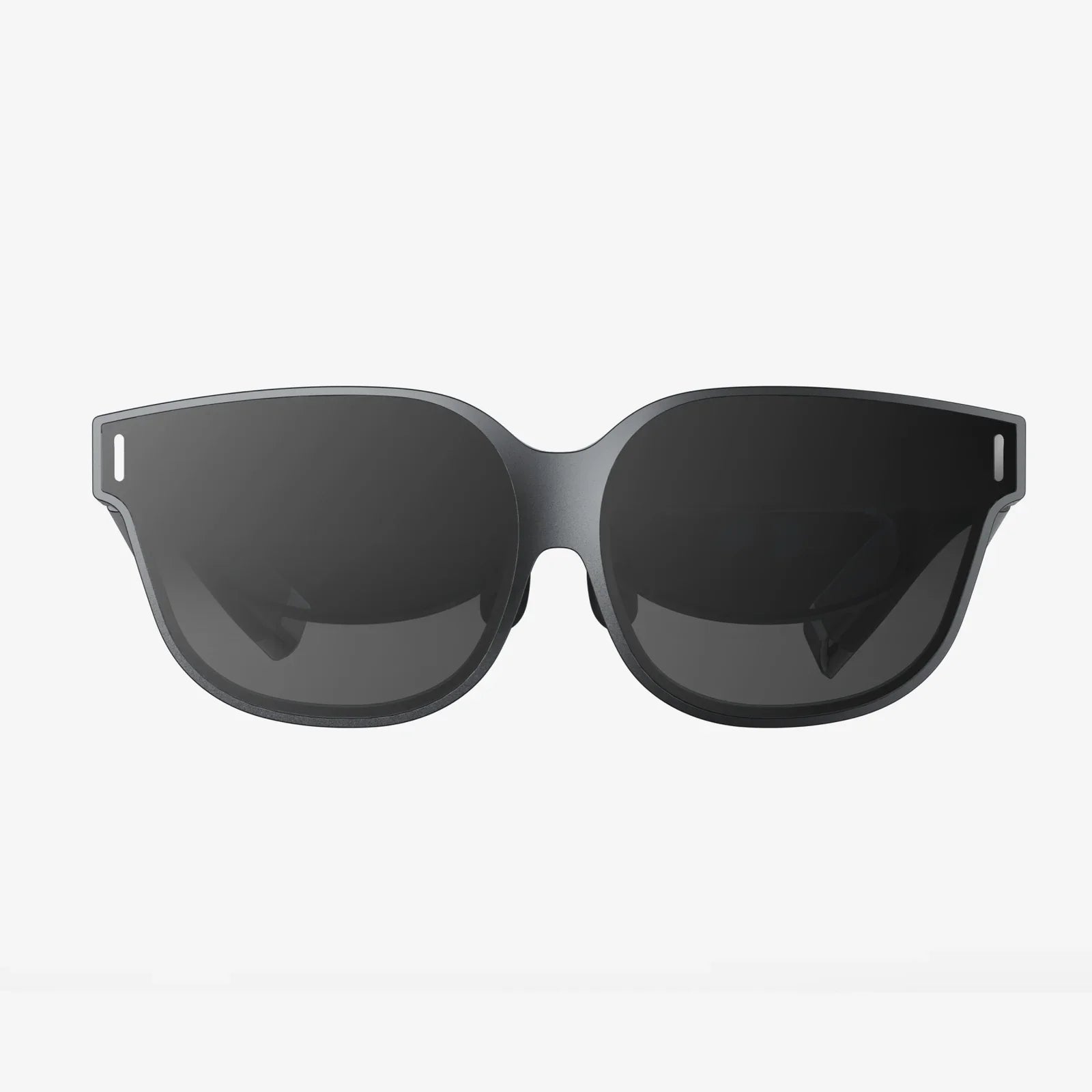
Imagine a world where information is not confined to a screen in your hand or on your desk, but is seamlessly woven into the very fabric of your perception. This is the promise, and increasingly the reality, of the Head-Mounted Display (HMD). More than just a piece of hardware, the HMD represents a fundamental shift in our relationship with technology, acting as a gateway to immersive digital realms and an augmentation of our own reality. It’s a technology that has captured the imagination of futurists for decades and is now rapidly maturing, poised to redefine everything from how we work and play to how we connect and learn. The journey of the HMD is a story of technological convergence, human ingenuity, and a future that is being built right before our eyes—if we know where to look.
From Sci-Fi to Reality: A Brief History of Head-Mounted Displays
The concept of a personal visual display worn on the head is not a product of the 21st century. Its roots stretch back surprisingly far, born in the realms of science fiction and military research long before the computing power to make it viable even existed. Early prototypes in the 1960s, often referred to as head-mounted displays, were monstrously heavy, offered primitive graphics, and were tethered to room-sized computers. They were tools for specialized simulation and research, far removed from the consumer devices we envision today.
The 1980s and 1990s saw the term gain traction, with advancements in miniaturization and display technology. However, these early forays were often commercial failures, held back by clunky designs, low resolution, high costs, and a lack of compelling software. They were a glimpse of a potential future, but one that the world was not yet ready to embrace. It wasn't until the 2010s that a perfect storm of technological progress—faster mobile processors, high-density micro-displays, precise motion sensors, and sophisticated tracking systems—finally enabled the creation of comfortable, powerful, and accessible HMDs. This era marked the transition of the HMD from a speculative concept to a tangible and rapidly evolving technology platform.
Deconstructing the Device: Core Technologies Inside a Modern HMD
At its heart, an HMD is a sophisticated fusion of several key technologies, each critical to creating a convincing and comfortable user experience.
Visual Display Systems
This is the core of any HMD—the screens that are placed just centimeters from the user's eyes. Modern devices primarily use one of two technologies: OLED (Organic Light-Emitting Diode) or LCD (Liquid Crystal Display) panels. OLEDs are prized for their perfect blacks, high contrast ratios, and fast response times, which are crucial for preventing motion blur. LCDs often achieve higher pixel densities, reducing the "screen-door effect" where users can perceive the gaps between pixels. These micro-displays are magnified by sophisticated lenses that create a wide field of view, making the image appear large and immersive rather than like looking through a small window.
Tracking and Sensors
For an HMD to create a believable experience, it must understand its own position and orientation in space, as well as the user's movements. This is achieved through a suite of sensors including:
- Gyroscopes & Accelerometers (IMUs): Track the rotation and acceleration of the user's head with extreme speed and precision.
- Cameras: Used for both inside-out positional tracking (where the HMD uses its own cameras to map the environment and locate itself within it) and for enabling mixed reality experiences by pass-through video.
- Infrared Sensors: Often used for eye-tracking, which enables foveated rendering (dynamically rendering the highest detail only where the user is looking to save processing power) and more intuitive interaction.
Audio and Interaction
Immersion is not solely a visual experience. Spatial audio is a critical component, using headphones and advanced software to make sounds appear to come from specific points in the 3D space around the user. Interaction paradigms are equally diverse, ranging from handheld motion controllers that track the user's hands, to sophisticated computer vision algorithms that allow for bare-hand tracking and gesture control, creating a more natural and intuitive interface.
Processing Power
There are two primary architectural approaches. Tethered HMDs act as high-resolution displays, offloading all the intense graphical processing to a powerful external computer or console, enabling the highest-fidelity experiences. Standalone HMDs, on the other hand, have all the necessary computing hardware, sensors, and battery built into the headset itself, offering complete wireless freedom and accessibility at the cost of some raw graphical power. The choice between these two represents a trade-off between fidelity and freedom.
A Spectrum of Experience: Understanding AR, VR, and MR
Not all HMDs are created equal. They exist on a spectrum, often referred to as the reality-virtuality continuum, defined by how they blend the digital and physical worlds.
Virtual Reality (VR)
VR HMDs are designed for full immersion. They completely block out the user's physical surroundings and replace them with a computer-generated environment. Users are transported to entirely new worlds, whether that's a fantasy game, a simulated training facility, or a virtual meeting room. This is typically achieved with opaque displays and requires robust tracking to prevent disorientation and motion sickness. The primary goal of a VR HMD is to make the user forget their physical location and accept the digital world as their reality.
Augmented Reality (AR)
AR HMDs, sometimes called smart glasses, are designed to overlay digital information onto the user's view of the real world. Instead of replacing reality, they augment it. This can be achieved with either optical see-through (using semi-transparent waveguides or mirrors to project images directly into the eye while allowing light from the real world to pass through) or with video pass-through (using cameras to capture the real world and then digitally compositing graphics on top of that video feed). The goal is to provide contextual information—like navigation arrows on the street, schematics overlaid on machinery, or a virtual screen floating in your living room—without disconnecting the user from their environment.
Mixed Reality (MR)
MR is a more advanced subset of AR. It not only overlays digital content but also allows that content to interact intelligently with the real world. An MR HMD understands the geometry of the environment, allowing a virtual character to hide behind a real sofa or a digital ball to bounce off a real wall. This requires deep integration of sensors, computer vision, and processing to create a cohesive blend where digital objects appear to be truly present in the user's physical space.
Transforming Industries: The Practical Applications of HMDs
While entertainment and gaming are the most visible applications, the impact of HMD technology is being felt across a vast range of professional fields.
Healthcare and Medicine
The medical industry is embracing HMDs for training, planning, and treatment. Surgeons can use AR overlays to see patient data, CT scans, or ultrasound imagery directly in their field of view during procedures, without looking away from the operating table. Medical students can practice complex surgeries in risk-free VR simulations. HMDs are also being used for phobia treatment through controlled exposure therapy, pain management by distracting patients in immersive environments, and for physical rehabilitation by turning exercises into engaging games.
Enterprise and Industrial Design
In manufacturing and maintenance, technicians can use AR HMDs to view schematics, receive remote expert guidance (with an expert seeing what they see and annotating their view in real-time), and follow step-by-step instructions overlaid directly onto the machinery they are repairing. Architects and engineers can walk clients through full-scale 3D models of unbuilt structures, and designers can collaborate in shared virtual spaces regardless of their physical location, manipulating 3D prototypes with an intuitive hands-on approach.
Education and Training
HMDs offer unparalleled potential for experiential learning. Instead of reading about ancient Rome, students can take a virtual field trip and walk its streets. Instead of watching a video about cellular biology, they can shrink down and explore a human cell from the inside. This learning-by-doing model in a safe, virtual environment dramatically improves knowledge retention and engagement. It also provides training for high-risk professions—like firefighters, pilots, or police officers—in a completely safe but highly realistic setting.
Remote Collaboration and the Future of Work
The concept of the "metaverse" is deeply tied to HMD technology. It envisions a persistent set of virtual spaces where people can work, socialize, and collaborate as embodied avatars. HMDs are the primary portal into these spaces. This has profound implications for remote work, enabling a sense of "presence" and non-verbal communication that is impossible on a traditional video call. Teams can brainstorm on virtual whiteboards, analyze 3D data models together, or conduct virtual conferences, breaking down geographical barriers and creating new paradigms for collaboration.
The Human Factor: Challenges and Societal Considerations
Despite its immense potential, the path forward for HMD technology is not without significant hurdles and important ethical questions.
Technical and User Experience Hurdles
For widespread adoption, several technical challenges remain. Visual Fidelity: Displays need even higher resolutions, wider fields of view, and solutions for visual comfort issues like vergence-accommodation conflict (where the eyes struggle to focus on objects at different virtual depths). Form Factor: Devices need to become lighter, more comfortable, less power-hungry, and ultimately, as socially acceptable and easy to wear as a pair of everyday glasses. Battery Life: Especially for standalone devices, achieving all-day battery life is a major engineering challenge.
Privacy, Security, and Data Ethics
An HMD is arguably the most intimate computing device ever conceived. It has the potential to see what the user sees, hear what they hear, and track their eye movements, attention, and biometric responses. This creates a treasure trove of incredibly sensitive data. Critical questions arise: Who owns this data? How is it stored and used? Could it be used for targeted advertising or manipulation? Could eye-tracking data reveal a user's unspoken emotions or medical conditions? Establishing robust ethical frameworks and security standards is paramount to building trust in this technology.
Social and Psychological Impact
The long-term effects of prolonged immersion in virtual environments are not yet fully understood. There are concerns about social isolation, as people might choose digital interactions over physical ones. The concept of "reality blurring" raises questions about how constant augmentation might affect our perception of the real world. Furthermore, the potential for hyper-realistic virtual experiences introduces new ethical dilemmas in content creation and consumption. Navigating these societal impacts will require ongoing dialogue among technologists, psychologists, ethicists, and policymakers.
The journey of the HMD is far from over; in many ways, it's just beginning. We are moving beyond the era of clunky prototypes and niche applications into a age where these devices will become as ubiquitous and transformative as the smartphone. The next decade will see the boundaries between physical and digital dissolve further, giving rise to new forms of creativity, communication, and human experience that we can only begin to imagine. The head-mounted display is not just a window into virtual worlds; it is a mirror reflecting our own technological ambitions and a lens focusing on a future waiting to be shaped.
Share:
Next Gen VR: The Unseen Revolution Reshaping Our Digital Reality
Holographic Computer The Future of Human-Computer Interaction is Here