


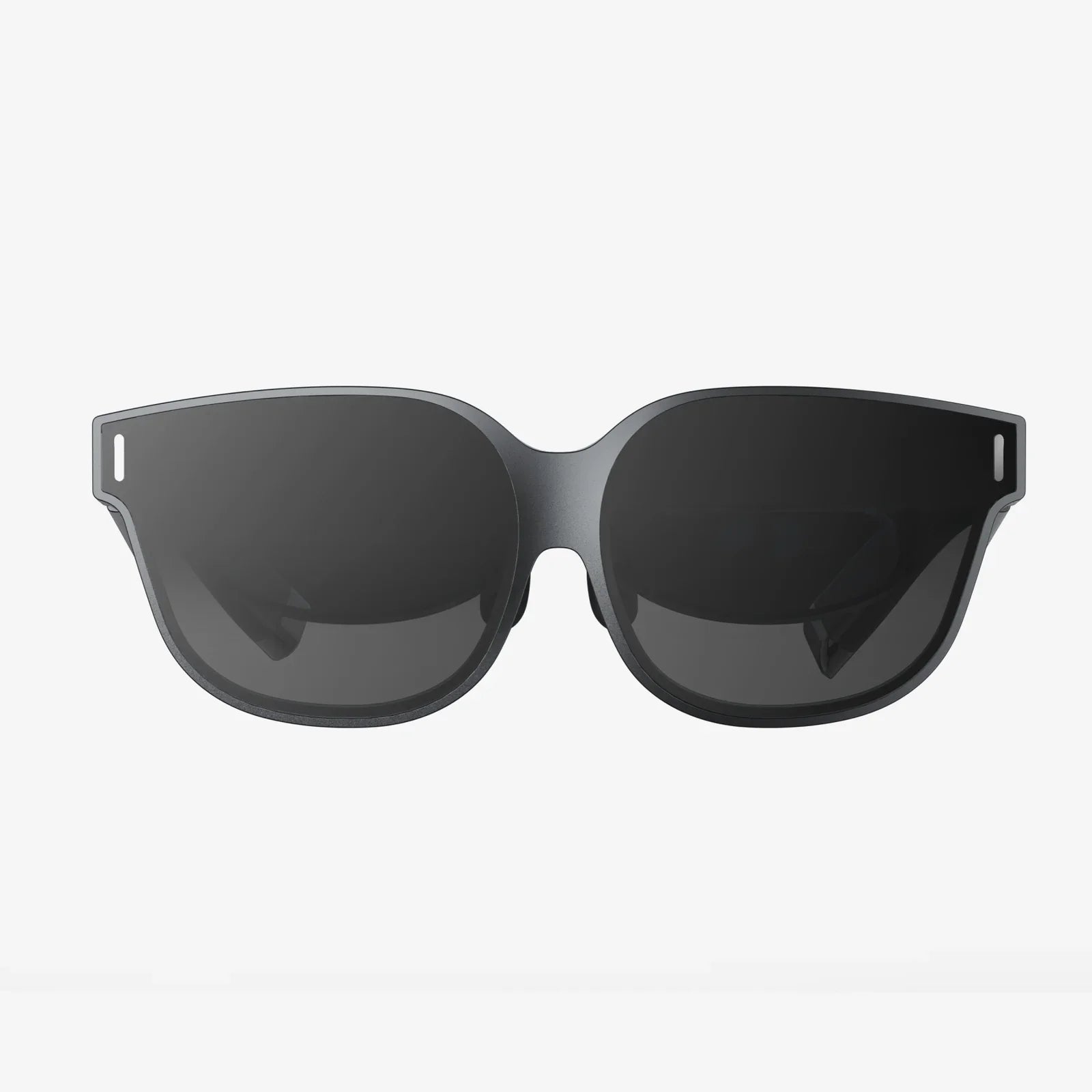
Imagine a world where your digital life isn't confined to a flat screen but is instead painted onto the very fabric of your reality, where information, entertainment, and social connection exist as tangible, interactive holograms that only you can see and manipulate. This is not a distant science fiction fantasy; it is the imminent future being forged by the rapid development of hologram augmented reality glasses, a technology poised to dissolve the final barrier between the digital and the physical.
The Architectural Blueprint: How Holographic AR Glasses Construct a New Reality
At its core, this technology is a symphony of advanced components working in perfect harmony to create a seamless illusion. Unlike their virtual reality counterparts, which seek to replace the world, hologram augmented reality glasses are designed to augment it. This begins with a complex array of micro-sensors, including accelerometers, gyroscopes, and magnetometers, which constantly track the precise position and orientation of the user's head in three-dimensional space. This data is the foundational coordinate system upon which digital content is anchored.
The true magic, however, lies in the display technology. Several pioneering methods are employed to project light directly into the user's eyes. Some systems utilize waveguide optics, where light from a micro-projector is channeled through a transparent glass lens etched with microscopic gratings that bend and direct the light toward the retina. Others experiment with holographic optical elements or even retinal projection, which sketches images directly onto the eye. The result is the perception of digital objects—text, 3D models, animated characters—occupying real space, with realistic occlusion, depth, and scale.
Beyond Novelty: The Practical Revolution Across Industries
The potential applications for this technology stretch far beyond gaming and entertainment, promising to revolutionize entire sectors of the global economy.
Transforming the Frontlines of Work
In fields where hands-free access to information is critical, hologram AR glasses are a game-changer. A surgeon in an operating theater could see a patient's vital signs, 3D anatomical models from recent scans, or guidance from a remote specialist overlaid directly on their field of view, without ever looking away from the procedure. Similarly, a field engineer repairing a complex piece of machinery could have schematics, step-by-step instructions, and sensor data holographically pinned to the equipment itself, drastically reducing errors and training time.
Reimagining Design and Collaboration
The creative and architectural professions stand to be utterly transformed. Designers and architects can interact with life-size, holographic prototypes of their creations, walking around them, peering inside, and making real-time adjustments with gesture controls. Remote collaboration ceases to be a gallery of faces on a screen and becomes a shared, virtual workspace where participants from across the globe can manipulate the same 3D models as if they were in the same room, pointing, annotating, and building together in a truly immersive environment.
Augmenting Everyday Life
On a more personal level, the implications are staggering. Navigation will evolve from a blue dot on a map to glowing directional arrows and signs superimposed onto the streets ahead. Language barriers could crumble as real-time translation appears as subtitles beneath a speaking person. Your home could become a dynamic control center, with interactive dashboards for climate, security, and entertainment floating on your walls, accessible with a glance or a gesture.
The Human Factor: Navigating the Social and Ethical Labyrinth
As with any paradigm-shifting technology, the rise of hologram AR glasses is not without its profound challenges and ethical dilemmas. The very act of mediating our perception of reality through a corporate-owned device raises urgent questions.
The Privacy Paradox
Devices equipped with always-on cameras and microphones, continuously scanning and interpreting the environment, represent a privacy challenge of unprecedented scale. The potential for unauthorized data collection, facial recognition, and the creation of persistent behavioral profiles is a significant concern. Robust regulatory frameworks and transparent data policies will be essential to prevent a dystopian future of perpetual surveillance.
The Blurring of Realities
When everyone can customize their reality with personalized filters, information feeds, and digital artifacts, we risk fracturing our shared experience of the world. Could this technology accelerate the spread of misinformation by allowing it to be visually embedded into environments? Will it deepen social divides as people retreat into bespoke, augmented bubbles? Ensuring a healthy balance between the augmented and the authentic will be a critical societal task.
Accessibility and the Digital Divide
The initial high cost of this advanced technology threatens to create a new kind of digital divide—a perceptual divide. If access to the augmented layer of reality becomes a prerequisite for full social and economic participation, those who cannot afford it risk being left further behind, unable to see or interact with the digital layer that is increasingly integral to daily life.
Gazing into the Crystal Ball: The Future Powered by Spatial Computing
The evolution of hologram AR glasses is inextricably linked to the broader concept of spatial computing—the idea that our computing environment will become an invisible, ambient utility woven into the world around us. Future iterations will likely become as lightweight and socially acceptable as standard eyeglasses, with all-day battery life and processing power that is either seamlessly integrated or offloaded to powerful personal devices.
We are moving toward a future where the internet will not be something we browse but something we experience. The convergence of 5G/6G connectivity, edge computing, and artificial intelligence will enable incredibly complex and responsive holographic experiences in real-time, from live concerts attended by thousands of holographic avatars to intricate data visualizations that help scientists solve humanity's greatest challenges.
The journey ahead is as thrilling as it is uncertain. Hologram augmented reality glasses are more than just a new gadget; they are a new lens through which we will perceive, understand, and shape our existence. They hold the promise of unlocking human potential in ways we are only beginning to imagine, but they also demand a thoughtful and deliberate conversation about the world we want to build—both in the physical realm and the digital one we are about to superimpose upon it.
The screen that has dominated our attention for decades is about to vanish, not into obsolescence, but into the air around us, replaced by a living, breathing digital universe waiting for your command. The next time you look at the world, you might just be seeing the very first draft of a new reality.
Share:
Define and Describe Virtual Office: The Complete Guide to the Future of Work
Define and Describe Virtual Office: The Complete Guide to the Future of Work