


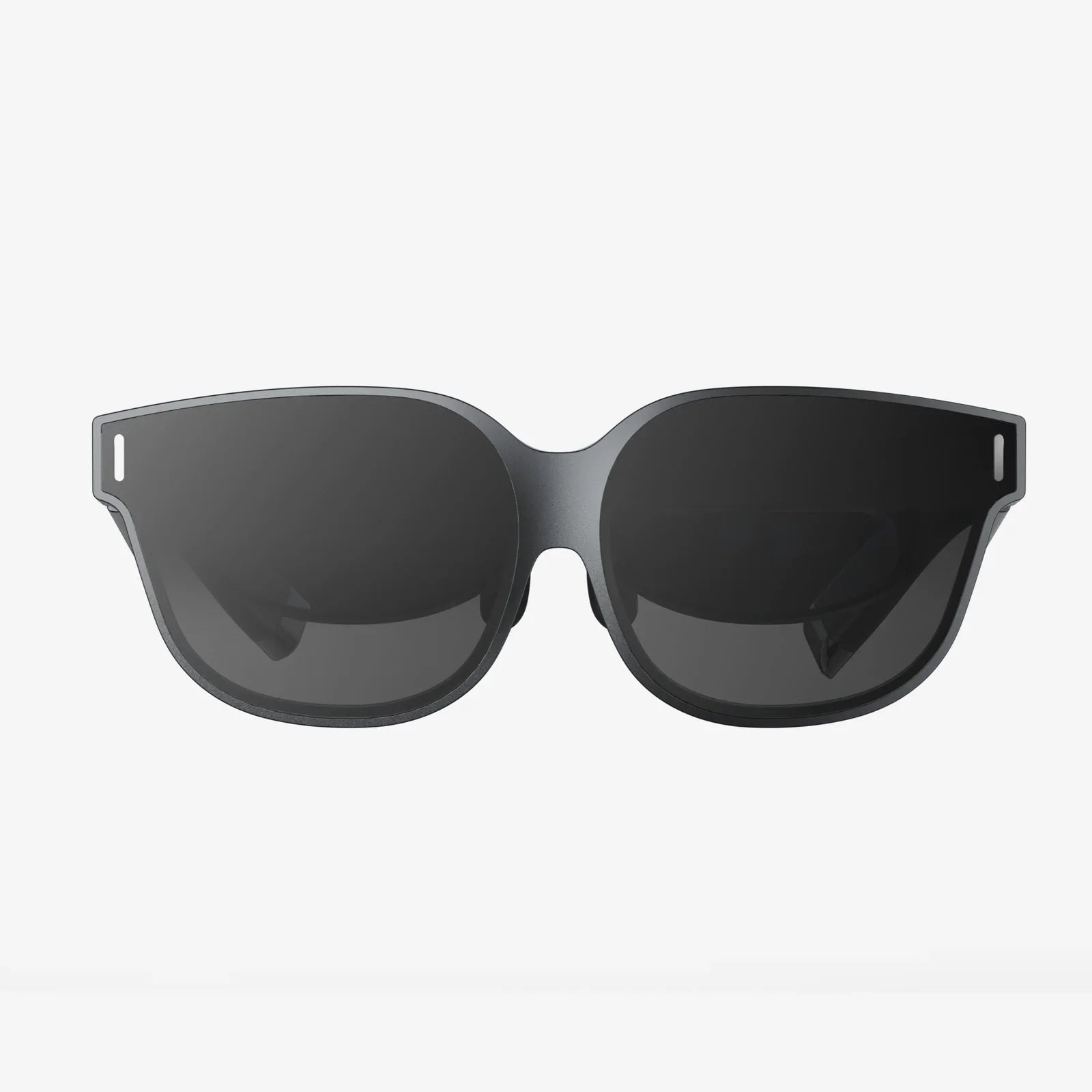
Imagine a world where your computer screen is not a flat pane of glass but a shimmering, three-dimensional model you can walk around. A world where a medical student can dissect a beating heart without a cadaver, where an architect’s blueprint materializes in the center of a conference room, and where a loved one from across the globe appears not on a tablet, but as a lifelike apparition sharing your space. This is the promise of hologram display technology, a field of science and engineering that is rapidly transitioning from the realm of science fiction into tangible, breathtaking reality. We are standing on the precipice of a new visual revolution, one that will fundamentally alter our relationship with digital information and redefine the very nature of communication, design, and entertainment.
The Science of Illusion: How We Perive Depth
To understand how hologram displays work, one must first grasp the fundamental way we perceive depth in the real world. Human vision is stereoscopic; our two eyes, spaced slightly apart, see the world from two slightly different angles. Our brain brilliantly fuses these two two-dimensional images into a single, coherent three-dimensional picture, calculating depth, distance, and spatial relationships. Traditional displays fail to replicate this. They present a single, flat image to both eyes, lacking the crucial binocular disparity that creates depth perception.
Hologram display technology seeks to solve this by not just presenting an image, but by reconstructing the light field of a real object. A true hologram is a recording of an interference pattern. When light waves from a laser bounce off an object and meet a second, pure reference laser beam, they create an intricate pattern of peaks and troughs. Recording this pattern onto a special medium (like a photographic plate) creates a hologram. When this recorded pattern is later illuminated by a laser similar to the original reference beam, it diffracts the light in such a way that it perfectly recreates the original light waves that came from the object. To your eyes and brain, this reconstructed light field is indistinguishable from the light that would be coming from a real, physical object sitting in that space. This is the gold standard, a true holographic display.
Beyond the Sci-Fi: The Diverse Paths to 3D
While the perfect recreation of a light field remains the ultimate goal, the term "hologram display" has been adopted more broadly in the consumer and tech spaces to describe a range of 3D display technologies that create the convincing illusion of a volumetric image, even if they don't use the interference principle of classical holography. These approaches can be broadly categorized.
Volumetric Displays
These displays literally create imagery within a defined volume. Think of them as 3D printers for light. One method involves projecting light onto a rapidly moving screen, such as a spinning helix or a vibrating panel. As the screen moves through the 3D space, the projected image changes precisely, using persistence of vision to make the entire volume appear filled with points of light. Another method uses focused laser pulses to create tiny points of plasma in mid-air, literally making air molecules glow at specific points in 3D space. The result is a truly three-dimensional image that can be viewed from any angle without special glasses.
Stereoscopic and Autostereoscopic Displays
These are the most common forms of 3D seen in cinemas and on some handheld devices. They work by presenting a different image to each eye, tricking the brain into perceiving depth. Stereoscopic displays require the viewer to wear glasses that filter the separate images (using polarized light or active shutters). Autostereoscopic displays advance this by using special lenses or barriers (a lenticular lens sheet or parallax barrier) placed over the screen to direct different pixel columns to each eye, eliminating the need for glasses. While effective, these displays often suffer from a limited "sweet spot" for viewing and can cause eye strain.
Pepper's Ghost and Optical Illusion Techniques
One of the oldest and most stage-effective techniques, famously used for "holographic" performances by departed musicians, is Pepper's Ghost. It relies on a simple trick with a transparent pane of glass or plastic film placed at a 45-degree angle between the viewer and a dark room. A bright, high-contrast display (like an LED screen) is positioned out of view, either above or below the stage. The image from this screen reflects off the transparent pane, making it appear as a ghostly, semi-transparent image within the performance space. While not a true hologram, its effectiveness and low cost make it a popular choice for live events and museum exhibits.
Light Field and Multiview Displays
This is one of the most advanced and promising areas of research, closely mimicking true holography. Light field displays aim to project not just a single image, but the entire field of light rays that would emanate from a real object. This is achieved through incredibly complex systems of micro-lenses or advanced algorithms that control the direction and intensity of millions of individual light rays. The goal is to create a visual scene where the eyes can focus and refocus naturally at different depths within the image, just as they do in the real world, drastically reducing the vergence-accommodation conflict that causes eye strain in other 3D technologies.
Transforming Industries: The Practical Applications
The potential applications for this technology extend far beyond flashy marketing gimmicks or resurrecting pop stars. They are set to become foundational tools across numerous professional fields.
Medicine and Healthcare
This is perhaps the most impactful arena. Surgeons can use interactive holographic models of a patient's specific anatomy, derived from CT or MRI scans, to plan complex procedures. They can rotate a holographic heart, zoom into a tumor's vascular structure, or practice a delicate operation virtually before making a single incision. Medical students can move beyond textbooks and cadavers to learn anatomy through detailed, interactive 3D models. Telemedicine could evolve into true telepresence, where a specialist can appear as a hologram in a remote clinic to consult with a local doctor and even annotate the air around a patient.
Engineering, Design, and Manufacturing
The days of poring over 2D blueprints are numbered. Automotive and aerospace engineers can project a full-scale hologram of a new engine design, allowing teams to visually inspect components for interference, assess airflow, and make collaborative decisions in a shared virtual space. Architects and construction managers can walk clients through a holographic rendition of a building before the foundation is even poured, making changes to layouts and materials in real-time.
Communication and Collaboration
Video conferencing is a poor substitute for a face-to-face meeting. Hologram display technology could be the next leap. Imagine a boardroom where participants from around the world are projected as life-size holograms, able to make eye contact and gesture naturally as they interact with shared 3D data visualizations. This sense of shared presence, or "telepresence," could make remote collaboration more natural, effective, and personal, shrinking the globe in a way video calls never could.
Education and Training
From elementary school to advanced technical training, holography can make learning immersive. History students could witness a historical event unfold in their classroom. Chemistry students could manipulate complex molecules. Mechanics could train on the holographic engine of a new vehicle, taking it apart and reassembling it virtually without needing the physical parts. This hands-on, visual learning can dramatically improve comprehension and retention.
Retail and E-Commerce
Try before you buy will take on a new meaning. Shoppers could see a life-size hologram of a new sofa in their living room to check for fit and style. They could rotate a holographic view of a sneaker or see how a piece of jewelry looks on their own wrist, all from their home. This bridges the critical gap between the digital storefront and the physical product.
The Hurdles on the Road to Widescale Adoption
For all its promise, the path to a holographic future is not without significant obstacles. The challenges are both technical and practical.
The foremost issue is computational intensity. Generating a true light field or holographic pattern requires an astronomical amount of processing power. A single high-resolution holographic frame can contain orders of magnitude more data than a standard 4K video frame. We need immense advances in computing, particularly in specialized processors and algorithms, to render complex scenes in real-time.
There is also the challenge of hardware limitations. Creating displays with sufficiently high resolution, pixel density, and, crucially, a wide enough field of view is incredibly difficult. Many current systems are either low-resolution, require very specific viewing angles, or are prohibitively large and expensive.
Content creation presents another hurdle. A whole new ecosystem of tools, software, and file formats needs to be developed to create content for these 3D displays. Filmmakers, game developers, and designers will need to learn entirely new languages of visual storytelling.
Finally, there are questions of usability and human factors. Long-term effects on vision are not fully understood. How do we interact with these images? Will we use gestures, specialized controllers, or something else entirely? Creating intuitive and fatigue-free interfaces is a critical piece of the puzzle.
The Future is Bright, and It's in 3D
Research is accelerating at a breakneck pace. In labs around the world, scientists are experimenting with novel materials like metasurfaces—artificial nanostructures that can manipulate light with unprecedented precision—to create thinner, more efficient holographic displays. Advancements in AI are being leveraged to compute holographic patterns faster and with less power. The convergence of 5G connectivity, edge computing, and advanced sensors will provide the infrastructure needed to stream rich holographic content seamlessly.
We are moving towards a future where displays will not be things we look at, but windows we look through—or perhaps, where there is no window at all, and the digital information is simply integrated into our physical environment. The distinction between the virtual and the real will blur, creating a new paradigm of mixed reality that enhances our perception and augments our capabilities.
The flickering, green wireframe of Princess Leia was a spark that ignited the world's imagination. Today, that spark is catching fire, fueled by relentless innovation and a deep human desire to break the flat confines of the screen. Hologram display technology is not merely about showing us something new; it is about changing the way we see everything. The revolution will not be televised. It will be projected, volumized, and light-fielded, and it will happen all around us, inviting us to reach out and touch the future.
Share:
Application Projection: The Invisible Bridge Between Digital and Physical Realms
Holographic Projection: Illuminating the Future of Immersive Experience