


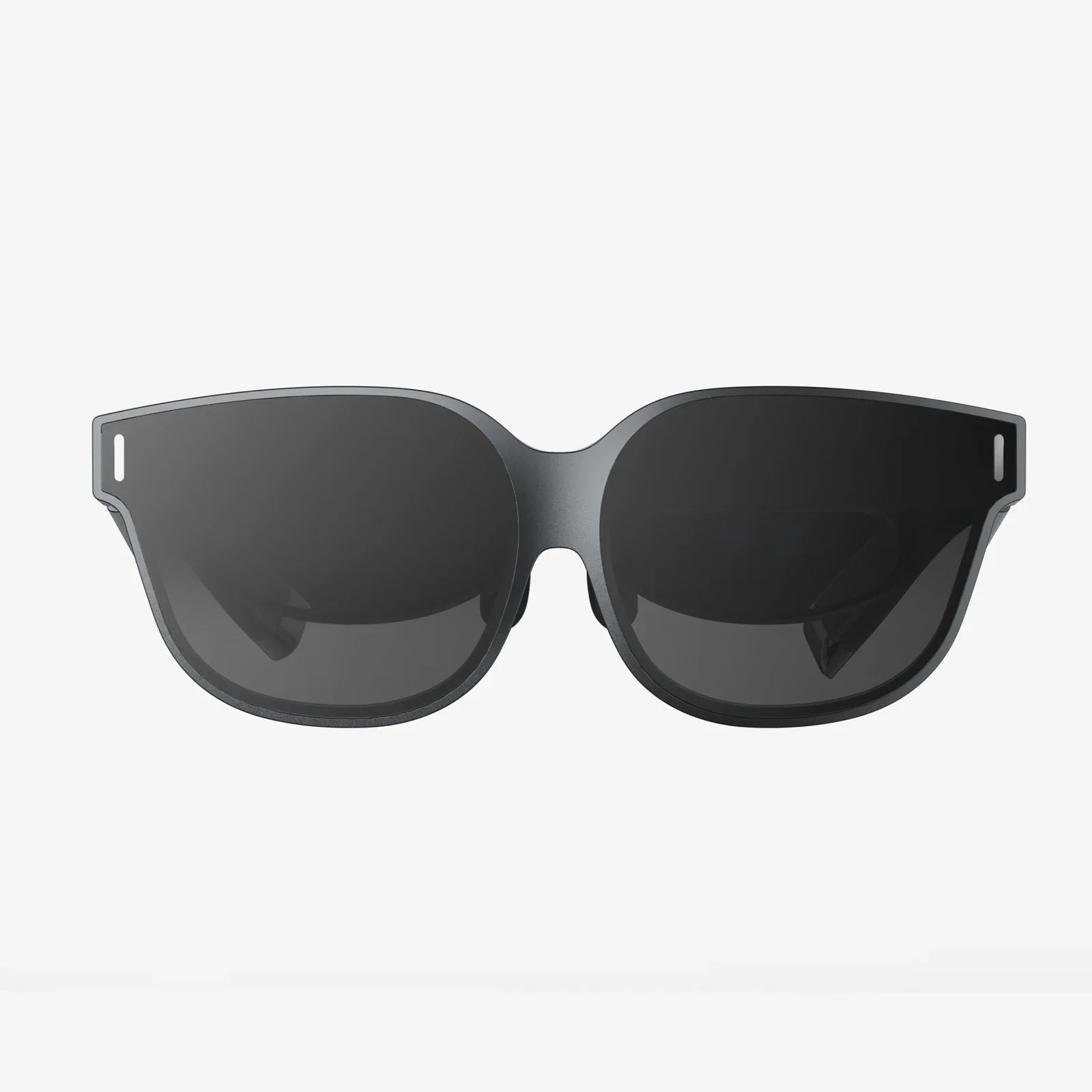
Imagine a world where a loved one, thousands of miles away, can appear in your living room as a shimmering, three-dimensional presence, not confined to the flat screen of a smartphone or monitor. Envision a surgeon guiding a complex procedure from another continent, their holographic hands pointing to precise anatomical details. This is the promise of holograms video—a technology that is rapidly transitioning from the realm of cinematic fantasy into a powerful, disruptive tool set to redefine human connection and visual storytelling. The era of passive, two-dimensional viewing is giving way to an immersive, interactive future, and it’s arriving faster than we ever thought possible.
The Science Behind the Spectacle: More Than Just an Illusion
To truly appreciate the revolution of holograms video, one must first understand what it is not. It is not the Pepper's Ghost illusion, a centuries-old technique using angled glass to reflect a hidden image, famously used for "holographic" performances by departed musicians. While effective for stage magic, these are two-dimensional projections lacking true volumetric depth.
True holograms video, or volumetric video, is the capture and display of objects or people in three dimensions, allowing viewers to walk around the representation and see it from different angles, just as they would a physical object. The creation process is a complex dance of advanced technology:
- Capture: Multiple high-resolution cameras, often arranged in a specialized rig or dome, record a subject from every possible angle simultaneously. This generates a massive dataset of 2D images.
- Processing: Sophisticated software algorithms, powered by artificial intelligence and machine learning, analyze these thousands of synchronized images. They identify corresponding points across all feeds and triangulate their positions in 3D space, stitching them together to create a photorealistic digital model—a point cloud or mesh.
- Encoding & Transmission: This complex 3D model is then compressed into a specialized video format capable of storing depth and spatial information. Transmitting this data-heavy stream requires robust, high-bandwidth networks, a challenge being met by the rollout of next-generation connectivity.
- Display: Finally, the hologram is rendered for viewing. This can be achieved through various means: on a smartphone or tablet screen using augmented reality (AR), where the 3D model is superimposed onto the real world; through a dedicated holographic display unit that uses light diffraction or other methods to create a volumetric image in space; or using VR headsets for a fully immersive experience.
This end-to-end pipeline represents a monumental leap beyond traditional videography, moving from recording a visual perspective to capturing a piece of reality itself.
A New Dimension in Storytelling: Entertainment Transformed
The most visible and exciting applications of holograms video are emerging in the entertainment industry, where it is unlocking unprecedented creative possibilities.
Live events and concerts are being utterly reinvented. Artists can now perform for audiences in multiple cities on the same night, their lifelike holograms beamed onto stages across the globe. This not only expands reach and eliminates grueling travel but also offers fans an experience far superior to a simple live stream—a palpable sense of presence. Furthermore, it opens the door to "resurrecting" legendary performers, allowing new generations to witness iconic acts in a respectful and technologically stunning manner.
The film and gaming industries are poised for a similar transformation. Directors can use volumetric capture to film actors and then place them into digital environments with perfect lighting and perspective, blending live-action and CGI seamlessly. For narrative storytelling, this allows for incredibly dynamic camera work; the director can choose the angle in post-production, long after the actor has left the set. In gaming and interactive media, holograms video enables the creation of hyper-realistic digital characters that players can interact with from any angle, deepening immersion and emotional connection.
Beyond the Stage: Enterprise and Education Applications
While the glitz of entertainment captures headlines, the most profound impact of holograms video may be felt in more pragmatic fields like enterprise and education, where it solves real-world problems.
- Remote Collaboration and Telepresence: Modern video conferencing, with its grid of talking heads, is a poor substitute for physical presence. Holograms video can create a true sense of shared space. Imagine a design team scattered across different countries examining a holographic prototype of a new engine, walking around it together, pointing out features, and making decisions as if they were in the same room. This "holoportation" could dramatically reduce the need for business travel while significantly improving the quality of collaboration.
- Education and Training: This technology is a powerful educational tool. Medical students can study detailed holograms of the human body, peeling back layers of anatomy in a way textbooks or even cadavers cannot match. Historians can transport students to ancient ruins, not as a 360-degree video, but as a explorable 3D environment. Mechanics-in-training can practice repairs on a holographic representation of complex machinery, receiving guidance from a remote expert whose holographic hands demonstrate the correct techniques.
- Retail and E-Commerce: The inability to try before you buy is the fundamental limitation of online shopping. Holograms video can shatter this barrier. Consumers could use their AR-enabled devices to project a life-size hologram of a new sofa into their living room to check for fit and style, or see a holographic model wearing an outfit from every angle. This immersive preview capability can reduce return rates and build consumer confidence.
Navigating the Holographic Horizon: Challenges and Ethical Considerations
Despite its immense potential, the path to widespread adoption of holograms video is not without significant obstacles.
The technical and infrastructural demands are immense. Volumetric video files are orders of magnitude larger than their 2D counterparts, posing immense challenges for storage, processing, and streaming. Widespread consumer access will depend on the proliferation of high-speed internet and 5G/6G networks to handle the data load without latency. On the display side, creating affordable, high-fidelity holographic displays for the home remains a key engineering challenge.
Perhaps more complex are the ethical and societal questions it raises. The power to create photorealistic, dynamic holograms of people brings a severe risk of misuse. The threat of deepfakes is already a concern with 2D video; volumetric video could create undetectable, three-dimensional forgeries capable of causing havoc in politics, fraud, and personal reputation. Establishing protocols for consent, authentication, and digital rights management for a person's holographic likeness will be a critical legal frontier. Furthermore, as interactions with holographic representations become more common, we must consider the psychological effects and the potential for new forms of deception or emotional manipulation.
The Future is Volumetric: What Comes Next?
The evolution of holograms video is inextricably linked to advancements in adjacent fields. The maturation of 5G and edge computing will offload the intense processing required to render these experiences, delivering them smoothly to mobile devices. Artificial intelligence will become crucial, not only in creating the models but also in compressing the data more efficiently and even generating synthetic holograms from limited input. The convergence with the metaverse concept is inevitable; holograms video provides the most realistic and compelling way to populate these persistent virtual worlds with representations of ourselves and others, bridging our physical and digital existences.
We are moving towards a future where capturing a memory might mean creating a volumetric snapshot of a moment, preserving not just how it looked from one viewpoint, but the entire scene to be revisited and explored. Communication will become less about calling and more about teleporting your presence. The screen, as we know it, may begin to fade away, replaced by interactive light sculptures that inform, entertain, and connect us.
The flickering, blue-tinted princess pleading for help was a moment of pure magic for a generation of moviegoers, a distant dream of a technology that could bend light and reality. Today, that dream is materializing not in a galaxy far, far away, but in research labs, broadcast studios, and corporate boardrooms across our planet. Holograms video is no longer a fantastical plot device; it is the next logical step in our relentless pursuit of more authentic, immersive, and human forms of connection, poised to break the final barrier between the digital and the physical and redefine reality itself.
Share:
How Much Are The VR Headsets? A Complete Price Breakdown
Best AR Headsets for Developers 2025: The Ultimate Toolkit for Spatial Computing Pioneers