


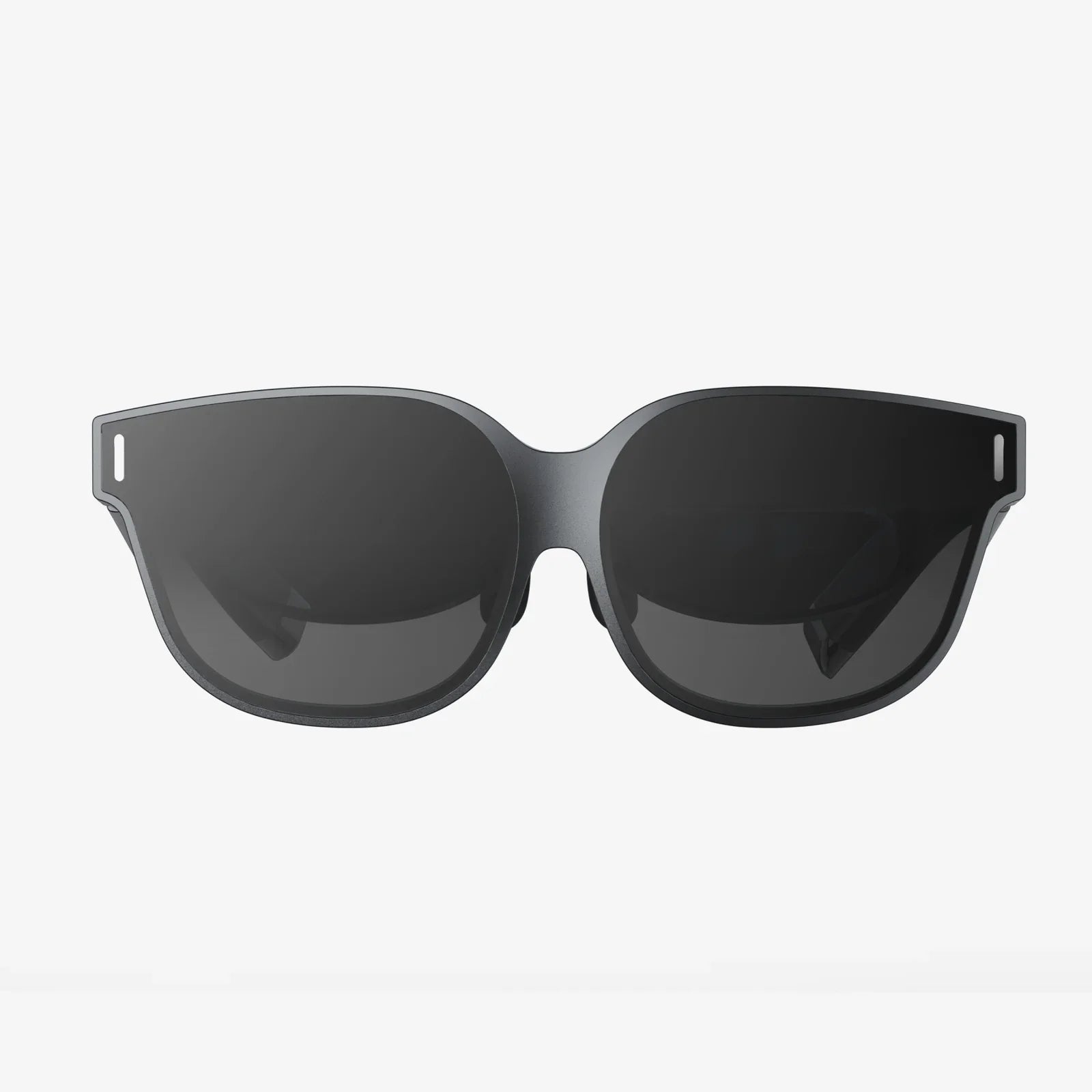
Imagine reaching into the air to sculpt a digital model, holding a conversation with a life-like 3D avatar that feels present in the room, or diagnosing a medical condition by walking through a perfect holographic rendering of a human heart. This is not a glimpse into a distant future; it is the imminent reality promised by the holographic computer, a technological evolution set to shatter our two-dimensional screens and fundamentally redefine the very nature of human-computer interaction. The age of peering through a glass window into the digital realm is ending, and the age of stepping through it is beginning.
Beyond the Screen: Defining the Holographic Paradigm
At its core, a holographic computer is a system designed to generate, process, and display interactive three-dimensional holograms in real-time, seamlessly integrating them into the user's physical environment. Unlike Virtual Reality (VR), which immerses a user in a completely synthetic world, or Augmented Reality (AR), which overlays simple digital graphics onto the real world, holographic computing aims to blend photorealistic, volumetric digital objects with such fidelity that they become indistinguishable from physical reality. The goal is not to replace the world but to augment it with digital information that behaves like real matter.
This is achieved through a sophisticated convergence of several cutting-edge technologies. Advanced photonic systems project light fields to create the illusion of solid, three-dimensional objects floating in space. Powerful computational algorithms, often leveraging artificial intelligence, render these complex scenes in real-time, adjusting for perspective and occlusion as the user moves. Sophisticated sensor arrays, including depth cameras, LiDAR, and motion trackers, continuously map the physical environment, allowing digital objects to interact with it convincingly—a holographic character sitting on a real couch or a digital tool casting a shadow on a real desk.
The Technological Pillars: Light, Silicon, and Intelligence
The magic of a holographic computer rests on three foundational pillars: display technology, processing power, and spatial mapping.
Display Technology: Sculpting with Light
Traditional displays emit a uniform field of light from a flat surface. Holographic displays must replicate the way light scatters and reflects from a real 3D object. This is tackled through various approaches. Some systems use volumetric techniques where lasers project onto a rapidly spinning or vibrating surface to create points of light in a 3D volume. Others employ wavefront modulation, using spatial light modulators (SLMs) to precisely control the phase and amplitude of light waves to reconstruct the wavefront that would be emitted by a real object, creating a true hologram. A more pragmatic approach for current systems involves stereoscopy, using headset lenses or special screen filters to deliver slightly different images to each eye, creating a convincing 3D effect, though this lacks the true volumetric qualities of light-field displays.
Processing Power: The Unseen Engine
Rendering a complex, interactive holographic scene requires an astronomical amount of computational power. The data density of a true 3D light field is orders of magnitude greater than that of a 2D image. This necessitates next-generation processors and graphics units designed not just for polygon crunching but for simulating physics, optics, and light propagation in real-time. The computational burden is so immense that it often relies on cloud computing and edge processing, where heavy rendering tasks are offloaded to remote servers with immense power, streaming the result to the local device with minimal latency. AI plays a crucial role here, using neural networks to predict light fields, reduce computational loads, and enhance image fidelity through techniques like super-resolution.
Spatial Mapping and Interaction: The Digital Nervous System
For a hologram to feel real, it must know its environment. This is the role of the spatial mapping system—a digital nervous system of sensors that perpetually scans the room. Depth-sensing cameras and LiDAR create a real-time 3D mesh of every surface, understanding the geometry, texture, and lighting of the space. This allows the holographic computer to anchor digital objects to physical ones, enabling realistic interactions. Hand-tracking cameras and gesture recognition algorithms translate human movement into intuitive commands, allowing users to push, pull, rotate, and manipulate holograms with their hands. Eye-tracking and voice recognition add further layers of natural, frictionless interaction, moving beyond the archaic language of mice and keyboards.
Transforming Industries: The Holographic Revolution in Practice
The implications of mature holographic computing extend far beyond entertainment and novelty. They promise to revolutionize the core methodologies of numerous professional fields.
Medicine and Healthcare
In medicine, holographic computers will provide an unprecedented window into the human body. Surgeons could plan complex procedures by interacting with a precise, full-scale hologram of their patient's unique anatomy, practicing incisions and evaluating approaches before ever lifting a scalpel. During an operation, real-time holographic overlays could project critical information like tumor margins or major blood vessels directly onto the patient's body, guided by live scans. Medical students could move from textbook diagrams to learning from life-sized, interactive holograms of organs and systems, accelerating comprehension and retention.
Engineering and Design
The entire product design lifecycle stands to be transformed. Engineers and architects will be able to collaboratively design and prototype in a shared holographic space, examining a full-scale model of a new engine block or walking through the unmade halls of a new building. They can assess ergonomics, spot design flaws invisible on a 2D screen, and make changes in real-time with a gesture. This drastically reduces the need for physical prototypes, saving immense amounts of time, resources, and materials.
Remote Collaboration and Telepresence
Holographic computing promises to make video calls obsolete. Instead of seeing colleagues on a screen, their lifelike holograms could be projected into the room, creating a powerful sense of shared presence. They could make eye contact, use natural gestures, and collaboratively interact with shared 3D data models. This has profound implications for global teamwork, remote expert assistance, and even personal communication, making distances feel meaningless.
The Human Factor: Challenges on the Road to Adoption
Despite its dazzling potential, the path to ubiquitous holographic computing is fraught with significant challenges that extend beyond pure engineering.
Hardware Limitations: Current systems often struggle with resolution, field of view, and brightness. Creating bright, high-resolution holograms that can be viewed in well-lit environments without specialized eyewear remains the holy grail, a challenge often referred to as the "display bottleneck." The form factor of hardware also needs to evolve from bulky headsets to something as socially acceptable and comfortable as eyeglasses.
Content Creation: A new medium requires new tools and a new language. Developing the software and authoring tools to create compelling holographic experiences is a massive undertaking. How does one design a user interface that exists in three-dimensional space? How do you tell a story when the audience can walk around it? A whole new ecosystem of developers and creators needs to emerge.
Social and Ethical Considerations: The ability to generate photorealistic holograms of people and objects raises deep ethical questions. The potential for misinformation, fraud, and new forms of cybercrime is significant. Furthermore, the blurring of physical and digital realities could have unforeseen psychological and social consequences, from new types of addiction to further erosion of the line between public and private life. Establishing ethical frameworks and digital authentication standards will be critical.
A Glimpse into the Holographic Future
Looking ahead, the trajectory points toward a world where the holographic interface becomes the primary portal to the digital world. We will move from devices we look at to environments we look into and eventually, spaces we walk within. The smartphone in your pocket could be replaced by a lightweight pair of glasses that projects your emails, maps, and messages onto the world around you. Your living room could transform into a home theater, a design studio, or a social space with friends from across the globe, all at a moment's notice.
The ultimate evolution may be the development of a true "haptic hologram"—a digital object you can not only see but also feel, through the use of focused ultrasonic waves or neural interfaces. This would complete the illusion, erasing the final barrier between the digital and the physical and opening up applications we can currently only dream of.
The journey from the first blinking command prompt to the modern graphical user interface was a revolution in accessibility. The leap from the glowing rectangle of a screen to the infinite canvas of holographic space is a revolution in reality itself. It is a shift from observing information to inhabiting it, promising to unlock new forms of creativity, empathy, and understanding by allowing us to interface with the digital world on the most human of terms—in three dimensions, with our own hands, and with a profound sense of presence. The screen is fading, and a new world is coming into focus.
Share:
HMD: The Future of Human-Machine Integration and Digital Experience
What Is A Human Computer? The Evolution of a Concept and Our Collaborative Future