


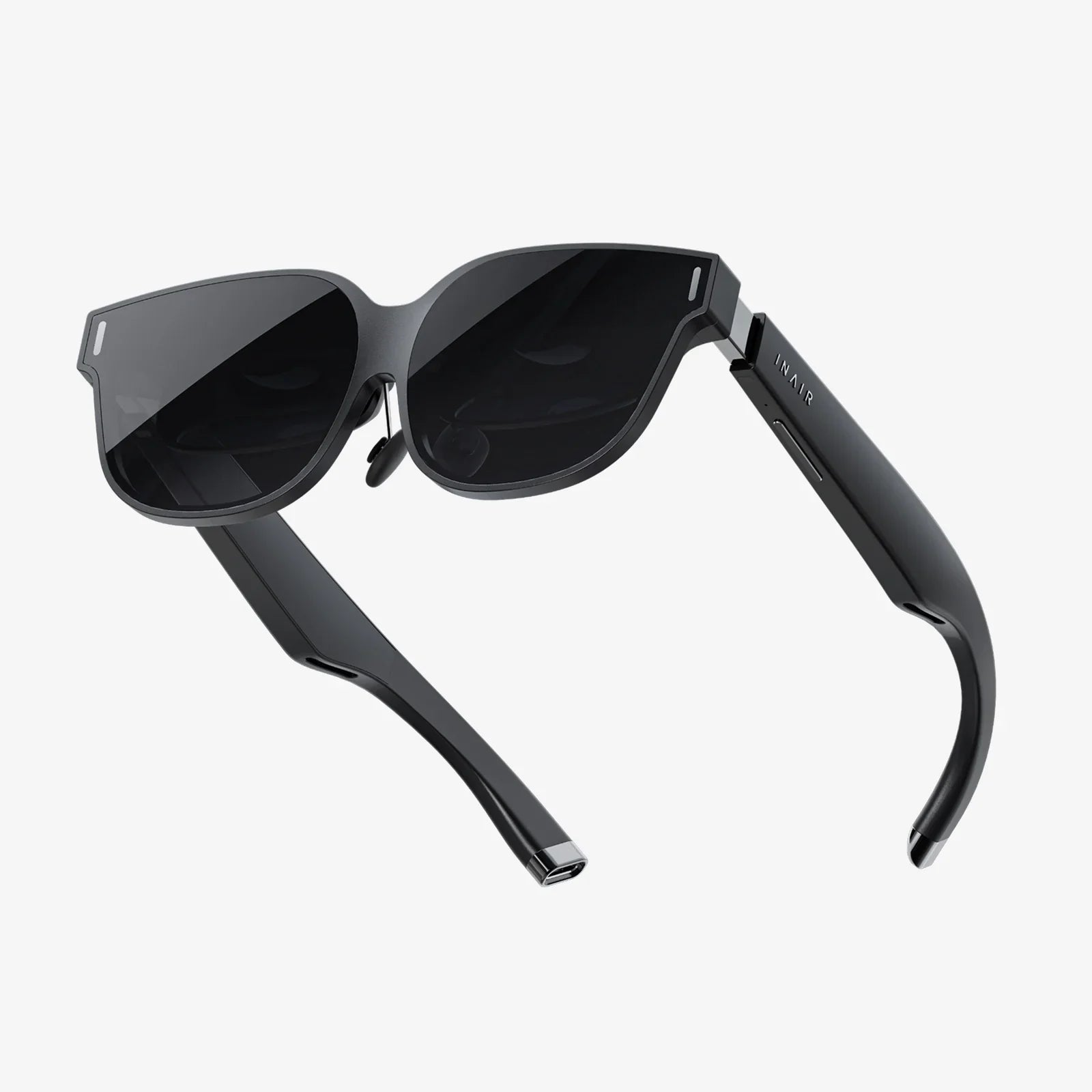
Imagine a world where your computer screen is not a pane of glass but a shimmering, three-dimensional model of a human heart, rotating in mid-air for a surgeon to examine from every angle. Envision a design team in different countries collaborating on a full-scale prototype of a new car, all seeing and manipulating the same holographic model as if it were physically present in the room. This is the breathtaking promise of the holographic display device, a technology that is steadily dismantling the barrier between the digital and the physical world. We are on the cusp of a visual revolution, moving beyond the two-dimensional confines of screens into an immersive realm of light and depth, and it is a future that is arriving faster than many realize.
The Science of Capturing Light: More Than Just an Illusion
To understand the magic of a modern holographic display, one must first grasp the fundamental principles of holography itself. Unlike a photograph, which merely records the intensity of light reflected from an object (creating a 2D image), a hologram captures both the intensity and the phase of light waves. This phase information is what encodes the parallax and depth perception that makes a hologram appear three-dimensional. The process was conceived in the late 1940s and involves using a coherent light source, like a laser, to create an interference pattern on a recording medium.
The original object is illuminated by the laser beam, which scatters off it. This scattered light (the object beam) then intersects with another portion of the same laser beam (the reference beam). Where these two beams meet, they create an interference pattern—a complex series of dark and light fringes—which is recorded onto a photosensitive material, such as a special photographic plate. When this developed plate, now a hologram, is later illuminated by the same type of coherent light source, it diffracts the light to reconstruct the exact wavefront that was originally scattered from the object. To the viewer, this is indistinguishable from the light coming from the original object, creating a perfect visual illusion of a 3D object occupying space.
Modern holographic display devices are, in essence, dynamic versions of this process. They are sophisticated systems designed to generate and control these complex light fields in real-time, without the need for a physical object or a static photographic plate. They are engines of light, and their goal is to project convincing, interactive holograms that can be viewed from multiple angles without the need for special glasses or headgear.
Engineering the Impossible: The Technological Race for True Holography
The quest to build a practical holographic display device has led researchers down several fascinating technological paths. Each approach has its own strengths, challenges, and trade-offs between image quality, field of view, and computational complexity.
Volumetric Displays
Some of the earliest approaches to 3D display were volumetric. These devices actually create imagery within a physical volume, rather than projecting it onto a 2D surface. One method involves using a rapidly spinning or moving screen that sweeps through a volume of space. A high-speed projector then precisely illuminates points on this screen as it moves, tracing out a 3D image within the defined volume. Another technique utilizes focused laser pulses to create tiny points of plasma at specific points in mid-air, a method that can generate audible sound as a byproduct. The primary advantage of volumetric displays is that they produce true 3D images that can be viewed from a wide range of angles. However, they typically cannot occlude objects behind them (as they are made of light within a volume) and often have limitations in resolution and color fidelity.
Stereoscopic and Autostereoscopic Displays
Most current consumer "3D" experiences, from cinema to some dedicated displays, rely on stereoscopy. This technique presents a slightly different image to each eye, tricking the brain into perceiving depth. This often requires viewers to wear glasses that filter the images. Autostereoscopic displays achieve the same effect without glasses by using special optical elements, like lenticular lenses or parallax barriers, placed over the screen to direct different images to each eye. While effective, these systems are not true holograms. They provide a convincing 3D effect but lack the crucial depth cues, like accurate accommodation (the eye's ability to focus on objects at different distances) and motion parallax, that a true holographic light field provides. Viewers often experience eye strain, and the "sweet spot" for viewing can be very narrow.
True Holographic Light Field Displays
This is the holy grail: a device that genuinely reconstructs the light field of a scene. These are the displays that most faithfully recreate the experience of looking at a real object. They work by using incredibly complex spatial light modulators (SLMs)—devices that can manipulate the amplitude and/or phase of light waves with extreme precision. By calculating the necessary interference pattern for a desired virtual object and using an SLM to impose that pattern onto a coherent light beam, these systems can project a convincing hologram. The computational burden is immense, requiring the calculation of billions of data points to create a high-resolution image. Furthermore, achieving a large field of view and a big image size has historically been a monumental challenge due to the microscopic pixel size required in the SLMs. Recent advances in AI-driven computational algorithms and new materials science are helping to overcome these hurdles, making practical light field displays an increasingly tangible reality.
A World Transformed: The Staggering Applications of Holography
The potential applications for this technology extend far beyond flashy entertainment. They promise to redefine workflows, enhance understanding, and create new forms of connection across numerous professional fields.
Revolutionizing Medicine and Biomedicine
In the medical realm, holographic displays offer a paradigm shift. Surgeons can plan complex procedures by interacting with a precise, full-scale hologram of a patient's anatomy derived from CT or MRI scans, allowing them to navigate unique anatomical structures before making a single incision. During an operation, such a hologram could be overlayed onto the patient themselves, providing real-time, X-ray vision guidance. Medical students could learn anatomy by dissecting infinitely complex and detailed holographic models, reducing the need for cadavers and providing a superior learning experience. Pharmaceutical researchers could visualize and manipulate complex protein structures and drug interactions in 3D, accelerating the discovery of new treatments.
Supercharging Engineering and Design
From automotive to aerospace to architecture, the entire design and prototyping process stands to be upended. Engineers from disparate global teams could stand around a life-sized holographic model of a jet engine, identifying potential points of failure and discussing modifications in a shared virtual space. Architects and their clients could walk through a holographic rendering of a new building, experiencing the scale, sightlines, and lighting long before the foundation is poured. This ability to interact with designs at a 1:1 scale, identifying problems early and collaborating intuitively, could save billions of dollars and drastically reduce time-to-market for new products.
Redefining Communication and Collaboration
The concept of a video call is rendered obsolete by the potential of holographic telepresence. Imagine a meeting where remote participants appear as life-like holograms around the conference table, able to make eye contact and gesture naturally as if they were physically present. This level of presence could dissolve the barriers of distance, making remote work more personal and effective and fostering a deeper human connection than any current video technology allows. It would be the ultimate tool for global collaboration, education, and even connecting families across continents.
Creating Unprecedented Entertainment Experiences
While the professional applications are profound, the consumer space will undoubtedly be transformed as well. Gaming will evolve into a truly immersive physical experience, with game elements and characters sharing our living space. Live concerts could be experienced with holographic performers, bringing legendary artists back to the stage or allowing fans everywhere to have a front-row experience. Museums could exhibit priceless artifacts as perfect holographic replicas, allowing them to be examined from all sides without risk of damage. Storytelling itself will evolve, moving from a screen-based narrative to an environmental experience.
The Flip Side of the Coin: Challenges and Ethical Considerations
Despite the exciting progress, significant hurdles remain before holographic displays become ubiquitous. The computational power required is still enormous, though AI and specialized processors are helping to manage the load. Creating bright, high-resolution, large-scale images with a wide field of view remains a formidable engineering challenge that often involves trade-offs. Furthermore, the cost of these systems is currently prohibitive for most consumers, residing firmly in the domain of research labs and high-budget enterprises.
Beyond the technical and economic challenges lie deeper ethical questions. As with any powerful technology, the potential for misuse is real. The ability to generate photorealistic, dynamic holograms could become a tool for unprecedented misinformation and fraud—imagine a convincing holographic public figure giving a fake speech, or a false event staged with holographic realism. The blurring of reality could have psychological impacts, making it harder to distinguish the real from the virtual. Questions of privacy will also become paramount; if our surroundings can be filled with digital artifacts, how do we control what is projected into our personal space? Establishing a framework of "digital authenticity" and ethical guidelines will be as important as developing the technology itself.
The journey of the holographic display device from a scientific curiosity to a transformative technology is a testament to human ingenuity. It is a field where physics, engineering, computer science, and design converge to create something that feels like magic. The challenges are immense, but the payoff is a fundamental change in our relationship with information and with each other. We are not just building a better screen; we are building a window into a new dimension of human experience.
We are standing at the precipice of a new visual era, one where data breaks free from the glass and takes its place in our world, not as a picture to be looked at, but as an object to be interacted with. The holographic display device is the key that will unlock this door, transforming everything from how a surgeon plans a lifesaving operation to how a family shares a moment across oceans. The future is not just on its way; it's already beginning to take shape, pixel by precise pixel, in the light all around us.
Share:
OLED Microdisplay Market: Illuminating the Future of Visual Technology
Latest VR Technology: Beyond the Hype and Into a New Reality