


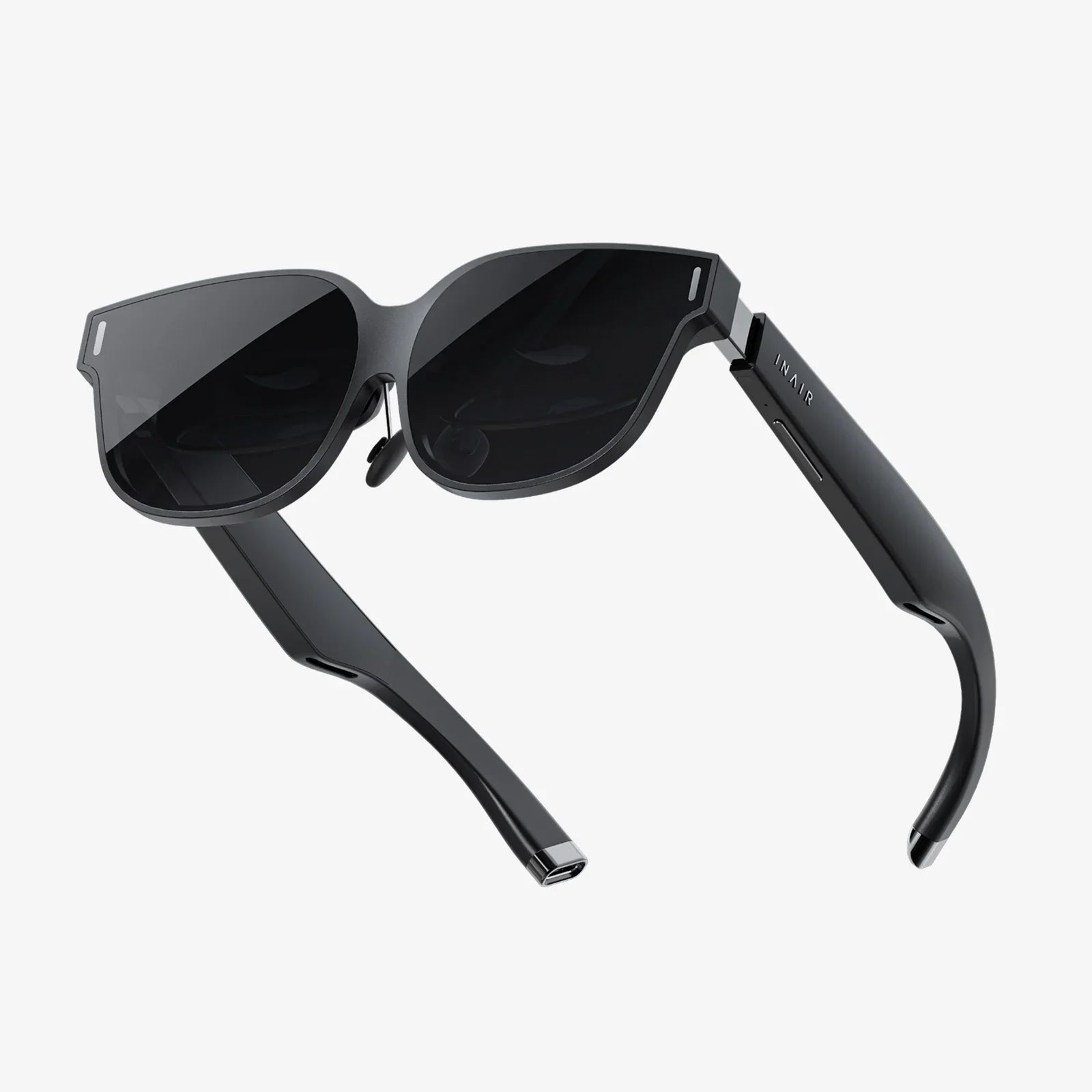
Imagine a world where your digital assistant appears as a lifelike figure in your living room, where a surgeon can see a beating heart hovering above the operating table, and where you can examine a digital artifact from every angle as if it were physically present. This is the breathtaking promise of holographic display technology, a field advancing so rapidly it is blurring the lines between science fiction and tangible reality. We stand on the precipice of a visual revolution that will fundamentally alter our relationship with information, communication, and the digital realm itself.
The Science of Making Light Take Shape
At its core, a holographic display is not merely a fancy 3D screen. It is a sophisticated orchestration of light, designed to replicate the way light waves scatter off a physical object, thereby tricking the human brain into perceiving a three-dimensional image suspended in space, without the need for any special headgear or glasses. This is a crucial distinction from stereoscopic 3D, which presents two slightly different images to each eye to create an illusion of depth. A true hologram is a light field, and viewers can move around it, seeing perspective and parallax shift naturally, just as they would with a real object.
The foundational principle is holography, a technique invented by physicist Dennis Gabor in 1947, for which he later won the Nobel Prize. Traditional photography records the intensity of light (amplitude) to create a flat image. Holography, however, records both the amplitude and the phase of light waves—the intricate way light waves interfere with each other. This interference pattern, when illuminated by a reference light source (traditionally a laser), reconstructs the original light field, creating the ghostly, three-dimensional image we recognize as a hologram.
Modern display technologies leverage several methods to achieve this effect. Some systems use rapidly moving mirrors or spinning LEDs to scan a 3D volume of space with light points. Others, known as volumetric displays, can actually create imagery within a defined physical space, such as inside a glass globe or a transparent pyramid. More advanced research focuses on photonic crystals, metasurfaces, and advanced computational algorithms to precisely control light diffraction, pushing towards the ultimate goal of creating large-scale, full-color, interactive holograms in real-time.
Beyond Novelty: The Practical Applications Blooming Today
While the concept often conjures images of futuristic interfaces or Princess Leia's distress call, holographic display technology is already moving out of the lab and into practical, high-value applications across numerous sectors.
Revolutionizing Medical Visualization and Surgery
In the medical field, precision is paramount. Holographic displays are transforming how surgeons plan and execute complex procedures. By converting MRI or CT scan data into interactive, life-sized holograms of a patient's anatomy, a surgeon can explore a tumor, a complex bone structure, or a vascular system from every conceivable angle before making a single incision. This spatial understanding, impossible to fully grasp on a 2D monitor, drastically improves preoperative planning. During surgery, augmented reality headsets can project these holograms directly onto the patient, acting as an X-ray vision guide and improving accuracy and outcomes.
Transforming Engineering and Design
The design and manufacturing industries are undergoing a digital transformation, and holography is a key driver. Engineers and architects can now collaborate around a holographic prototype of a new engine, a building, or a consumer product. They can walk around it, peer inside it, and manipulate its components virtually, identifying design flaws and making decisions long before committing to expensive physical prototyping. This not only saves immense amounts of time and resources but also fosters a deeper, more intuitive understanding of the design intent among all stakeholders.
Redefining Retail and E-Commerce
The retail experience is poised for a dramatic overhaul. Imagine viewing a life-sized hologram of a new sofa in your actual living room to check for fit and style, or inspecting the intricate details of a piece of jewelry from every angle before purchasing it online. Holographic displays in storefronts can create captivating, dynamic advertisements that stop pedestrians in their tracks. This technology offers a powerful tool to bridge the gap between the convenience of online shopping and the tangible assurance of an in-store experience, reducing product returns and increasing consumer confidence.
Creating Unforgettable Entertainment and Live Events
The entertainment industry has been an early and enthusiastic adopter. Deceased music legends have been "resurrected" as holograms to perform on stage for adoring fans, and live sports broadcasts are experimenting with holographic overlays to analyze player movements and strategies in real-time. Museums are using the technology to bring historical artifacts and ancient civilizations to life, allowing visitors to witness a dinosaur's skeleton or a ancient Greek vase in stunning, immersive detail. The potential for storytelling and audience engagement is limitless.
The Technical Hurdles on the Path to Ubiquity
Despite the exciting progress, significant challenges remain before holographic displays become as commonplace as televisions. The primary obstacle is the sheer computational power required. Generating a true, real-time hologram demands processing and calculating the interference patterns for billions of points of light, a task that pushes the limits of even the most advanced processors. Data transmission and storage for such detailed models also present a major bottleneck.
Furthermore, achieving high resolution, wide viewing angles, and ample brightness without consuming vast amounts of energy is a complex engineering puzzle. The "screen" itself—the medium that modulates the light—needs to be capable of incredibly precise and rapid manipulation of light waves. Current materials and methods can be expensive and difficult to scale to large sizes. Finally, creating truly realistic and convincing holograms requires overcoming the "uncanny valley" effect, ensuring the images are not just three-dimensional but also lifelike and natural.
A Glimpse into the Holographic Future
The trajectory of this technology points toward a future where holographic interfaces are seamlessly integrated into our daily lives. The concept of a static, rectangular screen dominating our desks and living rooms will feel increasingly archaic. Instead, we will interact with information on dynamic, spatial displays that can appear and disappear as needed. Telepresence will be revolutionized; a business meeting or a family gathering could involve participants appearing as realistic holograms around a table, making remote interaction feel genuinely present and personal.
In education, students could dissect a holographic frog or walk through a model of the Roman Colosseum at the height of its glory. In urban planning, citizens could explore a proposed new development as a holographic model in the town square. The convergence of holographic displays with artificial intelligence and the Internet of Things will create an ambient computing environment where digital information is not confined to a device but is an interactive part of our physical world.
The journey from the flickering, monochromatic holograms of the past to the rich, dynamic displays of the future is a testament to human ingenuity. It is a pursuit not just of a new display technology, but of a new way of seeing and interacting with the digital universe. We are building a window, not to look through, but to reach into.
The screen as we know it is about to shatter, and from its fragments will rise a new dimension of light, waiting for us to step inside. The era of flat pixels is ending; the age of volumetric light is dawning, promising to connect us to information and to each other in ways we are only beginning to imagine. The future isn't on a screen—it's all around us.
Share:
How to Use an Augmented Reality Headset: The Ultimate Guide to Unlocking a New Reality
How to Use an Augmented Reality Headset: The Ultimate Guide to Unlocking a New Reality