


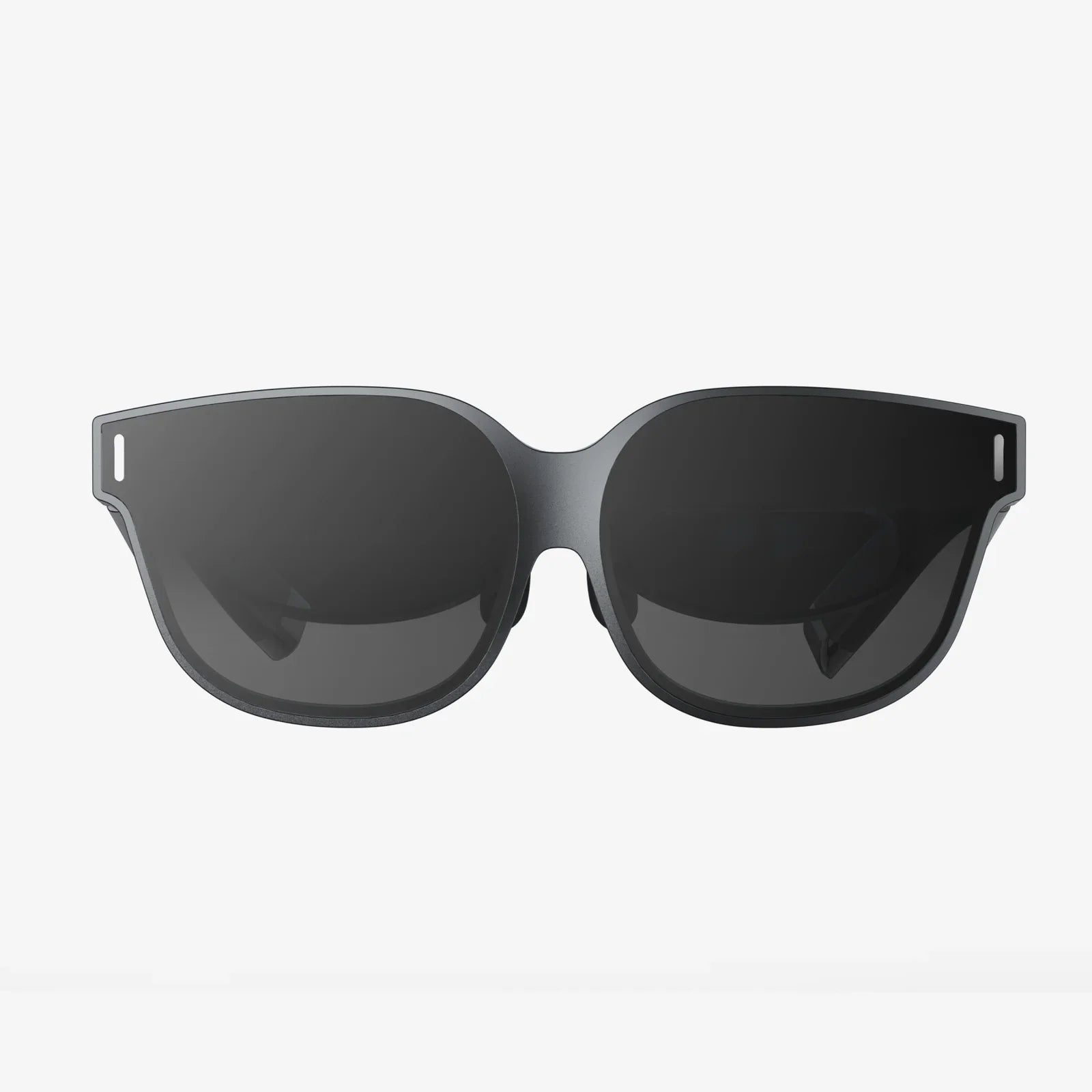
Imagine a world where a loved one, thousands of miles away, can appear in your living room as a shimmering, three-dimensional specter, so lifelike you feel you could reach out and touch them. Picture a surgeon guiding a complex procedure from another continent, their holographic avatar pointing to precise anatomical details. Envision a product launch where a new prototype materializes from thin air, rotating slowly for an awestruck audience. This is not the distant future of science fiction; it is the emerging reality being built today, one photon at a time, by the rapid advancement of the holographic projection device.
The Science Behind the Spectacle: More Than Just an Illusion
To truly appreciate the marvel of a modern holographic projection device, one must first understand that it is far more sophisticated than the Pepper's Ghost illusion that has tricked audiences for centuries. At its core, true holography is a photographic technique that records the light scattered from an object and then presents it in a way that appears three-dimensional. The device must capture or generate and then project that information, creating light fields that mimic the way light would bounce off a physical object.
The process often begins with the capture of a subject using multiple cameras or depth sensors to create a 3D model. This digital avatar is then translated into a projection, typically using one of several key methods. Some systems employ rapidly spinning mirrors or use specially treated surfaces like glass or foil to reflect light towards a viewer. Others utilize advanced laser plasma technology, where focused lasers excite air particles to a plasma state, causing them to emit light at specific points in mid-air, literally creating images out of nothing but air. The complexity lies not just in creating the image, but in doing so with enough resolution, brightness, and perspective correction to fool the human brain into perceiving a solid object.
A Spectrum of Applications: Transforming Industries
The potential applications for this technology stretch across virtually every sector, promising to redefine how we work, learn, heal, and play.
Revolutionizing Healthcare and Medicine
In the medical field, the implications are profound. Medical students can study intricate anatomical structures as full-scale, interactive holograms, peeling back layers of musculature, vasculature, and organs without the need for a cadaver. Surgeons are beginning to use projected holograms of a patient's MRI or CT scans during procedures, overlaying the 3D model onto the actual patient on the operating table. This provides unparalleled guidance, potentially reducing surgery time and improving outcomes. Furthermore, it enables revolutionary telemedicine, where a specialist's holographic presence can guide a local team through a complex process, making expert knowledge accessible anywhere in the world.
Redefining Retail and Product Design
The retail and manufacturing industries are poised for a massive shift. Imagine walking into a car showroom and being able to see a full-scale hologram of a vehicle, changing its color and examining the engine with a wave of your hand, all without the manufacturer having to ship a physical unit. Architects and interior designers can walk their clients through photorealistic holographic renderings of unbuilt homes, allowing for real-time modifications to layouts and finishes. For product design teams scattered across the globe, collaborating on a 3D holographic model in a shared virtual space accelerates development and enhances creativity.
The Future of Entertainment and Communication
Entertainment is perhaps the most visible frontier. Concerts featuring holographic performances of artists, both living and deceased, have already captivated millions. This technology could create immersive theatrical experiences and revolutionize gaming, blending digital characters with the player's physical environment. On a personal level, communication stands to be utterly transformed. Video calls, confined to the flat screen of a phone or monitor, could be replaced by holographic conversations, making participants feel truly present in the same room. This has the power to deepen personal connections across vast distances and create a new sense of intimacy in digital communication.
Navigating the Challenges: The Path to Ubiquity
Despite the exciting progress, significant hurdles remain on the path to making holographic projection devices a commonplace tool. The most prominent challenge is the issue of visibility. Many current systems require a controlled environment with specific lighting and sometimes a proprietary reflective surface or fog to scatter the light effectively. Creating bright, high-resolution, free-standing holograms visible in broad daylight is the holy grail that researchers are tirelessly pursuing.
Furthermore, the computational power required to render and project complex, real-time 3D imagery is immense. This ties into cost; cutting-edge systems are currently prohibitively expensive for the average consumer or small business. There are also nascent questions around standardization, data bandwidth for transmitting high-fidelity holographic content, and the development of a sustainable ecosystem of content creation tools. Overcoming these technical and economic barriers is critical for the technology's transition from a novel spectacle to an integrated utility.
The Ethical Dimension: A New Reality Demands New Rules
As with any powerful technology, the rise of photorealistic holography brings a host of ethical and societal questions that must be addressed proactively. The potential for misuse is significant. The creation of deepfakes is already a concern with 2D media; convincing holographic deepfakes could be used for misinformation, fraud, or character assassination on an unprecedented scale. The legal and philosophical concept of identity will be challenged: if a perfect holographic replica of a person can be created, who owns that digital likeness, especially after death?
Privacy concerns will also be amplified. Holographic communication, while immersive, could involve the capture and transmission of incredibly detailed biometric data. Establishing robust frameworks for data security, consent, and digital authentication will be paramount to ensuring this technology builds trust rather than erodes it. Society must engage in a dialogue to establish norms and regulations that harness the benefits of holographic projection while mitigating its risks.
Glimpsing the Horizon: What Comes Next?
The trajectory of this technology points toward a future where holographic interfaces are seamlessly woven into the fabric of our daily lives. We are moving towards devices that can project persistent, interactive images into any environment without screens. Researchers are working on tactile holography, using focused ultrasound waves to simulate the sensation of touch, allowing you to literally feel a hologram. The convergence of artificial intelligence, augmented reality, and holography will likely birth intelligent assistants that exist as interactive, three-dimensional entities in our homes and offices.
The ultimate goal is the elimination of the device itself—moving from a projector you own to a world where the environment is the canvas. This could lead to a paradigm where information and interaction are spatially mapped onto our reality, changing everything from navigation and education to art and social interaction. The line between the digital and the physical will blur into irrelevance.
We stand at the precipice of a new era of human experience, one defined not by screens and pixels but by light and space. The holographic projection device is the key unlocking this door, offering a glimpse into a world where our digital and physical realities are no longer separate, but beautifully, brilliantly, and seamlessly intertwined. The promise of a world where imagination can take tangible form is no longer a fantasy—it's a projection waiting to happen.
Share:
Pros and Cons of Virtual and Hybrid Meetings: A Deep Dive into the New Normal of Collaboration
Virtual Meetings Are Not Working: The Hidden Costs of Digital Collaboration and How to Fix Them