


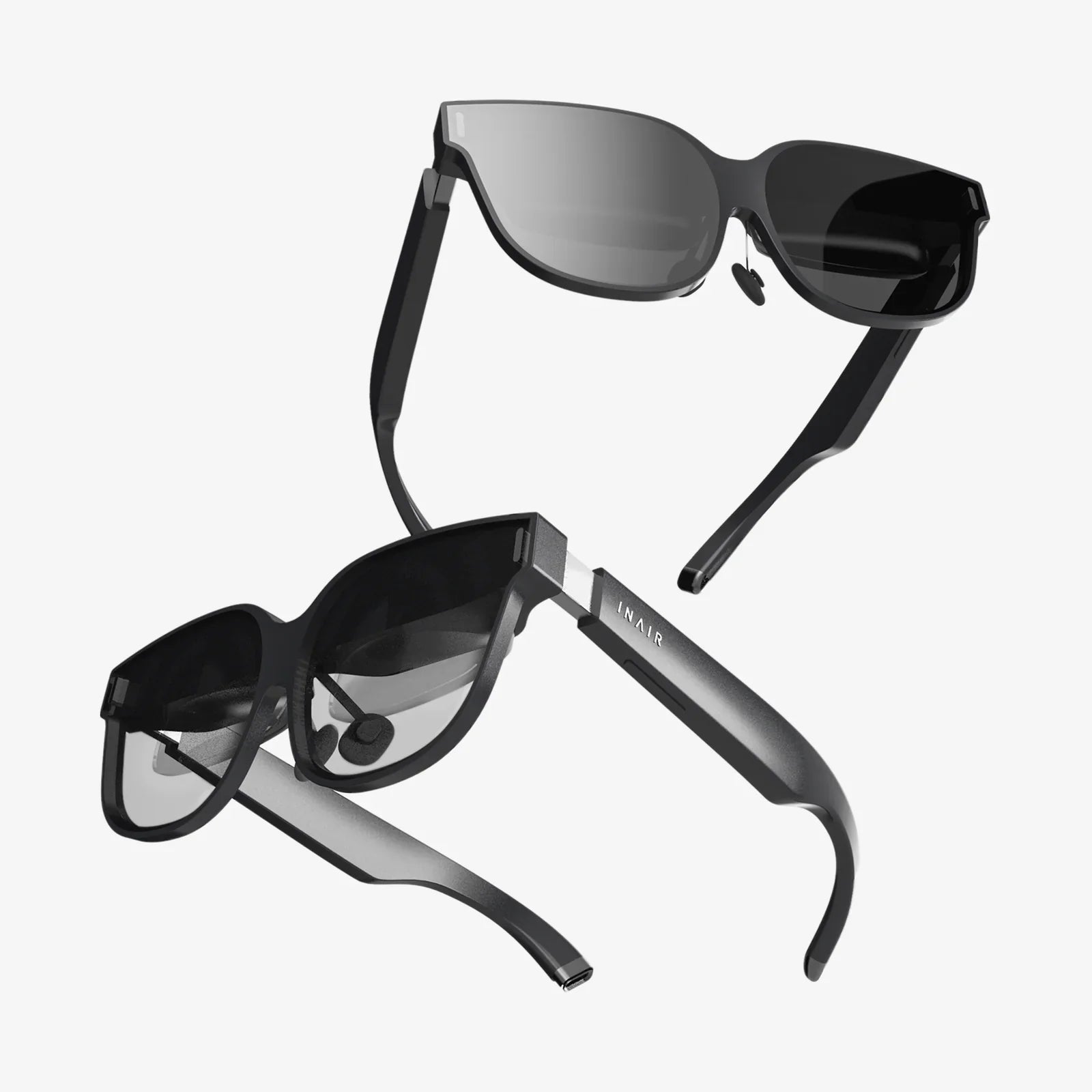
Imagine a world where the line between the digital and the physical dissolves. Where you can reach out and manipulate a complex 3D model as if it were sitting on your desk, collaborate with a colleague’s lifelike avatar as they stand in your living room, or walk through a historical site that has been perfectly reconstructed around you. This is not a distant science fiction fantasy; it is the imminent future being unlocked by the rapid development of holographic VR glasses, a technology set to redefine our very perception of reality.
The journey to this point has been one of relentless innovation. Traditional virtual reality headsets have done a remarkable job of transporting our vision into fully digital realms. However, they often act as blinders, isolating us from our physical surroundings and replacing them entirely. Augmented reality smart glasses, on the other hand, overlay digital information onto the real world but typically lack the depth, realism, and immersive scale that true holograms promise. Holographic VR glasses represent the synthesis of these two paths—a device that can function as a portal to entirely virtual worlds while also being capable of projecting high-fidelity, interactive holograms directly into your environment.
The Core Technology: How Light Becomes Matter
At the heart of this revolution is a complex interplay of optics, photonics, and advanced computing. Unlike standard displays that project light onto a 2D screen, holographic technology aims to recreate the way light naturally interacts with physical objects to produce a three-dimensional image with genuine depth cues.
One of the most promising approaches involves the use of spatial light modulators (SLMs). These sophisticated components precisely control the phase and amplitude of light waves passing through them. By manipulating these light waves, the SLM can effectively recreate the wavefront pattern that would be emitted by a real physical object. When this engineered light reaches the user’s eyes, their brain interprets it not as a flat picture but as a solid, three-dimensional hologram existing in space. This is a fundamental difference from stereoscopic 3D, which tricks the brain with two offset images, and is why holograms can provide comfortable, long-term viewing without the eye strain associated with older 3D tech.
Complementing this are advanced waveguide displays. These are transparent glass or plastic components embedded within the lenses of the glasses. They use a principle called total internal reflection to pipe light from micro-displays on the temple of the glasses into the user’s eye, all while allowing them to see the real world unimpeded. This is crucial for seamlessly blending digital holograms with physical reality.
Of course, generating these incredibly complex light fields in real-time requires immense processing power. This is where breakthroughs in AI-driven rendering and specialized chipsets come into play. Instead of brute-force rendering every detail of a hologram, these systems can use machine learning to predict and generate the most critical visual information, dramatically reducing the computational load and making real-time, complex holography feasible in a wearable form factor.
A World Transformed: Applications Across Industries
The potential applications for this technology stretch far beyond gaming and entertainment, poised to revolutionize nearly every professional field.
Revolutionizing Design and Engineering
In architecture and industrial design, holographic VR glasses will become an indispensable tool. Designers and engineers will be able to conjure life-size prototypes of new buildings, cars, or consumer products directly in their studio or on the factory floor. They can walk around the model, peer inside its components, and make adjustments with intuitive hand gestures. This will drastically accelerate the iterative design process, reduce prototyping costs, and facilitate a deeper understanding of spatial relationships and ergonomics long before any physical materials are used.
The Future of Medicine and Surgery
The medical field stands to benefit enormously. Surgeons could use the glasses to overlay precise holographic guides directly onto a patient’s body during procedures, showing exactly where to make an incision or highlighting critical blood vessels and nerves. Medical students could move beyond textbooks and screens to learn anatomy by studying interactive, full-scale holograms of the human body, dissecting virtual organs and systems in a way that was previously impossible. Telemedicine would evolve into true telepresence, allowing a specialist to ‘be’ in the room with a patient and a general practitioner, pointing to holographic charts and models to explain a condition.
Reimagining Collaboration and Remote Work
The concept of the ‘virtual meeting’ will be completely transformed. Instead of a grid of faces on a screen, participants will join as realistic holographic avatars, able to sit around a virtual conference table as if they were all in the same room. They will be able to collaboratively interact with 3D data visualizations, architectural plans, or molecular models, all rendered as shared holograms in the center of the space. This will create a sense of presence and shared purpose that video conferencing can never match, making remote collaboration more natural, effective, and human.
New Frontiers in Storytelling and Retail
Entertainment will become an active experience. Imagine a horror story where a ghostly hologram appears to drift through your own hallway, or a historical drama where key figures act out scenes around your living room. In retail, consumers will be able to use holographic VR glasses to see how a new piece of furniture would look and fit in their home at true scale, or ‘try on’ watches and jewelry as photorealistic holograms projected onto their wrist.
Navigating the Holographic Frontier: Challenges and Considerations
Despite the breathtaking potential, the path to widespread adoption of holographic VR glasses is not without its significant hurdles.
The first is the challenge of miniaturization and power. Packing the necessary high-resolution displays, sensors, and powerful compute units into a form factor that is comfortable, stylish, and wearable for long periods is a monumental task for engineers. Battery technology must also advance to support the high energy demands of these systems without requiring constant recharging.
Secondly, there is the immense challenge of content creation. Building a library of true 3D holographic content requires entirely new tools and skills for developers and artists. New file formats, rendering engines, and design philosophies must be established to build this new ecosystem from the ground up.
Perhaps the most profound challenges are societal and ethical. The ability to blend convincing holograms with reality raises serious questions about misinformation and deception. How do we prevent the malicious creation of ‘deepfake’ holograms for fraud or propaganda? New frameworks for digital authentication and truth will be essential. Furthermore, the constant augmentation of reality could lead to new forms of digital addiction or a further erosion of our connection to the unmediated physical world. Privacy concerns are also paramount, as these devices, equipped with always-on cameras and sensors, will have an unprecedented view into our lives and environments.
The Invisible Interface: A Glimpse into Tomorrow
Looking further ahead, holographic VR glasses are likely just a stepping stone. The ultimate goal is a seamless, invisible interface—technology that integrates with our environment and our senses so intuitively that it effectively disappears. Future iterations may move beyond glasses entirely, towards contact lenses or even direct neural interfaces that can project holograms directly into our visual cortex. The glasses of today are the proving ground for the spatial computing platform of tomorrow, a platform that will fundamentally change how we work, learn, communicate, and play.
The promise of holographic VR glasses is nothing short of a new sensory layer for humanity. They offer the chance to enhance our perception, to overlay the world with a blanket of useful information and breathtaking creativity, and to connect with others across vast distances with a authenticity previously reserved for physical presence. They hold the key to unlocking deeper understanding in science, more precision in medicine, and more powerful forms of human expression. We are standing at the precipice of a new reality, one where our digital and physical lives will finally converge into a single, holistic experience. The device that will catalyze this great convergence is already taking shape, and it’s looking right back at us through a lens of pure light and infinite possibility.
Share:
Personalised Glasses Using AI: The Future of Eyewear is Tailored to You
Difference Between Hologram and Augmented Reality: A Comprehensive Guide to Digital Realities