


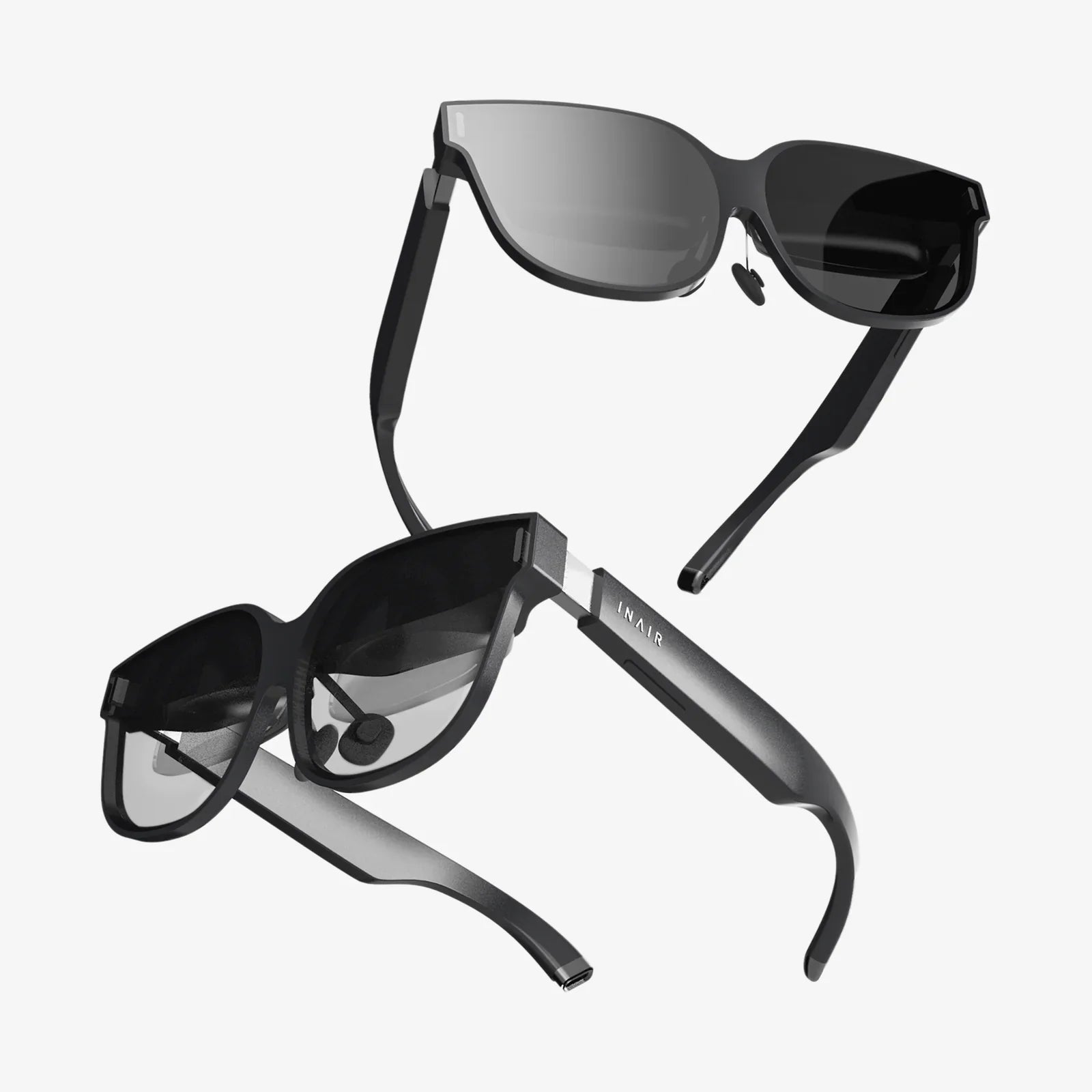
Imagine a world where your reality is your canvas, where information flows around you not as static text on a pane of glass, but as dynamic, three-dimensional holograms that you can touch, manipulate, and share. This is not a distant scene from science fiction; it is the imminent future being forged by the rapid convergence of two transformative technologies: holographic displays and wearable computers. This fusion promises to liberate us from the tyranny of the screen, dissolving the barrier between the digital and the physical and ushering in an era of intuitive, immersive, and profoundly human-centric computing. We stand on the precipice of a revolution that will redefine our very perception of reality, and it begins with a device you wear.
The Convergence of Two Technological Titans
The journey to holographic wearable computers is a story of two parallel paths finally merging. On one side is the field of wearable computing, a decades-long quest to make technology an unobtrusive, always-available extension of ourselves. From early head-mounted displays that were bulky and impractical to the sleek smart glasses of today, the goal has consistently been to integrate computing power into our personal space and workflow seamlessly. The other path is that of holographic technology, which has evolved from simple Pepper's Ghost illusions seen in concerts to sophisticated light-field displays capable of projecting convincing, volumetric images into thin air.
The true breakthrough occurs when these fields collide. A holographic wearable computer is not merely a screen strapped to your face; it is a sophisticated system that understands the world around you and projects information onto it in a way that feels natural and integrated. This requires a symphony of advanced components working in perfect harmony.
Peering into the Engine: Core Technologies at Work
The magic of these devices is underpinned by a suite of complex and innovative technologies. Understanding them is key to appreciating the revolution they represent.
Waveguide and Light-Field Display Technology
At the heart of the visual experience is the display system. Unlike virtual reality headsets that use screens viewed through lenses, most advanced holographic wearables rely on waveguides. These are transparent substrates, often made of glass or polymer, that use diffraction gratings to "bend" light from a micro-projector located near the temple into the user's eye. This creates the illusion that the image is floating in space several feet away, all while allowing the user to see the real world clearly behind it. More advanced systems are exploring true light-field displays, which project light rays replicating how light behaves in the real world, providing natural depth cues and reducing eye strain by allowing the eye to focus naturally on the holographic image.
Spatial Mapping and Environmental Understanding
For a hologram to feel like a real object in your room, the device must understand the room itself. This is achieved through a combination of sensors, including LiDAR (Light Detection and Ranging), depth-sensing cameras, and simultaneous localization and mapping (SLAM) algorithms. These sensors constantly scan the environment, creating a real-time, millimeter-accurate 3D map of the surrounding space. This digital twin allows the system to anchor holograms to physical surfaces—pinning a virtual recipe to your kitchen wall, placing a 3D model of an engine on your desk, or having a navigation arrow appear to hover over the road ahead.
Advanced Processing and AI Integration
Processing the immense amount of visual and spatial data, rendering complex 3D graphics in real-time, and running intuitive user interfaces requires immense computational power. This is handled by miniaturized, high-efficiency processors and often augmented by specialized AI co-processors. Artificial intelligence is the silent brain of the operation, enabling features like gesture recognition (allowing you to pinch and swipe holograms), object recognition (the device can identify your coffee mug and display its temperature), and predictive assistance (anticipating the information you need based on context).
A Day in a Holographically Augmented Life
The theoretical is compelling, but the practical applications are where this technology will change everything. Let's envision a day transformed by holographic wearable computers.
Revolutionizing the Professional Workspace
In the morning, an architect dons her device. Instead of hunching over a 2D blueprint on a monitor, she walks around a full-scale, holographic model of her new building. She can peer inside the walls to see plumbing and electrical conduits, change the material of the facade with a gesture, and even step inside to experience the sightlines and spatial flow. A remote structural engineer, represented by a photorealistic avatar, joins her inside the model to point out a potential issue. They collaborate within the shared holographic space as if they were in the same physical room, despite being continents apart.
A surgeon uses a holographic overlay during a complex procedure, seeing the patient's vital signs, 3D scans of the tumor, and critical anatomical landmarks projected directly onto their field of view, keeping their focus entirely on the patient. A factory technician sees assembly instructions and torque specifications holographically overlaid on the machinery they are repairing, guiding them through each step with precision and reducing errors.
Redefining Social Connection and Entertainment
Social interactions will leap into a new dimension. Instead of video calls on a flat screen, you could have a life-sized, holographic representation of a loved one sitting on your sofa, able to make eye contact and share body language in a way that feels profoundly more present. Watching a sporting event could mean choosing to have real-time stats hover around the action, or even switching your view to a holographic replay you can walk around to analyze the play from every angle.
Gaming will explode beyond the television and into your living room. Imagine a puzzle game where you physically walk around floating ancient ruins, or a strategy game where the battlefield is mapped out across your dinner table, with units you command by touching them.
Transforming Daily Navigation and Learning
Navigation will become intuitive. Directional arrows will appear to be painted on the road ahead, guiding you to your destination. Points of interest—a highly-rated restaurant, a historical landmark—will be flagged with subtle holographic markers visible only to you, enriching your exploration of a new city.
Education will become experiential. A student learning about the solar system could have the planets orbit around them; a biology student could dissect a holographic frog, observing each system in intricate, interactive 3D. This shift from abstract learning to experiential discovery has the potential to unlock understanding in entirely new ways.
Navigating the Invisible Frontier: Challenges and Considerations
For all its promise, the path to widespread adoption of holographic wearable computers is fraught with significant challenges that must be thoughtfully addressed.
The Form Factor Conundrum
The ultimate goal is a device that is indistinguishable from regular eyewear—lightweight, stylish, and with all-day battery life. Current prototypes are often too heavy, too power-hungry, or too limited in field of view. Overcoming these hurdles requires breakthroughs in battery technology, micro-optics, and thermal management. The industry must balance computational power with wearability, a challenge that will define the next generation of devices.
The Privacy Paradox
A device that sees everything you see and maps your environment raises monumental privacy questions. Continuous environmental scanning means these devices could, in theory, collect vast amounts of data about your home, your workplace, and the people you interact with. Robust, transparent, and user-centric data policies are non-negotiable. Users must have absolute control over what data is collected, how it is used, and who it is shared with. The specter of unwanted advertising or corporate surveillance via augmented reality is a dystopian outcome that must be proactively prevented through regulation and ethical design.
Social Acceptance and the Digital Divide
How will society adapt to a world where people are constantly interacting with an invisible digital layer? Social norms around attention and etiquette will need to evolve. Furthermore, the cost of early adoption could exacerbate the digital divide, creating a chasm between those who can afford to augment their reality and those who cannot. Ensuring this technology becomes an empowering tool for all, not a luxury for a few, is a critical societal challenge.
The Future is Transparent
The trajectory is clear. Holographic wearable computers will evolve from niche professional tools to mainstream consumer platforms. We will move from simple notifications and basic overlays to persistent digital objects that coexist with our physical reality. The very concept of an "app" may be replaced by contextual experiences that appear only when and where they are needed. This technology will become the next major computing platform, succeeding the smartphone as our primary gateway to digital information and connection.
It represents more than just a new gadget; it is a fundamental shift in the human-computer interface. We are moving from a paradigm of looking at technology to one of looking through it. The device itself will fade into the background—a transparent lens through which we enhance our perception, amplify our abilities, and connect with information and with each other in ways previously confined to our dreams. The boundary between the atoms of our world and the bits of our digital creations is becoming porous, and on the other side lies a future of limitless possibility.
The screen that has dominated our digital lives for half a century is beginning to fade, not to black, but to transparency. The next time you reach for your phone to check a message or get directions, imagine that information simply appearing in your world, integrated and immediate. This is the silent promise of holographic wearable computers—a world where technology doesn't demand our attention but enhances our perception, where the most powerful computer is the one you forget you're wearing, and the most compelling interface is the reality you already inhabit. The revolution won't be televised; it will be projected all around you, waiting for you to reach out and touch it.
Share:
Index AR: The Invisible Interface Revolutionizing Our Digital and Physical Worlds
VR Screen Keeps Moving: A Deep Dive into the Causes and Solutions for Unwanted Drift