


- by wangfred
Index AR: The Invisible Interface Revolutionizing Our Digital and Physical Worlds
- by wangfred
Imagine a world where the very fabric of your environment is alive with information, where every street corner, product on a shelf, and historical monument can tell its story directly to you, simply by looking through the lens of your device or smart glasses. This is not a distant science fiction fantasy; it is the imminent reality being built today, and at the heart of this transformation lies a critical, yet often invisible, technological cornerstone: the index for augmented reality. This conceptual framework is the silent orchestrator, the vast, intelligent catalog that makes meaningful augmentation possible, and it is poised to fundamentally alter how we work, learn, shop, and interact with the world around us.
At its core, an index for augmented reality is a sophisticated, dynamic, and multi-layered data structure. It is far more than a simple database or a list of points of interest. Think of it as the central nervous system of the AR ecosystem. If augmented reality is about overlaying digital content—be it 3D models, text, video, or audio—onto the physical world, then the index is the brain that decides what content to show, when to show it, and where to place it with impeccable accuracy.
This involves a complex interplay of different data types:
The monumental challenge for creators of an index for augmented reality is to not only store these colossal datasets but to process and query them in milliseconds, matching the user's real-world view with the appropriate digital layer in real-time. This requires immense computational power, often leveraging edge computing and cloud resources to deliver a seamless experience.
The power of a robust index for augmented reality is its versatility. Its applications are bleeding across every sector, solving real-world problems and creating entirely new experiences.
This is where the technology is already delivering immense value. In manufacturing and logistics, workers equipped with smart glasses can see digital work instructions overlaid directly onto machinery. The index recognizes the specific unit and pulls up the correct schematic, highlights the next bolt to tighten, or displays a warning if a step is missed. This reduces errors, speeds up training, and enhances safety. For warehouse logistics, an index can visualize the optimal picking path directly on the floor, highlight items on a shelf, and display inventory data, skyrocketing efficiency.
The shopping experience is on the cusp of a revolution. Imagine pointing your device at your living room and seeing virtual furniture from an online store placed perfectly to scale, thanks to the index's spatial mapping. In a physical store, pointing your phone at a product could reveal detailed specifications, customer reviews, comparable items, and even available discounts, all served by the index. It blurs the line between online and offline retail, creating a deeply informed and interactive consumer journey.
Textbooks become living entities. Students studying anatomy can explore a beating heart model in 3D space. History classes can walk through digitally reconstructed ancient ruins, with the index providing narrative and facts at key locations. Medical students can practice procedures on virtual patients, with the index guiding them and providing real-time feedback. This experiential learning, powered by a rich index, dramatically improves comprehension and retention.
Moving beyond the flat, 2D map, AR navigation powered by a precise index can paint directions onto the real world—arrows on the road, markers on building facades. Tourists can explore a city where every building's history, every restaurant's menu, and public transit schedules are available at a glance. The city itself becomes an interactive, informative canvas.
Creating this universal index is perhaps one of the greatest technological undertakings of the decade. The hurdles are significant and multifaceted.
Scale and Complexity: Indexing the entire world is a task of almost unimaginable scale. It requires capturing, processing, and continuously updating data for countless locations and objects globally. This is a task far beyond any single entity, suggesting a future of interconnected, interoperable indexes.
Privacy and Security: An index that understands the physical world in such intimate detail raises profound privacy questions. Who owns the digital data attached to a private building? How is user location and gaze-tracking data being used and protected? The potential for surveillance and data misuse is a serious concern that requires robust ethical frameworks and transparent policies.
Standardization and Interoperability: For AR to become a ubiquitous platform like the web, its underlying index cannot be a walled garden. There must be open standards that allow different devices, applications, and content creators to interact with a shared understanding of the world. A fragmented index would lead to a broken user experience.
Accuracy and Reliability: The digital overlay must be perfectly aligned. A misidentified object or misplaced instruction in an industrial setting could have dangerous consequences. The margin for error is virtually zero, demanding incredibly precise computer vision and localization technologies like simultaneous localization and mapping (SLAM).
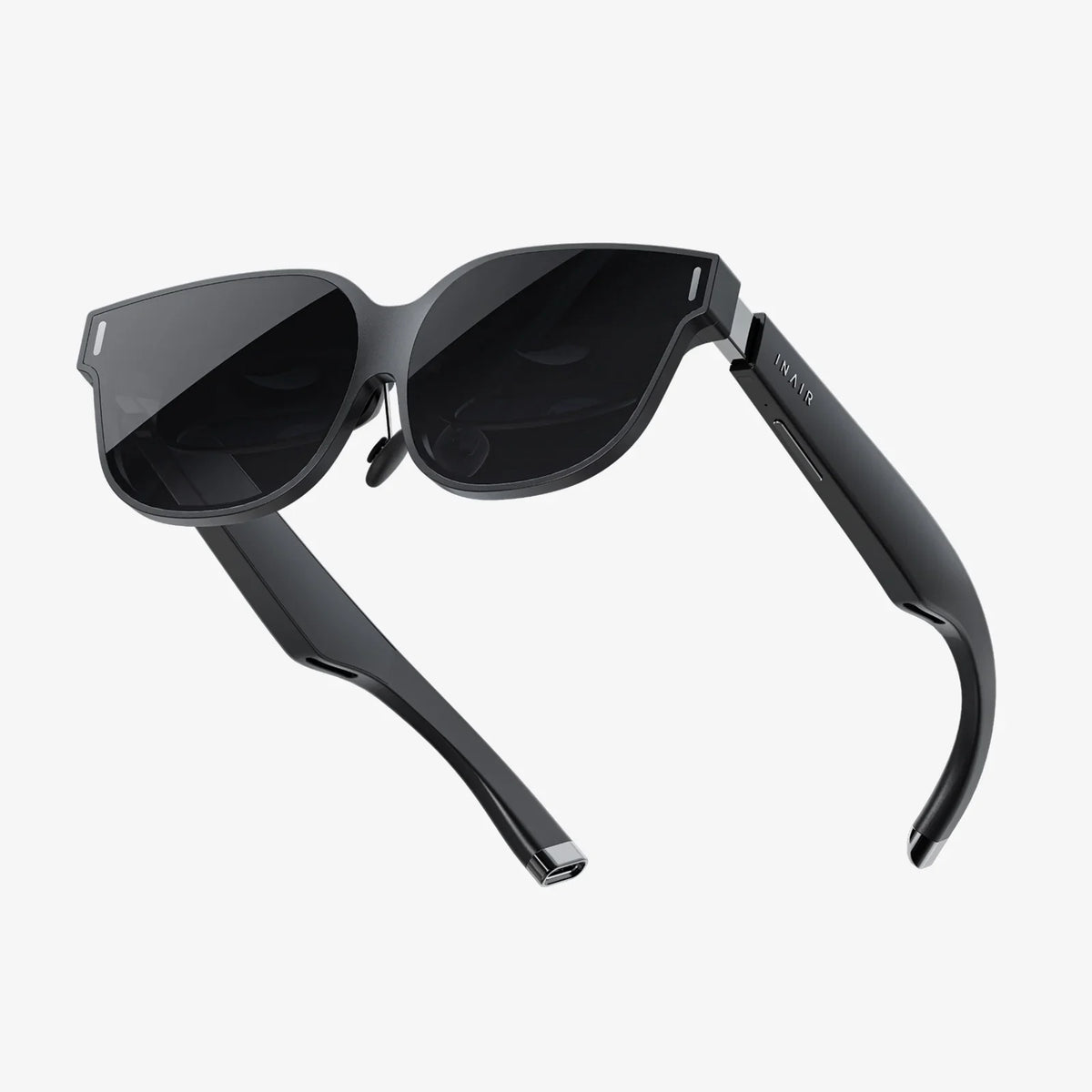
As the technology matures, the index for augmented reality will evolve from a tool we consciously use to a pervasive utility, much like GPS is today. We will move from smartphone-based AR to lightweight, stylish glasses that we wear all day, offering a continuous stream of contextual information.
This future "perpetual AR" will be powered by a ever-evolving, intelligent index that learns from collective user interactions. It will anticipate our needs, offer information before we even ask, and connect us to our environment in ways we are only beginning to imagine. It could democratize expertise, allowing anyone to perform complex tasks with digital guidance, and bridge language barriers by translating signs and speech in real-time.
However, this future also necessitates a crucial conversation about digital litter and attention economics. Without careful design, our field of vision could become a cluttered mess of notifications and advertisements. The design of the index and the experiences it powers must prioritize user well-being, allowing us to filter, focus, and engage with this new layer of reality on our own terms.
The journey to index our reality has already begun, quietly taking shape in labs, factories, and startups around the globe. It's the unspoken hero in the narrative of augmented reality, the intricate web of data that will tether our digital future firmly to the physical present. The world is about to get a whole lot smarter, and it all starts with looking something up in the ultimate index.