


Imagine slipping on a headset and instantly being transported. Not just to watch a new world, but to truly stand within it, to feel the sun on your virtual skin, to hear the rustle of leaves all around you, and to interact with this digital realm as intuitively as you do your own living room. This is no longer the stuff of science fiction; it is the startling reality of modern virtual reality. The question on everyone's mind, from curious consumers to industry titans, is a simple one with a complex answer: just how advanced is virtual reality, really? The journey from clunky, low-fidelity prototypes to the sleek, sense-bending systems of today is a story of unprecedented technological convergence, pushing the boundaries of what we believe is possible.
The Hardware Leap: Beyond the Screen and Into the World
The most tangible measure of VR's advancement lies in its hardware. The evolution here has been nothing short of revolutionary, moving far beyond simple stereoscopic displays.
Visual Fidelity: The Resolution Revolution
Early VR was plagued by the "screen door effect," where users could discern the faint lines between pixels, shattering immersion. Today's high-end headsets feature stunning resolutions that approach, and in some cases surpass, the perceived sharpness of a 1080p monitor. Combined with high refresh rates—90Hz, 120Hz, and even beyond—modern VR achieves a level of smoothness and clarity that is the foundational bedrock of presence, the feeling of actually "being there." Advanced lens technology, like pancake lenses, has also drastically reduced the size and weight of headsets while expanding the "sweet spot" for a clearer, more comfortable view.
Tracking and Interaction: Your Hands in the Machine
Perhaps the most significant leap has been in tracking. Inside-out tracking, where cameras on the headset itself map the environment and track controller movement, has eliminated the need for external sensors. This makes setup instantaneous and untethers the user, both physically and psychologically. The controllers themselves have become marvels of haptic engineering. They don't just track position; they provide nuanced rumble feedback, simulating everything from the gentle pull of a bowstring to the jarring impact of a virtual hammer.
Even more advanced is the emergence of hand-tracking technology. By simply using your bare hands, you can push buttons, grab objects, and gesture naturally. This represents a paradigm shift towards more intuitive and human-centric interaction, removing the last barrier of artificial input devices.
Haptics and Feedback: The Illusion of Touch
True immersion engages all senses. Advanced haptic vests and gloves are now taking VR beyond sight and sound. These devices can simulate directional impacts, pressure, and even temperature changes. Imagine feeling the recoil of a virtual weapon precisely where it's shouldered or the gentle patter of rain across your back. This multisensory feedback is a giant leap towards complete sensory deception, making virtual experiences feel startlingly tangible.
The Software Symphony: Building Believable Worlds
Powerful hardware is useless without software to bring it to life. The creation of virtual worlds has evolved from simple, blocky environments to breathtakingly complex and interactive simulations.
Photorealism and Stylized Realities
Through advanced rendering techniques like ray tracing, which accurately simulates the behavior of light, and ever-more-detailed asset creation, developers can build worlds of stunning photorealism. The way light glints off a wet surface, shadows creep across a room, and materials like metal, cloth, and stone are rendered can be indistinguishable from reality. Conversely, there's equal advancement in stylized, non-realistic aesthetics. Artful, immersive worlds are built not to mimic our reality, but to realize the full potential of an artist's imagination, proving that advancement isn't solely about realism but about believability within its own context.
Physics and Interactivity: A World That Reacts
An advanced virtual world isn't a static painting; it's a dynamic system. Modern physics engines allow for incredibly realistic object interaction. Stacking boxes, swinging a sword that collides accurately with objects, and watching debris scatter according to real-world principles—these interactions reinforce the solidity of the virtual space. The environment remembers changes, allowing for persistent manipulation that makes users feel like genuine agents of change within the world, not just passive observers.
Artificial Intelligence and Social VR
Populating these worlds with believable characters is another frontier. Advanced AI drives non-player characters (NPCs) with more complex behaviors and interactions, making them feel less like scripted robots and more like inhabitants of their world. Furthermore, the rise of social VR platforms represents a software revolution. Here, the most advanced element is other people. Using motion-tracked avatars that replicate body language, eye contact, and gesture, VR enables a profound sense of social presence, making a conversation with a friend who is physically thousands of miles away feel as natural as if they were in the same room.
Practical Applications: Beyond the Game
While entertainment is a massive driver, the true measure of a technology's advancement is its utility. VR has firmly moved out of the game lab and into critical, real-world industries.
Revolutionizing Medicine and Therapy
In healthcare, VR is a transformative tool. Surgeons use detailed, accurate VR simulations to practice complex procedures risk-free, planning surgeries with a 3D model of a patient's specific anatomy. For mental health, VR exposure therapy is dramatically effective, allowing patients to confront and manage phobias like fear of heights or social anxiety in a safe, controlled, and gradual environment. It's also used for pain management, distracting burn victims during painful wound care procedures with immersive, calming experiences.
Architecture, Engineering, and Construction (AEC)
Architects and engineers now use VR to walk clients through unbuilt designs long before ground is broken. This allows for unparalleled understanding of scale, space, and lighting, enabling changes to be made at a fraction of the cost of physical mock-ups. Factory planners can design and test assembly line layouts in VR, optimizing workflows and identifying potential safety issues before implementation.
Corporate Training and Education
From training retail employees to handle busy holiday rushes to teaching mechanics the intricacies of a new engine, VR provides a "learn by doing" environment that is far more effective than videos or manuals. In education, students can take field trips to ancient Rome, the depths of the ocean, or the surface of Mars, transforming abstract concepts into memorable, experiential learning.
The Remaining Frontiers and Challenges
For all its progress, VR is not without its limitations, and these challenges define the next frontier for advancement.
The Comfort Conundrum: Motion Sickness and Form Factor
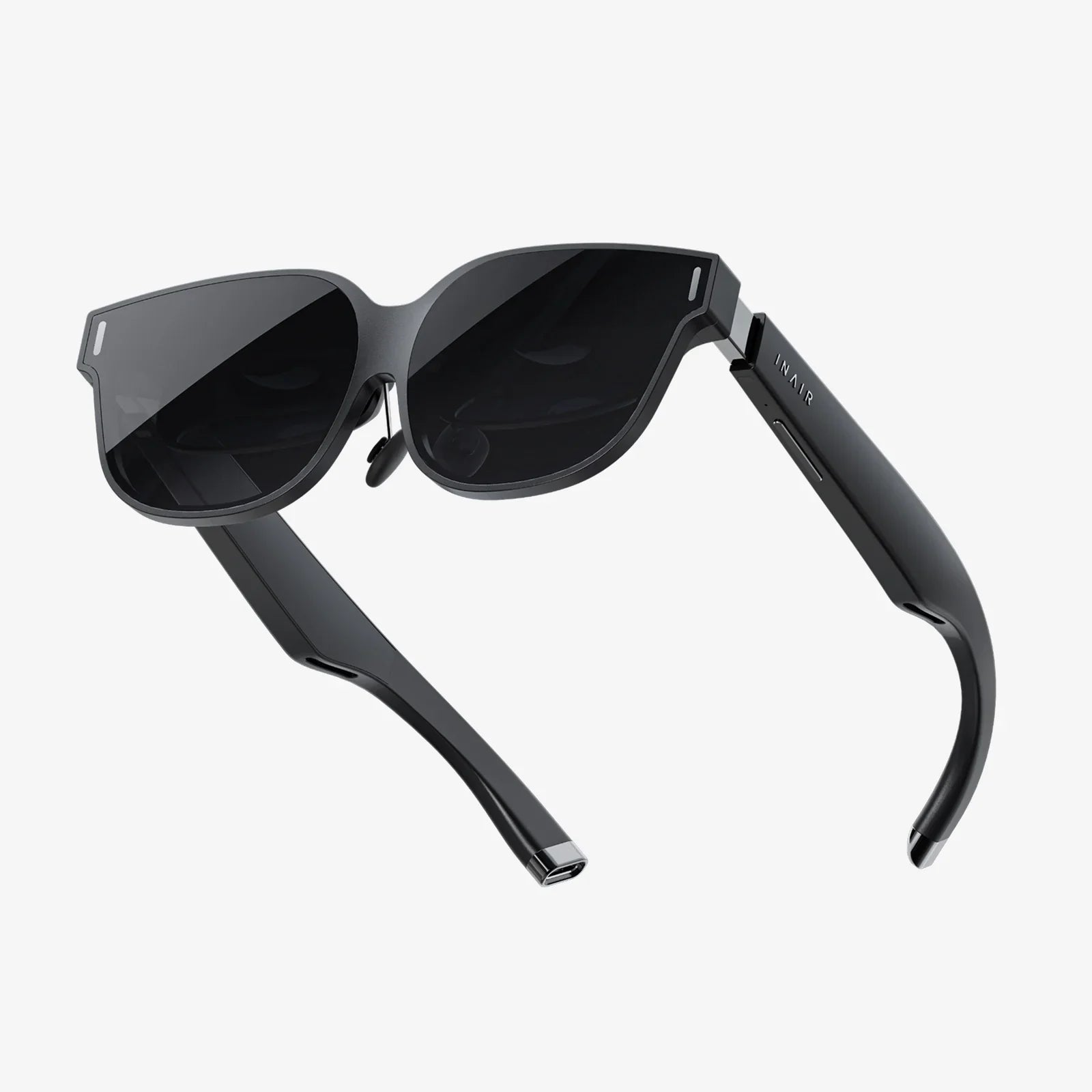
Despite improvements, motion sickness remains an issue for some users, often caused by a latency mismatch between physical movement and visual feedback. While reduced by higher refresh rates, it's a persistent hurdle. Furthermore, while headsets are smaller, the goal of a comfortable, all-day wearable device that looks like a pair of sunglasses is still on the horizon. Achieving this requires breakthroughs in display miniaturization, processing power, and battery technology.
The Quest for True Photorealism and the "Uncanny Valley"
While environments are becoming photorealistic, human characters often still fall into the "uncanny valley," where they are close to human but just off enough to be unsettling. Achieving true, believable digital humans with perfect skin, eye, and muscle simulation requires immense computational power and artistic talent that is still developing.
Accessibility and the Digital Divide
The cost of high-end VR systems, and the powerful computers needed to run them, remains a barrier to mass adoption. Making this technology more affordable and accessible is crucial for it to become a truly universal tool rather than a niche luxury.
The Future is Immersive: What Comes Next?
The trajectory points towards even greater integration with our physical reality. The concept of the "Metaverse," a persistent network of interconnected virtual spaces, is the next logical step. This will require advancements in cloud streaming (to offload processing from the headset), global standardization, and even more seamless hardware. Research into brain-computer interfaces, while futuristic, hints at a day when we might control VR with our thoughts, bypassing controllers entirely.
So, how advanced is virtual reality? It is advanced enough to fool our senses, to train our surgeons, to treat our phobias, and to connect us in profound new ways. It has moved from a novel toy to a powerful tool, yet it stands on the precipice of becoming something even greater. It is not a perfected technology, but it is a breathtakingly advanced one, evolving at a breakneck pace. The line between the virtual and the real is not just blurring; in many compelling and practical ways, it has already begun to vanish, inviting us all to step across.
Share:
Virtual Reality Environment: A Deep Dive into the Digital Worlds Reshaping Our Reality
Virtual Reality Is Used For: Beyond Gaming Into a New Digital Epoch