


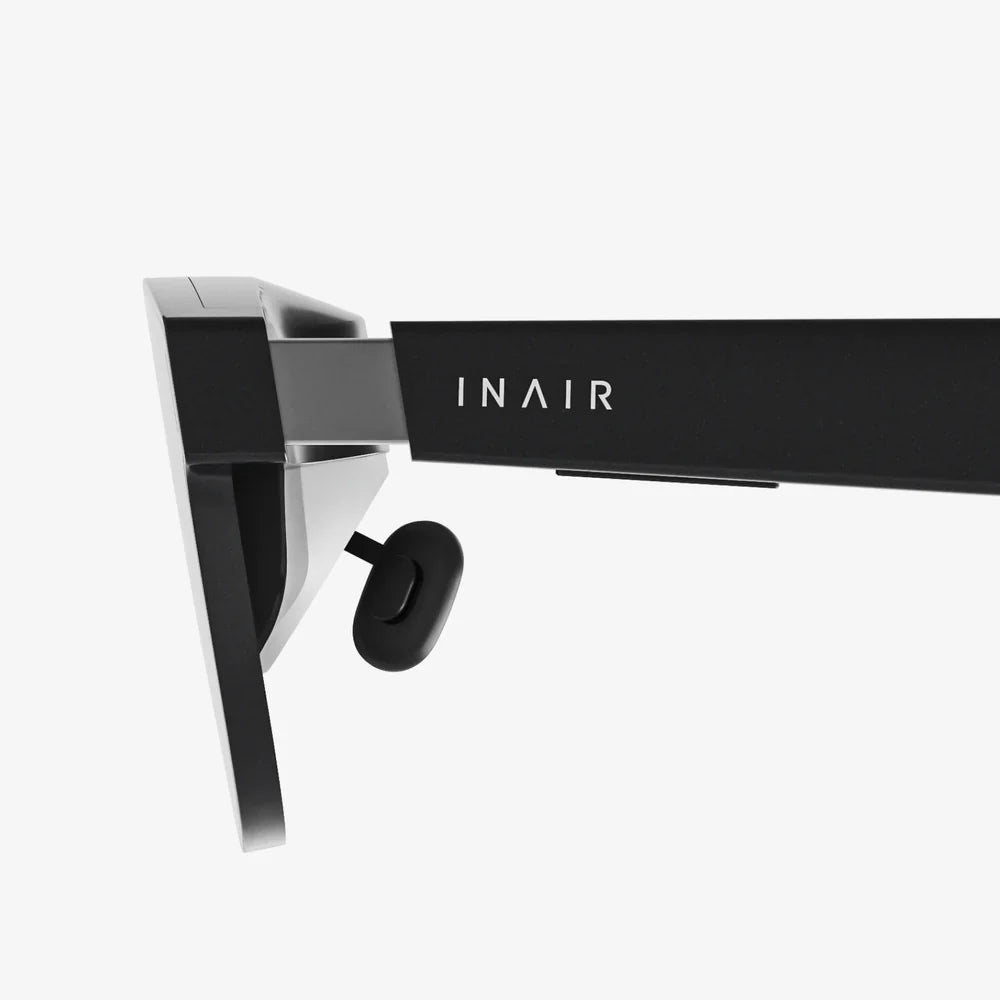
Have you ever wondered how a digital dinosaur can stomp across your living room or how you can seemingly step inside a video game? The magic of Augmented Reality (AR) and Virtual Reality (VR) feels like science fiction made real, but it’s all grounded in a fascinating symphony of advanced hardware and sophisticated software. These technologies don’t just create illusions; they construct entirely new ways of perceiving and interacting with information. Understanding how they work reveals not just technical ingenuity but a profound shift in the human-computer relationship, moving from screens we look at to environments we inhabit.
At its core, the fundamental difference between AR and VR lies in their relationship with the real world. Virtual Reality is an immersive, all-encompassing technology designed to shut out the physical world and transport the user to a completely simulated environment. When you put on a VR headset, your visual and auditory fields are replaced with a digital construct. The goal is presence—the convincing feeling of being somewhere else. Augmented Reality, by contrast, seeks to overlay digital information onto the real world. It enhances your existing reality by superimposing computer-generated images, data, or animations onto your view of your immediate surroundings. Think of it as a technological layer on top of the real world, accessible through smartphone screens, smart glasses, or specialized headsets.
The Pillars of Virtual Reality: Building a Believable World
Creating a convincing VR experience is a complex feat of engineering that requires tricking several human senses simultaneously, primarily sight and sound. The process can be broken down into several key components working in perfect harmony.
1. The Headset and Display Technology
The VR headset, or Head-Mounted Display (HMD), is the primary gateway to the virtual world. Its most obvious job is to display the visual content, but it does so in a very specific way. Inside the headset are two small high-resolution screens (one for each eye) that show slightly different images, replicating human binocular vision to create a sense of depth and stereoscopy. These displays are placed behind high-quality lenses that sit between the screen and the user’s eyes. These lenses focus and reshape the image for each eye, creating a wide field of view (typically over 100 degrees) to make the experience feel expansive and immersive rather than like looking through a small window.
2. Tracking: The Magic of Movement
For VR to feel real, the digital world must respond to your movements with imperceptible latency. This is achieved through precise tracking systems that monitor the position and orientation of your head and, often, your controllers.
- Rotational Tracking: This is handled by an Inertial Measurement Unit (IMU), a small chip inside the headset containing a gyroscope, accelerometer, and magnetometer. The gyroscope tracks rotational movement (like turning your head side-to-side or nodding), the accelerometer tracks linear acceleration (like moving your head forward quickly), and the magnetometer acts as a digital compass to correct for drift. The IMU provides extremely fast data, crucial for low-latency responses.
-
Positional Tracking: Knowing which way you're facing isn't enough; the system needs to know where you are in a physical space. Several methods achieve this:
- Outside-In Tracking: External sensors or base stations placed around the room emit lasers or light signals that are picked up by sensors on the headset. By calculating the time it takes for these signals to arrive, the system can triangulate the exact position of the headset in 3D space with extremely high accuracy.
- Inside-Out Tracking: This more modern approach embeds cameras directly onto the headset itself. These cameras continuously observe the physical environment, tracking the movement of static features like furniture corners, pictures on the wall, or patterns on the rug. By analyzing how these reference points move in the camera’s field of view, the headset’s internal processor can calculate its own position and movement through the room without any external hardware.
3. Rendering and Latency: The Need for Speed
Once the tracking system knows the user’s position, it sends this data to the connected computer or internal processor. The graphics engine must then re-render the entire 3D scene from this new perspective, and it must do so at an incredibly high speed. The industry standard is a minimum of 90 frames per second (FPS), with high-end systems pushing 120 FPS or more. This high frame rate is essential to avoid motion sickness and maintain the illusion of a solid, stable world.
The total time between a user’s physical movement and the corresponding change in the display is called motion-to-photon latency. If this latency is too high (typically over 20 milliseconds), the virtual world will feel laggy and disconnected, almost certainly inducing simulator sickness. Powerful processors, optimized software, and fast displays all work together to minimize this delay to near-instantaneous levels.
4. Audio and Haptics: Completing the Illusion
Visuals are only half the story. Spatialized 3D audio is critical for immersion. Instead of playing sound from a static left and right channel, VR audio systems simulate how sound waves interact with the human head and ears. A sound coming from behind and to your left will be processed to sound like it’s coming from behind and to your left, convincing your brain of its source. Haptic feedback, through vibrating controllers or even advanced suits, provides the sense of touch, allowing you to feel a virtual impact, the rumble of an engine, or the texture of a digital object.
The Mechanics of Augmented Reality: Layering Digital onto Physical
While VR builds a new world, AR has a different challenge: understanding the existing world well enough to place digital objects convincingly within it. The core technologies overlap with VR but are applied differently.
1. Environmental Understanding and Computer Vision
The single most important task for any AR device is to perceive and comprehend its surroundings. This is achieved through a suite of sensors and sophisticated software algorithms under the umbrella of computer vision.
- Cameras: The primary sensor is one or more cameras that capture the live video feed of the real world. This feed is what the digital content will be composited onto.
- Depth Sensing: To understand the geometry of a room, many AR systems use a depth sensor. This can be an active system like a time-of-flight sensor, which shoots out invisible infrared light pulses and measures how long they take to bounce back to create a depth map of the environment. This map identifies surfaces like floors, walls, and tables.
- Simultaneous Localization and Mapping (SLAM): This is the revolutionary algorithm that makes modern AR possible. SLAM allows a device to simultaneously map an unknown environment while tracking its own location within that map in real-time. As you move your phone or AR glasses around, the SLAM system identifies unique feature points in the room, tracks their movement from frame to frame, and uses this data to constantly update its position and its understanding of the 3D space. This is how the system knows that a virtual character can stand on your floor or hide behind your real sofa.
2. Registration and Occlusion: Making Digital Objects Play by Real-World Rules
For an AR overlay to be believable, it must be properly registered and occluded.
- Registration means the digital object is anchored to a specific point in the real world. If you place a virtual lamp on your side table, it should stay on that table even if you walk around the room and look at it from different angles. This persistent anchoring relies on the continuous data from the SLAM system.
- Occlusion is the visual effect where real-world objects correctly block digital ones. If your virtual dog runs behind your real coffee table, the part of the dog that should be hidden must disappear behind the table. Advanced AR systems use the depth map of the environment to handle occlusion dynamically, making the digital content feel truly integrated into physical space.
3. Display and Projection Methods
There are several ways to deliver the combined real-plus-digital image to the user’s eyes:
- Smartphone and Tablet Displays: The most common method. The device’s camera captures the world, the processor composites the AR elements, and the screen shows the final combined image. It’s simple and effective but holds the device like a window.
- Optical See-Through (Smart Glasses): These glasses have waveguides or tiny projectors that shine light onto transparent lenses or directly into the user’s retinas. The user sees the real world directly through the lenses, while the digital images are projected on top. This allows for a more natural, hands-free experience.
- Video See-Through (Headsets): Similar to a VR headset, but with front-facing cameras that pass a live video feed of the real world to the internal displays, where digital content is added. This allows for more vivid and complex digital overlays but can slightly alter the perception of the real world.
The Shared Challenges and The Future
Both AR and VR face significant hurdles on the path to ubiquity. Processing power must be immense yet efficient enough to be packed into mobile, untethered devices. Improving battery life is a constant battle. Perhaps the most difficult challenge is creating natural and intuitive interaction paradigms—moving beyond controllers to using our hands, eyes, and voice to manipulate these digital worlds as effortlessly as we do the physical one. Furthermore, the societal and ethical implications, from data privacy to the psychological effects of persistent digital layers, are only beginning to be explored.
The line between AR and VR is also beginning to blur with the concept of Mixed Reality (MR), where digital objects not only coexist with the real world but can interact with it physically—a virtual ball bouncing off a real wall. This requires an even deeper understanding of the environment, a field often referred to as spatial computing. As these technologies mature, driven by advances in artificial intelligence, miniaturization, and connectivity, they promise to redefine everything from how we work and learn to how we socialize and play. The journey into these digital realities is just beginning, and it’s built on a foundation of some of the most exciting technology of our time.
Imagine a world where your workspace extends infinitely beyond the edges of your physical desk, where learning history means walking through ancient cities in your living room, and where the line between your digital creativity and physical reality dissolves completely. This isn’t a distant future—it’s the direct result of the incredible engineering behind AR and VR. The next time you see a digital creature scamper across your floor, you’ll appreciate the intricate dance of light, data, and processing power making it possible, a silent symphony orchestrating a revolution in perception that is only just getting started.
Share:
AI Smart Sunglasses The Next Frontier in Wearable Technology and Personal AI
AI Smart Sunglasses The Next Frontier in Wearable Technology and Personal AI