


Imagine trying on a new watch, placing a new sofa in your living room, or test-driving a powerful new piece of equipment—all without leaving your home. This is no longer the stuff of science fiction; it is the tangible, exciting reality being unlocked today through the power of augmented reality. AR technology is not just enhancing virtual product demonstrations; it is completely redefining the very essence of how we explore, interact with, and ultimately decide to purchase products, bridging the immense gap between digital convenience and physical experience in a way that was once unimaginable.
The Architectural Framework of AR Demonstrations
At its core, augmented reality is a technology that superimposes computer-generated images, information, or interfaces onto a user's real-world view. Unlike Virtual Reality (VR), which creates a completely artificial environment, AR enhances the real world by adding digital layers to it. For virtual product demonstrations, this is achieved through a sophisticated interplay of software and hardware. Modern smart devices, from phones and tablets to more advanced AR glasses, act as the viewport. Their high-resolution cameras capture the live environment, while onboard sensors—accelerometers, gyroscopes, GPS, and depth sensors—gather critical spatial data.
This sensory input is processed in real-time by powerful AR platforms, which use complex algorithms for Simultaneous Localization and Mapping (SLAM). SLAM allows the device to understand and map its surroundings, creating a digital spatial awareness. It can identify floors, walls, surfaces, and their dimensions. Once the environment is mapped, the 3D digital model of the product—be it a piece of furniture, a sneaker, or an industrial valve—is rendered and anchored precisely within the user's physical space. This model is not a static image; it is often a high-fidelity, interactive asset that can be manipulated. Users can walk around it, view it from different angles, change its color or finish, and in more advanced applications, even interact with its moving parts, all while seeing how it fits and looks in their actual environment.
Transcending Physical and Geographical Barriers
One of the most profound impacts of AR-powered demonstrations is the demolition of traditional barriers to product evaluation. Geography is rendered irrelevant. A customer in a rural town can now visualize how a large, complex piece of farm machinery would fit in their equipment shed and operate in their fields, something previously impossible without an expensive and time-consuming visit from a sales representative or a trip to a distant showroom. This globalizes access to products, empowering customers everywhere with the same level of detailed inspection previously reserved for those in major metropolitan areas with flagship stores.
Scale, another significant hurdle, is also overcome. Products that are too large, too small, too complex, or too dangerous to demonstrate physically become easily accessible. Architects can project a full-scale, to-scale model of a new building onto an empty plot of land for stakeholders to walk through. Engineers can examine a life-sized 3D model of a jet engine, peering into its intricate components without the need for a physical prototype that may be housed in a secure facility thousands of miles away. Conversely, a tiny, complex component like a microchip can be scaled up to the size of a room, allowing every minute detail to be examined and explained in an immersive manner. This ability to manipulate scale provides an unparalleled depth of understanding.
Enhancing Consumer Confidence and Reducing Purchase Anxiety
The 'try-before-you-buy' concept has long been a golden standard for retail, but it has largely been confined to specific categories like clothing or cosmetics. AR democratizes this experience across virtually every product category. The number one fear for online shoppers—especially for big-ticket items—is that the product will not meet their expectations upon arrival. Will this paint color actually look good on my walls? Is this rug the right size for my hallway? Will this new grill fit on my patio? This uncertainty is a major driver of cart abandonment and product returns, both of which are costly for businesses and frustrating for consumers.
AR directly attacks this anxiety. By allowing users to see the product in their own context, it provides a powerful dose of certainty. The ability to place a virtual lamp on your actual nightstand and see how its light casts a glow in your bedroom drastically reduces the perceived risk of the purchase. This leads to significantly higher consumer confidence. When a buyer has, in a sense, already 'experienced' the product in their home, they are far more likely to complete the purchase and be satisfied with it upon arrival. This translates to tangible business benefits: higher conversion rates, larger average order values as customers feel more confident in their choices, and a dramatic reduction in return rates, which directly improves the bottom line and sustainability metrics by cutting down on 'reverse logistics'.
Delivering Rich, Interactive Information On-Demand
A virtual product demonstration in AR is far more than a simple visual placeholder; it is a dynamic information portal. The digital overlay can be designed to include interactive hotspots and data points that the user can tap or select to learn more. Imagine demonstrating a new smart home device. By looking at it through an AR view on your phone, you could tap on the device to see a pop-up menu: 'Watch a features video', 'See technical specifications', 'View color options', or 'Read customer reviews'. This contextual information is delivered at the exact moment the user is most engaged with the product—while they are actively visualizing it in their life.
This transforms the demonstration from a passive viewing experience into an active, educational interaction. For complex products, this is revolutionary. A medical professional could demonstrate a new piece of diagnostic equipment, using AR to peel back the outer casing and animate its internal workings, explaining how each component functions during a procedure. This depth of explanation, available on-demand and within context, accelerates the learning curve and ensures the user fully appreciates the product's value and functionality, leading to more informed and confident decision-making.
The Future is Now: Emerging Trends and Possibilities
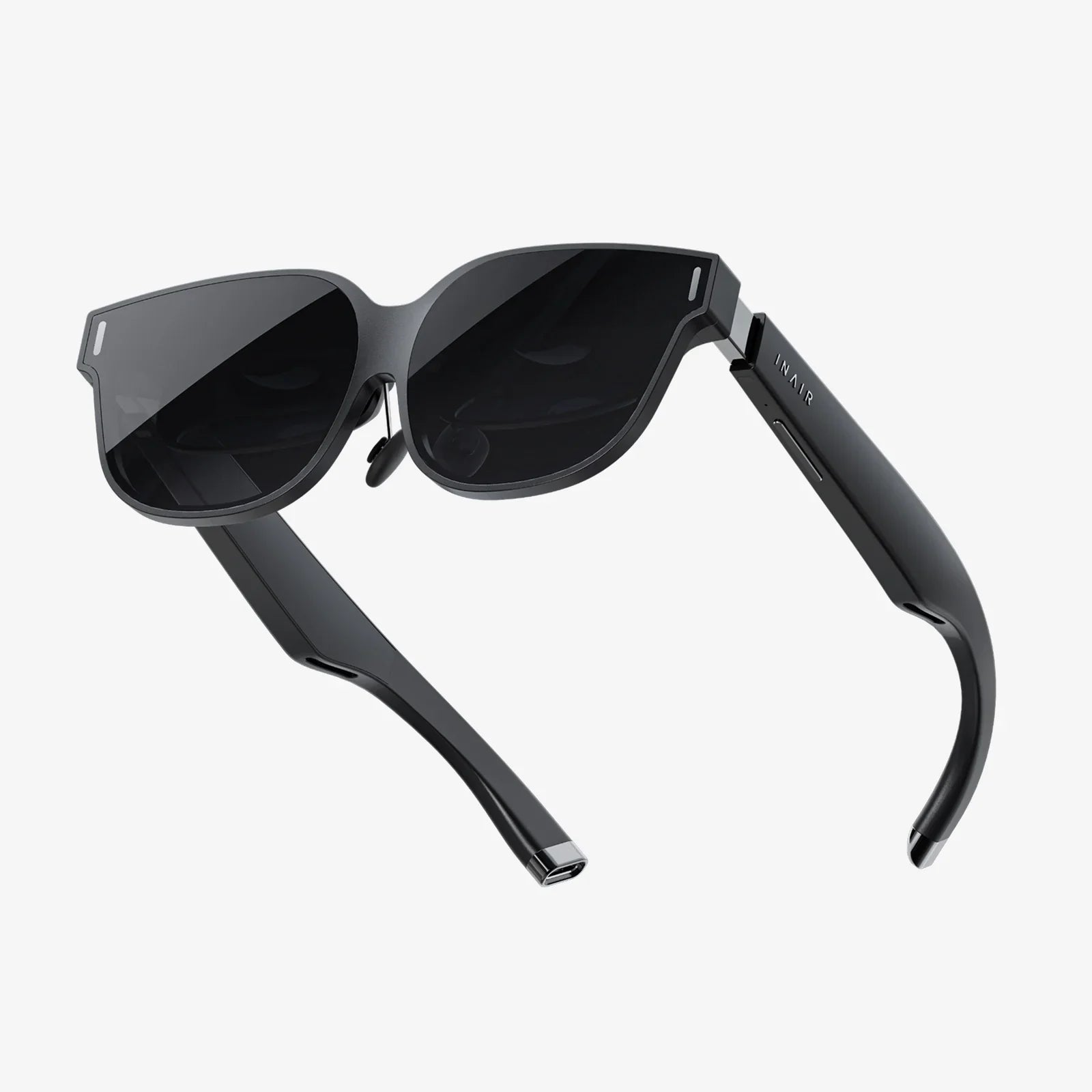
The evolution of AR for product demonstrations is accelerating rapidly. The future points toward even more seamless and integrated experiences. The proliferation of wearable AR glasses will free users from the need to hold up a smartphone, creating a truly hands-free demonstration experience. This is particularly valuable in industrial settings, where a technician needs both hands to work while receiving AR-guided instructions on repairing a machine.
Furthermore, the integration of Artificial Intelligence (AI) with AR will create 'intelligent' demonstrations. An AI-powered AR system could analyze the user's environment and make personalized product recommendations. For example, after scanning a room, it might suggest a specific size of rug or a lamp with a certain lumen output tailored to the room's existing lighting and dimensions. Social AR is another frontier, allowing multiple users in different locations to share the same AR experience simultaneously. Friends could virtually place furniture in a shared living space and collaborate on the decision-making process in real-time, no matter where they are physically located. This adds a powerful social layer to what has traditionally been an individual or household decision.
We are also moving toward a world of persistent AR, where digital objects can be permanently anchored to a physical location. A real estate developer could leave a virtual model of a future building on the empty lot, allowing anyone with an AR device to view it months before construction even begins. This creates a continuous, always-available demonstration platform.
The trajectory is clear: static images and even video are becoming inadequate for the modern consumer who demands deeper engagement and more certainty before committing to a purchase. Augmented reality is rising to meet this demand, not as a novelty, but as a fundamental utility for commerce. It is building a bridge of trust between the digital and physical worlds, ensuring that what you see on your screen is truly what you will get in your home, office, or worksite. This is transforming customer satisfaction from a hopeful outcome into a predictable result, setting a new and unstoppable standard for how products will be presented and experienced forever.
Share:
VR Goggles for Movies: The Ultimate Guide to Your Personal IMAX
Augmented Reality Concept: Bridging Our Digital and Physical Worlds