


- by wangfred
How Augmented Reality Helps Reshape Our World and Enhance Human Potential
- by wangfred
Imagine a world where digital information doesn't just live on a screen but is seamlessly woven into the fabric of your physical reality, where your surroundings become an interactive canvas for knowledge, guidance, and wonder. This is no longer the realm of science fiction; it is the present and future being built by augmented reality (AR), a technology that is fundamentally altering how we perceive, interact with, and understand our world. From the moment you wake up to the way you work, learn, and play, AR is quietly revolutionizing the human experience, offering a powerful new lens through which to see and solve problems.
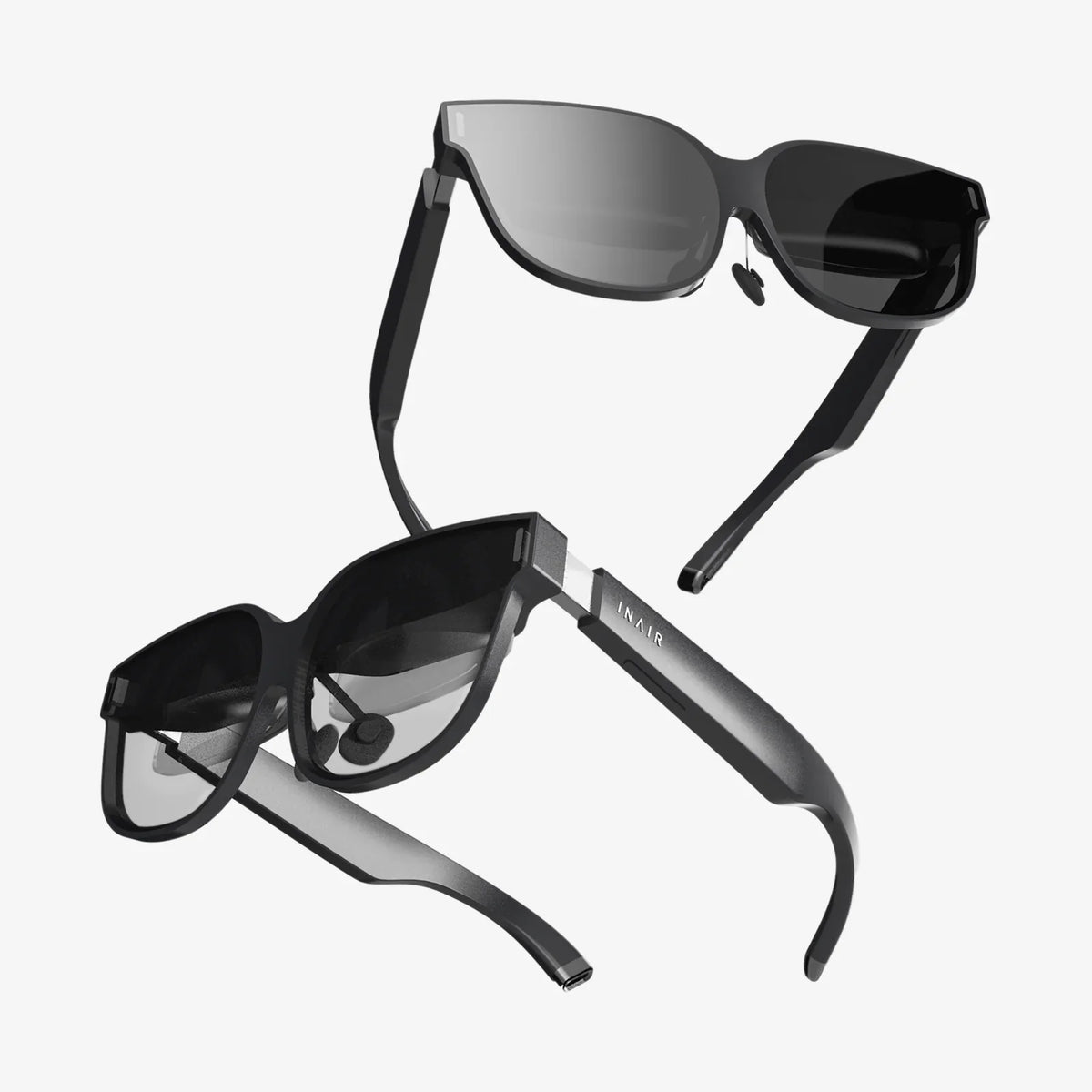
At its core, augmented reality is a technology that superimposes a computer-generated overlay—be it images, sounds, text, or data—onto a user's real-world view. Unlike virtual reality, which creates a fully immersive digital environment, AR enhances the real world by adding a contextual digital layer to it. This crucial distinction makes AR uniquely practical and accessible. It doesn't require users to disconnect from their environment; instead, it connects them to it more deeply. This is achieved through a sophisticated combination of hardware and software, including cameras, sensors, algorithms for simultaneous localization and mapping (SLAM), and display technologies that project information onto glasses, screens, or even directly onto the retina. By understanding the geometry and content of the physical space, AR systems can anchor digital objects with astonishing precision, making them appear as persistent, interactive parts of the real world.
One of the most profound ways augmented reality helps is in the realm of education and training. It moves learning beyond the static pages of a textbook and into an interactive, three-dimensional space. Imagine a history class where students can walk around a holographic reconstruction of ancient Rome, watching daily life unfold around them. Or a biology lesson where a beating heart model floats above the desk, allowing students to peel back layers to understand the circulatory system in vivid detail. This immersive, visual learning caters to diverse learning styles and dramatically improves information retention and engagement.
In professional training, the impact is even more significant. AR provides a safe, cost-effective environment for practicing complex and dangerous tasks. Surgeons can practice intricate procedures on virtual patients superimposed onto medical mannequins, receiving real-time data and guidance without any risk. Mechanics can see internal components of an engine and follow step-by-step repair instructions overlaid directly onto the machinery they are fixing, reducing errors and training time. This "see-what-I-see" capability also enables remote mentoring, where an expert can see a technician's field of view and draw annotations directly into their environment, guiding them through a process from thousands of miles away.
The healthcare sector is experiencing a paradigm shift thanks to AR's capabilities. It helps medical professionals enhance their vision and precision, leading to better patient outcomes. For diagnosticians, AR can project 3D visualizations of MRI or CT scan data directly onto the patient's body, providing an intuitive map for planning surgery or locating a tumor. This allows for a much clearer understanding of the spatial relationships between anatomy and pathology than is possible with traditional 2D scans on a monitor.
During surgical procedures, AR guidance systems can overlay critical information—such as the location of blood vessels, nerves, or the precise path for an incision—onto the surgeon's view of the patient. This minimizes the need to look away at separate screens, keeping the focus entirely on the operation and reducing cognitive load. Furthermore, AR is a powerful tool for patient education and rehabilitation. A patient can visualize their own condition in 3D, leading to a better understanding of their treatment plan. In physiotherapy, AR games and visual cues can guide patients through exercises, ensuring correct form and making the repetitive process of recovery more engaging and measurable.
On the factory floor and at construction sites, augmented reality is a powerhouse for efficiency, safety, and accuracy. It helps by providing workers with hands-free access to crucial information exactly when and where they need it. Assembly line workers can see digital instructions and diagrams overlaid on the physical components in front of them, streamlining complex assembly processes and drastically reducing errors. This is particularly valuable for custom or low-volume production where constant referral to paper manuals or computer screens is inefficient.
In logistics and warehouse management, AR smart glasses can visually guide pickers to the exact shelf location of an item, displaying the quantity to be picked and the optimal route through the warehouse. This "vision picking" accelerates order fulfillment and reduces training time for new employees. For quality control and maintenance, technicians can use AR to visualize internal systems, compare a live feed of machinery against its ideal digital twin to spot anomalies, and access equipment history and repair manuals hands-free. This not only speeds up maintenance but also helps in identifying potential problems before they lead to costly downtime.
The way we shop is being fundamentally reimagined through AR. It helps bridge the gap between online browsing and the physical in-store experience, mitigating one of e-commerce's biggest limitations: the inability to try before you buy. Virtual try-on applications allow consumers to see how furniture would look in their living room, how a new shade of paint would transform their walls, or how a pair of glasses or makeup would look on their face—all from their smartphone. This not only enhances consumer confidence and reduces return rates but also creates a fun, engaging shopping experience.
Within physical stores, AR can unlock a new layer of engagement. Pointing a device at a product could reveal detailed specifications, customer reviews, or video demonstrations. It can enable interactive treasure hunts for discounts or provide personalized offers as customers navigate the aisles. This fusion of digital information with the physical store environment creates a rich, informative, and highly personalized customer journey that boosts satisfaction and loyalty.
Augmented reality is set to become an indispensable tool for navigation and urban exploration. Instead of glancing down at a phone map, pedestrians can follow floating arrows and directions superimposed onto the street in front of them, intuitively guiding them to their destination. This technology can highlight points of interest, provide historical information about a building when you look at it, or display Yelp ratings floating above a restaurant's entrance.
For drivers and future autonomous vehicles, AR head-up displays (HUDs) can project navigation cues, speed, and hazard warnings directly onto the windshield, aligned with the real road. This allows drivers to absorb critical information without taking their eyes off the road, significantly enhancing safety. City planners and architects are also using AR to visualize new buildings and infrastructure projects within existing cityscapes, allowing for better public consultation and design decisions before a single foundation is poured.
Despite its immense potential, the widespread adoption of AR faces hurdles. Concerns about privacy, data security, and digital addiction are paramount as the technology becomes more integrated into daily life. The social acceptability of wearing AR glasses in public and the potential for a new "digital divide" are issues that society must grapple with. Furthermore, creating a seamless and compelling user experience requires overcoming significant technical challenges in areas like battery life, field of view, and connectivity.
However, the trajectory is clear. As the technology matures, becoming more lightweight, powerful, and socially integrated, its applications will only expand. We are moving towards a future where AR interfaces become as natural and ubiquitous as smartphone screens are today. The ultimate goal is a contextually aware, intelligent system that provides information not as a distraction, but as an effortless enhancement to human perception and capability.
The true power of augmented reality lies not in the flashy graphics it can display, but in its profound ability to make us more capable, informed, and connected humans. It is a tool that amplifies our intellect, extends our skills, and deepens our understanding of the complex world around us. By seamlessly blending the infinite potential of the digital realm with the tangible reality we inhabit, AR is quietly building a future where technology doesn't demand our attention—it enriches our perspective, empowers our actions, and helps us see our world, and our potential within it, in a brilliant new light.