


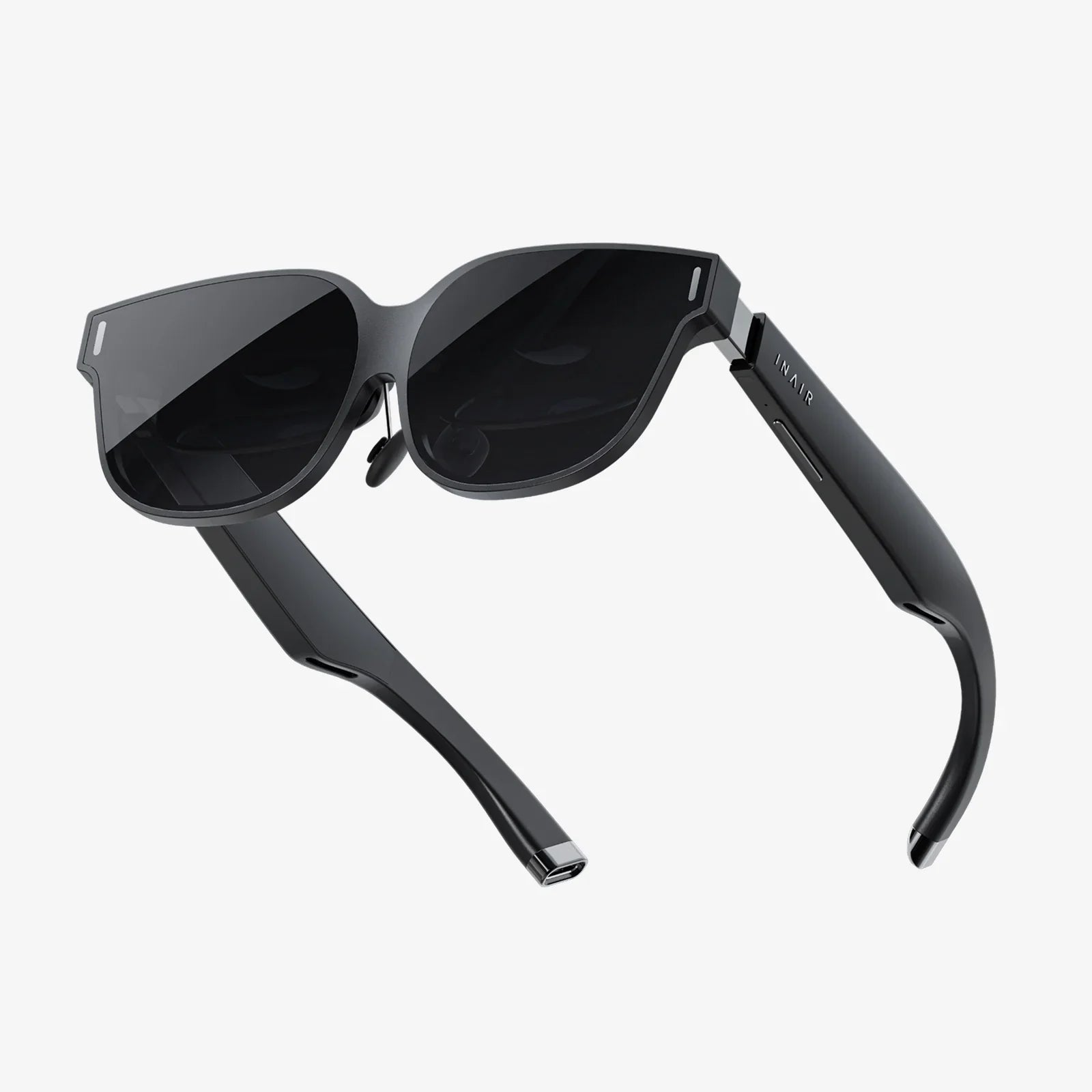
Close your eyes and imagine slipping on a headset, instantly transported to a digital realm where the only limit is imagination. This experience, once the exclusive domain of science fiction, is now a reality for millions. But the path to creating these immersive worlds was not a sudden invention; it was a slow, deliberate, and often tumultuous journey spanning centuries. The quest to build a window into another dimension is a story filled with brilliant, eccentric pioneers who dared to dream of realities beyond our own. To understand the sleek, powerful devices of today, we must first travel back to a time when the very concept was a fantastical speculation, a mere glimmer in the eyes of inventors and storytellers.
The Seeds of an Idea: Early Precursors and Philosophical Concepts
Long before silicon chips and liquid crystal displays, the foundational ideas of virtual reality were being sown in the fields of art and philosophy. The drive to create an illusion, to replicate or replace our reality with a crafted experience, is a deeply human impulse.
In the 19th century, the creation of panoramic paintings, or panoramas, represented a massive leap in immersive art. These massive, 360-degree canvases surrounded viewers, depicting historical battles, cityscapes, or natural wonders. Artists used careful perspective and lighting to create a powerful sense of presence, aiming to make the observer feel as if they were truly within the scene. This was a passive form of immersion, but it demonstrated a clear desire to visually transport a person to another place.
Perhaps the most significant direct ancestor of the VR headset was the Stereoscope, patented by Sir Charles Wheatstone in 1838. This device presented a slightly different image to each eye, mimicking human binocular vision to create a single, three-dimensional picture. Later popularized by the View-Master toy, the stereoscope proved that a machine could trick the human brain into perceiving depth and dimension from a flat image. It was the first practical step toward creating a visually artificial world that felt real.
Beyond technology, science fiction authors provided the conceptual blueprint and the name itself. In 1935, Stanley G. Weinbaum's short story Pygmalion's Spectacles described a pair of goggles that allowed the wearer to experience a fictional world that engaged all the senses, including smell and touch. This was a remarkably prescient description of a holistic VR experience. The term "virtual reality" itself is often credited to French playwright, actor, and director Antonin Artaud, who used the phrase "la réalité virtuelle" in his 1938 book The Theatre and Its Double to describe the illusory nature of characters and objects in theatre.
The Birth of a Technology: Sensorama and the Telesphere Mask
While philosophers and artists laid the groundwork, it took a true visionary to attempt to build a functional machine. That person was cinematographer Morton Heilig. In the mid-1950s, Heilig foresaw a future of cinema that would engulf the viewer entirely. He wasn't content with just sight and sound; he wanted to create an experience.
His masterpiece, patented in 1962, was the Sensorama Simulator. This bulky, arcade-style cabinet was a mechanical marvel for its time. A single user would sit inside and be presented with a short film—such as a motorcycle ride through Brooklyn—in wide-angle 3D stereo. But Heilig didn't stop there. The Sensorama incorporated a vibrating seat, generators for wind and smell, and even speakers for stereo sound. It was the first-ever multi-sensory, interactive simulator, a true prototype for immersive technology. Despite its genius, Heilig struggled to secure funding for further development, and the Sensorama never moved beyond its prototype stage.
Two years prior, in 1960, Heilig had patented an even more recognizable device: the Telesphere Mask. This head-mounted display offered stereoscopic 3D vision and stereo sound, making it the archetypal precursor to the modern HMD. While it lacked head-tracking and interactive capabilities, its design and purpose are unmistakably the genesis of today's VR headsets. Heilig’s work proved that the technology for immersion was possible; it just needed the right environment and further innovation to thrive.
The Digital Dawn: The Sword of Damocles and the Aspen Movie Map
The 1960s marked a critical shift from electromechanical devices like the Sensorama to computer-generated worlds. This transition was pioneered by Ivan Sutherland, a computer scientist whose work was so foundational he is often called the "father of computer graphics."
In 1968, Sutherland and his student Bob Sproull created what is widely considered the first head-mounted display system that used computer graphics instead of filmed video. They called it The Sword of Damocles—an apt name given its intimidating appearance. The headset was so heavy it had to be suspended from the ceiling with a mechanical arm. The graphics themselves were primitive wireframe models, such as a simple cube that would convincingly change perspective as the user moved their head. This was a watershed moment. It introduced the concepts of head-tracking and real-time computer-generated imagery, the two absolute cornerstones of modern VR.
Throughout the 1970s and 1980s, VR technology was primarily confined to government and military applications, particularly for flight simulators and combat training. These systems were phenomenally expensive but demonstrated the practical utility of virtual environments for safe, effective training.
A pivotal project that bridged military research and future consumer applications was the Aspen Movie Map, created at MIT in 1978. Funded by DARPA, the project allowed users to take a virtual tour of the city of Aspen, Colorado. Using a laserdisc system, it presented photographic footage from a car driving through the city's streets, offering choices at every intersection. While not real-time 3D, it was a groundbreaking hypermedia experience that explored the concept of navigating a virtual space, directly influencing future VR and interactive mapping systems.
The Promise and The Hype: The 1990s Consumer Attempt
By the late 1980s and early 1990s, the technology had advanced enough for companies to believe VR was ready for the living room. The term "Virtual Reality" was popularized by Jaron Lanier, founder of VPL Research, a company that developed some of the first commercial goggles and datagloves. This era was defined by massive hype and media excitement, fueled by depictions in films like Lawnmower Man.
Several companies rushed to market with the first generation of consumer VR headsets and arcade machines. These systems captured the public's imagination but were a commercial failure. The technology of the time simply couldn't deliver on the promise. The graphics were crude and laggy, the headsets were heavy and uncomfortable, and the computing power required was prohibitively expensive for the average consumer. The experience often caused nausea and simulator sickness due to high latency and low refresh rates. The public's first taste of VR was ultimately disappointing, and the technology faded from the mainstream spotlight for nearly two decades.
The Modern Resurrection: A Perfect Storm of Technology
VR entered a long "winter" after the 1990s bust, but research continued quietly in academic and industrial labs. Its triumphant return in the 2010s was not the result of a single invention, but rather a convergence of technologies that finally matured to make high-quality VR feasible and affordable.
The explosive growth of the smartphone industry was the single biggest catalyst. It drove the mass production of critical components that had previously been too costly: high-resolution, low-persistence OLED displays; tiny, accurate motion sensors (IMUs); and powerful, compact mobile processors. A modern VR headset is, in many ways, a pair of smartphones strapped to your face—a fact underscored by early efforts like Google Cardboard, which used a smartphone itself as the display and brain of the VR experience.
This ready supply of cheap, high-quality components allowed a new wave of innovators to succeed where the 1990s had failed. The development of the Oculus Rift prototype, which reignited industry interest through a wildly successful Kickstarter campaign in 2012, demonstrated that the time was finally right. It offered a wide field of view, ultra-low latency head-tracking, and a high refresh rate that eliminated much of the discomfort of earlier systems. This kickstarted an arms race, leading to the development of major PC-based, console-based, and standalone VR platforms that continue to evolve at a rapid pace.
From Then to Now: The Enduring Quest for Presence
The story of how virtual reality started is not a linear path but a sprawling tapestry woven from many threads. It connects the philosophical musings of artists, the clunky mechanical prototypes of lone inventors, the multi-million-dollar military simulators, the hyped-up consumer flops, and finally, the sleek, standalone headsets of today. Each era built upon the last, learning from both its successes and spectacular failures.
The core vision, however, has remained remarkably consistent for over a century: to create a machine that can convincingly transport human consciousness to a place that does not physically exist. It is the pursuit of the ultimate illusion, the ultimate empathy machine, and the ultimate simulator. From Sensorama's smells to the Sword of Damocles' wireframe cube, every step was a crucial part of the journey to achieve that feeling of true presence.
Today, we stand on the shoulders of these giants. We are living in the future that Morton Heilig and Ivan Sutherland dreamed of. The journey of virtual reality is a powerful testament to human ingenuity and persistence—a decades-long marathon of technological progress that proves even the most fantastical ideas can eventually become real. The next time you put on a headset and block out the physical world, remember that you are participating in a dream centuries in the making, and the journey is far from over.
You are no longer just a user of technology but an active explorer in the latest chapter of a grand adventure that began with panoramic paintings and philosophical concepts. The boundaries of these digital worlds are expanding at an breathtaking pace, promising experiences we can barely yet imagine, all built upon the stubborn, brilliant work of those who asked 'what if' long before the world was ready for an answer.
Share:
Best Inexpensive Virtual Reality Goggles: Your Portal to the Metaverse on a Budget
Best Inexpensive Virtual Reality Goggles: Your Portal to the Metaverse on a Budget