


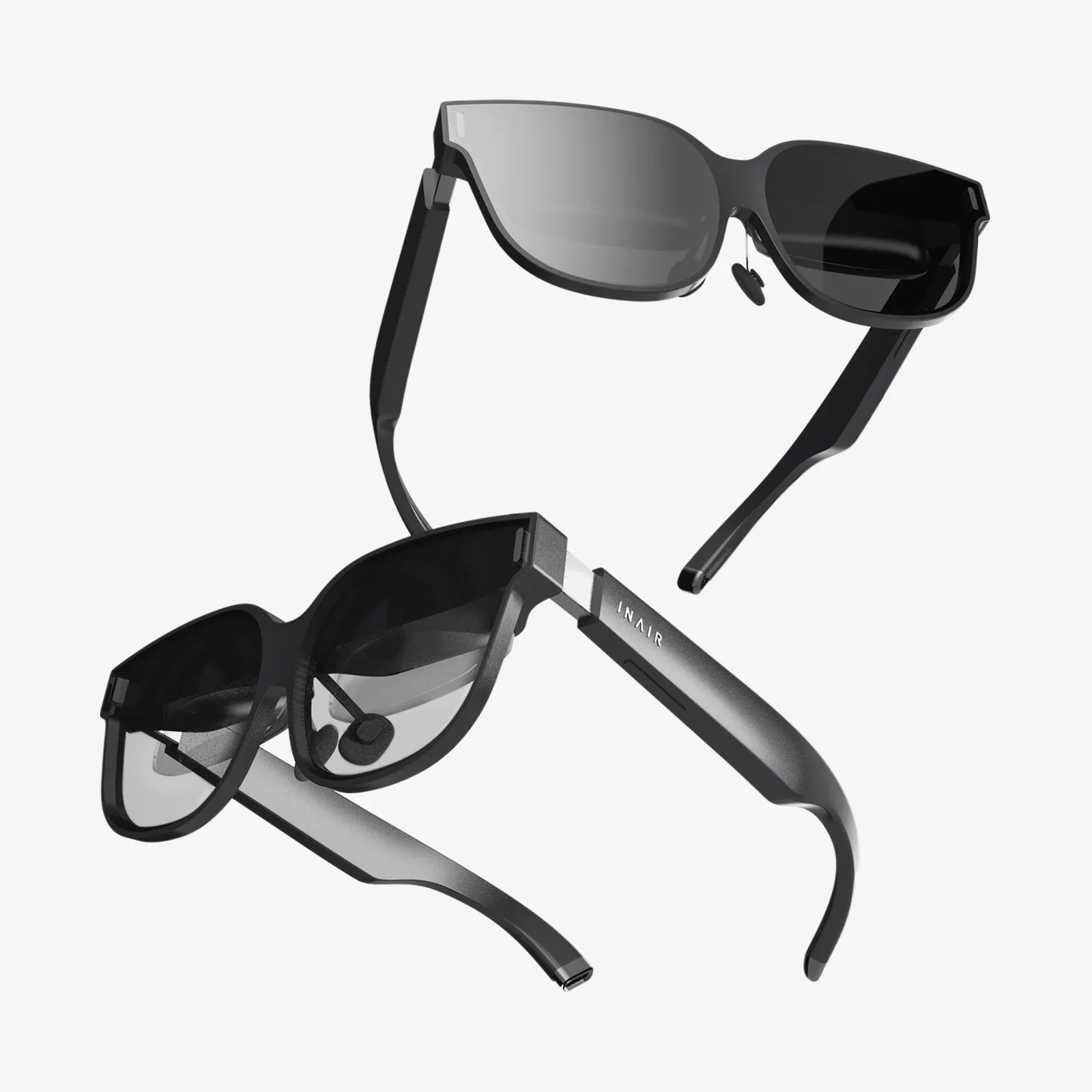
- by wangfred
How Do Near Eye Displays Work: Peering Into the Future of Visual Technology
- by wangfred
Imagine slipping on a pair of sleek, unassuming glasses and instantly being transported to a virtual boardroom, a surgical training simulation, or a breathtaking alien landscape, all while the real world remains perceptibly present around you. This is the extraordinary promise of near eye display (NED) technology, a field that is rapidly blurring the lines between the digital and the physical. The magic of seeing high-resolution, vibrant images seemingly floating in mid-air feels like science fiction, but it is grounded in intricate and fascinating scientific principles. The journey of light from a microscopic screen to your perception of a vast, immersive world is a story of optical innovation, precision engineering, and a deep understanding of human vision. Unpacking how these devices work reveals not just a clever gadget, but a portal to a new way of interacting with information and our environment.
At its most basic level, the purpose of a near eye display is to project an image generated by a tiny electronic display directly into the user's eye, filling a large portion of their field of view. The core challenge is both simple and profound: the display screen itself is mere millimeters wide, but the image it creates must appear to be meters away and many times larger. This illusion is achieved not by magnifying the screen itself, but by carefully manipulating the light rays that emanate from it.
Think of how a simple magnifying glass works. When you hold it over a page, the lens collects light from the small print and bends the rays so they diverge at a wider angle, making the letters appear larger. A NED performs a similar, albeit vastly more complex, function. It takes the collated light from a microdisplay and uses a sophisticated optical system, known as a combiner, to shape and guide these light rays into the pupil of your eye. Your eye's natural lens then focuses these rays onto the retina, and your brain interprets them as a large, distant image superimposed on your view of the real world.
To understand the process, we must break down a near eye display into its essential building blocks. While designs vary, almost all systems rely on three key components working in perfect harmony.
This is the tiny engine where the digital image is born. Several competing technologies serve as the microdisplay, each with its own advantages.
Regardless of the type, the microdisplay's job is to create a crisp, bright, and colorful source image that is ready to be processed by the optics.
The microdisplay needs to be illuminated. For transmissive technologies like some LCDs, this is a straightforward backlight. For reflective technologies like LCoS and DLP, a bright light source is needed to beam light onto the display surface. This is often achieved with high-luminance LEDs or lasers. The choice of light source is critical, as it directly impacts the final image's brightness, color gamut, and power efficiency—especially important for battery-powered wearable devices.
This is the most critical and complex part of the system. The combiner has two simultaneous jobs: to act as a magnifying lens, making the tiny image from the microdisplay appear large and distant, and to "combine" this virtual image with the user's view of the real world. There are several primary methods for achieving this.
This classic design uses a simple and effective arrangement. Light from the microdisplay is projected onto a semi-transparent curved mirror (the "birdbath" because of its shape). This mirror reflects the light through a beamsplitter (a partially silvered mirror) and into the user's eye. The real-world view passes through the beamsplitter, combining with the digital image. While effective and relatively inexpensive, this design can be bulkier than other solutions.
Waveguides are the technology enabling the sleek, glasses-like form factor that is the holy grail of NED design. They are transparent substrates (often made of glass or plastic) that literally "guide" light from the microdisplay, which is typically mounted on the temple of the glasses, into the user's eye.
The process involves a few precise steps:
There are different types of waveguide technologies, including:
Waveguides are brilliant because they allow the bulky electronics to be moved to the frame, leaving the lenses thin, transparent, and lightweight.
This category includes more complex folded optical systems that use a series of mirrors and lenses to guide light. They can offer a very wide field of view and high image quality but often at the cost of a larger physical size, making them more suited for helmets or other non-eyeglass form factors.
A flat image floating in space is only the beginning. For true immersion, NEDs must create a convincing perception of depth and volume. The primary method for this is stereoscopy, which mimics how human binocular vision works.
We have two eyes, spaced roughly 6-7 centimeters apart. This means each eye sees the world from a slightly different perspective. Our brain fuses these two two-dimensional images into a single three-dimensional perception, calculating depth based on the disparity between them. NEDs replicate this by presenting a unique, slightly offset image to each eye. The brain does the rest, interpreting the combined view as a 3D scene.
However, stereoscopy has a well-known limitation called the vergence-accommodation conflict (VAC). In the real world, when you look at a nearby object, your eyes converge (cross slightly) and your lenses accommodate (change shape) to focus on it. For distant objects, your eyes become parallel and your lenses relax. In a stereoscopic NED, the virtual image is always projected from a fixed focal plane (the optical combiner), so your eyes must always focus at that specific distance, even as they converge to look at virtual objects at different perceived depths. This mismatch can cause eye strain and visual fatigue.
Next-generation NEDs are exploring advanced techniques like varifocal and light field displays to solve VAC. Varifocal systems dynamically adjust the focal plane of the display to match where the user is looking, tracked via eye-tracking sensors. Light field displays are even more advanced, projecting not just a bundle of light rays but the entire light field—the intensity and direction of rays—allowing the eye to focus naturally anywhere within the scene, just as it does in reality.
A functional NED requires more than just optics. It is part of a complete system that includes:
The march of progress in near eye displays is relentless. Researchers are pushing the boundaries toward displays with higher resolution (approaching and exceeding retinal resolution), wider fields of view, greater brightness and contrast, and ever-smaller, more efficient, and more socially acceptable form factors. Breakthroughs in nanomaterials, holography, and computational optics promise a future where digital information is seamlessly and comfortably integrated into our perception of reality, unlocking new possibilities for work, education, communication, and entertainment that we are only beginning to imagine.
The next time you hear about a breakthrough in augmented or virtual reality, remember the incredible dance of physics happening just millimeters from someone's retina. It's a symphony of engineered light, where microscopic mirrors tilt with precision, lasers pulse with purpose, and transparent waveguides bend reality itself, all orchestrated to create worlds from pure information. This hidden technology, so complex yet so elegantly designed to interface with our own biology, is quietly building the lenses through which we will see the future.