


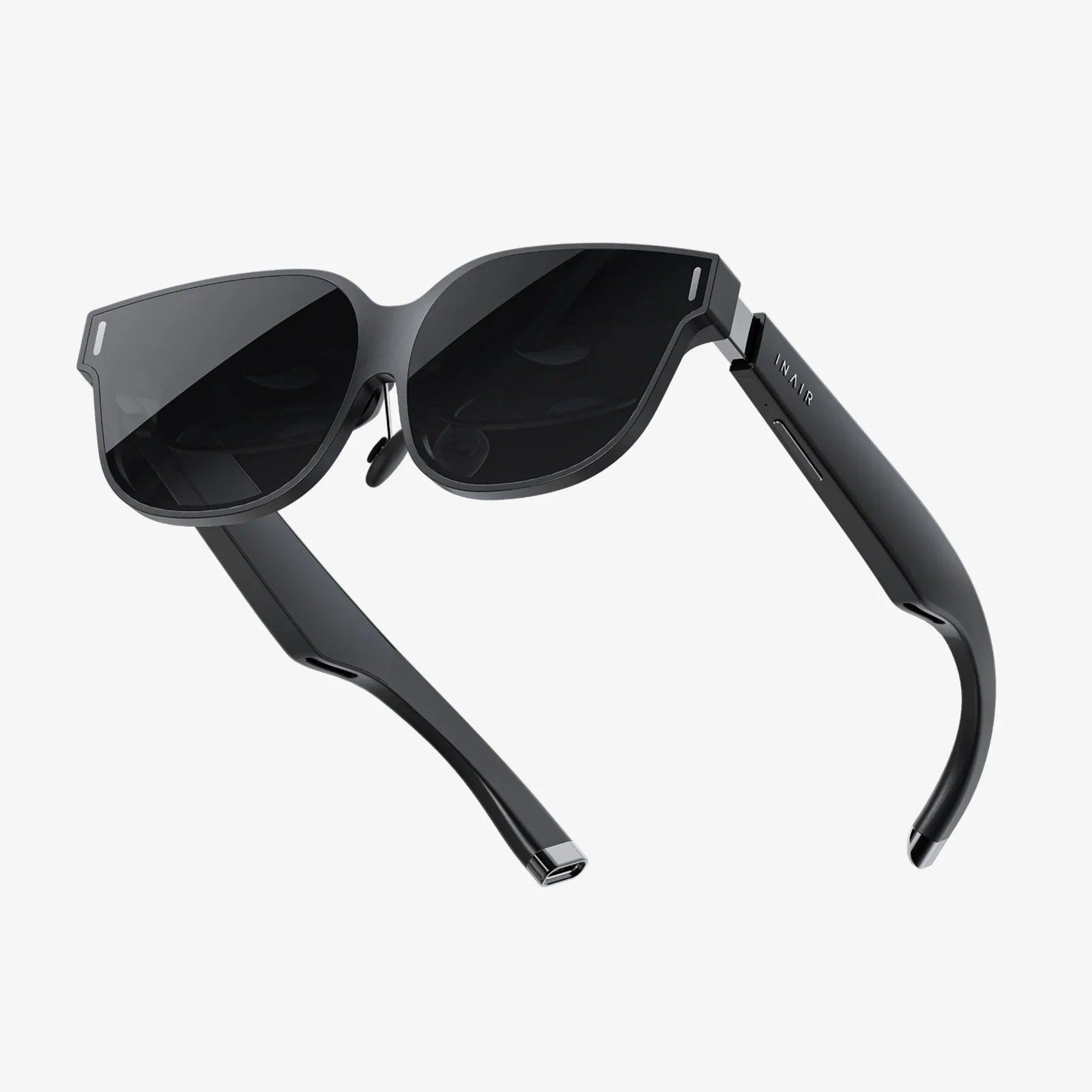
Have you ever slipped on a pair of sleek, futuristic glasses and instantly found yourself transported to a different dimension, battling aliens in your living room, or examining a 3D model of a human heart floating in mid-air? Or perhaps you’ve seen a pair that simply overlays your running speed and navigation arrows onto the street ahead. The magic of virtual glasses feels like something from science fiction, but it’s rapidly becoming science fact. The burning question for many is: how do these incredible devices actually work? The answer is a breathtaking symphony of advanced hardware and sophisticated software, all miniaturized into a wearable form factor. It’s not one single technology but a convergence of several, each playing a critical role in bending reality to our digital will.
The Core Illusion: Tricking the Human Brain
At its most fundamental level, the goal of virtual glasses is to present a convincing digital image to your eyes. This is far more complex than simply placing a small screen very close to your face. The human visual system is incredibly sophisticated. Our brains judge depth and distance through a process called stereoscopy, which relies on the slight difference between the images seen by our left and right eyes (binocular disparity). Virtual glasses must replicate this effect perfectly to create a sense of depth and scale, making a flat image appear three-dimensional.
Furthermore, the human eye naturally focuses on objects at different distances—a phenomenon known as accommodation. If you look at a virtual object that appears to be ten feet away, but the screen displaying it is only an inch from your eye, your eyes will try to focus on the screen, causing a conflict with the stereoscopic depth cues. This vergence-accommodation conflict is a primary source of eye strain and a major technical hurdle that engineers are constantly working to overcome with advanced optical solutions.
Deconstructing the Hardware: A Look Inside the Frame
To understand how virtual glasses work, we must first dissect their physical components. While designs vary, most high-end devices share a common set of core hardware elements.
The Display Panels: The Digital Canvas
The journey of a virtual image begins with the displays. These are miniature screens, often Micro-OLED or Liquid Crystal on Silicon (LCoS) panels, mounted inside the arms of the glasses, positioned perpendicular to the user's line of sight. Their job is to generate the raw, two-dimensional images that will eventually become your immersive experience. The resolution and refresh rate of these panels are crucial; higher resolutions reduce the "screen door effect" (where users can see the gaps between pixels), and faster refresh rates (90Hz and above) ensure smooth motion and reduce latency, which is vital for preventing motion sickness.
The Optical System: The Heart of the Magic
This is arguably the most critical component in answering "how do virtual glasses work?" Since the display panels are off to the side, their light must be redirected, focused, and shaped before it reaches your eyes. This is the job of a complex optical assembly, which typically uses one of two main approaches:
- Pancake Lenses: A modern and compact solution that uses a series of polarized lenses to fold the light path. Light from the display passes through a polarizing filter, reflects off a half-mirror, then reflects again off another polarized surface before finally reaching the eye. This folding effect allows for a much shorter distance between the display and the eye, significantly slimming down the overall form factor of the glasses.
- Waveguide Optics: Commonly used in augmented reality glasses that aim for a see-through effect, waveguides are transparent glass or plastic plates embedded within the lenses. Light from a micro-projector is "injected" into the edge of the waveguide. Through a process of total internal reflection, the light bounces through the waveguide until it hits an optical grating or embossed pattern that diffracts it outwards, directly into the user's eye. This allows digital images to be superimposed onto the real world while keeping the lenses relatively thin and transparent.
These systems also include custom lenses to correct for focal distance, ensuring the virtual image appears sharp and at a comfortable viewing distance, usually several meters away.
Sensors: The Window to the World
For virtual glasses to be interactive and responsive, they need to understand their environment and your place within it. This is achieved through a suite of sensors that act as the device's eyes and ears.
- Inside-Out Tracking Cameras: Small, wide-angle cameras mounted on the front of the glasses constantly film the surrounding environment. By tracking the movement of static features in the room, these cameras can precisely determine the headset's position and orientation in 3D space (a process called simultaneous localization and mapping, or SLAM). This allows you to move around physically and have that movement reflected accurately in the virtual world.
- Inertial Measurement Unit (IMU): This sensor package, containing a gyroscope, accelerometer, and magnetometer, provides ultra-fast data on rotational and linear head movements. The IMU handles high-frequency tracking (like quick head turns), while the cameras handle lower-frequency positional correction, working together for seamless and low-latency movement.
- Eye-Tracking Cameras: Infrared cameras pointed at the user's eyes can precisely track pupil position and gaze direction. This enables powerful features like foveated rendering (where the highest detail is rendered only where you are looking, saving processing power), intuitive menu navigation, and more realistic avatars in social applications.
- Depth Sensors: Some devices include dedicated time-of-flight (ToF) sensors or structured light projectors that scan the environment to create a detailed 3D depth map. This allows the glasses to understand the geometry of a room, so virtual objects can realistically occlude behind real-world furniture or interact with physical surfaces.
Processing Power: The Digital Brain
The torrent of data from the sensors is useless without a powerful processor to make sense of it all. This computational workload can be handled in two ways:
- On-Device Processing: A dedicated system-on-a-chip (SoC) inside the glasses themselves handles the sensor data, runs the operating system, and renders the graphics. This is common in standalone all-in-one devices.
- External Processing: Some glasses act primarily as a display and sensor hub, offloading the heavy computational lifting to an external device, like a powerful computer or a smartphone, connected via a cable or a high-speed wireless link.
The Software Symphony: Bringing It All Together
Hardware provides the instruments, but software conducts the orchestra. The operating system of the glasses is a specialized piece of software that manages all the hardware components in real-time.
It takes the IMU and camera data to perform positional tracking, uses the eye-tracking data for input and rendering optimization, and manages the rendering pipeline to ensure the visuals on the displays are perfectly synchronized with your head movements. Any lag or delay between moving your head and the image updating (motion-to-photon latency) can break immersion and cause discomfort. Advanced software and powerful hardware work in lockstep to keep this latency to an absolute minimum, ideally under 20 milliseconds.
Furthermore, game engines and development platforms provide the tools for creators to build experiences that leverage all this technology, from precise physics simulations that respect your room's layout to social platforms that translate your eye contact and facial expressions into your digital avatar.
Bridging the Real and Virtual: How Augmented Reality Glasses Diverge
While the underlying principles of displays, optics, and tracking are shared, augmented reality (AR) glasses have the added challenge of seamlessly blending the digital and the physical. Their optical systems, like waveguides, must be transparent. The software must be advanced enough to understand the real world in real-time—recognizing tables, walls, and windows so that digital objects can interact with them realistically. This often requires even more sophisticated computer vision algorithms to achieve convincing occlusion (where a virtual character can step behind your real sofa) and environmental interaction.
The Future of Sight
The technology is continuously evolving. Research into varifocal and light field displays aims to solve the vergence-accommodation conflict for more natural and comfortable viewing. Holographic optics promise even thinner and more efficient waveguides. As processing power increases and components shrink, we are moving towards a future where virtual glasses will be as lightweight, socially acceptable, and powerful as the prescription eyeglasses we wear today. They are evolving from bulky headsets into sleek, all-day wearable computers that will fundamentally change how we work, learn, play, and connect with each other.
Imagine a world where your field of view is your workspace, your classroom, and your canvas. The intricate dance of light, silicon, and code happening inside a pair of virtual glasses is not just displaying an image; it’s building a new layer of reality, and it’s already here. The next time you see someone gesturing at seemingly empty air, you’ll know the incredible technological symphony they are conducting, all through a lens that is learning to see the world not just as it is, but as it could be.
Share:
Live Augmented Reality: The Unseen Layer Transforming Our World
How to Create Augmented Reality Video: A Comprehensive Guide for Beginners and Pros