


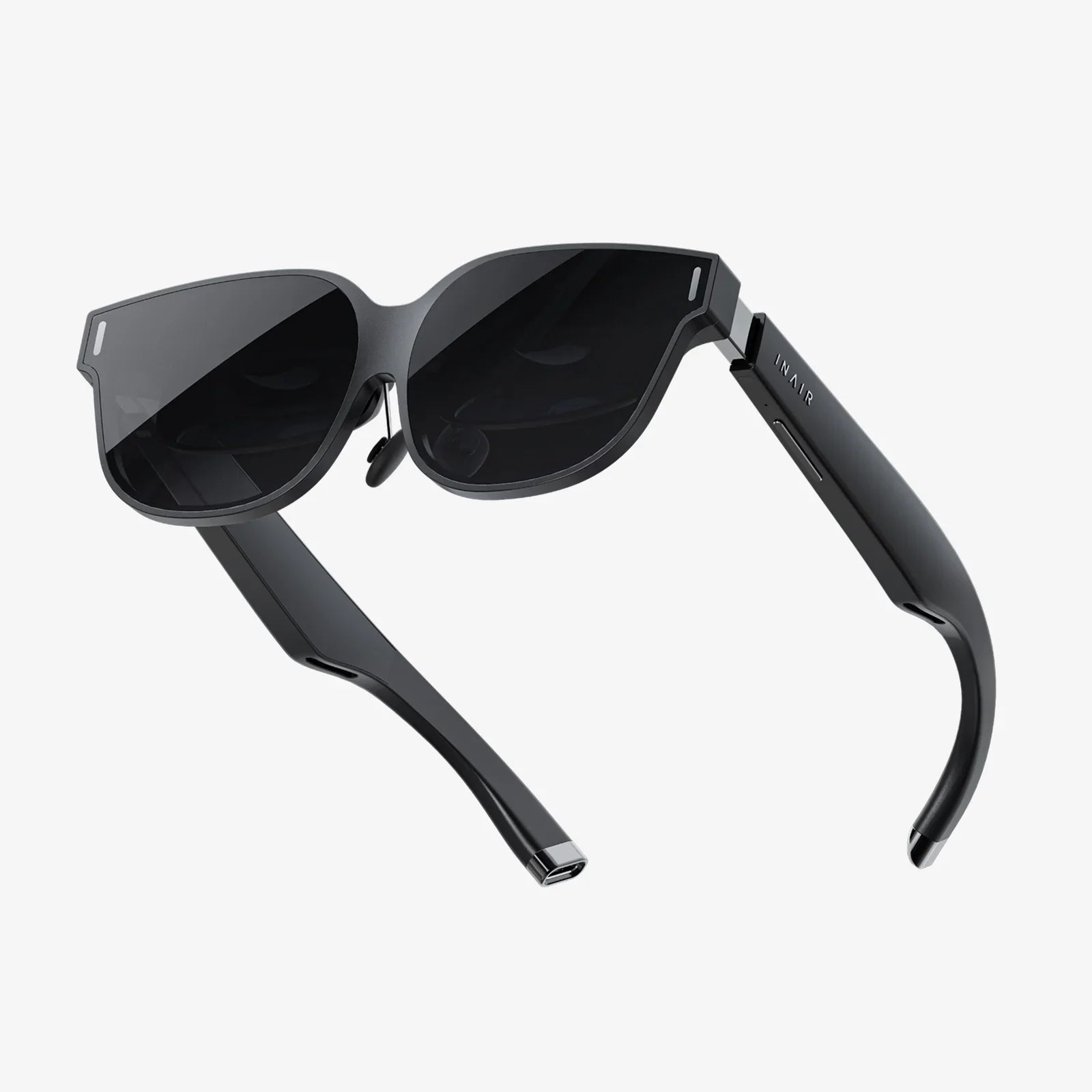
Imagine slipping on a pair of sleek, futuristic goggles and instantly being transported. One moment you're in your living room; the next, you're standing on the surface of Mars, navigating a complex molecular structure, or facing down a dragon in a fantasy realm. This is the magic promised by virtual reality, a technology that has captured the global imagination. But have you ever stopped to wonder, amidst the awe and immersion, exactly how these devices perform such a incredible feat? The journey from a simple headset to a portal into another dimension is a breathtaking symphony of advanced engineering, optical science, and computational power. It’s a story not of magic, but of meticulously engineered illusion, and it begins with a fundamental goal: tricking your brain into accepting a digital reality as truth.
The Core Principle: Stereoscopy and the Human Brain
At its heart, the function of virtual goggles is a sophisticated exploitation of human biology. Our perception of a three-dimensional world stems from a phenomenon called stereoscopy. Because our eyes are spaced approximately two-and-a-half inches apart, each one receives a slightly different two-dimensional image of our surroundings. The brain's visual cortex seamlessly merges these two flat images, using the subtle differences between them—a concept known as binocular disparity—to calculate depth and construct a rich, volumetric understanding of our environment.
Virtual goggles hijack this natural process. Instead of each eye viewing the physical world, each looks into a dedicated high-resolution display. These two miniature screens show the same virtual scene but rendered from two slightly different perspectives, precisely mimicking the vantage points of our left and right eyes. This artificial binocular disparity is the foundational trick that convinces your brain it is looking at a real, three-dimensional space, not just two flat pictures.
Deconstructing the Hardware: A Component-by-Component Breakdown
The creation of this illusion requires a carefully orchestrated ensemble of hardware components, each playing a critical role in selling the fantasy of presence.
The Displays: Your Digital Windows
Nestled within the housing of the goggles, directly in front of each eye, is a compact, high-performance display. Modern devices typically use either Fast-Switch LCDs or OLED (Organic Light-Emitting Diode) panels. OLED is often preferred for its ability to produce true blacks by turning off individual pixels, leading to a higher contrast ratio and more vivid imagery. The key metrics for these displays are resolution, refresh rate, and persistence.
- Resolution: Measured in pixels per eye (e.g., 1832 x 1920), higher resolution drastically reduces the "screen door effect," where users could once see fine lines between pixels, breaking immersion.
- Refresh Rate: Measured in Hertz (Hz), this is how many times per second the image on the screen is updated. Standard rates are 72Hz, 90Hz, and now often 120Hz or higher. A higher refresh rate means smoother motion, less latency, and, crucially, a significantly reduced feeling of nausea or simulator sickness for the user.
- Persistence: This refers to how long a pixel is illuminated for each frame. Low-persistence display technology flashes each frame for a very brief moment instead of keeping it lit continuously. This eliminates motion blur when you turn your head, as your brain is not retaining the afterimage of the previous frame, resulting in a crisper, more stable visual experience.
The Lenses: The Magic of Refraction
If the displays are the digital canvas, the lenses are the masterful frame that makes the art viewable. You cannot simply place your eyes against a screen; the image would be blurry and unfocused. The displays are positioned very close to the user's eyes, but the lenses—specialized aspheric or Fresnel lenses—refract the light from each pixel on the screen.
Their primary job is to bend the light so that it appears to be coming from a farther distance, allowing your eye's lens to relax and focus comfortably on the virtual world, which might be optically simulated to be several meters away. This process, known as collimation, creates a virtual image at a comfortable focal depth, preventing eye strain. Furthermore, these lenses also correct for various optical distortions, such as the pincushion effect, often through a process called barrel distortion applied in software that pre-warps the image, which the lenses then correct to appear normal.
The Tracking Systems: Anchoring You in the Virtual
For the illusion to hold, the virtual world must respond naturally to your movements. If you turn your head, the scene must change in perfect synchrony. Any detectable lag between your motion and the visual update—a delay known as latency—will instantly shatter the sense of presence and can cause discomfort. This is where sophisticated tracking technology comes into play.
Rotational Tracking: Inside-Out
Every modern headset contains an Inertial Measurement Unit (IMU), a miniature chip packed with sensors including a gyroscope, accelerometer, and magnetometer. The gyroscope measures angular velocity (how fast you're turning your head), the accelerometer measures linear acceleration (moving forward or backward), and the magnetometer acts as a digital compass, establishing a fixed heading. The IMU provides incredibly high-speed data on rotational movement, which is essential for low-latency head tracking.
Positional Tracking: The Outside World
Knowing which way you're facing is only half the battle; the system also needs to know where you are in physical space. This is achieved through one of two primary methods:
- Outside-In Tracking: This method uses external sensors or base stations placed around the room. These devices emit either visible light, infrared lasers, or other signals that are picked up by sensors on the headset. By triangulating the position of these signals, the system can pinpoint the headset's location and orientation in the room with extreme precision.
- Inside-Out Tracking: This is now the dominant method for consumer devices. The headset itself is equipped with multiple wide-angle cameras that continuously monitor the surrounding environment. Using a technique called Simultaneous Localization and Mapping (SLAM), these cameras track the position of unique features in the room (like the edge of a sofa, a picture on the wall, or a bookshelf). By observing how these features move relative to the headset, the system can calculate its own position and movement through space in real-time, all without any external hardware.
Audio and Haptics: Completing the Sensory Picture
Immersion is a multi-sensory experience. Spatialized 3D audio is critical. Instead of standard stereo sound, advanced audio algorithms simulate how sound waves would interact with the shape of your head and ears (Head-Related Transfer Functions or HRTFs). This allows developers to place sounds in specific 3D locations around you—a whisper from behind your left shoulder, an explosion echoing from a distant mountain—making the virtual environment feel tangibly real.
Haptic feedback, often through subtle vibrations in the headset itself or in handheld controllers, provides a tactile layer to interactions, confirming a virtual collision or the hum of a nearby engine, further grounding the user in the experience.
The Software Symphony: Bringing the Hardware to Life
Hardware is nothing without the software that orchestrates it. The operating system of the goggles is a marvel of optimization. It manages a relentless pipeline:
- Tracking Data Processing: The OS takes the constant flood of data from the IMU and tracking cameras, filters it for noise, and calculates the precise pose (position and orientation) of the headset.
- Pose Prediction: To combat latency, the software doesn't just render the scene for your current pose; it predicts where your head will be by the time the frame is actually displayed on the screen, based on your current velocity and acceleration.
- Rendering: The graphics processing unit (GPU) is commanded to render two distinct, high-fidelity images—one for each eye—from the predicted viewpoint. This is computationally expensive, requiring roughly double the rendering power of a traditional flat game.
- Distortion and Correction: The rendered images are pre-warped (distorted) using a complex algorithm that precisely counteracts the distortion that will be introduced by the physical lenses. This ensures the final image perceived by the user is geometrically correct.
- Display and Persistence: The warped images are sent to the displays, which flash them with precise low-persistence timing.
This entire cycle must be completed flawlessly within the timeframe of a single refresh cycle (e.g., less than 11.1 milliseconds for a 90Hz display). Any failure is perceived as lag, jitter, or dropped frames, pulling the user out of the experience.
Advanced Enablers: Pushing the Boundaries of Realism
As the technology matures, new features are being integrated to deepen the illusion.
- Eye-Tracking: Tiny infrared cameras inside the headset track the pupil position of each eye. This enables foveated rendering, a revolutionary technique where the GPU renders only the small central area of your vision (where the fovea is) in full detail, while intelligently reducing the detail in your peripheral vision. This drastically reduces the computational load without the user perceiving any difference, allowing for more complex and realistic graphics.
- Variable Focus (Vergence-Accommodation Conflict Mitigation): A natural limitation of current headsets is the Vergence-Accommodation Conflict (VAC). Your eyes vergence (cross or uncross) to focus on near or far objects, but the lenses in the headset force your eyes to accommodate (focus) at a fixed focal plane. Advanced prototypes are experimenting with moving displays or liquid crystal lenses to dynamically adjust the focal plane to match the virtual object you are looking at, eliminating this conflict and making long-term use more comfortable.
- Face and Body Tracking: Additional external cameras or sensors on the headset can track your facial expressions and full body movements, translating them onto your digital avatar. This allows for incredibly nuanced and expressive social interactions in virtual meetings and social platforms, making communication feel more human and natural.
Beyond Entertainment: The Expanding Universe of Applications
While gaming is the most famous application, the principles of how these goggles work are revolutionizing countless other fields. Surgeons practice complex procedures on virtual patients, architects walk clients through unbuilt structures, and engineers design and interact with 3D prototypes in virtual space. Therapists use controlled virtual environments to treat phobias and PTSD, and remote teams collaborate in shared virtual offices as if they were in the same room. The ability to create and inhabit any reality has profound implications for education, healthcare, enterprise, and social connection.
The next time you witness someone wearing a headset, gesturing at thin air, remember you are not seeing a user isolated from the world, but a traveler connected to a new one. You are witnessing the culmination of decades of research in optics, computer graphics, and human-computer interaction, all condensed into a wearable form factor. The flickering of those internal displays, the silent calculations of the IMU, and the precise bend of the lenses are all working in concert to achieve one goal: to convince the most powerful computer in the room—the human brain—that the impossible is real. This intricate dance of technology is not just about building better games; it's about forging new tools for creativity, connection, and understanding, fundamentally expanding the canvas of human experience one frame at a time.
Share:
Best Virtual Goggles: Your Ultimate Portal to Immersive Digital Realities
Extended Reality Services Are Reshaping Our World and Redefining Human Potential