


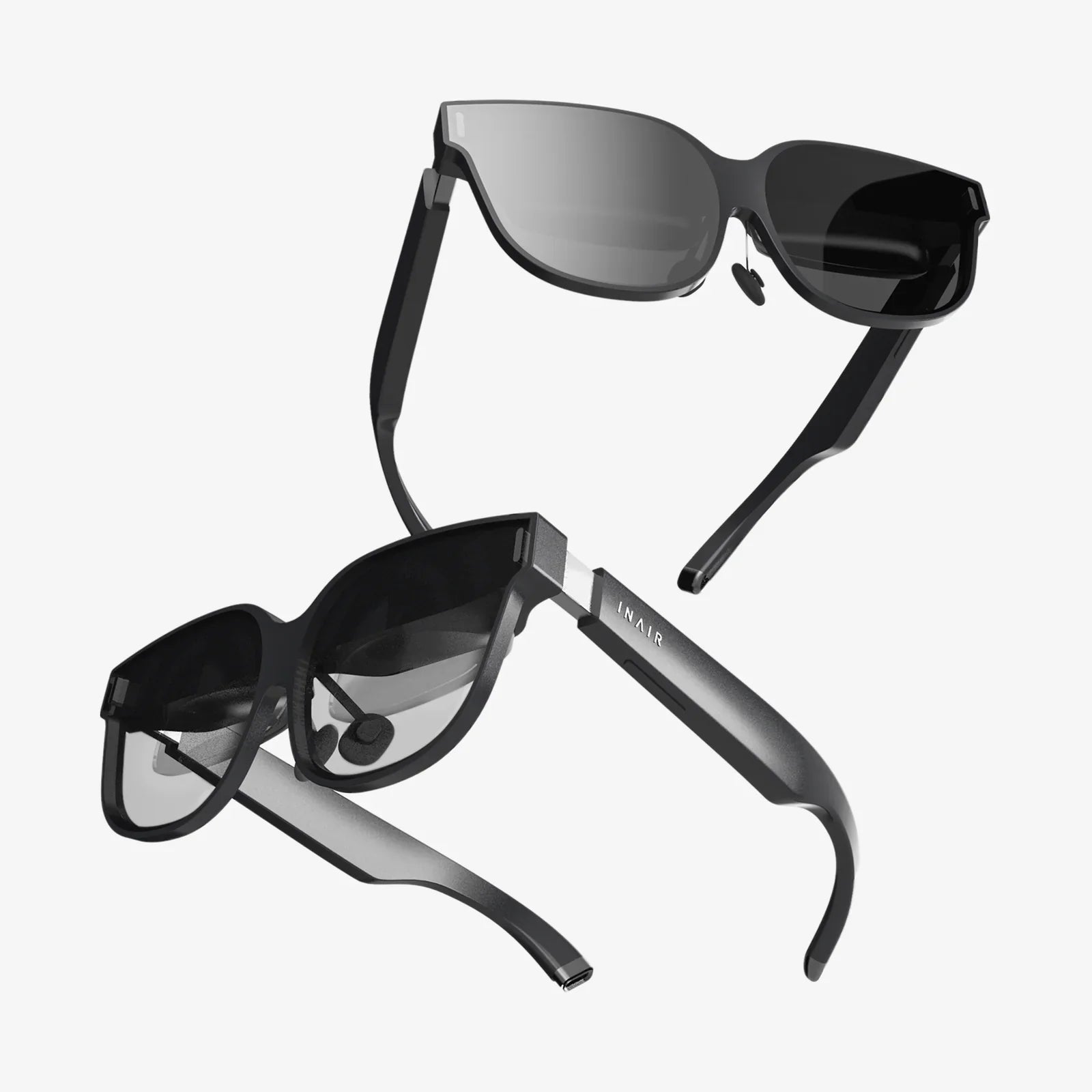
You slip the headset over your eyes, and in an instant, the real world vanishes. You're standing on the surface of Mars, dodging laser fire in a futuristic arena, or sitting in a virtual meeting room with colleagues from across the globe. The experience is so convincing, so utterly immersive, that your brain is completely fooled. But have you ever stopped to wonder, in the midst of that breathtaking virtual experience, how does a VR headset actually work? The magic isn't sorcery; it's a breathtaking symphony of advanced technology, clever software, and a deep understanding of human perception, all working in perfect harmony to transport your consciousness to another place.
The Foundation: The Human Senses and the Illusion of Presence
At its core, the goal of any VR headset is to achieve what technologists call "presence"—the undeniable, gut-level feeling that you are actually in the virtual environment. This isn't just about seeing a 3D image; it's about tricking your entire sensory system. To understand how the hardware accomplishes this, we must first understand the human senses it's trying to deceive.
Our perception of reality is built on constant, minute feedback between our eyes, ears, and body. Our brains are exquisitely tuned to detect even the slightest discrepancies. If you turn your head, the world moves in a predictable way. If you lean forward, your perspective shifts accordingly. If you drop a virtual object, your brain expects to hear a sound at the precise moment of impact. A VR headset's entire operation is dedicated to replicating this feedback loop with such speed and accuracy that the conscious mind is never given a reason to doubt the illusion. Any lag, any miscalculation, any sensory mismatch shatters the illusion instantly, often leading to disorientation or motion sickness. Therefore, every component inside the headset is engineered for one purpose: to create a seamless, convincing, and responsive fake reality.
Seeing is Believing: The Optical and Display Systems
The most immediate and obvious magic of VR happens through the eyes. The visual system is the primary battleground for achieving presence.
The High-Resolution Screens
Inside the headset, mere centimeters from your eyes, are two small, high-resolution screens—one for each eye. This is the first critical component. Using two separate images is what creates the stereoscopic 3D effect, replicating the way our two eyes naturally see the world from slightly different angles, allowing our brain to perceive depth. These are not ordinary smartphone screens; they are designed for extremely low persistence. This means each pixel is illuminated for a fraction of a millisecond before turning off until the next frame is ready. This prevents motion blur when you move your head, a key factor in maintaining a crisp image and preventing nausea.
The Lenses: A Window to Another World
If the screens were placed directly in front of your eyes, the image would be a blurry, un-focusable mess. This is where the sophisticated lenses come in. Placed between your eyes and the screens, these specialized lenses perform several crucial jobs:
- Refocusing: They bend the light from the screens to make the image appear at a comfortable, distant focal point, often around two meters away, rather than a few inches. This reduces eye strain.
- Warping: The image sent to the screens is pre-distorted by the software (a process called a barrel distortion). The lenses then correct this distortion, stretching the picture to fill your entire field of view and creating a wide, immersive panorama.
- Sweet Spot Maintenance: They provide a large enough "sweet spot"—the area where the image is clear and in focus—to accommodate different facial structures and IPD (Interpupillary Distance), the distance between a user's pupils.
This combination of warped imagery and corrective lenses is what transforms two small, flat screens into an infinite, immersive world.
Tracking the Universe: Positional Tracking and Movement
A static image, no matter how 3D, is not enough. The true magic of VR is the ability to look and move around within the virtual space. This requires a complex system of sensors to track the position and orientation of your head in real-time. This is known as six degrees of freedom (6DoF) tracking.
Orientation Tracking (3DoF)
The basic level of tracking involves orientation: which way you're looking. This is achieved through a component called an Inertial Measurement Unit (IMU), a standard in every modern smartphone and VR headset. The IMU is a miniature powerhouse containing:
- A Gyroscope: Tracks the rotational movement of your head—tilting, turning, and looking up and down.
- An Accelerometer: Measures linear acceleration, determining the speed and direction of your head's movement.
- A Magnetometer: Acts as a digital compass, correcting for drift (tiny errors that accumulate over time in the gyroscope and accelerometer) by aligning to Earth's magnetic field.
The IMU works at an incredibly high speed, providing data thousands of times per second to ensure the virtual world responds to your head movements with imperceptible latency.
Positional Tracking (6DoF)
While the IMU handles rotation, it cannot accurately track your position in physical space—leaning to the side, ducking, or walking around. For this, more advanced systems are used. There are two primary methods:
- Outside-In Tracking: This method uses external sensors or cameras placed in the room. These devices constantly watch the headset (which is covered in infrared LED markers), triangulating its exact position in 3D space. This is known for its high accuracy but requires external hardware setup.
- Inside-Out Tracking: This is the modern standard for consumer headsets. Cameras are mounted directly on the headset itself. These cameras look outward at your room, tracking the position of fixed objects and features (like furniture, corners, etc.) to understand its own movement relative to the environment. This is completely self-contained and allows for easier setup and portability, as no external sensors are needed.
This positional data is then fused with the IMU's orientation data to create a complete, real-time understanding of your head's movement through space, allowing you to peek around virtual corners or dodge incoming projectiles.
The Sound of Reality: Spatial Audio
Visuals are only half the battle. Sound is arguably just as important for selling the illusion. VR headsets employ 3D spatial audio, a technology that mimics how sound behaves in the real world.
Using a set of algorithms called Head-Related Transfer Functions (HRTF), the audio software modifies sounds based on their position relative to your virtual head. A sound coming from your left will be slightly louder in your left ear and will reach it a fraction of a second sooner than your right ear. If a sound is behind you, it will have a different tonal quality than if it were in front of you, as your head and ears naturally filter sounds based on their direction.
This means that without any special surround sound hardware—just standard headphones—you can instinctively locate the source of a sound in 3D space. The creak of a floorboard behind you, the whisper of an ally to your left, or the roar of a dragon overhead all feel terrifyingly real because they behave exactly as your brain expects them to.
The Bridge to the Virtual: Controllers and Haptics
To truly interact with a virtual world, you need your hands. VR controllers are sophisticated tracking devices in their own right. They contain their own IMUs for orientation and are tracked by the same outside-in or inside-out system that tracks the headset. This allows the system to know not just where your head is, but also the position, orientation, and movement of your hands.
Furthermore, controllers are packed with haptic feedback motors. These provide precise, nuanced vibrations that simulate touch. You can feel the virtual click of a button, the recoil of a gun, or the thrum of a car engine. This tactile feedback is a crucial layer of immersion, closing the loop between seeing an action and feeling it.
The Brain: Tying It All Together with Software and Computing Power
The headset itself is a marvel of hardware, but it is essentially a dumb terminal. The true brains of the operation are the connected computer or internal processor and the sophisticated software that drives it.
The software is responsible for the immense computational heavy lifting required for VR. It must:
- Render Two Perspectives: Generate two separate, high-resolution, high-frame-rate (typically 90Hz or higher) images for each eye, effectively doubling the graphical workload.
- Apply Distortion Correction: Pre-warp the images so they appear correct once viewed through the headset's lenses.
- Manage Latency: The entire process—from moving your head to updating the image on the screen—must happen in less than 20 milliseconds to avoid nausea. This is known as motion-to-photon latency, and the software optimizes every step of the pipeline to achieve this.
- Run the Experience: Execute the complex code of the game or application itself.
This requires immense graphical processing power, which is why high-end VR often relies on a powerful external graphics card, while standalone headsets pack cutting-edge mobile processors designed specifically for this task.
Standalone vs. Tethered: Two Paths to the Same Destination
The VR market is broadly split into two categories, which differ primarily in where this computing power resides:
- Tethered Headsets: These act as high-end displays and sensors. They are connected via a cable to a powerful external computer that handles all the rendering. This setup provides the highest fidelity visuals and most immersive experiences but sacrifices wireless freedom and requires a significant investment in PC hardware.
- Standalone Headsets: These are all-in-one devices. The computer—a miniaturized system-on-a-chip—is built directly into the headset. They are completely wireless and self-contained, offering incredible ease of use and accessibility, though they often make trade-offs in graphical complexity to conserve battery life and manage heat.
Both architectures ultimately serve the same purpose: to process user input and deliver an immersive audiovisual output, just with different balances of power and convenience.
Beyond the Basics: The Future of Immersion
The technology is already racing toward new frontiers to deepen immersion. Eye-tracking sensors can know exactly where you are looking, enabling foveated rendering—a technique where only the center of your vision is rendered in full detail, drastically reducing the computational load. This same technology allows for more expressive avatars in social VR, as your virtual eyes can mimic your real ones.
Other experimental areas include varifocal lenses that dynamically adjust to focus on virtual objects at different distances, more advanced haptic suits for full-body feedback, and even emerging research into neural interfaces for direct control. The fundamental principles of tracking, display, and audio will remain, but they will become faster, lighter, cheaper, and far more sophisticated.
So the next time you find yourself exploring a digital landscape, remember the intricate dance of technology at play. It’s a feat of human ingenuity that transforms plastic, glass, and silicon into a gateway to anywhere, proving that the most powerful virtual reality engine is, and always will be, the human mind itself, constantly weaving the threads of sensory input into a believable tapestry of experience. The headset doesn't create the world; it simply provides the signals, and your brilliantly gullible brain does the rest, willingly accepting the invitation to leave the room behind and step into the impossible.
Share:
VR Headset Spec Comparison: The Ultimate Guide to Choosing Your Next Headset
VR Headset Spec Comparison: The Ultimate Guide to Choosing Your Next Headset