


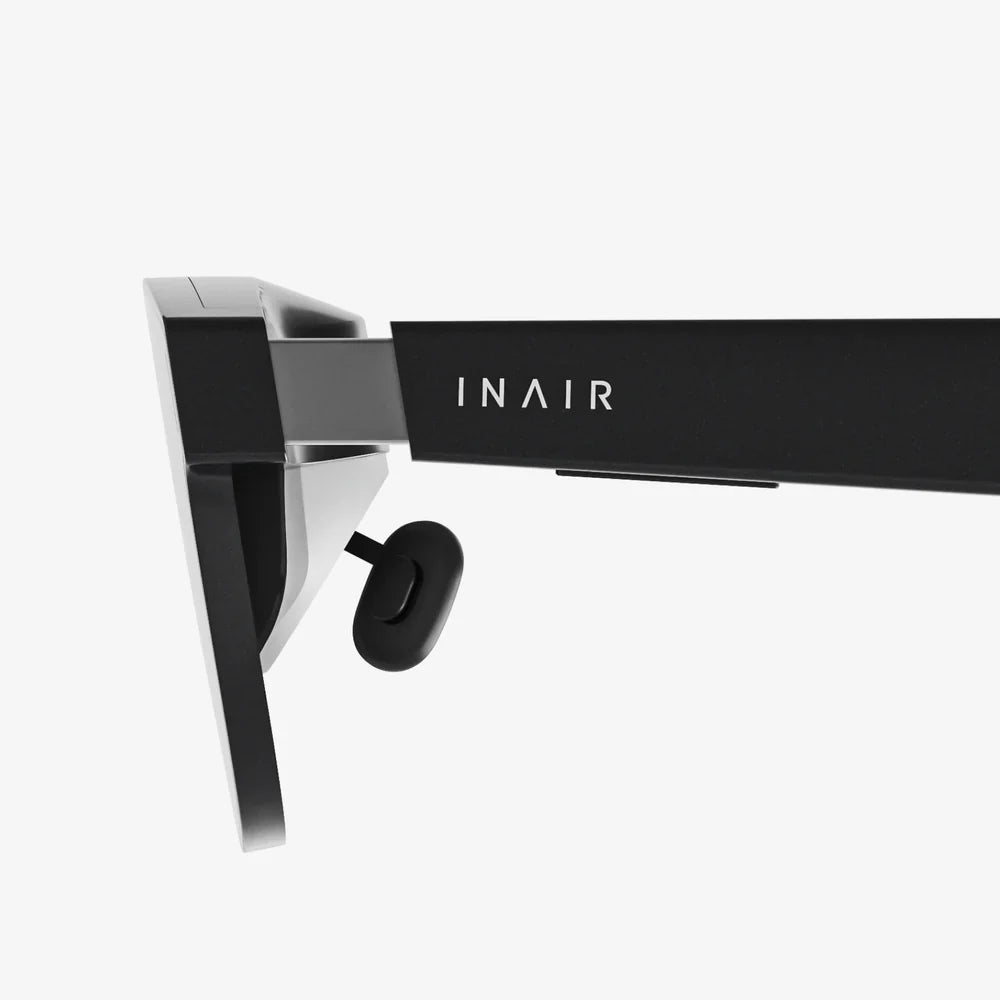
Imagine a world where digital information isn't confined to a screen in your hand or on your desk but is seamlessly woven into the very fabric of your reality. Directions float on the street in front of you, a colleague's avatar joins your living room for a meeting, and a repair manual superimposes itself over the broken engine you're fixing. This is the promise of near eye display (NED) technology, a field advancing so rapidly it's blurring the lines between science fiction and tangible reality. The magic isn't in complex incantations but in a breathtaking symphony of optics, photonics, and computing, all miniaturized to fit on the bridge of your nose.
The Core Principle: A Screen Placed Before the Eye
At its most fundamental level, a near eye display is exactly what its name suggests: a tiny, high-resolution display system positioned extremely close to the user's eye. Unlike a television or a monitor, which you look at, an NED is something you look through. Its primary objective is to project images directly onto the retina, fooling the brain into perceiving these digital creations as part of the natural world. This creates two primary experiences: a fully immersive Virtual Reality (VR), where your entire field of view is replaced by a digital environment, and see-through Augmented Reality (AR), where digital elements are composited over your view of the physical world. The distinction often lies in the optical combiner—the component that merges the digital light with light from the real world.
Deconstructing the Hardware: The Essential Components
A modern near eye display is a marvel of miniaturization, packing an array of sophisticated components into an incredibly small form factor. Each plays a critical role in the illusion.
The Microdisplay: The Digital Canvas
The heart of any NED is the microdisplay. This is the tiny, ultra-high-resolution screen that generates the initial image. Given the extreme magnification of the optics that follow, any imperfection on this display would be massively enlarged, necessitating pixel densities far beyond those of smartphones. Several competing technologies dominate this space:
- Liquid Crystal on Silicon (LCoS): A reflective technology where liquid crystals modulate light shone from a powerful miniature LED. The crystals act like tiny shutters, controlling the amount of light reflected from a mirrored silicon backplane for each pixel.
- Micro-Organic Light-Emitting Diode (Micro-OLED): These are emissive displays, meaning each pixel generates its own light. Built directly on a silicon wafer, they offer exceptional contrast ratios, true blacks, and incredibly fast response times, making them a premier choice for high-end applications.
- Micro-Light Emitting Diode (Micro-LED): An emerging technology that promises even greater brightness, efficiency, and longevity than Micro-OLED. While manufacturing challenges remain, it is seen as the future for the brightest and most durable AR displays.
The Illumination Source: Bringing the Display to Life
The microdisplay needs light. For transmissive or reflective displays like LCoS, this requires an external illumination module. These often use high-lumen LEDs or lasers, coupled with light guides and homogenizers to create a perfectly uniform field of bright light that is then painted by the microdisplay. For emissive technologies like Micro-OLED, the display is its own light source, simplifying the optical path but presenting different challenges for achieving extreme brightness in see-through AR applications.
The Optical Combiner: The Magic Mirror
This is arguably the most critical and differentiating component in an AR-focused near eye display. Its job is to combine the light from the real world with the light from the microdisplay and direct the fused image into the user's eye. There are several ways to achieve this, each with trade-offs between field of view, eyebox (the sweet spot where the image is visible), size, and clarity.
- Birdbath Optics: A compact design that uses a beamsplitter cube and a concave mirror. Light from the microdisplay is projected into the cube, reflected onto the mirrored surface, and then reflected again into the user's eye. This design allows the user to see the real world through the combiner.
- Waveguides: The State of the Art Waveguides are the technology enabling the sleek, glasses-like form factor everyone is chasing. They work on the principle of in-coupling and out-coupling. A small projector module shoots light into the edge of a flat, transparent piece of glass or plastic (the waveguide). This light is then "guided" through the material via total internal reflection, bouncing along until it encounters an out-coupling structure. This structure, which can be microscopic gratings, mirrors, or holographic films, deflects the light out of the waveguide and directly into the eye. The real world is seen by looking straight through the transparent waveguide.
- Free-Space Combiners: Used in some earlier headsets, these systems use semi-transmissive mirrors or prisms placed directly in the user's line of sight. While they can offer excellent image quality and a wide field of view, they tend to be bulkier than waveguide solutions.
The Projection Lens: Focusing the Image
Between the microdisplay and the optical combiner sits a complex set of projection lenses. Their job is to take the tiny image on the microdisplay, correct for any color fringing or distortion, and prepare it to be correctly focused by the combiner. The design of these lenses is crucial for achieving a sharp, comfortable image that doesn't strain the eyes.
Tracking and Sensors: Anchoring the Illusion
A pristine image is useless if it floats disconnected from reality. For a compelling AR or VR experience, the system must understand its environment and the user's position within it. This is achieved through a suite of sensors:
- Inside-Out Tracking: Cameras on the device constantly monitor the surrounding environment, tracking the position of unique features on walls, tables, and objects. This allows the system to understand its own movement in 3D space with six degrees of freedom (6DoF).
- Eye Tracking: Infrared cameras pointed at the user's eyes precisely measure pupil position. This enables foveated rendering (dynamically rendering the center of your gaze in high detail while reducing quality in the periphery to save processing power), more intuitive UI control, and creating a more realistic sense of depth.
- Depth Sensors: Technologies like structured light or time-of-flight sensors project invisible infrared dot patterns or laser pulses into the environment, measuring their deformation or return time to create a real-time 3D map of the room. This allows digital objects to realistically occlude behind and interact with physical furniture.
The Software and Processing: The Invisible Conductor
Hardware creates the light, but software tells it what to draw. The computational burden is immense. A powerful processor must:
- Fuse the data from all the sensors to create a unified understanding of the world.
- Precisely anchor digital content to real-world surfaces.
- Render complex 3D graphics at high frame rates (90Hz or more) to prevent motion sickness.
- Manage power consumption and heat in a device with severe size constraints.
Advanced computer vision algorithms and machine learning are now fundamental to this process, enabling real-time object recognition, spatial mapping, and gesture tracking.
The Human Factor: Comfort, Vergence-Accommodation Conflict, and the Future
Engineering a comfortable visual experience is one of the field's greatest challenges. A key issue is the Vergence-Accommodation Conflict (VAC). In the real world, your eyes converge (cross or uncross) and your lenses accommodate (change focus) in unison to bring an object into sharp relief. In most current NEDs, the image is projected onto a fixed focal plane. Your eyes may converge on a virtual object that appears to be one meter away, but your lenses must still focus on the screen, which is physically only a few centimeters from your face. This sensory mismatch is a primary cause of eye strain and visual fatigue in prolonged use.
Researchers are actively developing solutions like varifocal and light field displays. Varifocal systems dynamically move the display focal plane to match the depth of the virtual object you're looking at, while light field displays use complex optics to project the direction and intensity of light rays, simulating true depth cues and allowing the eye to focus naturally anywhere in the scene. These technologies are paving the way for all-day, comfortable wearable computing.
The journey of light from a microscopic semiconductor to a perceived part of your reality is a testament to human ingenuity. It's a dance of physics, engineering, and computer science, all converging to expand human perception. We are moving beyond simply displaying pixels to expertly manipulating the very physics of light and vision itself. The next time you see a digital creature scamper across your real-world floor or find yourself transported to a virtual mountaintop, you'll appreciate the intricate symphony of technology playing out mere millimeters from your retina, a silent revolution happening right before your eyes.
Share:
AI Tools for Creating Digital Products 2025: The Future of Automated Creativity
AI Tools for Creating Digital Products 2025: The Future of Automated Creativity