


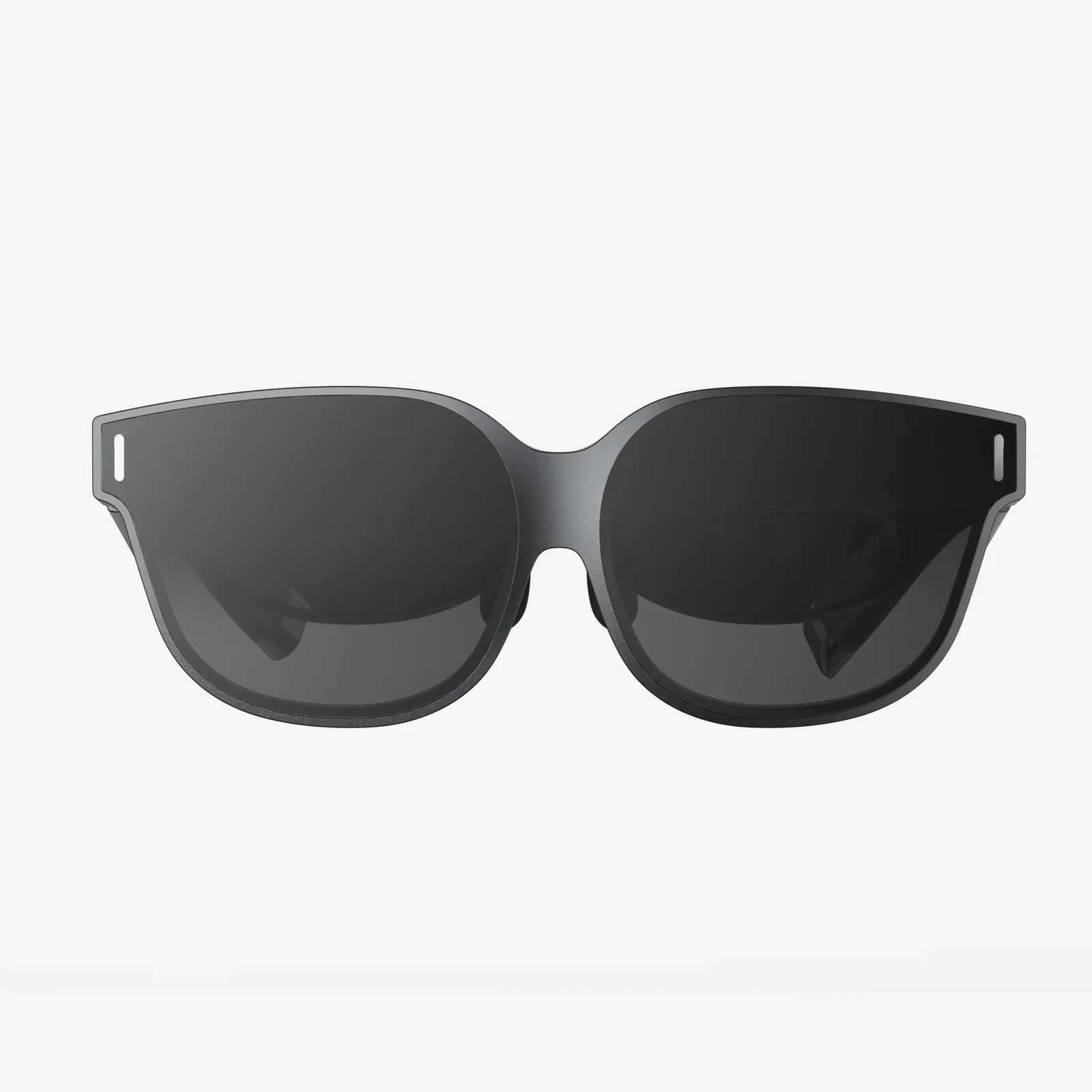
Imagine a world where digital information doesn't just live on a screen but is seamlessly woven into the fabric of your physical reality, where instructions float over a complex machine you're repairing, historical figures materialize in your living room to tell their stories, and you can see how a new sofa would look in your home before you buy it. This is no longer the realm of futuristic fantasy; it is the present and rapidly evolving world of augmented reality. The question is no longer if AR will be integral to our future, but how profoundly it is already transforming our present, reshaping industries and redefining human interaction with the digital and physical worlds.
The Foundational Mechanics: How AR Works Its Magic
Before diving into its vast applications, it's crucial to understand the basic mechanics that power augmented reality. At its core, AR is a technology that superimposes a computer-generated image, video, or 3D model onto a user's view of the real world, thus creating a composite view. This is achieved through a combination of sophisticated hardware and software.
Devices like smartphones and tablets use their cameras to capture the real-world environment. Simultaneously, software employing complex algorithms, including simultaneous localization and mapping (SLAM), scans the environment to understand its geometry and surfaces. It identifies flat planes (like a table or floor), detects edges, and maps the space in real-time. Once the environment is mapped, the software precisely anchors digital content—whether it's a animated character, a piece of text, or a virtual piece of furniture—to a specific point in the physical world. Advanced AR systems in headsets and glasses also use sensors like gyroscopes and accelerometers to track the user's head and eye movements, ensuring the digital overlay remains stable and interacts naturally as the user moves.
Revolutionizing the Assembly Line and Construction Site
One of the most significant and financially impactful applications of AR is in industrial settings. Here, it is used to enhance efficiency, improve accuracy, and dramatically increase safety.
- Complex Assembly and Maintenance: Technicians working on intricate machinery, from jet engines to industrial printers, can use AR headsets to view step-by-step digital instructions overlaid directly onto the physical components they are handling. This eliminates constant back-and-forth referencing of paper manuals or computer screens, reducing errors and cutting task completion time by up to 50%. An expert located thousands of miles away can see what the on-site technician sees and provide remote guidance by drawing arrows and annotations directly into their field of view.
- Design and Prototyping: Engineers and designers use AR to visualize and interact with 3D prototypes at full scale before any physical prototype is built. They can walk around a virtual model of a new car engine or a building's architectural design, identifying potential design flaws, assessing ergonomics, and making changes in real-time, saving immense costs in materials and development time.
- Logistics and Warehousing: In massive distribution centers, AR is used to optimize the picking and packing process. Warehouse workers wearing smart glasses can see the most efficient route through the aisles displayed in their vision, with digital arrows guiding them. The glasses can highlight the exact shelf and item to be picked, and even verify the correct item is selected through barcode scanning, drastically improving order accuracy and speed.
- Training and Safety: New employees can be trained on dangerous equipment using AR simulations that overlay crucial safety information and operational procedures onto real machinery, all without any risk of injury or costly downtime.
Transforming the Patient and Practitioner Experience
The healthcare sector has embraced AR with remarkable results, enhancing both the capabilities of medical professionals and the understanding of patients.
- Surgical Precision and Planning: Surgeons are using AR to gain X-ray vision during operations. By overlaying CT or MRI scan data—such as the precise location of a tumor or the path of a critical blood vessel—directly onto the patient's body during surgery, surgeons can operate with unprecedented precision. This minimizes incision sizes, reduces surgery time, and improves patient outcomes. AR is also used for pre-operative planning, allowing surgical teams to walk through a complex procedure using a detailed 3D model of the patient's own anatomy.
- Medical Training and Education: Medical students no longer need to rely solely on cadavers and textbooks. AR applications allow them to explore detailed, interactive 3D models of the human body, peeling back layers of muscle, tissue, and organs to understand anatomy and physiology in a deeply immersive way. This hands-on, visual learning accelerates comprehension and retention of complex information.
- Patient Care and Rehabilitation: AR is making physiotherapy and motor skill rehabilitation more engaging. Patients recovering from a stroke or injury can perform exercises that are gamified through AR, where they must reach for or interact with virtual objects. This not only improves motivation and adherence to therapy regimens but also provides therapists with precise data on range of motion and progress. Furthermore, AR apps can help patients better understand their own conditions by visualizing their ailment and the proposed treatment in 3D.
- Vein Visualization: For nurses and phlebotomists, finding a vein for drawing blood or inserting an IV can be challenging, especially in children or patients with difficult venous access. AR projection systems can map the vascular network onto the patient's skin in real-time, clearly showing the location and depth of veins, thereby increasing success rates and reducing patient discomfort.
Creating Immersive and Interactive Classrooms
Education is being fundamentally reshaped by AR, moving learning from a passive to an active, experiential process.
- Bringing Textbooks to Life: Students can point a device at an image in their history textbook to see a historical event unfold in 3D animation on their desk. They can explore the solar system with planets orbiting around them, or dissect a virtual frog without the smell of formaldehyde. This makes abstract concepts tangible and memorable.
- Interactive Learning Environments: AR transforms the entire classroom into a dynamic learning space. A lesson on archaeology could have students digging for virtual artifacts in the schoolyard, while a geometry class could involve students walking around and examining 3D shapes from every angle.
- Skill Development and Professional Training: Beyond K-12 and higher education, AR is used for vocational training. Mechanics can learn to repair engines, electricians can practice wiring circuits, and welders can hone their technique—all through AR simulations that provide immediate feedback without wasting materials or risking safety.
Redefining the Retail and Try-Before-You-Buy Journey
The retail industry has found a powerful ally in AR, using it to bridge the gap between online shopping and the physical in-store experience, while also reducing product returns.
- Virtual Try-On and Preview: Cosmetic companies allow customers to use their smartphone cameras to try on thousands of shades of lipstick, eyeshadow, or foundation instantly. Fashion retailers offer virtual fitting rooms where shoppers can see how clothes, glasses, or watches will look on their own body. The most widespread application is in home furnishing and decor, where apps enable users to place true-to-scale 3D models of sofas, tables, and art directly into their living space to see how it fits with their existing decor and dimensions.
- Enhanced In-Store Experiences: Physical stores are deploying AR to create engaging experiences. Pointing a phone at a product on a shelf might trigger a video demonstrating its use, show detailed specifications, or display customer reviews. This empowers consumers with more information at the point of decision.
- Navigation and Information: Large stores like supermarkets or home improvement warehouses can use AR for indoor navigation. An app can overlay a path on the live camera feed, guiding the customer directly to the aisle and shelf where their desired product is located.
Creating New Dimensions in Entertainment and Gaming
While popularized by a certain mobile game phenomenon, AR's role in entertainment extends far beyond catching digital creatures in the park.
- Interactive Gaming: AR games blend the digital and physical worlds, turning a user's home into a dungeon to explore, their backyard into a battlefield, or their tabletop into a strategic playing field. This encourages physical movement and social interaction in shared physical spaces.
- Live Events and Sports Broadcasting: Sports broadcasts have used AR for years to overlay the first-down line in American football or the offside line in soccer, giving viewers at home a clearer understanding of the game. During live concerts, artists are using AR to create stunning virtual effects and characters that appear to share the stage with them, enhancing the spectacle for arena audiences and remote viewers alike.
- Art and Museum Exhibits: Museums are using AR to add deeper layers of context to their exhibits. Pointing a device at a fossil might show a video of the dinosaur coming to life, while an ancient artifact could reveal a holographic historian explaining its origins. Public art installations are becoming interactive, allowing people to engage with statues and murals in novel ways.
- Social Media Filters and Lenses: Perhaps the most ubiquitous form of AR, filters on social media platforms allow users to add fun, animated elements to their faces and surroundings, driving a new form of creative expression and communication that is now ingrained in popular culture.
Navigating the World with Augmented Information
AR is becoming an invisible guide, overlaying useful data onto our perception of cities and landscapes.
- Navigation: Instead of looking down at a 2D map on a phone, future AR navigation systems, likely integrated into car windshields or smart glasses, will project directional arrows, street names, and points of interest directly onto the real road ahead, making driving and walking directions more intuitive and safer.
- Tourism and Cultural Heritage: Tourists visiting a historic city can point their device at a monument to see its original construction, historical figures related to it, or how the surrounding area looked centuries ago. This creates a powerful, personalized, and educational travel experience.
- Real Estate: Potential home buyers can point their phone at a building to see available listings, pricing history, and interior floor plans without even stepping inside. This streamlines the property hunting process significantly.
The Future is Overlaid: Challenges and What Lies Ahead
Despite its incredible potential, the widespread adoption of AR faces hurdles. Technical challenges include improving battery life for wearable devices, creating more natural and comfortable form factors like everyday glasses, and enhancing spatial understanding for flawless occlusion (where digital objects realistically hide behind physical ones). There are also significant social and ethical concerns regarding privacy, as AR devices with constant cameras and sensors collect vast amounts of environmental data, and the potential for digital spam or advertising cluttering our reality. Furthermore, the long-term psychological effects of blending realities are not yet fully understood.
However, the trajectory is clear. The convergence of AR with other technologies like 5G (for high-speed, low-latency data transmission) and artificial intelligence (for better object recognition and context-aware information) will unlock even more powerful applications. The concept of the metaverse—a persistent network of shared virtual spaces—is deeply intertwined with AR, promising a future where our digital and physical lives are permanently and seamlessly integrated.
From the operating room to the classroom, from the factory floor to your living room, augmented reality is not just a novel gadget; it is a fundamental shift in the human-computer interface. It's a tool that enhances our innate abilities, provides superhuman knowledge contextually, and unlocks new forms of creativity, productivity, and connection. The overlay has begun, and it is permanently changing the way we see everything.
Share:
Augmented Reality Trends 2025: The Future Is Now and It's Overlaying Our World
Augmented Reality in Learning and Development: The Future of Corporate Training is Here