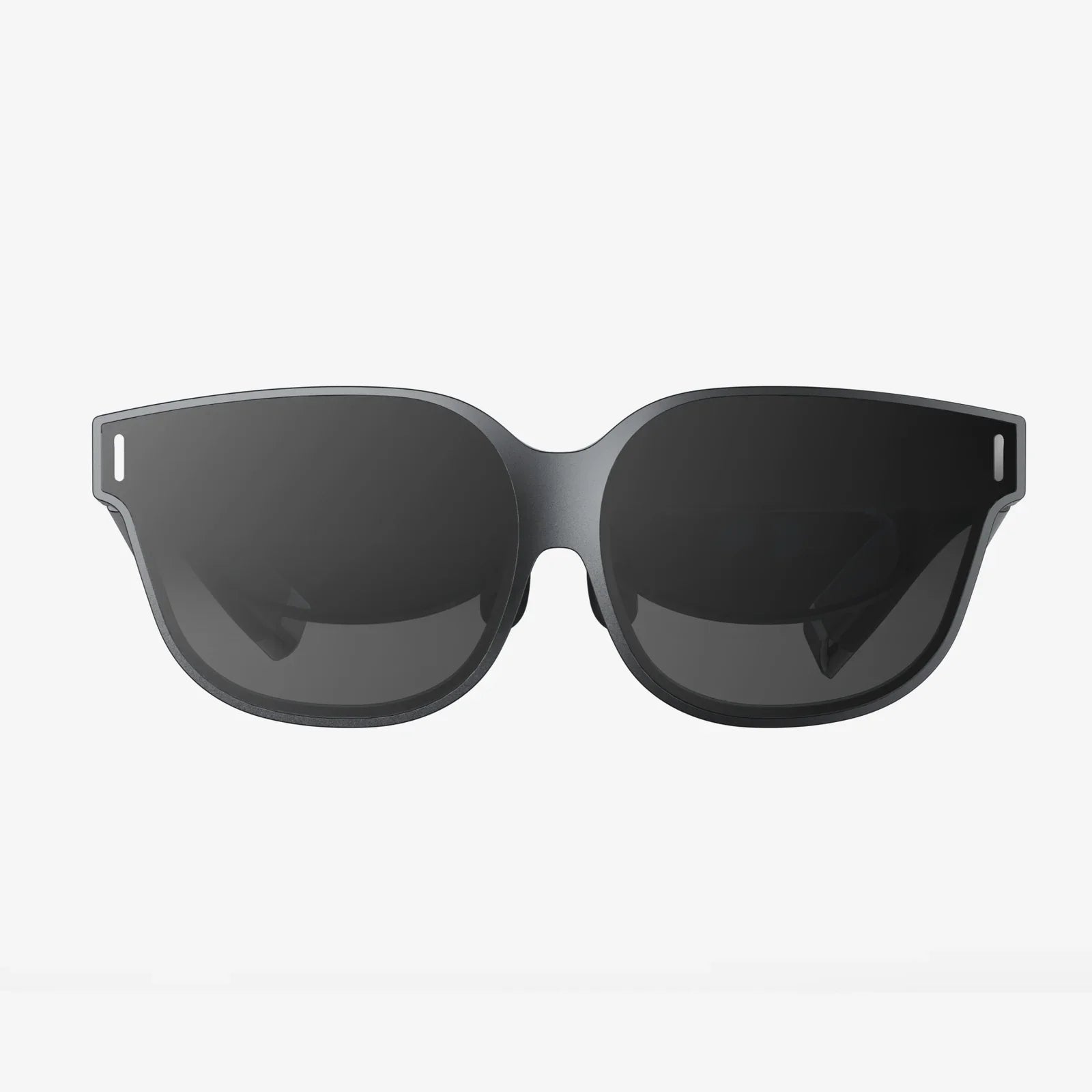
You put on a headset, and suddenly, the room around you vanishes. You're standing on the surface of Mars, the red dust swirling at your feet. Or perhaps you're deep underwater, a majestic whale gliding silently past. This is the magic of virtual reality—a technological sleight of hand so convincing that your brain accepts it as real. But have you ever stopped to wonder, as you reach out to touch a digital object that isn't there, just how is this incredible illusion crafted? The answer is a breathtaking symphony of advanced hardware, sophisticated software, and a deep understanding of human perception, all working in perfect harmony to transport your consciousness to another place.
The Foundational Pillar: Stereoscopic Vision and Head-Mounted Displays
At its core, virtual reality is a trick played on the senses, and the primary target is vision. The technology's starting point is replicating the way humans naturally perceive depth and three-dimensionality. We have two eyes, spaced approximately 6.5 centimeters (2.5 inches) apart. Because each eye sees the world from a slightly different angle, our brain receives two distinct 2D images. It then performs a remarkable feat of computation, merging these two images into a single, coherent 3D picture. This process is known as stereoscopy.
Virtual reality headsets, or Head-Mounted Displays (HMDs), exploit this biological principle. Inside the headset, a high-resolution display—or often two separate displays, one for each eye—is positioned in front of the user's eyes. A key piece of hardware, the lens, is placed between the eyes and the screen. These are not simple magnifying glasses; they are specially designed to correct for distortion, focus the image across the entire field of view, and ensure the user's eyes can comfortably converge on the virtual scene. The software renders two slightly different perspectives of the virtual world, one for the left eye and one for the right. When viewed through the lenses, the brain is fooled into interpreting these dual 2D images as a single, immersive 3D environment. The feeling of depth and scale is immediate and powerful.
Seeing the Whole Picture: The Critical Role of Field of View
Creating a 3D image is only part of the challenge. For the illusion to be truly persuasive, it must fill your vision. In the real world, humans have a vast field of view (FOV)—roughly 220 degrees horizontally, including peripheral vision. Early VR suffered from a "binocular" or "looking through goggles" effect because the FOV was too narrow. Modern headsets prioritize a wide FOV, typically between 90 and 110 degrees for consumer-grade devices and even higher for specialized units. This expanded view is crucial for immersion. When you turn your head, the virtual world doesn't just exist in a small window in front of you; it surrounds you, making the digital barrier between the real and the virtual begin to dissolve.
Banishing the Lag: High Refresh Rates and Low Persistence
Another enemy of immersion is latency—the delay between a user's action and the system's response. In VR, high latency is the primary cause of simulator sickness, a type of motion sickness that occurs when there's a disconnect between what the eyes see and what the inner ear feels. If you turn your head in the real world, the visual world updates instantly. In VR, that update must be equally instantaneous.
This is achieved through two key technologies: high refresh rates and low persistence. Refresh rate is measured in Hertz (Hz) and indicates how many times per second the image on the screen is redrawn. Standard monitors often run at 60Hz, but VR headsets demand 90Hz, 120Hz, or even higher. This ensures motion appears buttery smooth, not juddery or blurry.
Low persistence works in tandem with this. Instead of keeping each frame illuminated on the screen until the next one is drawn (which causes motion blur when you move your head), the display flashes each frame for a very brief instant and then goes black. Your brain, which is excellent at filling in gaps, seamlessly stitches these sharp, strobing images together into a clear and continuous scene. This combination of high speed and brief illumination is vital for maintaining visual fidelity and user comfort during movement.
Tracking Your Every Move: The Technology of Positional Tracking
A static 3D image is not a reality; reality is dynamic and responsive. The true magic of VR unfolds when you move. The technology that enables this is called six degrees of freedom (6DoF) tracking. This means the system can track not just your rotational movements—pitching your head up and down, yawing left and right, and tilting side-to-side—but also your translational movements: leaning forward, crouching down, jumping, or stepping sideways.
There are several methods to achieve this precise tracking:
-
Inside-Out Tracking: Cameras or sensors are mounted on the headset itself. These look outward at the surrounding environment, tracking the relative movement of features in the room (like furniture, walls, or specially placed markers) to calculate the headset's position in space. This method is popular for its simplicity and lack of external hardware.
-
Outside-In Tracking: Sensors or cameras are placed in stationary positions around the room. These devices look inward, tracking the position of LEDs or sensors on the headset and controllers. This method is often considered extremely precise and low-latency but requires setting up external equipment.
-
Inertial Measurement Units (IMUs): Complementing both methods, IMUs are inside every headset and controller. These micro-electromechanical systems contain accelerometers, gyroscopes, and magnetometers that measure acceleration, rotational velocity, and orientation. They provide extremely fast, albeit drift-prone, data on movement, which is then fused with the camera data to create a rock-solid and accurate estimate of position.
This constant, real-time tracking is what allows you to peek around a virtual corner by physically leaning or examine a digital artifact by walking around it.
Hearing the World: The Power of 3D Spatial Audio
Vision may be the star, but sound is the indispensable supporting actor that completes the illusion. Standard stereo audio, which simply pans sound between left and right speakers, is useless in VR. If a helicopter is flying overhead in your virtual experience, you need to hear it above you, moving from front to back. This is achieved through 3D spatial audio.
This advanced audio technology uses a sophisticated understanding of psychoacoustics—how the human brain interprets sound—to simulate how sound waves interact with the head, torso, and outer ears (pinnae). By applying a Head-Related Transfer Function (HRTF), which is a unique filter for each ear, audio software can make a sound appear to come from any specific point in 3D space around you. The effect is uncanny; you will instinctively turn your head towards the source of a sound, believing it exists in the physical world. This auditory feedback is a critical component for presence, the feeling of truly being in the virtual space.
Reaching Out and Touching: The Science of Haptic Feedback and Controllers
To be an active participant and not just a passive observer, you need a way to interact with the virtual world. This is the role of controllers and haptic feedback. Modern VR controllers are themselves marvels of engineering, packed with IMUs and sensors for precise 6DoF tracking, allowing the system to know exactly where your hands are and how they are oriented.
But interaction is more than just motion. Haptic feedback provides the sense of touch. Using small, off-balance motors called eccentric rotating mass (ERM) actuators or more precise linear resonant actuators (LRAs), these controllers can vibrate. Sophisticated software can control the frequency, amplitude, and pattern of these vibrations to simulate a stunning array of sensations: the gentle buzz of a bumblebee landing on your hand, the sharp recoil of a virtual weapon, or the rough scrape of a sword against a shield. This tactile confirmation bridges a final gap between intention and action, making digital interactions feel tangible and real. Advanced research into haptic gloves and full-body suits promises even more profound levels of physical immersion in the future.
The Invisible Engine: The Software and Rendering Pipeline
All this hardware would be inert without the complex software that drives it. The process begins with a powerful computer or a standalone device that acts as the brain. The software's first job is to run the simulation or game engine, which governs the rules, physics, and logic of the virtual world.
The most demanding task is rendering. Unlike a traditional game rendered on a flat screen, a VR application must render two distinct, high-resolution, high-frame-rate images—one for each eye. This effectively doubles the graphical workload. To manage this immense computational load, developers use advanced techniques like:
-
Foveated Rendering: This technique leverages eye-tracking technology (found in some high-end headsets) to render the area of the image where the user's fovea (the center of the eye with the sharpest vision) is looking in high detail, while subtly reducing the detail in the peripheral vision. This saves a tremendous amount of processing power without the user perceiving any loss in quality.
-
Asynchronous Timewarp (ATW) and Spacewarp: These are clever software tricks that act as a safety net. If the system senses it's about to miss a frame deadline (which would cause a jarring stutter), it can take the last fully rendered frame and warp or reproject it based on the latest head-tracking data. This creates a smooth, continuous image even during performance dips, which is essential for preventing discomfort.
This entire pipeline, from head tracking to dual-image rendering to distortion correction, must run in a tight, optimized loop with latency measured in mere milliseconds.
The Human Element: Perceiving the Illusion
Ultimately, virtual reality is not achieved by technology alone; it is a partnership with the human brain. The hardware and software are designed to expertly stimulate the senses, but it is the brain's own predictive and integrative processes that create the final, seamless experience. This phenomenon is known as presence—the undeniable, subconscious feeling of being in the virtual environment. It's the moment you forget about the headset on your face and the controllers in your hands and simply accept the digital world as your reality. Achieving presence is the holy grail of VR development, and it only happens when every technological component—visual, auditory, and haptic—works in flawless concert to earn the brain's belief.
The next time you step into a virtual world, you'll understand the monumental effort behind that moment of magic. It's a complex dance of optics, physics, processing power, and biological trickery, all orchestrated to answer a simple, profound human desire: to explore the impossible. From the stereoscopic images projected before your eyes to the hum of a haptic motor in your palm, every element is a carefully engineered piece of a puzzle designed to convince you, utterly and completely, that you are somewhere else. And as the technology continues to evolve, with higher resolutions, wider fields of view, and more immersive feedback, that line between the real and the virtual will become ever more beautifully, and thrillingly, blurred.