


- by wangfred
How It Works: Augmented Reality - Bridging the Digital and Physical Worlds
- by wangfred
Imagine pointing your device at a city street and seeing historical figures reenact events right before your eyes, or assembling a complex piece of furniture with digital arrows guiding your every move. This is the magic of augmented reality, a technology rapidly weaving itself into the fabric of our daily lives, from entertainment and education to industry and healthcare. But have you ever stopped to wonder, amidst the wonder, exactly how it works? The journey from a blank screen to a world layered with digital information is a fascinating dance of advanced hardware, sophisticated software, and complex algorithms, all working in perfect harmony to trick our perception and enhance our reality.
At its most fundamental level, augmented reality functions on a simple premise: it superimposes computer-generated perceptual information onto the real world. Unlike Virtual Reality (VR), which aims to replace your reality entirely, AR aims to supplement it. The goal is to make these digital additions—whether they are 3D models, text, images, or videos—appear as if they are authentically part of the physical environment, coexisting in space and obeying its rules. This seamless integration is the ultimate challenge and the true genius of AR technology.
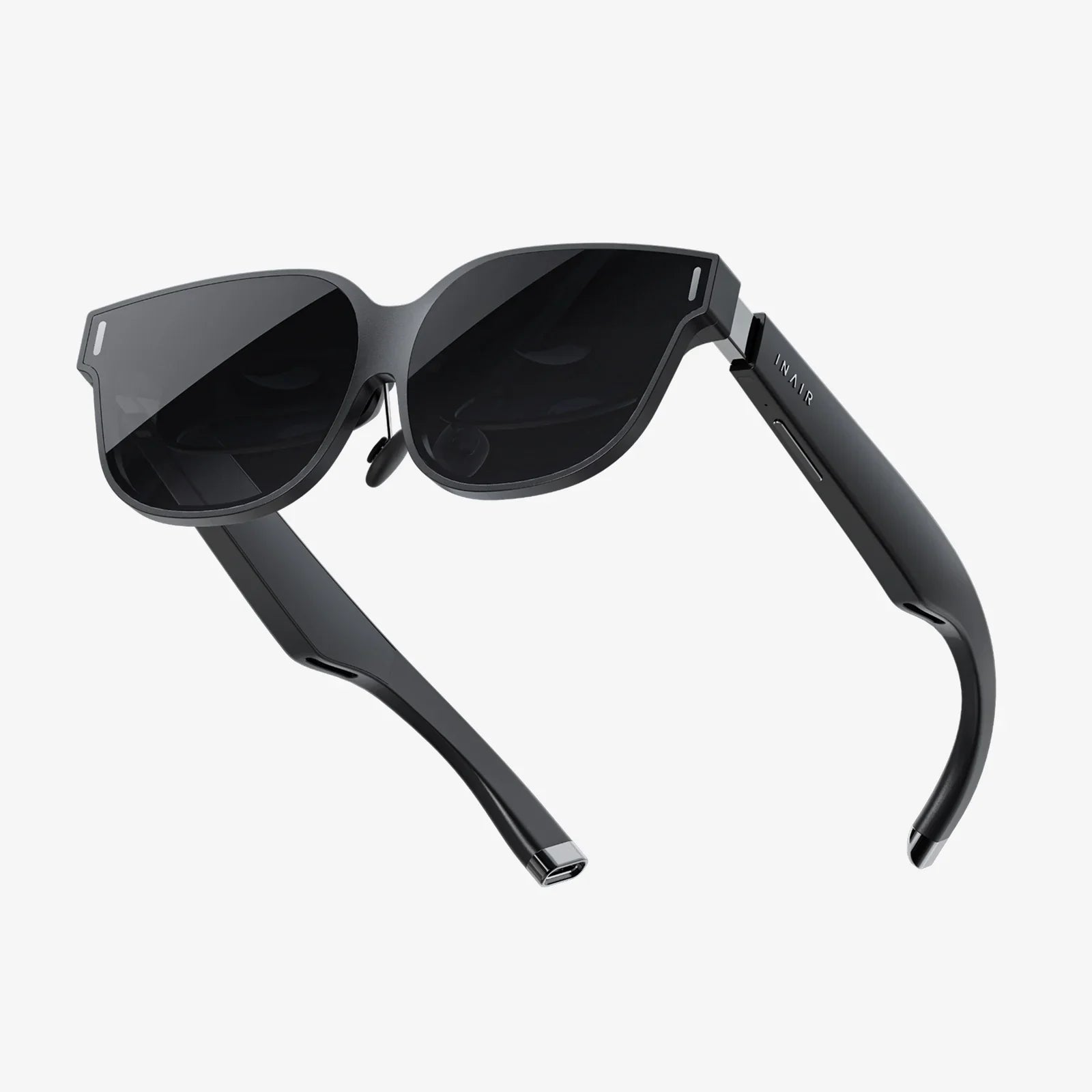
For any AR experience to occur, a system needs to perceive the world before it can augment it. This requires a specific suite of hardware components that act as the eyes, brain, and voice of the operation.
A device's sensors are its primary means of understanding the environment. The most critical is the camera, which captures the live video feed of the real world—the canvas upon which the digital will be painted. However, a camera alone is not enough. Other sensors work in concert to provide depth and spatial context:
The raw data from these sensors is a chaotic stream of information. It is the job of the processor—specifically, the Central Processing Unit (CPU), Graphics Processing Unit (GPU), and increasingly, dedicated AI chips called Neural Processing Units (NPUs)—to make sense of it all. This is an immense computational task. The processor must simultaneously:
This is how the augmented world is presented to the user. Display technology in AR falls into several categories:
Hardware provides the raw input and output, but it is the software that performs the true magic. This is where the arcane acronyms of AR come into play.
If there is one fundamental algorithm that makes modern AR possible, it is SLAM. It is the core process that answers two critical questions simultaneously: "Where am I?" (Localization) and "What does my environment look like?" (Mapping).
As you move your device through an environment, the SLAM algorithm analyzes the camera feed and sensor data to identify unique feature points—distinct visual details like the corner of a picture frame, a power outlet, or a pattern on the carpet. It tracks how these points move from frame to frame. By triangulating the position of these points and combining this with data from the accelerometer and gyroscope, the SLAM system can:
This real-time environmental understanding is what allows a digital dragon to land convincingly on your coffee table, knowing exactly where the table is in relation to you.
Building on the foundation of SLAM, computer vision algorithms perform more specific tasks. A key one is plane detection. The system analyzes the point cloud generated by SLAM to identify flat, horizontal surfaces (like floors and tables) and vertical surfaces (like walls). Once a plane is detected and confirmed, it becomes an anchor point—a real-world coordinate where a digital object can be placed and will stay locked, even if you walk around the room.
For AR to feel truly immersive, digital objects must interact correctly with the real world. This means they must be occluded (hidden) by real objects that are in front of them. This is where depth sensors like LiDAR become critical. By having a precise understanding of the distance of every object in the scene, the AR software can determine if a real-world chair is in front of a digital avatar. It then instructs the rendering engine to only draw the parts of the avatar that are not hidden by the chair. This creates the powerful and convincing illusion that the digital object exists within the physical space, not just on top of it.
The final step is drawing the digital object itself. The GPU renders the 3D model with textures and shaders. Advanced AR systems now also perform environmental lighting estimation. The software analyzes the camera feed to determine the color temperature, intensity, and direction of the real-world light sources. It then applies similar lighting and shadows to the digital object, making its appearance match its surroundings. A digital vase placed in a sunlit room will have bright highlights and sharp shadows, while the same vase in a dimly lit room will appear darker and softer, blending in perfectly.
Seeing a digital object is one thing; interacting with it is another. AR systems employ various methods for user input:
Early AR was almost entirely reliant on marker-based tracking. This required a predefined visual pattern (like a QR code or a specific image) to be placed in the environment. The camera would find this marker, and the digital content would be anchored to its position. While reliable, it was limiting.
Modern AR is overwhelmingly markerless. Thanks to SLAM and related technologies, it can understand and augment any environment without pre-programmed cues. This is known as world-scale or world-facing AR. It can also use object recognition to identify specific items (like a sofa or a tennis shoe) and attach relevant information or animations directly to them, a technique sometimes called model-based tracking.
The trajectory of AR is clear: moving from handheld devices to wearable glasses and eventually to something as socially acceptable as everyday eyewear. This future requires breakthroughs in miniaturization, battery life, display technology (like holographic waveguides), and connectivity (like 5G and 6G to offload heavy processing to the cloud). The ultimate goal is a always-on, context-aware assistant that provides information exactly when and where you need it, seamlessly blending the digital and physical until the line between them becomes indistinguishable.
The next time you use a filter to add silly ears to your video call or preview a new piece of furniture in your living room through an app, take a moment to appreciate the incredible technological symphony happening in milliseconds behind the scenes. It’s a symphony of light, data, and computation, all orchestrated to answer a single, powerful question: what if your world could be more? This is the promise of augmented reality, and understanding how it works is the first step toward imagining what it will become.
Share:
Global AR VR Market Size 2024: A Deep Dive into the Numbers Shaping Our Digital Future
AR VR Marketing Trends 2025: The Future of Immersive Customer Engagement