


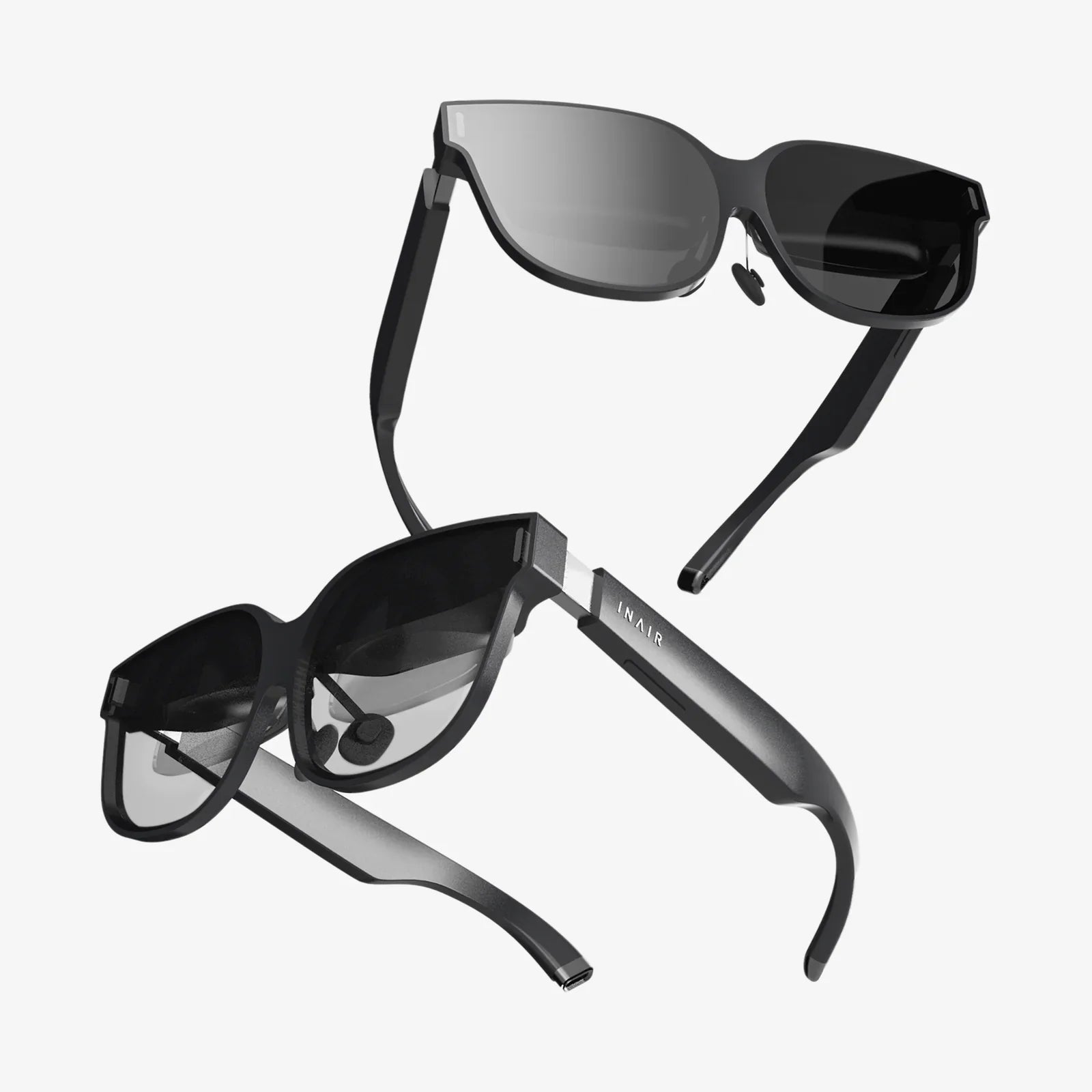
Imagine a world where you can climb Mount Everest before breakfast, perform delicate brain surgery without risk, or have a heartfelt conversation with a departed loved one—all from your living room. This is the breathtaking promise of virtual reality, a technology accelerating toward a future where the line between the digital and the physical dissolves into pure experience. The question is no longer if VR will become realistic, but how real it will ultimately feel, and what that profound shift will mean for humanity itself.
The Current State of the Virtual Sense
Today's high-end virtual reality systems offer a compelling, yet still incomplete, illusion. Users are immediately transported to new environments through stereoscopic vision delivered by high-resolution displays. The sense of presence—the feeling of actually being in a virtual space—is now a tangible reality for many. This is achieved through a combination of precise head-tracking, which ensures the virtual world responds naturally to every turn and glance, and convincing 3D audio that tricks the brain into perceiving sound from specific locations in the digital space.
However, the illusion is fragile. It can be broken by the limited field of view that creates a sensation of looking through binoculars, the tangible weight of the headset on your face, or the slight latency between physical movement and digital response that can induce discomfort. The current frontier involves overcoming these barriers. Foveated rendering, a technique that uses eye-tracking to render only the area you are directly looking at in high detail, promises to drastically reduce the computational power needed for photorealistic graphics. Meanwhile, inside-out tracking has eliminated the need for external sensors, making setup seamless and untethering the user for greater freedom.
The Quest for Photorealism: Beyond Pixels
The most obvious path to realism is through visual fidelity. The goal is to achieve photorealistic graphics in real-time, creating environments indistinguishable from a high-resolution photograph. This pursuit is powered by advancements in several key areas:
- Ray Tracing: Simulating the physical behavior of light—how it bounces off surfaces, creates soft shadows, and produces perfect reflections—is paramount for realism. Real-time ray tracing in VR is the holy grail, as it allows for dynamic, physically accurate lighting that responds to user interaction.
- High Dynamic Range (HDR): Modern displays are pushing for higher brightness, deeper blacks, and a wider color gamut. This allows a virtual sun to feel genuinely bright and a moonlit night to be believably dark, mimicking the vast range of light intensity we perceive in the real world.
- Resolution and Refresh Rates: The dreaded "screen door effect," where users can see the gaps between pixels, is rapidly fading as display resolutions push beyond 4K per eye. Coupled with refresh rates exceeding 120Hz, these displays create a buttery-smooth visual experience that is crucial for maintaining immersion and preventing motion sickness.
Yet, visual perfection alone is insufficient. A perfectly rendered forest will still feel dead if the leaves don't rustle in the virtual wind, the branches don't bend when touched, and the animals don't behave according to believable artificial intelligence. True realism requires a living, breathing world governed by its own consistent physics and ecology.
Engaging the Forgotten Senses: The Haptic Frontier
Vision and sound are just the beginning. The real leap toward true realism will come from engaging our other senses, particularly touch. Haptic technology, which provides tactile feedback, is evolving at a staggering pace.
Current consumer-grade motion controllers provide basic rumble feedback. But the next generation is focused on replicating nuanced sensations. Advanced haptic gloves can simulate the pressure of grabbing a virtual object, the texture of a rough surface, or even the resistance of pulling a bowstring. Researchers are developing ultrasonic and air-based systems that can create the feeling of touch mid-air, without any wearable hardware. Imagine feeling the virtual rain on your skin or the brush of a butterfly's wing on your palm.
Beyond touch, other senses are being explored. Olfactory devices, often called "smellovision," can release precise combinations of chemicals to simulate everything from the salty sea air to the aroma of fresh coffee. Even the vestibular system, which governs our sense of balance, is being targeted through techniques like galvanic vestibular stimulation, which uses small electrical currents to trick the brain into feeling motion, potentially solving VR's locomotion problem.
The Brain's Reality: Neurological and Psychological Immersion
Ultimately, reality is a construct of the brain. Therefore, the final battleground for VR realism is not in the hardware, but in the human mind. The concept of presence is a psychological state, and achieving it relies on perfectly aligning the virtual experience with the brain's expectations.
This is where the uncanny valley of VR becomes a significant challenge. As avatars and humanoid characters become more realistic, slight imperfections in their movement, eye contact, or speech patterns become deeply unsettling. Overcoming this requires breakthroughs in artificial intelligence and animation to create characters that not only look human but also communicate with the subtle, non-verbal cues we subconsciously expect.
Furthermore, the brain's proprioceptive sense—its awareness of the body's position—must be accounted for. Full-body tracking, which maps your entire skeleton into the virtual world, is a critical step. When your virtual legs match your real ones and your reflection in a virtual mirror moves exactly as you do, the brain's suspension of disbelief becomes almost absolute. The ultimate expression of this is neural interfacing, where signals are read directly from the brain to control the virtual environment or, conversely, where sensations are written directly into the nervous system, bypassing external hardware entirely. While this remains largely in the realm of science fiction for consumer applications, early research is already underway.
The Ethical Chasm of Hyper-Realism
As VR approaches a level of realism that could be indistinguishable from physical reality, a host of profound ethical questions emerge. The potential for misuse is as staggering as the technology's promise.
Hyper-realistic VR could revolutionize therapy, allowing patients to confront phobias in a safe space, or enable unparalleled social connection across vast distances. But it could also be weaponized for hyper-effective propaganda, immersive torture, or the creation of deeply traumatic experiences. The concept of "virtual crime" will take on new meaning; while no physical harm occurs, a psychologically realistic assault in VR could have severe real-world mental health consequences.
This blurring of realities also challenges our very notion of truth and experience. If you can have a perfect virtual memory of walking on Mars, did you ever really experience it? Does it matter? The potential for addiction is immense, as a perfect virtual world could become a more appealing alternative to a user's challenging physical reality. Establishing ethical frameworks, digital rights, and perhaps even a "reality label" to distinguish VR from AR and the physical world will become a critical societal task.
A Future Intertwined: The Merging of Realities
The endgame for VR may not be a headset we put on and take off, but a persistent virtual layer integrated into our perception of the world through augmented reality (AR) and Mixed Reality (MR). The goal is a seamless spectrum of experiences, from the fully real to the fully virtual, where we can interact with digital objects and information as naturally as we do with physical ones.
This will be built on a foundation of ambient computing, where powerful, distributed networks (like 6G and beyond) provide the bandwidth and low latency needed for these complex experiences to be wireless and ubiquitous. Artificial intelligence will act as the invisible conductor, managing these worlds, generating content on the fly, and personalizing experiences to an unimaginable degree.
We are marching toward a future where virtual reality will not just be "realistic," but will become another valid, persistent, and rich layer of human reality itself. It will be a place we visit, work in, socialize within, and learn from. The technology will become so advanced and so seamlessly integrated that the question "is this real?" will become increasingly difficult, and perhaps even irrelevant, to answer.
The screen is dissolving. The controllers are vanishing. The very headset that gates this new reality is destined to become a forgotten artifact, replaced by lightweight glasses and eventually neural interfaces. We are not just building more realistic games; we are constructing a new plane of human existence. The final barrier isn't technical, but experiential—the day you forget you're wearing any technology at all, and simply live the experience, is the day virtual reality has truly arrived. That day is coming faster than anyone thinks, and its arrival will redefine reality itself.
Share:
Best Smart Glasses 2025 Under $50: The Ultimate Budget Tech Wearables Guide
Smart Keyboard Not Working: The Ultimate Troubleshooting and Prevention Guide