


- by wangfred
How to Use AR and VR: A Comprehensive Guide to Immersive Technology
- by wangfred
Imagine a world where digital information overlays your physical reality, where you can train for complex surgeries, explore ancient ruins, or design your dream home without leaving your living room. This is no longer the realm of science fiction; it's the tangible, exciting present of Augmented Reality (AR) and Virtual Reality (VR). These immersive technologies are reshaping our interaction with the digital world, and understanding how to use AR and VR is becoming an essential skill for professionals, creators, and curious minds alike. The potential is limitless, and the journey to mastering it starts right here.
Before diving into implementation, it's crucial to distinguish between these two powerful technologies. While often grouped together, they serve distinct purposes and offer different user experiences.
Virtual Reality (VR) is a fully immersive, computer-generated simulation. By wearing a headset, users are transported into a completely digital environment, entirely replacing the physical world around them. This isolation is its greatest strength, allowing for unparalleled focus and presence within the virtual space. How to use VR effectively hinges on this principle of total immersion—for training simulations, virtual travel, or deep gaming experiences.
Augmented Reality (AR), conversely, layers digital information onto the real world. Using devices like smartphones, tablets, or smart glasses, AR superimposes computer-generated images, data, or animations into your immediate environment. You still see your surroundings, but they are enhanced with digital content. The key to how to use AR is in its ability to provide context-aware information, from navigation arrows on a street to furniture previewed in your apartment.
Success with immersive tech begins with the right tools. The barrier to entry is lower than ever, with options available for every budget and use case.
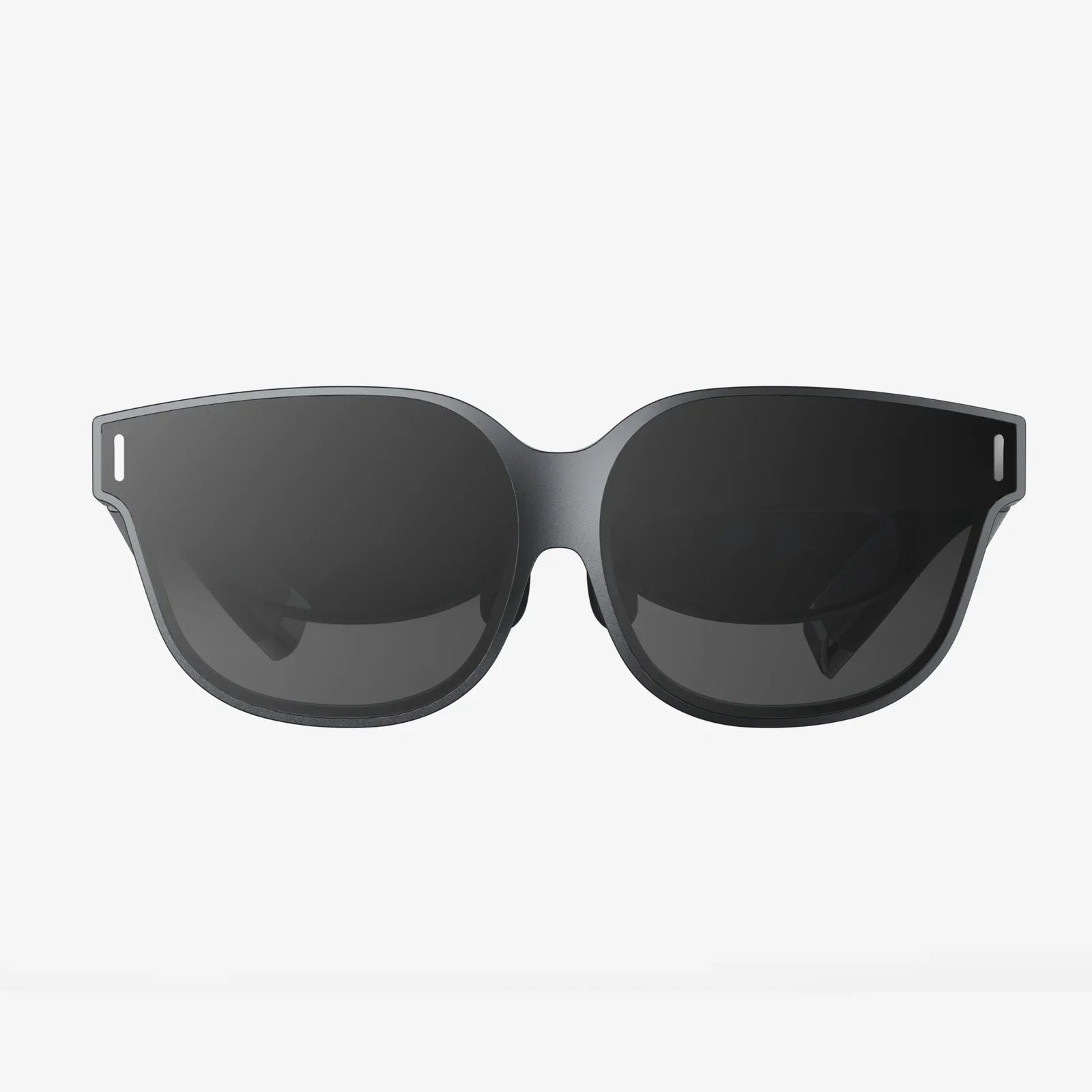
The hardware spectrum is broad. For VR, tethered headsets connected to powerful computers offer the highest fidelity experiences, while standalone headsets provide excellent wireless freedom. For AR, the most accessible device is already in your pocket—a modern smartphone. For more hands-free, advanced applications, dedicated smart glasses are emerging, offering a seamless blend of the digital and physical worlds.
You don't need to be a master programmer to create AR and VR content. Numerous robust platforms provide developer-friendly environments with drag-and-drop interfaces, extensive asset libraries, and templates for common tasks. These platforms often support popular game engines, which are industry standards for creating high-end, interactive 3D content. For simpler AR experiences, web-based frameworks allow you to create content that runs directly in a mobile browser, requiring no app download.
Knowing how to use AR and VR effectively requires a structured approach, whether you're an individual developer or a large enterprise.
This is the most critical step. Technology should never be the starting point. Begin by asking: What problem am I solving? What experience am I enhancing? Who is my user? A training simulation for engineers has vastly different requirements than an interactive marketing campaign for consumers. Clearly defining your goal dictates every subsequent decision, from hardware selection to interaction design.
With your objective clear, select the appropriate medium. Ask yourself: Does my application require complete immersion (VR), or is it about enhancing the real world (AR)? For example, a virtual tour of a historical site benefits from VR's immersion, while an assembly manual for machinery is perfect for AR, overlaying instructions directly onto the equipment.
Immersion is about more than just visuals; it's about narrative and intuition. Map out the user's journey. What do they see first? How do they interact with the environment? Prioritize intuitive user interfaces. In VR, this means designing comfortable movement systems to prevent motion sickness. In AR, it means ensuring digital objects are anchored firmly and realistically in the user's space. The core of how to use AR and VR well is crafting a seamless and engaging user experience (UX).
Start small. Build a minimal viable product (MVP)—a simple prototype that tests your core idea. This allows for early feedback and iteration without a significant investment of time and resources. Use an agile development process, constantly testing and refining the experience on the target hardware. Performance optimization is key; a laggy or glitchy experience instantly shatters immersion.
How you deploy your experience depends on its nature. VR applications are typically distributed through dedicated app stores. AR experiences can be distributed as native apps or, more accessibly, via the web. Web-based AR has a massive advantage: anyone with a smartphone and a link can instantly access the experience, removing friction and broadening your potential audience dramatically.
Launch is not the finish line. Use analytics to understand how users are engaging with your experience. Where do they spend the most time? Where do they get stuck? Gather qualitative feedback through surveys and user testing sessions. The real mastery of how to use AR and VR lies in this continuous cycle of improvement, using data to refine and enhance the experience over time.
The theoretical how-to is best understood through real-world applications. These technologies are already delivering profound value across sectors.
This is arguably the most impactful domain. VR creates safe, repeatable, and cost-effective training environments for high-stakes professions. Medical students can practice complex procedures, mechanics can train on virtual engines, and public safety personnel can rehearse emergency response scenarios—all without risk. AR, on the other hand, acts as an on-the-job performance aid, overlaying checklists, diagrams, and instructions directly into a worker's field of view, reducing errors and improving efficiency.
AR is revolutionizing shopping. The "try before you buy" concept is now a digital reality. Customers can use their smartphones to see how furniture fits and looks in their home, how sunglasses suit their face, or how a new coat of paint would transform a room. This reduces purchase anxiety and product returns, creating a more confident and satisfying customer journey. VR can transport users into virtual showrooms or fashion shows, creating a branded experience that is both memorable and engaging.
Beyond training, VR is a powerful therapeutic tool. It's used for exposure therapy, helping patients with phobias confront their fears in a controlled, gradual manner. It's also effective for pain management, distracting patients during painful procedures with calming or engaging virtual environments. AR assists surgeons by projecting critical patient data, like ultrasound imagery, directly onto their visual field during operations, keeping them focused without looking away.
Enterprises are using VR for collaborative design reviews. Engineers and designers from around the world can meet inside a full-scale, 3D model of a new product or building, identifying design flaws and making decisions long before physical prototyping begins, saving immense time and resources. AR assists on the factory floor by guiding assembly line workers through complex wiring or assembly processes with digital overlays, streamlining production and improving quality control.
Adoption isn't without its hurdles. Understanding these challenges is part of learning how to use AR and VR responsibly.
The trajectory of AR and VR points toward a more seamless and integrated future. We are moving toward lighter, more comfortable, and more powerful hardware. The lines between AR and VR will blur with mixed reality (MR) devices that can smoothly transition between full virtuality and augmented overlays. As 5G connectivity becomes ubiquitous, cloud-based rendering will allow for incredibly complex experiences on lightweight devices, and social interactions in shared virtual spaces will become more commonplace and nuanced.
The power to reshape reality is now at your fingertips. From revolutionizing how we learn and work to unlocking new forms of creativity and connection, the practical applications of AR and VR are only bounded by our imagination. This guide has provided the roadmap—the principles, the steps, and the inspiration. The next move is yours. The digital world is waiting to be built, explored, and experienced in ways we are only beginning to imagine. Your journey into the immersive realm starts now.
Share:
Best XR Glasses: A Deep Dive into the Future of Immersive Technology
Gaming Glasses: The Essential Gear for the Modern Gamer's Eye Health and Performance