


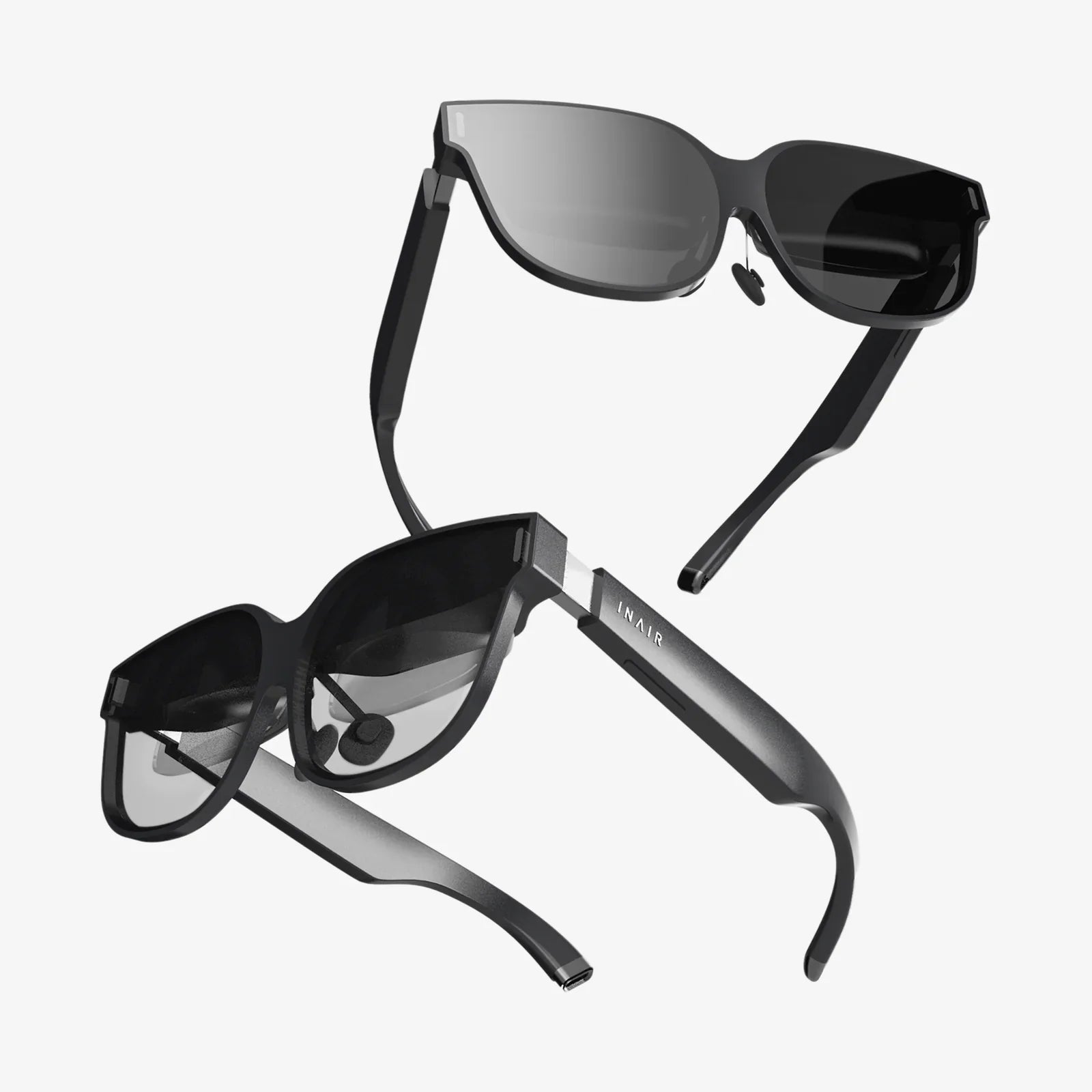
Imagine a world where your field technician can see the internal wiring of a broken machine simply by looking at it through their tablet, where a customer in a different country can virtually place your new sofa in their living room to see if it fits, and where your entire global team can collaborate on a 3D prototype as if they were standing in the same room. This is not a distant science fiction fantasy; it is the imminent future of business, powered by the rapid and relentless advancement of Augmented Reality (AR). The question for every leader, entrepreneur, and innovator is no longer if AR will arrive, but how swiftly and decisively it will reshape their industry, redefine customer expectations, and revolutionize their internal operations. The businesses that begin exploring this transformative technology today are the ones that will dominate the markets of tomorrow.
Demystifying Augmented Reality: Beyond the Hype
Before delving into its applications, it's crucial to understand what AR truly is. Unlike Virtual Reality (VR), which creates a completely immersive, digital environment that replaces the real world, Augmented Reality overlays digital information—images, data, 3D models, animations—onto the user's view of the physical world. This blend of the real and the virtual is typically experienced through devices we already own, such as smartphones and tablets, or through specialized wearables like smart glasses. This accessibility is a key driver of its imminent widespread adoption. AR doesn't seek to escape reality; it seeks to enhance it, making it richer, more informative, and more interactive.
The Retail Revolution: From Showrooms to Living Rooms
The retail sector is perhaps the most visible and immediate beneficiary of AR technology, fundamentally altering the path to purchase.
Virtual Try-On and Visualization
One of the most powerful applications is in overcoming the inherent limitation of online shopping: the inability to physically interact with a product. AR shatters this barrier. Customers can now use their smartphone cameras to see how a pair of glasses looks on their face, how a new shade of paint transforms their wall, or how a luxury watch fits on their wrist. Furniture retailers have pioneered this space, allowing apps to project true-to-scale 3D models of sofas, tables, and chairs into a user's home. This not only drastically reduces purchase hesitation and the fear of buyer's remorse but also significantly decreases return rates, a major cost center for e-commerce businesses.
In-Store Enhancement and Navigation
For brick-and-mortar stores, AR offers a tool to fight back against online competition by creating immersive, value-added experiences. Imagine pointing your phone at a product on a shelf and instantly seeing detailed specifications, customer reviews, video demonstrations, or even complementary items. Large-format stores can use AR for indoor navigation, guiding customers directly to the aisle and shelf where their desired product is located, saving time and improving the overall customer experience. This transforms a mundane shopping trip into an engaging discovery process.
Transforming Industrial and Manufacturing Sectors
While consumer-facing applications are flashy, some of the most profound and valuable use cases for AR are happening on factory floors, in warehouses, and at remote job sites.
Assembly, Maintenance, and Repair
AR is revolutionizing complex manual processes. Technicians performing maintenance on intricate machinery can wear AR glasses that overlay digital schematics, animated repair instructions, and torque specifications directly onto the equipment they are working on. This hands-free access to information improves accuracy, drastically reduces errors, and cuts down task completion time. New employees can be onboarded and trained more effectively, with AR guiding them through complex assembly processes step-by-step, reducing the training burden on senior staff and standardizing procedures across the organization.
Design and Prototyping
In the design phase, engineers and designers can use AR to visualize and interact with 3D prototypes at full scale before a single physical component is manufactured. A car designer can project a life-size model of a new vehicle into an empty space, walk around it, and make adjustments to the design in real-time. This allows for rapid iteration, early detection of design flaws, and better collaboration between departments, ultimately leading to a superior final product and a more efficient development cycle.
Logistics and Warehousing
In massive distribution centers, AR can supercharge logistics. Warehouse workers equipped with smart glasses can have order-picking instructions visually superimposed onto their field of view, directing them to the exact bin location and indicating the quantity to pick. This streamlines the fulfillment process, minimizes walking time, and virtually eliminates picking errors, leading to faster shipping times and higher customer satisfaction.
Redefining Training and Remote Collaboration
AR dissolves geographical and physical barriers, creating new paradigms for knowledge transfer and teamwork.
Immersive and Safe Learning Environments
Training for high-risk jobs—from surgeons to aircraft mechanics—can be conducted safely through AR. Trainees can practice procedures on digital overlays that mimic real-world scenarios without the risk of damaging expensive equipment or harming anyone. This experiential learning leads to better knowledge retention and higher proficiency before an employee ever touches the real thing. Medical students can practice anatomy on detailed 3D holograms, and electricians can learn to wire a complex circuit without the danger of electrocution.
The Expert in Your Field of View
Remote assistance via AR is a game-changer for organizations with distributed teams and assets. A less-experienced field technician encountering a novel problem can don AR glasses and live-stream their point-of-view to a senior expert located thousands of miles away. The expert can then annotate the technician's real-world view with arrows, circles, and notes, literally guiding their hands through the repair process. This "see-what-I-see" collaboration reduces downtime, saves on expensive expert travel costs, and ensures that institutional knowledge is effectively disseminated throughout the company.
The New Frontier of Marketing and Customer Engagement
AR offers marketers a uniquely engaging medium to tell brand stories and create memorable, interactive campaigns that drive deep emotional connections.
Interactive Advertising and Packaging
Static print ads, billboards, and product packaging can be transformed into dynamic, interactive portals. By scanning an image with a smartphone, consumers can unlock immersive experiences: a movie poster might launch a trailer that plays in their living room, a cereal box could turn into a fun educational game for children, and a wine label might tell the story of the vineyard through a virtual sommelier. This creates a powerful "wow" factor that increases brand recall and encourages social sharing.
Experiential Events and Showrooms
At trade shows, conferences, and in flagship stores, AR can create breathtaking experiences that draw crowds and generate buzz. Visitors can interact with products that are too large, expensive, or conceptual to physically display. Automotive companies can let users configure a car's color and features and then see it materialize in front of them, while travel agencies can transport potential tourists to a virtual beach resort. These experiences are not just gimmicks; they are powerful tools for lead generation and brand positioning.
Navigating the Challenges and Considerations
The AR future is bright, but its integration is not without hurdles that businesses must thoughtfully address.
Technological and Infrastructural Hurdles
For truly seamless AR, we need devices with longer battery life, more powerful processing capabilities, and wider fields of view. The development of robust and accurate spatial mapping—allowing digital objects to interact convincingly with the physical world—is critical. Furthermore, these immersive experiences demand significant data bandwidth and low latency, which will require continued investment in 5G and edge computing infrastructure to support widespread enterprise use.
User Experience and Design
Poorly designed AR experiences can be clunky, confusing, and ultimately counterproductive. The user interface (UI) and user experience (UX) must be intuitive and add genuine value without overwhelming the user. The digital overlays must be contextually relevant and appear at the right time and place. Investing in skilled UX designers who understand the unique principles of spatial computing is essential for success.
Privacy and Security
AR devices, especially those with always-on cameras and sensors, collect vast amounts of data about the user's environment. This raises serious questions about data privacy, security, and consent. Businesses must establish clear, transparent policies on what data is collected, how it is used, and how it is protected. Building trust with both employees and customers will be paramount for adoption.
A Practical Roadmap for AR Integration
For businesses looking to explore AR, a methodical approach is key.
- Identify a Specific Problem: Don't adopt AR for its own sake. Start with a clear business challenge—high training costs, elevated product return rates, complex assembly errors—and investigate if AR can provide a solution.
- Start Small and Scale: Begin with a pilot program focused on a single use case. Use readily available technology like smartphones and tablets to test the concept and prove its value before investing in specialized hardware.
- Focus on User Adoption: The best technology is useless if people won't use it. Involve employees in the process, provide thorough training, and clearly communicate the benefits to ensure buy-in.
- Measure ROI: Establish key performance indicators (KPIs) from the outset. Are you aiming to reduce training time by 20%? Cut down maintenance errors by 15%? Measure the results of your pilot against these metrics to gauge success and justify further investment.
The wave of augmented reality is not approaching; it is already crashing upon the shores of industry, and its waters are rising fast. This is not a technology that will politely wait for laggards to catch up. The businesses that will thrive in the next decade are those that recognize AR not as a fleeting trend or a marketing gimmick, but as a fundamental layer of the new operational reality—a powerful tool to unlock unprecedented efficiency, create deep customer loyalty, and empower their workforce in ways previously confined to imagination. The first step into this augmented future is a simple one: look at your operations through a new lens and ask not what AR is, but what it can do for you.
Share:
Augmented Reality Market Analysis: A Deep Dive into the Next Digital Frontier
AR VR in Media and Entertainment: The Ultimate Immersive Revolution